


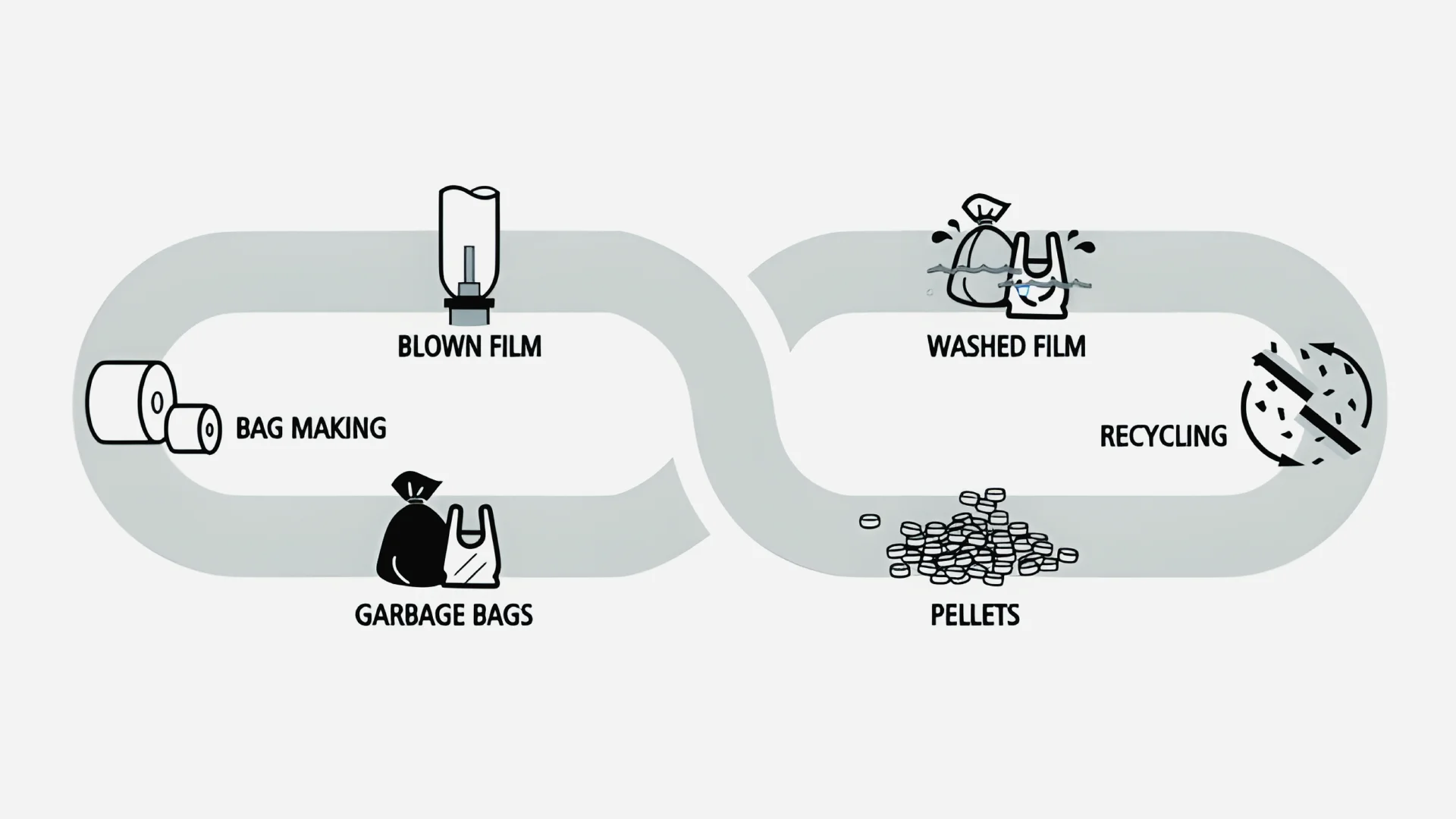
Industrieinterner Kunststoffrecycling (auch In-House- oder nachindustrieller Recyclingprozess, PIR) ermöglicht es Herstellern, sauberen Produktionsabfall wiederzuverwenden und in den Prozess zurückzuführen – anstatt für die Lagerung, Beförderung und Entsorgung zu bezahlen. Bei einem stabilen, einpoligen Abfallstrom führt dies in der Regel zu niedrigeren Einkäufen von Rohstoffen, weniger Handhabung und einem engeren Kontrolle über die Qualität der recycelten Materialien.
Dieser Leitfaden ist für Gussformen, Extruder, Folien/Taschenproduzenten und Rohr/Profilanlagengeschrieben – nicht für kommerzielle Recycler, die gemischte Post-Konsumentenballen kaufen. Er behandelt, welche Abfälle geeignet sind, welche Ausrüstung Sie benötigen, wie Sie Einsparungen schätzen und wann ein In-House-System die Miete oder den Verkauf von Abfällen als Müll übertrifft.
Für die Kapitalplanung auf Betriebsniveau für vollständige kommerzielle Linien verwenden Sie bitte die separate ROI-Analyse für Kunststoffrecyclingmaschinen. Um kompakte Maschinen gegenüber vollständigen Linien zu vergleichen, sehen Sie kleine Kunststoffrecyclingmaschine vs. industrielle Linie.
Was ist In-House-(Nachindustrieller) Kunststoffrecycling?
Industrieinterner Recycling erfasst Abschnitte, Reste, Start-up-Abfall, abgelehnte Teile und andere bekannte Produktionsabfälle, bevor sie mit Außenmaterial vermischt werden. Der Abfall wird nach Polymer und Farbe sortiert, auf Größe reduziert und – falls erforderlich – gewaschen, getrocknet und pelletiert. Wiederhergestellte Schuppen oder Pellets werden dann in eine genehmigte Formulierung gemischt oder als dokumentierter industrieller Strom verkauft.
Das ist anders als das Recycling von Post-Konsumenten: Sie kennen bereits die Kunststoffklasse, das Additivpaket und die Produktionsgeschichte. Das Qualitätsrisiko ist niedriger – aber nur, wenn Sie Polymere, Farben und abgenutztes Material getrennt halten.
Welche Produktionsabfälle sind geeignet?
| Abfallart | Beispiele | Typischer erster Prozessschritt |
|---|---|---|
| PE-Folie & Taschen | LDPE/LLDPE/HDPE-Randstreifen, Folienrollen, Taschenabfall | Zerkleinerer/Schneidemaschine → Pelletierung |
| PP-Raffia & gewebt | Ziehen von Bändern, gewebte-Taschen-Abschnitte, nichtgewebte Abfälle | Schreddern + Verdichten/Pelletieren |
| Rohstoffabfall | Laufwerke, Flash, Rohr/Profil-Abschnitte, abgelehnte Teile | Granulator/Zerkleinerer → Wiedergewinnung |
| Klares Offspec-Produkt | Bekannte Kunststoffklassen, trennbar von Metall/anderen Polymern | Größenreduzierung ± leichte Reinigung |
Nicht mischen Verschiedene Polymere, inkompatible Additivkombinationen oder stark abgenutzte Startreinigung in einen Strahl, den Sie für die Wiederverwendung im Spezifikationsbereich planen. Ein sauberer, dokumentierter Abfallstrom ist weitaus einfacher wieder einzuführen als gemischt Bodenabfall.
Vier Geschäftsprofiten des Recycling von Produktionsabfall
1. Schnittkosten für Entsorgung, Transport und Lagerung
Große Abfälle belegen Fläche und verursachen wiederholte Handhabungs- und Transportkosten. Die Verarbeitung in der Nähe der Produktionslinie reduziert die Ausgangslasten und die Notwendigkeit, recyceltes Material von einem Dritten zurückzukaufen.
2. Ersatzteil der ursprünglichen Harzmenge
Wenn die Produkteigenschaften es erlauben, kann verifizierter Kunststoffregranulat oder Kunststoffpellets mit reinstem Harz gemischt werden. Der zulässige Prozentsatz muss aus Versuchen, Qualitätskontrolle und Kundenanforderungen stammen — nicht aus einer allgemeinen Annahme wie „X % sind in Ordnung“.
3. Qualitätskontrolle des recycelten Materials
Sie kennen das ursprüngliche Harz, die Farbkonsistenz und das Prozesshistorie. Diese Nachverfolgbarkeit macht die Beherrschung von Farbe, Feuchtigkeit, Kontamination und Schmelzeigenschaften einfacher als beim Kauf unbekannter gemischter Recyclate.
4. Kreislaufwirtschaft fördern und Recycledgehalt berichten
Die Rückgewinnung von Fertigungsabfällen hält Materialien in produktiven Einsatz und erstellt messbare Daten für Abfallreduktions- und Recyclinggehalt-Ziele. Überschüssiges Material, das den Spezifikationen eines Umformers entspricht, kann auch verkauft werden.
Was für Ausrüstung benötigt ein Anlagen-System im Werk?
Passen Sie die Anlage an die Form des Abfalls, die Kontamination, die Feuchtigkeit, die Spitzenleistung in kg/h und die Qualität an, die Ihr Prozess akzeptieren wird.
| Zustand des Abfalls | Typische Ausrüstung | Austragsmaterial |
|---|---|---|
| Saubere starre Laufwerke, Teile, Profile | Granulator / ZerkleinerungsmaschineMetalschutz, Staubabsaugung | Größenkontrollierter Neuschreddel |
| Saubere Filme, Raffia, Woven Bags | Schredder oder Schnittkompressor + Pelletieranlage | Wiederverwendbare Pellets |
| Schmutzige oder bedruckte Folie | Waschanlage, Press/Trockner, Granulationsanlage | Gewaschene Schuppen oder Pellets |
| Große hohle / dicke-wandige starre Abfälle | Zerkleinerer → Zerkleinerer → optional Waschung | Einheitliche Schuppen |
Systemgröße von gemessene Spitzen- und Durchschnittsabfallraten—not only the nameplate output of the production machine. Leave space for safe feeding, buffer storage, dust control, and maintenance access.
Ein einfaches ROI-Modell für den Betrieb innerhalb der Anlage
Beginnend mit dem jährlich erhaltbaren Schrott, berechnen Sie dann den geschaffenen Wert und die vermiedenen Kosten:
Jahresvorteil = vermiedene Virginharz-Einkäufe + vermiedene Entsorgung/Transportkosten + Verkaufswert des Überschussrecyclats − jährliche Strom-, Arbeits- und Wartungskosten sowie Verbrauchsmaterialien.
Kapitalverzinsungszeit (Jahre) = installierte Projektkosten ÷ jährlicher Ertrag.
Verwenden Sie konservative Wiedererholungsrenditen. Berücksichtigen Sie Trennverluste, Siebwechsel, Messer, Filter, Betriebsmittel, Grundfläche und Qualitätsprüfungen. Für ein breiteres kommerzielles Rahmenwerk siehe Kosten-Nutzen-Analyse-Leitfaden.
Beispiel (nur illustrierend)
| Annahme | Beispielhafte Werte |
|---|---|
| Erneuerbare Produktionsabfälle | 180,000 kg/jahr |
| Erreichter Materialwert | 0,30/kg → 54.000 / Jahr |
| Vermeidene Transporte & Entsorgung | $12,000/jahr |
| Leistung, Personal, Wartung, Verbrauchsmaterialien | −$24,000/jahr |
| Geschätzter jährlicher Vorteil | $42,000/jahr |
| Installationskosten des Projekts | $105,000 |
| Einfache Amortisation | 2.5 Jahre |
Führen Sie mindestens drei Szenarien durch: konservativ, erwartet und hochausgelastet. Wenn das Projekt nur unter der optimistischsten Annahme der Harzpreis- oder Betriebszeit arbeitet, ist das Risiko zu hoch.
Wenn In-Plant Recycling Sinn macht
- Die Anlage erzeugt eine vorhersehbare Volumen von trennbarem Kunststoffabfall.
- Recycled material hat eine definierte interne Verwendung eine zuverlässige externe Käuferin.
- QC kann Polymer, Farbe, Feuchtigkeit und Kontamination überprüfen.
- Es gibt Platz für sichere Füllung, Speicherung, Staubabsaugung und Wartung.
- Geplante Einsparungen bleiben attraktiv bei conservativ Resinpreis und Annahmen zur Auslastung.
Falls die Mengen unregelmäßig sind, die Polymere gemischt sind oder das Endprodukt die recycelten Inhalte nicht verträgt, kann das Sammelprocessing oder ein Fachrecycler wirtschaftlicher sein.
RFQ-Checkliste: Was Sie vor der Anfrage eines Angebots senden sollten
- Kunststoffe, Farben und Additivpakete, die getrennt bleiben müssen
- Durchschnittliche und Spitzenmengen an Schrott in kg/h (Bilder der Stücksgröße helfen)
- Vorhandene Kontamination, Druck, Etiketten, Öle und Feuchtigkeit
- Gewünschter Ausgang: Regranulat für Behältermischung, Pellets für internen Gebrauch oder zum Verkauf
- Qualitätstests und maximale recycelte Inhalt % erlaubt im Endprodukt
- Verfügbare Fläche, Stromversorgung und Betriebsstunden
- Vertretungsmuster von Schrott für einen Testlauf
FAQ
Muss sauberer Produktionsabfall gewaschen werden?
Nicht immer. Saubere, einpolymere Laufbänder oder Kantenabfälle benötigen möglicherweise nur Größe reduzieren und Metallschutz. Gedruckte, staubige, ölige oder bodenkontaminierte Materialien benötigen möglicherweise Waschen und Trocknen.
Soll Schrott im Werk wiederverwendet werden, als Regranulat oder Pellets?
Regranulat ist einfacher, wenn der Prozess es konstant zuführt. Pelletisierung verbessert die Bruttodichte, das Mischen und die Filtration – aber erhöht Kapital-, Energie- und Wartungskosten.
Wie sollte die Kapazität der Ausrüstung ausgewählt werden?
Messung von Spitzen kg/h, Bruttodichte, Stücksgröße, Feuchtigkeit und Betriebsstunden. Fordern Sie den Lieferanten auf, repräsentative Schrott zu testen und den vollständigen Linienausgang zu angeben – nicht nur die Klemm- oder Extruderleistung.
Was ist der größte ROI-Fehler?
Gewinnung des Bruttowertes des Rohmaterials, während der Ertragsverlust, Arbeitskraft, Energie, Wartung, Siebwechsel, Qualitätsprüfung und Perioden, in denen die Linie nicht voll ausgelastet ist, ignoriert werden.
In-house Recycling gegenüber dem Kauf einer vollständigen Recyclinganlage?
In-house-Systeme zielen auf Ihr saubere Produktionsabfälle ab. Eine kommerzielle Anlage ist für gemischte externe Rohstoffe, höhere Kontamination und verkaufsfähige Schütt-/Pellets-Spezifikationen konzipiert. Wählen Sie basierend auf der Herkunft des Abfalls und dem Endverwendungszweck – nicht nur Maschinengröße.
Nächster Schritt
Planung eines In-house-Recycling-Projekts? Senden Sie Materialbilder, Polymerart, Spitzen kg/h und gewünschten Ausgang für eine linienbezogene Empfehlung. Entdecken Sie verwandte Equipment-Guides: Kunststoffpelletiermaschine-Auswahl, Leitfaden für Kunststoffgranulatoren, und Kosten für eine Kunststoffrecyclingmaschine.
