


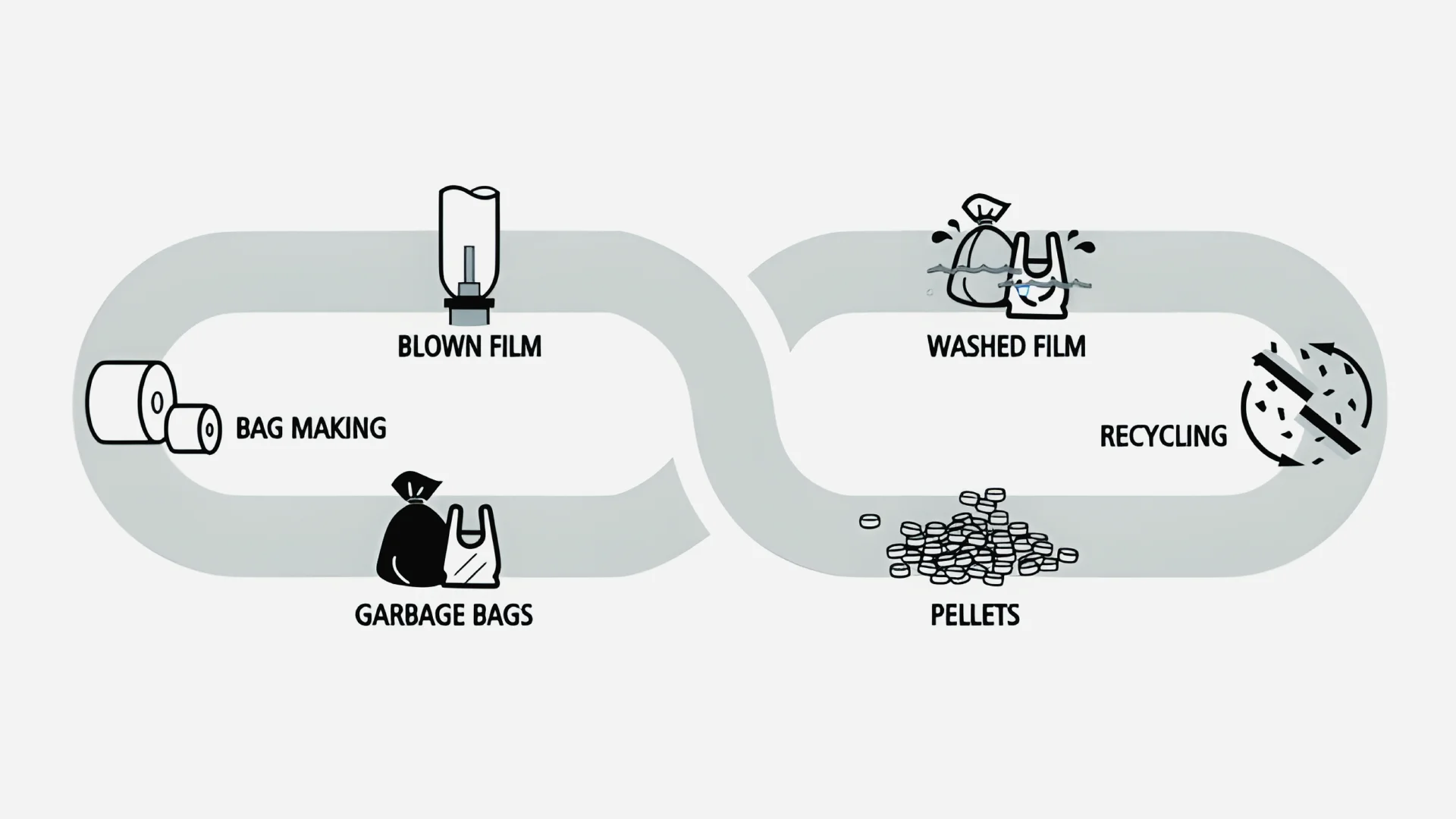
Wewnętrzny recykling plastiku (nazywany również wewnętrznym lub post-prodукcyjnym recyklingiem, PIR) pozwala producentowi odzyskać czysty odpad produkcyjny i zwrócić go do procesu, zamiast płacić za jego przechowywanie, transport i utylizację. Dla stabilnego strumienia odpadów z pojedynczego polimeryzu, wynikiem jest zazwyczaj niższe zakupy surowca pierwotnego, mniejsza obsługa i lepsza kontrola jakości materiałów recyklingowych.
Ta przewodnik jest napisany dla iniekcjonistów, ekstruderów, przetwórców folii/bagów, oraz zakładów rur/profile—nie dla komercyjnych recyklerów kupujących mieszane bale post-konsumenckie. Opisuje jakie odpady są odpowiednie, jakie urządzenia są potrzebne, jak oszacować oszczędności oraz kiedy system wewnętrzny przewyższa opłacenie lub sprzedaż odpadów jako śmieci.
Dla budżetowania kapitałowego na poziomie zakładu dla pełnych lin komercyjnych, użyj osobnego analizy zwrotu z inwestycji maszyn do recyklingu plastiku. Aby porównać kompaktowe maszyny z pełnymi liniami, zobacz mała maszyna do recyklingu plastiku w porównaniu do linii przemysłowej.
Co to jest wewnętrzny (post-prodукcyjny) recykling plastiku?
Recykling wewnętrzny przechwytuje odłamy, resztki, odpady startowe, odrzucone części oraz inne znane odpady produkcyjne przed ich wymieszaniem z materiałami zewnętrznymi. Odpady są sortowane według polimeryzu i koloru, zmniejszane do rozmiaru i—gdzie wymagane—oczyszczane, suszone i pelletyzowane. Odzyskane płatki lub granulki są następnie mieszane z zatwierdzonymi formułami lub sprzedawane jako udokumentowany strumień przemysłowy.
To różni się od recyklingu post-konsumenckiego: już wiesz klasę polimeru, pakiet dodatków i historię produkcji. Ryzyko jakości jest niższe—ale tylko jeśli utrzymujesz oddzielenie polimerów, kolorów i materiałów zdegradowanych.
Które odpady produkcyjne są odpowiednie?
| Typ odpadu | Przykłady | Typowy pierwszy etap procesu |
|---|---|---|
| Folia PE i worki | LDPE/LLDPE/HDPE krawędzie, rolki folii, odpady worków | Tłucznik/czopnik-kompresor → pelletyzacja |
| PP raffia i tkane | Tape do wiązania, odłamy worków tkanych, odpady nieprzewodzące | Tłucze + zagęszczanie/pelletyzacja |
| Odpady produkcyjne sztywne | Runners, resztki, krawędzie rur/profile, odrzucone części | Młoteczek do granulacji/kruszarka → regranulacja |
| Produkt o specyfikacji odciętej | Znane klasy polimeru, oddzielne od metali/innych polimerów | Redukcja rozmiaru ± lekka mycie |
Nie łączyć Różne polimery, niekompatybilne opakowania dodatków lub mocno zniszczone odpady startowe do strumienia, który planujesz ponownie wykorzystać zgodnie z normami. Czysty, dokumentowany strumień odpadów znacznie łatwiej jest ponownie wprowadzony niż zмешany odpad z podłogi.
Cztery korzyści biznesowe z recyklingu odpadów produkcyjnych
1. Obniżanie kosztów utylizacji, transportu i magazynowania
Bulky scrap occupies floor space and creates repeated handling and hauling cost. Processing near the production line reduces outbound loads and the need to buy recycled material back from a third party.
2. Zastąp część wymagań dotyczących surowca wstępnego
Gdy specyfikacje produktu na to pozwalają, zweryfikowany regrind lub granulaty można zmieszać z czystym tworzywem. Dozwolony procent musi pochodzić z prób, kontroli jakości (QC) i wymagań klienta — a nie z ogólnego założenia „X% jest w porządku”.
3. Kontrola jakości surowców z recyklingu
Wiesz oryginalny tworzywok, barwnik masterbatch i historię procesu. Ta ścieżka identyfikacji ułatwia zarządzanie kolorem, wilgotnością, zanieczyszczeniem i właściwościami wylewającymi, w porównaniu do zakupu nieznanych zмешanych odpadów recyklingowych.
4. Wsparcie cykliczności i raportowania zawartości zrecyklingowanego materiału
Odbieranie odpadów produkcyjnych utrzymuje materiał w produkcyjnym użyciu i tworzy mierzalne dane dla celów redukcji odpadów oraz zawartości zrecyklingowanego materiału. Nadwyżka spełniająca specyfikacje konwertora może również być sprzedana.
Jakie urządzenia jest wymagane w systemie wewnętrznym?
Dołącz linię do formy odpadów, zanieczyszczeń, wilgotności, szczytowej przepustowości kg/h oraz jakości, którą proces będzie akceptował.
| Stan odpadów | Typowe urządzenia | Frakcja wyjściowa |
|---|---|---|
| Czyszczenie sztywnej odlewki, części, profili | Granulator / zmiażdżaczoch ochrona metalu, kontrola pyłu | Regranż o kontrolowanym rozmiarze |
| Czysty film, rafia, płótna torby | Shredder lub ciętnik-press + linia do granulowania | Pellety wielokrotnego użytku |
| Brudna lub drukowana folia | Linia czyszczącasqueezer/szybkowarstwowy suszarka, granulator | Oczyszczone płatki lub pellety |
| Duży pusty / gruby ścianki sztywne odpady | Niszczarka → zgniatarka → opcjonalne myjanie | Jednorodne płatki |
Skaluj system od pomiarowych maksymalnych i średnich stóp odpadów—nie tylko nazwane wyjście maszyny produkcyjnej. Zostaw miejsce na bezpieczne podawanie, buforowanie magazynowanie, kontrolę pyłu i dostęp do konserwacji.
Prosty model zwrotu z inwestycji w zakładzie
Zacznij od rocznego odzyskowanego odpadu, a następnie oblicz stworzoną wartość i uniknięte koszty:
Roczny zysk = uniknięte zakupy surowca virgin + uniknięte koszty utylizacji/transportu + wartość sprzedaży nadwyżki recyklingu − roczne koszty energii, pracy, konserwacji i materiałów zużywalnych.
Prosty okres zwrotu (lata) = koszt zainstalowanego projektu ÷ roczny zysk.
Używaj konserwatywnych wskaźników odzysku. Zawierz straty sortowania, zmiany sit, ostrza, filtry, media, powierzchnię podłogi i testowanie jakości. Dla szerszego ramienia komercyjnego, zobacz przewodnik analizy kosztów i korzyści.
Przykład obliczeniowy (tylko ilustracyjny)
| Założenie | Wartość ilustracyjna |
|---|---|
| Odzyskujący odpad produkcyjny | 180 000 kg/rok |
| Wartość materiału utworzona | $0.30/kg → $54,000/rok |
| Uniknięcie transportu i utylizacji | $12 000/rok |
| Energia, praca, konserwacja, materiały zużywalne | −$24 000/rok |
| Szacunkowy roczny zysk | $42 000/rok |
| Koszt instalacji projektu | $105,000 |
| Prosty okres zwrotu inwestycji | 2,5 lat |
Uruchom co najmniej trzy scenariusze: konserwatywny, oczekiwany i wysoki poziom wykorzystania. Jeśli projekt działa tylko przy najbardziej optymistycznym założeniu ceny surowca lub czasu pracy, ryzyko jest zbyt wysokie.
Kiedy recykling w zakładzie ma sens
- Fabryka generuje przewidywalną ilość odseparowanego odpadu z plastiku.
- Odzyskany materiał ma zdefiniowane wewnętrzne zastosowanie lub niezawodnego nabywcy zewnętrznego.
- QC może potwierdzić polimer, kolor, wilgotność i zanieczyszczenia.
- Istnieje miejsce na bezpieczne podawanie, magazynowanie, kontrolę pyłu i dostęp do konserwacji.
- Projektowane oszczędności pozostają atrakcyjne pod konserwatywnymi założeniami cen surowca i wykorzystania.
Jeśli objętości są nieregularne, polimery są mieszane, lub końcowy produkt nie może tolerować zawartości recyklingu, bardziej opłacalne może być przetwarzanie na zlecenie lub specjalista od recyklingu.
Lista kontrolna RFQ: Co wysłać przed zapytaniem o wycenę
- Polimery, kolory i pakiety dodatków, które muszą pozostać oddzielne
- Średnie i szczytowe stopy odpadów w kg/h (zdjęcia rozmiaru elementu mogą pomóc)
- Zanieczyszczenia, druk, etykiety, oleje i wilgotność obecne
- Pożądany wynik: regranulat do mieszanki zbożowej, granulki do wewnętrznego użytku lub sprzedaży
- Testy jakości i maksymalna dopuszczalna zawartość recyklingu % w produkcie końcowym
- Dostępna powierzchnia podłogi, zasilanie elektryczne i godziny pracy
- Przykładowe próbki odpadów do próby
Często zadawane pytania
Czy czysty odpad produkcyjny wymaga mycia?
Nie zawsze. Czyste, pojedyncze rury z polimeru lub krawędzie mogą wymagać tylko zmniejszenia rozmiaru i ochrony przed metalem. Drukowane, pylistne, oleiste lub zanieczyszczone podłogą materiały mogą wymagać mycia i suszenia.
Czy odpady wewnętrzne powinny być ponownie używane jako regranulat lub granulki?
Rgranulat jest prostszy, gdy proces może go konsekwentnie dostarczać. Pelletyzacja poprawia gęstość objętościową, mieszanie i filtrację, ale dodaje koszty kapitału, energii i utrzymania.
Jak powinna być wybrana pojemność urządzenia?
Zmierzyć szczytowe kg/h, gęstość objętościową, rozmiar elementu, wilgotność i godziny pracy. Poproś dostawcę o przetestowanie reprezentatywnych odpadów i podanie kompleksowego wyniku linii, a nie tylko oceny kruszarki lub ekstrudera.
Jaki jest największy błąd ROI?
Używanie wartości surowego polimeru, ignorując straty plonowe, koszty pracy, media, utrzymania, zmiany siatki, testy jakości i okresy, gdy linia nie jest w pełni wykorzystywana.
Recykling wewnętrzny w porównaniu do zakupu pełnej instalacji recyklingowej
Systemy wewnętrzne targetują twój czysty odpad produkcyjny. Komercyjna instalacja jest zaprojektowana do mieszanych zewnętrznych surowców, wyższego zanieczyszczenia i sprzedawalnych płatków/granulek. Wybierz na podstawie pochodzenia odpadów i końcowego użytku, a nie tylko wielkości maszyny.
Następny krok
Planowanie projektu recyklingu wewnętrznego? Wyślij zdjęcia materiałów, typ polimeru, szczytowe kg/h i pożądany wynik dla rekomendacji na poziomie linii. Odkryj związane przewodniki sprzętowe: wybór granulatora polimerowego, przewodnik po granulatorze plastiku, i koszt maszyny do recyklingu tworzyw sztucznych.
