


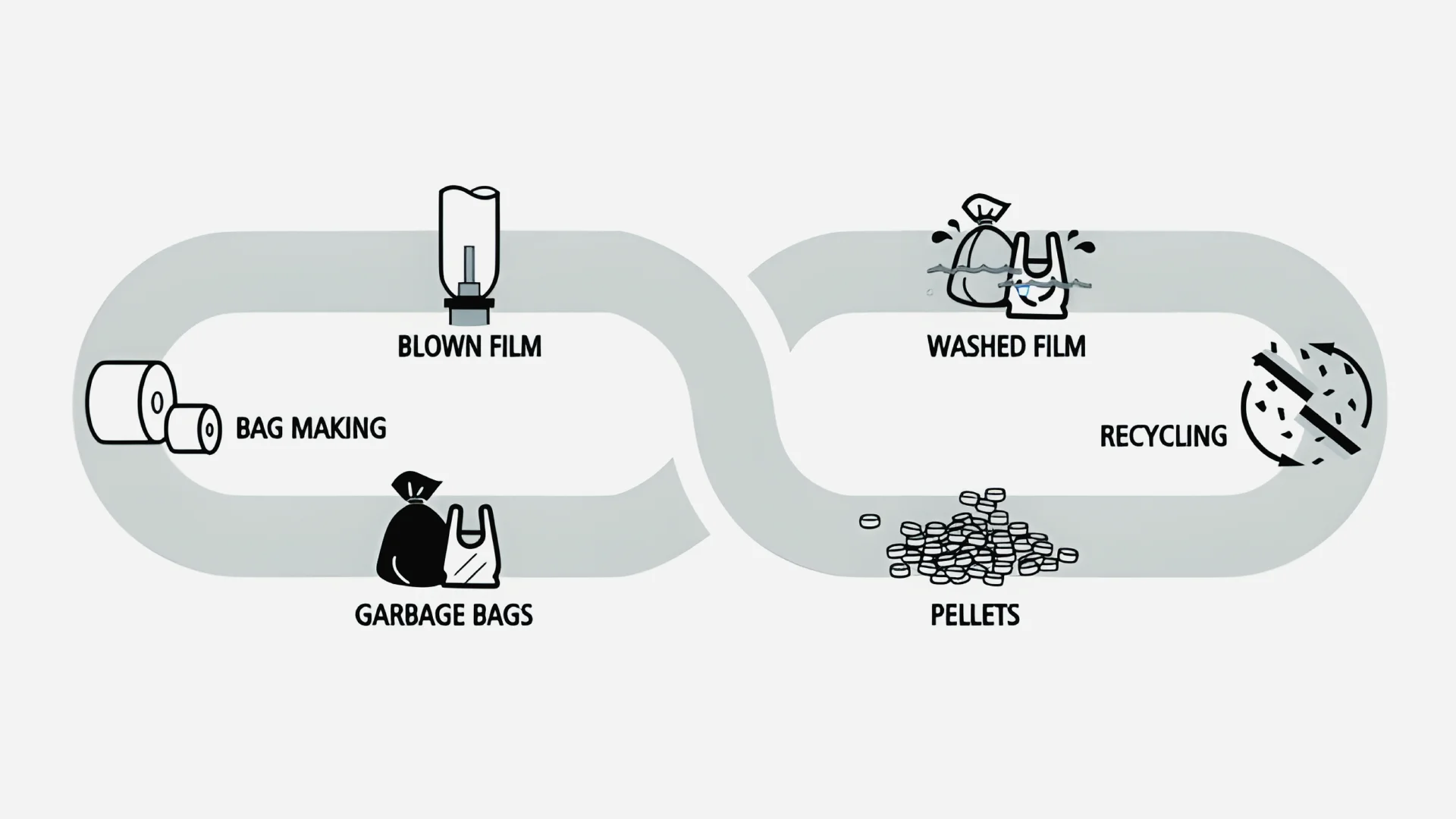
Производственная пластическая переработка (также называемое внутренним или послепроизводственным вторичным переработкой, PIR) позволяет производителю восстанавливать чистый производственный отход и возвращать его в процесс — вместо того чтобы платить за хранение, транспортировку и утилизацию. Для стабильного потока отходов из одного полимера результат обычно включает снижение закупок первичного резинопластика, меньше переработок и более жесткий контроль над качеством вторичного материала.
Это руководство написано для инжекционные формовщики, экструдеры, производители пленок/тележек и труб/профилей—not for commercial recyclers buying mixed post-consumer bales. It covers which scrap is suitable, what equipment you need, how to estimate savings, and when an in-plant system beats tolling or selling scrap as waste.
Для капитального бюджетирования на уровне предприятия для полных коммерческих линий используйте отдельные Анализ рентабельности инвестиций в машину для переработки пластика. Для сравнения компактных машин и полных линий, см. маленькая установка для переработки пластика vs промышленная линия.
Что такое внутризаводская (постиндустриальная) переработка пластика?
Внутризаводское переработка включает в себя обрезки, отрезки, стартерный лом, отклоненные части и другие известен Производственные отходы до того, как они смешиваются с внешним материалом. Обрезки сортируются по полимеру и цвету, измельчаются и—при необходимости—промываются, сушатся и гранулируются. Полученные фракции или гранулы затем смешиваются обратно в утвержденную формулу или продаются как задокументированный промышленный поток.
That is different from post-consumer recycling: you already know the resin grade, additive package, and production history. Quality risk is lower—but only if you keep polymers, colors, and degraded material separate.
Какой производственный отход подходит?
| Тип отходов | Примеры | Обычный первый этап процесса |
|---|---|---|
| Пластиковые пленки и мешки | ЛДПЭ/ЛДПЭ/ХДПЭ обрезки кромки, рулоны пленки, отходы мешков | Шредер / режущий сжимающий пресс → гранулятор |
| PP raffia & woven | Натяжная лента, обрезки полипропиленовых мешков, нетканые отходы | Шредер + уплотнитель / гранулятор |
| Rigid production scrap | Плечи, вспышки, отрезки труб/профилей, отборные части | Гранулятор / измельчитель → пластик для переработки |
| Очистка некачественной продукции | Знакомые марки полимеров, разделимые от металла/других полимеров | Уменьшение размера ± легкая промывка |
Не смешивайте разные полимеры, несовместимые пакеты добавок или сильно изношенный материал для пуска в производство в поток, который вы планируете повторно использовать в соответствии с нормами. Чистый, документированный поток отходов значительно легче повторно ввести, чем смешанные обрезки с пола.
Четыре бизнес-преимущества переработки производственных отходов
1. Уменьшите затраты на утилизацию, транспортировку и хранение
Объемный обрезок занимать полочное пространство и создает повторяющиеся затраты на обработку и транспортировку. Обработка вблизи производственной линии уменьшает вывозимые нагрузки и необходимость покупать переработанный материал у третьей стороны.
2. Замените часть потребности в первичном полимере
Когда спецификация продукта позволяет, проверенный регранулят или гранулы могут быть смешаны с первичным полимером. Разрешенный процент должен определяться на основе испытаний, контроля качества и требований клиентов, а не от предположения типа “X% подходит”.
3. Контролируйте качество переработанного материала
You know the original resin, color masterbatch, and process history. That traceability makes color, moisture, contamination, and melt behavior easier to manage than when purchasing unknown mixed recyclate.
4. Поддержите циркулярность и отчетность о содержании переработанного материала
Восстановление производственного обрезка поддерживает использование материалов и создает измеримые данные для целей уменьшения отходов и целевых показателей содержания переработанного материала. Излишки, соответствующие спецификации переработчика, также могут быть проданы.
Какое оборудование необходимо для системы на предприятии?
Соответствуйте линии форме обрезка, загрязнению, влажности, пиковому значению кг/ч и качеству, которое принимает ваш процесс.
| Состояние отходов | Типичное оборудование | Выходная фракция |
|---|---|---|
| Чистые жесткие пазухи, детали, профили | Гранулятор / дробилка, защита от металла, контроль пыли | Ретсин размерного контроля |
| Чистая пленка, raffia, тканые мешки | Шредер или компактор-измельчитель + линия гранулирования | Перерабатываемые шарики |
| Грязные или печатные пленки | Линия мойки, сжиматель / сушилка, грануляция | Очищенные фракции или шарики |
| Крупный пустотелый или толстостенный жесткий обрезок | Шредер → дробилка → опционально промывка | Равномерные фракции |
Оцените систему с размером от измеренные пиковые и средние показатели потока вторичного сырья—не только маркировка выходной мощности производственного оборудования. Оставьте пространство для безопасной загрузки, буферного хранения, контроля пыли и доступа для обслуживания.
Простой модельный расчет срока окупаемости на месте
Начните с годового извлекаемого сырья, затем рассчитайте созданную стоимость и сэкономленные расходы:
Годовой доход = предотвращение закупок вулканического клея + предотвращение затрат на утилизацию/транспортировку + реализационная стоимость излишков вторсырья − годовые затраты на электроэнергию, труд, обслуживание и расходные материалы.
Время окупаемости (лет) = стоимость установленного проекта ÷ годовая выгода.
Используйте консервативные показатели извлечения. Учитывайте потери при сортировке, замену сит, лезвия, фильтры, коммунальные услуги, площадь пола и испытания на качество. Для более широкого коммерческого контекста см. Руководство по анализу затрат и выгод.
Пример работы (только для иллюстрации)
| Предположение | Примерное значение |
|---|---|
| Восстанавливаемый производственный отход | 180 000 кг/год |
| Ценность сырья, созданная netto | 0,30 за кг → 54 000 долларов в год |
| Избегание транспортировки и утилизации | 12 000/год |
| Мощность, трудозатраты, обслуживание, расходные материалы | −24 000 USD/год |
| Оценочный годовой эффект | 42 000/год |
| Стоимость установленного проекта | $105,000 |
| Простая окупаемость | 2,5 года |
Запустите как минимум три сценария: консервативный, ожидаемый и сценарий высокого использования. Если проект работает только при самом оптимистичном предположении о цене резины или времени безотказной работы, риск слишком высок.
Когда внутренняя переработка имеет смысл
- Плант генерирует предсказуемый объем отделимого пластиковой отхода
- Восстановленный материал имеет определенное внутреннее использование или надежного внешнего покупателя.
- Контроль качества может проверить полимер, цвет, влажность и загрязнение.
- Есть место для безопасной загрузки, хранения, контроля пыли и обслуживания.
- Ожидаемые экономии остаются привлекательными при консервативный цена связующего и допущения по его использованию.
Если объемы нерегулярны, полимеры смешаны или готовый продукт не выдерживает вторичного сырья, то платная переработка или обращение к специализированному переработчику могут быть более экономически целесообразными.
Проверочный список RFQ: Что отправить перед тем, как запросить котировку
- Полимеры, цвета и пакеты добавок, которые необходимо поддерживать в отдельности
- Средние и пиковые нормы брака в кг/ч (фото размеров деталей помогут)
- Присутствие загрязнений, печати, этикеток, масел и влаги
- Желаемый результат: регранулят для смесительного бункера, гранулы для внутреннего использования или продажи
- Качественные испытания и максимальное содержание переработанного материала %, допускаемое в готовом продукте
- Доступное напольное пространство, электропитание и рабочие часы
- Представительные образцы брака для пробного запуска
Часто задаваемые вопросы
Нужна ли промывка для брака чистого производства?
Not always. Clean, single-polymer runners or edge trim may only need size reduction and metal protection. Printed, dusty, oily, or floor-contaminated material may need washing and drying.
Должен ли брак на предприятии использоваться повторно в виде регранулята или гранул?
Регранулят проще, когда процесс может его постоянно подавать.Pelletizing улучшает объемную плотность, смешивание и фильтрацию, но добавляет капитальные, энергетические и затраты на обслуживание.
Как выбрать производительность оборудования?
Измерьте пиковые кг/ч, объемную плотность, размер деталей, влажность и рабочие часы. Попросите поставщика протестировать представительские образцы брака и указать полную производительность линии, а не только рейтинг дробилки или экструдера.
Какая ошибка окупаемости инвестиций самая большая?
Использование валовой стоимости резины, игнорируя потери выхода, трудовые ресурсы, услуги, обслуживание, замену сит, качество испытаний и периоды, когда линия не используется полностью.
Внутрипроизводственный переработка против покупки полной перерабатывающей установки?
Внутрипроизводственные системы направлены на твой чистый производственный брак. Коммерческая установка спроектирована для смешанного внешнего сырья, более высокого уровня загрязнения и продажных спецификаций гранул/гранул. Выберите на основе происхождения отходов и конечного использования — не только размера машины.
Следующий шаг
Планируете проект внутрипроизводственной переработки? Отправьте фотографии материалов, тип полимера, пиковые кг/ч и желаемый результат для рекомендации на уровне линии. Изучите связанные руководства по оборудованию: выбор пластикового гранулятора, руководство по гранулятору пластика, и Стоимость машины для переработки пластика.
