


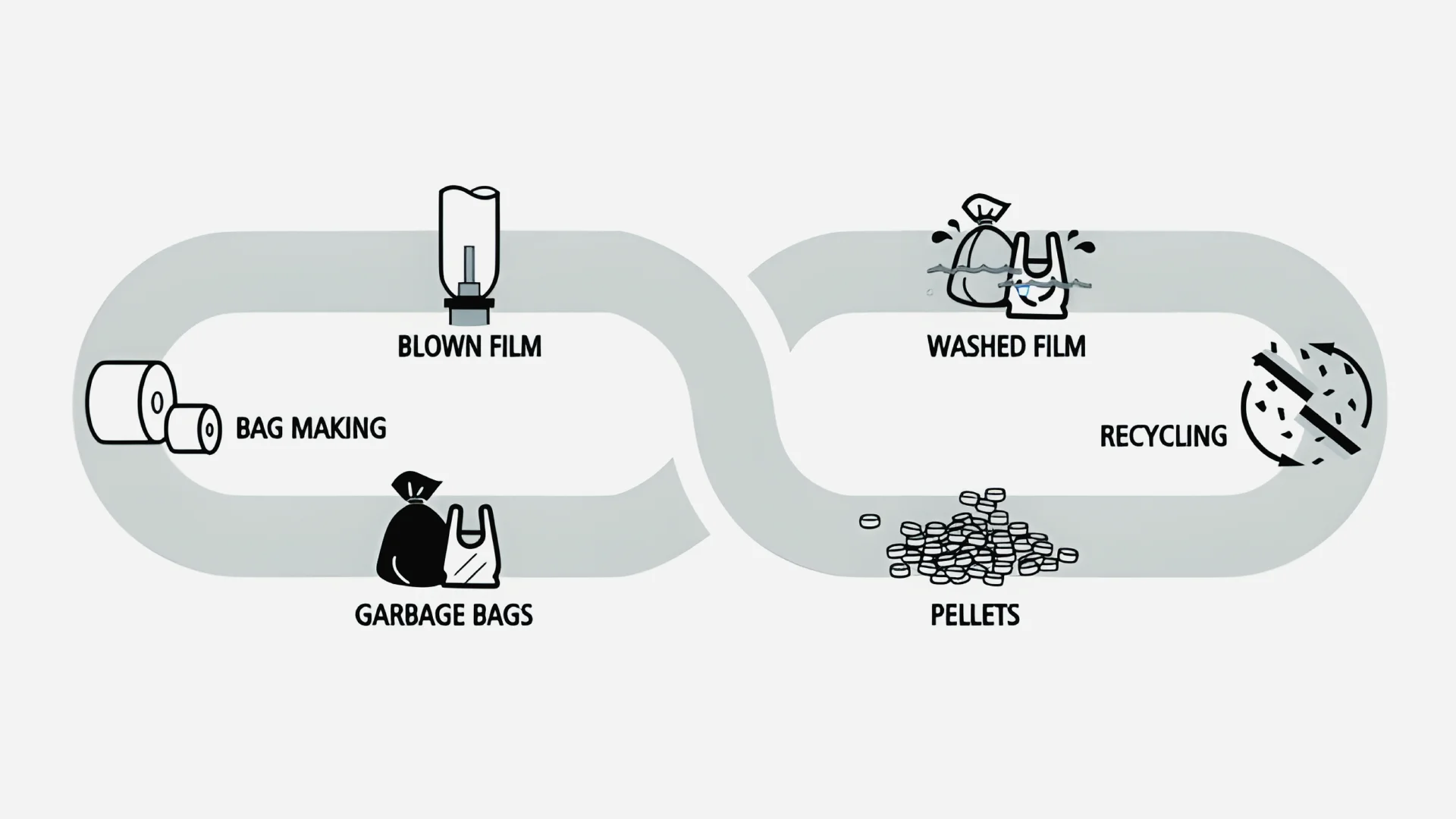
工場内プラスチックリサイクル (内部リサイクルまたは産業廃棄物リサイクルと呼ばれることもあり、PIRと呼ばれることもあります)は、製造業者がクリーンな生産廃材を回収し、それをプロセスに戻すことを可能にします—廃棄物を格納し、輸送し、処分するために費用を払う代わりに。安定した単一ポリマーの廃棄物ストリームの場合、結果として通常は新規樹脂の購入量が減少し、手配が少なくなり、リサイクル材料の品質に対するコントロールが厳密になります。
このガイドは、 注射成形機、押出機、フィルム/バッグコンバーター、管/プロファイルプラント—商業リサイクラーが混合した消費後バレーを購入するためではなく、適切な廃材、必要な設備、節約の見積もり方法、工場内システムがタッリングまたは廃材として廃棄するよりも有利な場合についてカバーしています。
工場レベルの資本予算において、完全な商業ラインの場合は、別途 プラスチックリサイクル機器の投資回収分析コンパクト機器とフルラインを比較するには、参照してください 小型プラスチックリサイクル機器と産業ライン.
インプラン(ポスト・インダストリアル)プラスチックリサイクルとは何ですか?
プラント内リサイクルは、切り落とし物、切り詰め物、開始時のスカーフェイス、不合格部品、その他を回収します。 既知 production waste before it mixes with outside material. Scrap is sorted by polymer and color, reduced in size, and—where required—washed, dried, and pelletized. Recovered flakes or pellets are then blended back into an approved formulation or sold as a documented industrial stream.
それはポストコンシューマー再生資源とは異なります:樹脂のグレード、添加剤の組合せ、生産履歴はすでにわかっています。品質リスクは低い——ただし、ポリマー、色、劣化した材料を分離して扱う場合に限ります。
どの生産廃棄物が適していますか?
| 廃材の種類 | 例 | 典型的最初の工程 |
|---|---|---|
| PEフィルムおよび袋 | LDPE/LLDPE/HDPEの端材、フィルムロール、袋廃材 | Shredder / cutter-compactor → pelletizing |
| PPラッパーおよび編み物 | テープ、織物袋の端材、非織造廃材 | シャレッド + 密度化/パルレット化 |
| 硬質生産スカーフェイス | ランナー、フラッシュ、パイプ/プロファイルの端材、不良部品 | 粒状造粒機 / 粉砕機 → 再研磨 |
| 異色製品を清掃する | わかっている樹脂の品種、金属/他のポリマーから分離可能 | サイズ削減 ± 軽洗浄 |
混ぜないでください 異なるポリマーや互換性のない添加剤パッケージ、または高度に劣化したスタートアッププルージュを再利用する計画があるストリームに投入しないでください。クリーンで文書化された廃棄物ストリームは、混ざったフロアスクラップよりも再導入が容易です。.
リサイクル生産スクラップの4つのビジネス上の利点
1.廃棄物、輸送、貯蔵コストを削減
大きなスクラップは床面積を占め、繰り返しの取扱いと輸送コストが発生します。生産ライン近くでの処理は、輸送荷重を減らし、第三者からリサイクル材料を購入する必要がありません。.
2.天然樹脂の一部を代替
製品仕様が許可される場合、検証済みのリグリンドやペレットは天然樹脂とブレンドできます。許可される割合は、一般的な「X%が大丈夫」という仮定ではなく、試験、品質管理、顧客要求からきます。.
3.リサイクル材料の品質を管理
元の樹脂、カラーマスターバッチ、プロセス履歴を知っています。そのトレーサビリティが、未知の混ざったリサイクレートを購入する場合よりも、色、水分、汚染、溶融挙動を管理しやすくします。.
4.循環性とリサイクル含量報告をサポート
製造スクラップの回収は、材料を生産的な使用に保ち、廃棄物削減とリサイクル含量目標のための測定可能なデータを作成します。コンバーターの仕様に合った余剰品は、販売することもできます。.
工場内システムに必要な設備は何ですか?
Match the line to scrap form, contamination, moisture, peak kg/h, and the quality your process will accept.
| 廃棄物の状態 | 標準設備 | 排出物 |
|---|---|---|
| クリーンな硬質ランナー、部品、プロファイル | グランュラーターやクラッシャー, ,金属保護、粉塵管理 | サイズ制御再粒化 |
| クリーンなフィルム、ラフィア、綴じ袋 | シュレッダーやカッター・コンパクタ+ ペレット化ライン | リユース可能なペレット |
| 汚れたまたは印刷されたフィルム | 洗浄ライン, ,プレッサー/乾燥機、ペレット化 | 洗浄されたフラークまたはペレット |
| 大型中空/肉厚な硬質スクリプト | シュレッダー → 粉砕機 → 洗浄はオプション | 均一なフラック |
システムの規模を決定してくださいから ピークおよび平均廃材率を測定—生産機器の名札出力のみではなく、安全な給料、バッファストレージ、ダストコントロール、メンテナンスアクセスのスペースを確保してください。
プラント内ROIモデルのシンプルな例
年間回収可能な廃材から始め、作成された価値と回避されたコストを計算します:
年間利益 = 総 virgin-resin 購入の回避 + 総廃棄/輸送コストの回避 + 足り余ったリサイクレートの販売価値 − 年間電力、労働、メンテナンス、消耗品のコスト
単純回収期間(年) =設置プロジェクトコスト ÷ 年間利益
保守な回収収率を使用してください。分別損失、スクリーン交換、刃、フィルター、設備、床面積、品質検査を含めます。より広範な商用ラインのフレームワークについては、こちらをご覧ください。 費用対効果分析ガイド.
具体的な例(あくまで説明用)
| 仮定 | 参考値 |
|---|---|
| 回収可能な生産廃棄物 | 180,000 kg/年 |
| 生成されるネット材料価値 | 0.30/kg → 54,000円/年 |
| 輸送と廃棄を回避する | $12,000/年 |
| 電力、労力、メンテナンス、消耗品 | −$24,000/年 |
| 推定年間利益 | $42,000/年 |
| 設置プロジェクトコスト | $105,000 |
| シンプルな償還期間 | 2.5年 |
最低限で3つのシナリオを実行してください:保守的、期待通り、および高利用率。もしプロジェクトが最も楽観的な樹脂価格または稼働時間の仮定の下でのみ機能する場合、リスクは高すぎます。
工場内再資源化が適している場合
- 工場は 予測可能な体積 分離可能なプラスチックスクリプト。
- 回収された材料には 定義された内部使用 または、信頼できる外部の買い手。
- QCはポリマー、色、水分、汚染を確認できます。
- 安全な給料、貯蔵、粉塵制御、およびメンテナンスのためのスペースがあります。
- 予測される節約は、引き続き魅力的なままである。 保守的 樹脂価格と利用率の仮定。
もし量が不規則であったり、ポリマーが混ざっていたり、完成品がリサイクル素材を耐えられない場合、タール処理または専門のリサイクル業者がより経済的である可能性があります。.
RFQリスト:見積もりを依頼する前に送るべきもの
- 分離しておかなければならないポリマー、色、および添加剤パッケージ
- 平均およびピークスラップ率(kg/h)(ピースサイズの写真が役立ちます)
- 汚染物、印刷、ラベル、油、および水分が存在します
- 望ましい出力:ホッパーブレンド用のリグリンド、内部使用用のペレット、または販売用
- 品質試験および完成品中の最大リサイクル素材%許可
- 利用可能な床面スペース、電力供給、および運転時間
- 試運転用の代表的なスラップサンプル
よくある質問
クリーンな生産廃棄物は洗浄が必要ですか?
常にそうではありません。クリーンな単一ポリマーラナーまたはエッジトリムは、サイズダウンと金属保護のみが必要かもしれません。印刷、埃、油、または床に汚染された材料は、洗浄と乾燥が必要かもしれません。.
工場内のスラップはリグリンドまたはペレットとして再利用されるべきですか?
プロセスが一貫してリグリンドを供給できる場合、リグリンドはシンプルです。ペレット化は体積密度、混合、濾過を向上させますが、資本、エネルギー、メンテナンスコストを追加します。.
設備容量はどのように選定しますか?
Measure peak kg/h, bulk density, piece size, moisture, and operating hours. Ask the supplier to test representative scrap and state complete-line output—not only the crusher or extruder rating.
最も大きなROIミスは何ですか?
粗原料価値を使用しながら、収益率の低下、労働、公共料金、メンテナンス、スクリーン交換、品質試験、ラインが完全に利用されていない期間を無視します。.
工場内リサイクルと完全なリサイクルプラントの購入の比較
工場内システムのターゲット あなたの クリーンな生産スラップです。商業的なプラントは、混ざった外部原料、高い汚染、販売可能なフラック/ペレットスペックのため設計されています。廃棄物の起源と最終用途に基づいて選択してください。機械のサイズだけでなくです。.
次のステップ
Planning an in-plant recycling project? Send material photos, polymer type, peak kg/h, and desired output for a line-level recommendation. Explore related equipment guides: プラスチックペレット化機の選定, プラスチック造粒機ガイド, 、および プラスチックリサイクル機械のコスト.
