
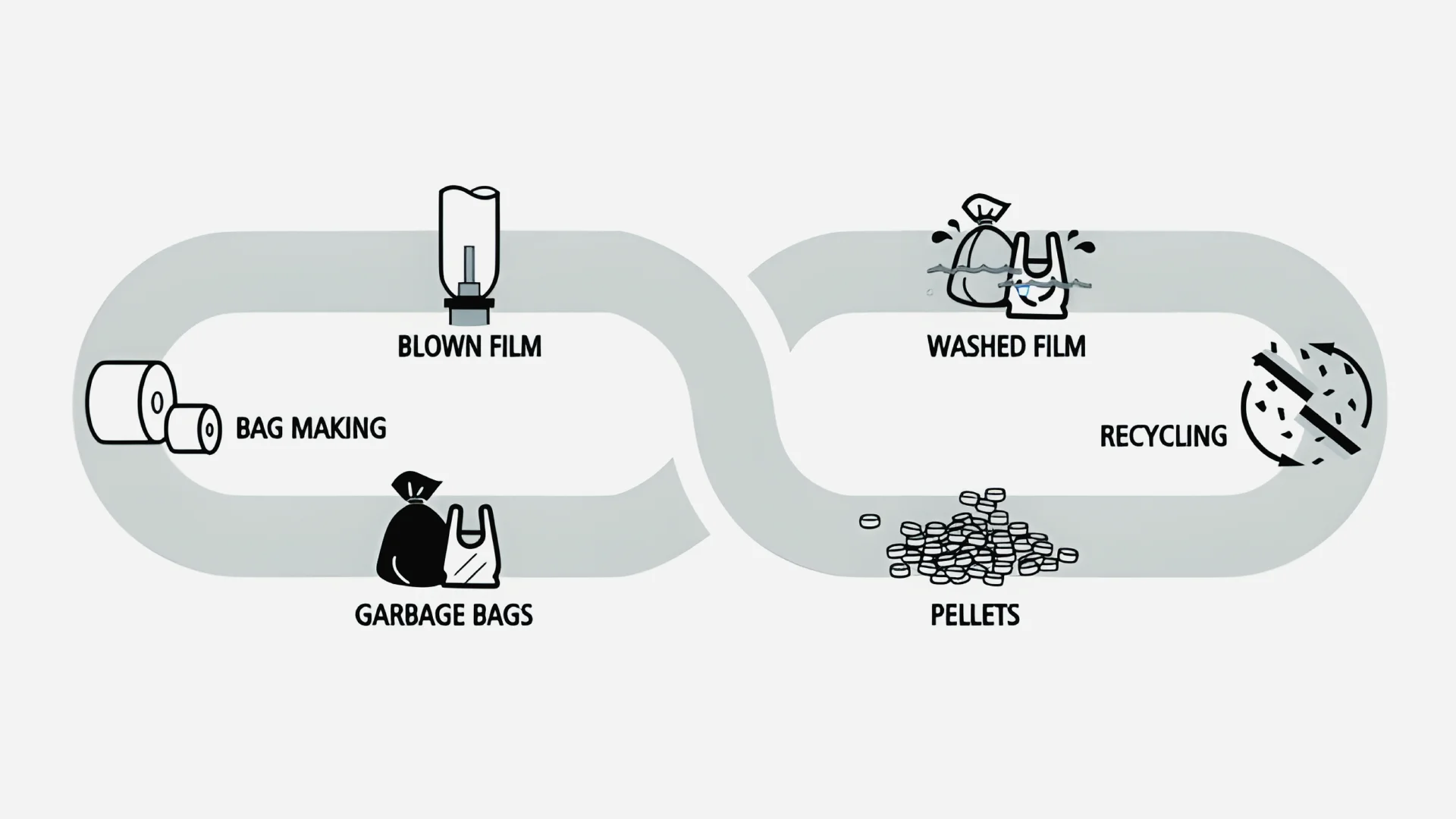
إعادة تدوير البلاستيك داخل المصنع (تُعرف أيضًا بمعادلة الإعادة الاستخدام الداخلي أو الإعادة الاستخدام الصناعي، PIR) تسمح للمصنع بإعادة استرداد المخلفات النظيفة من الإنتاج واستعادتها في العملية بدلاً من دفع تكاليف التخزين والنقل وإنهاءها. لقناة النفايات الواحدة المصنوعة من البوليمر الواحد، النتيجة عادةً هي تقليل شراء الراتنجات الأولية، وتقليل التعامل، والتحكم الأكثر دقة في جودة المواد المعاد تدويرها.
هذا المُنظِّمُ مكتوب لـ المصممون النوويون، والطواحن، ومصنعو الأفلام/الأكياس، ومصانع الأنابيب/الأنماط—ليس لشركات التدوير التجارية التي تشتري حزم التدوير المختلطة من المستهلكين النهائيين. إنه يغطي ما هي النفايات المناسبة، ما هي المعدات التي تحتاجها، وكيف تقدير الأرباح، و когда نظام داخل المصنع يكون أفضل من التدوير المادي أو بيع النفايات كنفايات.
للتمويل الثابت للشركة على الخطوط التجارية الكاملة، استخدم الخطة المفصلة تحليل العائد على الاستثمار لمعدات إعادة تدوير البلاستيكللتحقق من المقارنة بين الآلات المصغرة والخطوط الكاملة، راجع آلة إعادة تدوير البلاستيك الصغيرة مقابل الخط الصناعي.
ما هو إعادة تدوير البلاستيك داخل المصنع (بعد الإنتاج الصناعي)؟
إعادة التدوير داخل المصنع يلتقط القطع الزائدة، والقطع المقطعة، والسحق الأولي، والقطع المرفوضة، وأخرى. معروف الإطارات قبل أن تختلط بأي مواد خارجية. يتم تصنيف المخلفات حسب البوليمر واللون، وإعادة تقليل حجمها، وإذا لزم الأمر، يتم غسلها، وتجفيفها، وتحويلها إلى حبيبات. ثم يتم دمج الحبيبات أو الحبيبات المستعادة معًا في صيغة موقعة أو بيعها كح поток صناعي مُسجل.
هذا يختلف عن إعادة التدوير بعد الاستهلاك: حيث أنك بالفعل تعرف درجة البوليمر، مجموعة المضافات، وسجل الإنتاج. مخاطر الجودة أقل — ولكن فقط إذا حافظت على الفصل بين البوليمرات، الألوان، والمادة المتحللة.
Which Production Scrap Is Suitable?
| نوع المخلفات | أمثلة | الخطوة الأولى الشائعة |
|---|---|---|
| بولي إيثيلين أغلفة ومجموعات | لحافات LDPE/LLDPE/HDPE، رولات الأفلام، قمامة حقائب | مكثف قطع / محمّل قطع → خط إنتاج البوليمرات |
| PP رافيا ومواد التطبيق الويوفان | لتفريغ الأشرطة، قطع الغلاف النسيجي المترامي، النفايات غير النسيجية | تقطيع + تثبيت/تحويل إلى حبيبات |
| مخلفات الإنتاج الصلبة | جهاز تكسير، احتراق سريع، قطع أنابيب/شبكات، أجزاء رفضية | غلاسيه / محطم → إعادة تدوير البلاستيك |
| تنظيف المنتج غير المطابق للمواصفات | أشكال البوليمرات المعروفة القابلة للفصل عن المعادن/البوليمرات الأخرى | تقليل الحجم ± تنظيف خفيف |
لا تمزج م polymers، أو حزم إضافية غير متوافقة، أو إزالة البداية المُتدهورة بشكل كبير في تدفق تخطيط لإعادة استخدامه في المواصفات. تدفق النفايات المُسجل بشكل نظيف هو أسهل لإعادة إدخاله من النفايات المُختلطة على الأرض.
فوائد الأعمال الأربعة لتدوير نفايات الإنتاج
1. قلل تكاليف التخلص من النفايات، النقل، والخزن
النفايات الكبيرة تشغل مساحة على الأرض وتسبب تكاليف معالجة وتنقل متكررة. معالجة القرب من خط الإنتاج يقلل من الحمولات الصادرة والاحتياج إلى شراء مادة مُستعملة من طرف ثالث.
2. استبدل جزء من احتياجات الرسيل الأصلي
عندما تسمح مواصفات المنتج، يمكن خلط الطحن المعتمد أو الكريستال مع الرسيل الأصلي. النسبة المسموح بها يجب أن تأتي من التجارب، التفتيش الجودة، وتطلبات العملاء—not from a generic “X% is fine” assumption.
3. تحكم في جودة المادة المُستعملة مرة أخرى
تعرف على الرسيل الأصلي، مادة الباتش الألوان، وتاريخ المعالجة. هذا التتبع يجعل إدارة اللون، الرطوبة، التلوث، والسلوك الذوباني أسهل من شراء مادة مُستعملة مُختلطة غير معروفة.
4. دعم الدورة الداخلية وتقارير محتوى المادة المُستعملة مرة أخرى
استعادة النفايات الصناعية تبقي المادة في الاستخدام الإنتاجي وتخلق بيانات قابلة للقياس للحد من النفايات وتحقيق أهداف محتوى المادة المُستعملة مرة أخرى. أي فائض يلبي مواصفات المحول يمكن أن يُباع أيضًا.
ما هو معدات النظام الداخلي الذي يحتاجه؟
تناسب الخط مع شكل النفايات، التلوث، الرطوبة، ذروة kg/h، والجودة التي سيقبلها عملية.
| حالة النفايات | المعدات النموذجية | المخرجات |
|---|---|---|
| تنظيف الأنابيب الصلبة، الأجزاء، الأنظمة | مزلاج/مطرقة, حماية معدنية، التحكم في الغبار | نوع إعادة التدوير بقياس محدد |
| تنظيف الفيلم، الرافية، الأكياس المرفوعة | مزلاج أو مضغوطة + خط التكوير | كريات قابلة للإعادة الاستخدام |
| فيلم قذر أو مطبوع | خط غسيل, مضغوطة/مجفف، كريستال | قطع نظيفة أو كريات |
| نفايات صلبة كبيرة/حائط سميك | التقطيع → مطرقة → اختياري غسل | قطع متساوية |
حجم النظام من معدل الذروة والوسطي لكمية النفايات القابلة للاسترجاع—ليس فقط إنتاج الماكينة المعدني. اترك مساحة لغذاء آمن، تخزين احتياطي، التحكم في الغبار، والوصول للصيانة.
نموذج عائد الاستثمار البسيط في المصنع
ابدأ بكمية النفايات القابلة للاسترجاع سنويًا، ثم احسب القيمة المضافة والنفقات التي تم تجنبها:
عائد الاستثمار السنوي = تكاليف شراء الرسينة الخام المتجنب + تكاليف التخلص من النفايات والنقل المتجنب + قيمة مبيعات النفايات الزائدة − تكاليف الطاقة، العمل، الصيانة والمستهلكات السنوية.
فترة الاسترداد البسيطة (سنوات) = تكلفة المشروع المثبتة ÷ العائد السنوي.
استخدم أرقام الاسترجاع الحذرة. تضم التضاريس، تغيير الشاشات، السكاكين، الفلاتر، الخدمات، مساحة الأرضية، والاختبارات الجودة. للإطار التجاري الأوسع، انظر إلى دليل التحليل الاقتصادي للتكاليف والفوائد.
مثال عملي (للاستعراض فقط)
| إفتراض | قيمة موضحية |
|---|---|
| نفايات الإنتاج القابلة للاسترجاع | 180،000 كجم/سنة |
| قيمة المواد النقية المضافة | $0.30/كجم → $54،000/سنة |
| تجنب النقل والتخلص | $12،000/سنة |
| طاقة، عمل، صيانة، المستهلكات | −$24،000/سنة |
| فوائد سنوية محسوبة | $42،000/سنة |
| تكلفة المشروع المثبتة | $105,000 |
| الإعادة الاستثمار البسيط | 2.5 سنوات |
شغل على الأقل ثلاثة سيناريوهات: الحذر، المتوقع، والاستخدام العالي. إذا لم ينجح المشروع إلا تحت افتراضات الأسعار الأكثر تفاؤلاً للرسينة أو وقت التشغيل، فإن المخاطر عالية جدًا.
عندما يكون التدوير الداخلي في المصنع مناسبًا
- يولد المصنع كمية متوقعة من النفايات البلاستيكية القابلة للفصل.
- المادة المسترجعة لديها استخدام داخلي محدد أو مشتري خارجي موثوق.
- يمكن للجودة التحقق من البوليمر، اللون، الرطوبة، والتلوث.
- هناك مساحة لغرض التغذية الآمنة، التخزين، التحكم في الغبار، والصيانة.
- يبقى الادخار المتوقع جذابًا تحت تقدير أسعار الرسوم، واستخدام البوليمر.
إذا كانت الكميات غير منتظمة، أو يتم خلط البوليمرات، أو لا يمكن للمنتج النهائي تحمل محتوى مكرر، فإن معالجة الاشتراك أو معالجة مكررة محترفة قد تكون أكثر اقتصادًا.
قائمة مراجعة الطلب المسبق: ما يجب إرساله قبل طلب عرض سعر
- البوليمرات، الألوان، و-packages الإضافية التي يجب أن تبقى منفصلة
- معدلات القمامة العادية والقمة في كل ساعة (صور حجم القطعة تساعد)
- التلوث، الطباعة، العلامات، الزيوت، والرطوبة الحالية
- النتيجة المطلوبة: إعادة التدوير للخلط في الحاوية، أو كرات للاستخدام الداخلي أو للبيع
- اختبارات الجودة والكمية القصوى للمحتوى المكرر المسموح به في المنتج النهائي %
- مساحة الأرضية المتاحة، توفير الطاقة، والساعات التشغيلية
- عينات القمامة الممثلة للتجربة
التعليمات
هل تحتاج القمامة المنتجة في المصنع إلى الغسل؟
ليس دائمًا. يمكن أن تكون المسارات البوليمرية النظيفة أو قطع الحواف الحافة فقط بحاجة إلى تقليل الحجم وحماية المعادن. قد تحتاج المواد المطبوعة، الملطخة بالغبار، الزيتية، أو الملوثة بالأرض إلى الغسل والتجفيف.
هل يجب إعادة استخدام القمامة الداخلية كإعادة التدوير أو كرات؟
يكون إعادة التدوير أسهل عندما يمكن أن يغذيه العمل بشكل مستمر. تحسين كثافة الحجم، الخلط، والتصفية عن طريق تحويل الكرات، لكنه يضيف تكلفة رأس المال، الطاقة، والصيانة.
كيف يتم اختيار قدرة المعدات؟
قياس قمة الكيلوغرام/الساعة، كثافة الكتلة، حجم القطعة، الرطوبة، وعدد ساعات التشغيل. اطلب من المورد اختبار النفايات الممثلين وتحديد إنتاج الخط الكامل—not only the crusher or extruder rating.
ما هو أكبر خطأ في العائد على الاستثمار؟
استخدام قيمة الرسينة الخام بينما يتم تجاهل خسارة الكفاءة، العمالة، الكهرباء، الصيانة، تغيير الشاشات، اختبارات الجودة، وأوقات عندما لا يتم استخدام الخط بشكل كامل.
تدوير المواد داخل المصنع مقابل شراء مصنع تدوير كامل؟
أنظمة التدوير داخل المصنع تستهدف لك نفايات الإنتاج النظيف. المصنع التجاري مصمم للنفايات الخارجية المختلطة، التلوث العالي، وأحجام القشرة/القذيفة القابلة للبيع. اختر بناءً على مصدر النفايات واستخدام النهائي—not only machine size.
الخطوة التالية
تخطيط مشروع تدوير المواد داخل المصنع؟ أرسل صور المواد، نوع البوليمر، قمة الكيلوغرام/الساعة، وإنتاج الرغبة للخط لتلقي توصية مستوى الخط. اكتشف أدلة الأجهزة ذات الصلة: اختيار مكبس البوليمر, دليل آلة تحبيب البلاستيك, ، و تكلفة ماكينة إعادة تدوير البلاستيك.
