


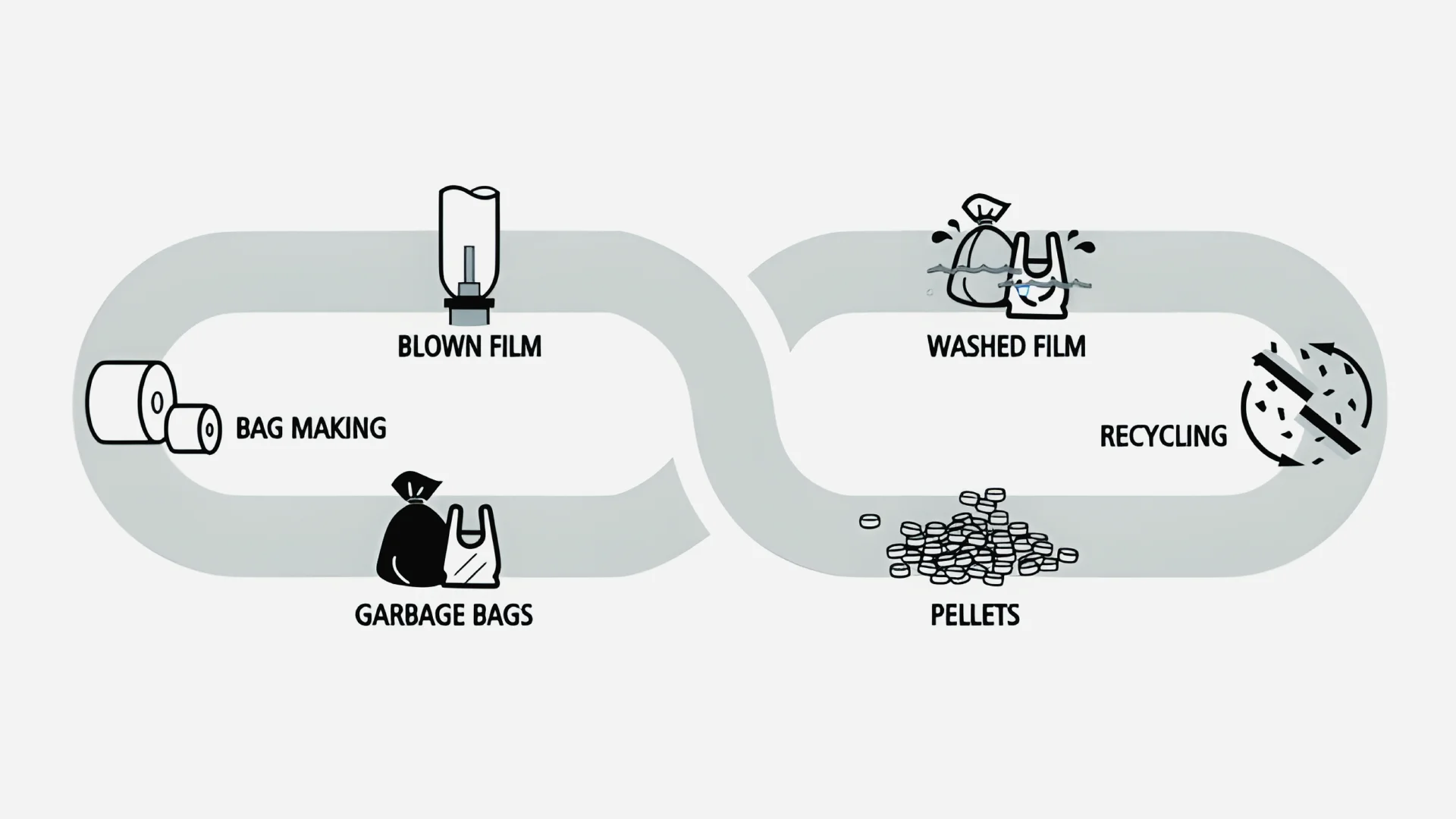
İn-plant plastik geri dönüşüm (aynı zamanda içsel veya post-endüstriyel geri dönüşüm olarak da adlandırılır, PIR) bir üreticinin temiz üretim atığını geri kazanmasını ve bunu sürece geri döndürmesini sağlar—onun yerine depolama, taşımaya ve atıklaştırma için ödeme yapmasını. Bir tek-polimer atık akışına sahipken, genellikle taze reçine satın alımının azalması, daha az işleme ve geri dönüştürülmüş malzemenin kalitesine daha sıkı kontrol sağlanması sonuçlanır.
Bu rehber, aşağıdaki için yazılmıştır: injektör kalıplama makineleri, extrüzyon makineleri, film/bag dönüşümcüleri ve boru/profil fabrikaları—sadece karışık post-consumer paketleri satın alan ticari geri dönüşümcülere değil. Bu, hangi atığın uygun olup olmadığını, hangi ekipmanınız gerektiğini, tasarrufu nasıl tahmin etmeniz gerektiğini ve fabrikadaki sistemlerin tozaj veya atığı çöpler olarak satmaktan daha avantajlı olduğu zamanları kapsar.
Tesisel sermaye bütçeleme amacıyla tam ticari hatlar için ayrı kullanın plastik geri dönüşüm makinesi ROI analiziÖlçekleyici makinalar ile tam hatları karşılaştırmak için bakın Küçük plastik geri dönüşüm makinesi ile endüstriyel hattın karşılaştırması.
İn-Planta (Post-Endüstriyel) Plastik Geri Dönüşüm Nedir?
İn-plant geri dönüşüm, kesme artıkları, kesme ürünleri, başlangıç atığı, reddedilen parçalar ve diğerleri yakalanır. bilinmekte olan Üzerinde dış malzemeyle karışmadan önce üretim atığı ayrılır. Atık malzeme polimer ve renklerine göre sınıflandırılır, boyutlandırılır ve gerekirse yıkanır, kurutulur ve granül edilir. Elde edilen flakeler veya granüller, onaylanmış bir formülasyona karıştırılır veya belgelenmiş bir endüstriyel akış olarak satılır.
Bunun, post-consumer geri dönüşümün farklıdır: rezin sınıfını, katkı paketini ve üretim tarihini zaten biliyorsunuz. Kalite riski daha düşüktür—ama sadece polimerleri, renkleri ve bozulmuş malzemeyi ayırırsanız.
Hangi Üretim Atığı Uygun Görülüyor?
| Atık türü | Örnekler | Tipik ilk işlem adımı |
|---|---|---|
| PE film ve torbalar | LDPE/LLDPE/HDPE kenar atığı, film rulo, poşet atığı | Shredder / kesme-kompaktör → pelletize edici |
| PP rafia ve dokunmuş plastik | Tasma çekirdek, dokunmuş poşet ayırtıkları, nonwoven atık | Shred + sıkıştırma/pelletleştirme |
| Rigid atık malzeme | Gelecekler, flama, boru/profil ayırma kısımları, reddedilen parçalar | Granulator / crushestirici → regrind |
| Ön spec ürünü temizleyin | Tanınmış reaktif maddeler türleri, metal/y diğer polimerlerden ayrılabilir | Ölçü azaltma ± hafif yıkama |
Plastikleri karıştırmayın farklı polimerler, uyumsuz katkı paketleri veya aşırı derecede bozuk başlangıç temizleme atığını yeniden kullanmayı planladığınız bir akıma katmayın. Temiz, belgelenmiş atık akımı, karışık zemin atığını yeniden kullanmak kadar kolay yeniden tanımlanabilir.
Üretim Atığının Dört İşletme Avantajı
1. Atık bertaraf, taşıma ve depolama maliyetlerini azaltın
Geniş atık yer kaplar ve sürekli işleme ve nakliye maliyetleri yaratır. Üretim hattı yakınında işleme yapmak, dışarı çıkan yükleri azaltır ve üçüncü tarafın geri dönüştürülmüş malzemesini satın alma ihtiyacını ortadan kaldırır.
2. Ham rezenin gereksinimlerinin bir kısmını değiştirin
Ürün spesifikasyonları izin verdiğinde, doğrulanmış reground veya granül rezenin ham rezenle karıştırılabilir. İzin verilen yüzdelik, genel bir “X% yeterli” varsayımından değil, deneyler, kalite kontrolü ve müşteri gereksinimlerinden gelmelidir.
3. Geri dönüştürülmüş malzeme kalitesini kontrol edin
Orijinal rezen, renk ana karışımı ve işleme geçmişi bilirsiniz. Bu takip edilebilirlik, renk, nem, kirletme ve erime davranışını, bilinmeyen karışık geri dönüştürülmüş atık satın alırken daha kolay yönetir.
4. Döngüelliği ve geri dönüştürülmüş içerik raporlamasını destekleyin
Üretim atığını geri kazanmak, malzemeyi üretken kullanımında tutar ve atık azaltma ve geri dönüştürülmüş içerik hedefleri için ölçülebilir veri oluşturur. Konvertörün spesifikasyonlarına uygun olan fazla malzeme de satılabilir.
İntra-tesis Sistemin Gereken Ekipmanlar Nelerdir?
Hattı atık formuna, kirletme, nem, zirve kg/h ve işleme sürecinizin kabul edeceği kaliteye uyacak şekilde eşleştirin.
| Atık durum | Tipik equipment | Çıkış Ürünü |
|---|---|---|
| Temiz sert runnerlar, parçalar, profiller | Granülasyon/crusher, metal koruma, toz kontrolü | Ölçülen yeniden işlenmiş plastik |
| Temiz film, raffia, doku torbaları | Shredder veya kesici-kompaktör + peletleme hattı | Yeniden kullanılabilir pelletler |
| Kirlıklı veya baskılı film | Yıkama hattı, sıkıştırıcı/kurutucu, granülasyon | Yıkanmış flakeler veya pelletler |
| Büyük boş/kalın duvarlı sert atık | Parçalayıcı → kırıcı → seçenekli yıkama | Eşit boyutlu flakeler |
Sistemden ölçü alın Ölçülen tepe ve ortalama atık oranları—sadece üretim makinesinin etiketinde belirtilen çıktıyı değil. Güvenli besleme, arz stoğu, toz kontrolü ve bakım erişimi için yer bırakın.
Bir Basit Tesis İçin ROI Modeli
Yıllık geri kazanılabilir atığı başlayarak, ardından yaratılan değeri ve engellenen maliyetleri hesaplayın:
Yıllık fayda = doğal selüloit alımlarının önlenmesi + atık/taşıma maliyetlerinin önlenmesi + fazlalık geri dönüşümcü materyalinin satış değeri − yıllık elektrik, işgücü, bakım ve tüketim maliyetleri.
Basit geri ödeme (yıl) = kurulu proje maliyeti ÷ yıllık kar.
Konservatif geri dönüşüm verimlerini kullanın. Sıralama kayıpları, ekran değişiklikleri, bıçaklar, filtreler, temel hizmetler, yer kaplaması ve kalite testlerini dahil edin. Daha geniş bir ticari hat çerçevesi için bakın Fayda-zarar analizi kılavuzu.
Örnek hesaplama (sadece gösterim amaçlı)
| Varsayım | Örnek değer |
|---|---|
| Kurtarılabilir üretim atığı | 180.000 kg/yıl |
| Net materyal değer yaratımı | $0.30/kg → $54,000/yıl |
| Havuz & atık bertaraf edildi | $12,000/yıl |
| Güç, iş gücü, bakım, tüketim malzemeleri | −$24,000/yıl |
| Tahmini yıllık fayda | $42,000/yıl |
| Kurulum projesi maliyeti | $105,000 |
| Basit geri ödeme | 2.5 yıl |
En az üç senaryo çalıştırın: konservatif, beklenen ve yüksek kullanım. Eğer proje sadece en iyimser malzeme fiyatı veya çalışma süresi varsayımı altında çalışıyorsa, risk çok yüksektir.
İn-Planta Yeniden Döngü İşlemi Nasıl Anlamlı Olur
- Tesis, bir üretim gerçekleştirir. Öngörülebilir hacim ayrılabilir plastik atık.
- Kurtarılmış malzeme bir tanımlanmış iç kullanım veya güvenilir bir dış alıcı.
- QC, polimer, renk, nem ve kirliliği doğrulayabilir.
- Güvenli besleme, depolama, toz kontrolü ve bakım için yer vardır.
- Öngörülen tasarruflar hala cazip olmaya devam ediyor. conservatif resin-fiyatı ve kullanım varsayımları.
Eğer hacimler düzenli değil, polymirler karışmış veya bitmiş ürün geri dönüştürülmüş içeriği tolere edemiyorsa, toll işleme veya uzman bir geri dönüşümcü daha ekonomik olabilir.
RFQ Çekirdek Listesi: Fiyat Teklifi İstemeden Önce Gönderilmesi Gerekenler
- Ayrı tutulması gereken polimerler, renkler ve katkı paketleri
- Ortalama ve zirve atık oranları kg/h (parça boyutu fotoğrafları yardımıyla)
- Kirlilik, baskı, etiketler, yağlar ve nem varlığı
- İstenen çıktı: sepet karışımı için yeniden işlenmiş malzeme, iç kullanım için granül veya satış için
- Kalite testleri ve maksimum % geri dönüştürülmüş içerik izin verilen bitmiş üründe
- Mevcut yer alan alan, güç kaynağı ve çalışma saatleri
- Deneme çalışması için temsilci atık örnekleri
SSS
Temiz üretim atığı yıkama gerektirir mi?
Hayır, temiz, tek polimerli üretim hattı veya kenar kesimleri sadece boyut küçültme ve metal koruması ihtiyacı olabilir. Baskılı, tozlu, yağlı veya zemin kirli malzemeleri yıkama ve kurutma ihtiyacı olabilir.
Fabrika içi atık, yeniden işlenmiş malzeme veya granül olarak yeniden kullanılmalı mı?
Yeniden işlenmiş malzeme, sürekli olarak besleyebilen bir süreçte daha basittir. Granülasyon, yoğunluğu, karıştırma ve süzmeyi artırır - ancak sermaye, enerji ve bakım maliyetlerini ekler.
Ekipman kapasitesi nasıl seçilmelidir?
Zirve kg/h, yoğunluk, parça boyutu, nem ve çalışma saatlerini ölçün. Tedarikçiden temsilci atık test etmesini ve tam hattın tam çıktısını belirtmesini isteyin.
En büyük ROI hatası nedir?
Brüt rezen değeri kullanırken verim kaybını, iş gücü, hizmetler, bakım, ekranda değişiklikler, kalite testleri ve hattın tam olarak kullanılmadığı dönemleri göz ardı etmek.
Fabrika içi geri dönüşüm ile tam bir geri dönüşüm tesisini satın almak?
Fabrika içi sistemler senin temiz üretim atığını hedefler. Ticari bir tesis karışık dış girdi, daha yüksek kirlilik ve satılabilir flake/granül spesifikasyonları için tasarlanmıştır. Atık kaynağı ve son kullanımına göre seçin - sadece makine boyutundan değil.
Sonraki Adım
Fabrika içi geri dönüşüm projesi planlıyorsanız, malzeme fotoğraflarını, polimer türünü, zirve kg/h ve hattın istenen çıktısını göndererek seviye önerisi alın. İlgili ekip rehberlerini keşfedin: plastik granül makinesi seçimi, plastik granülatör kılavuzu, Ve plastik geri dönüşüm makinası maliyeti.
