


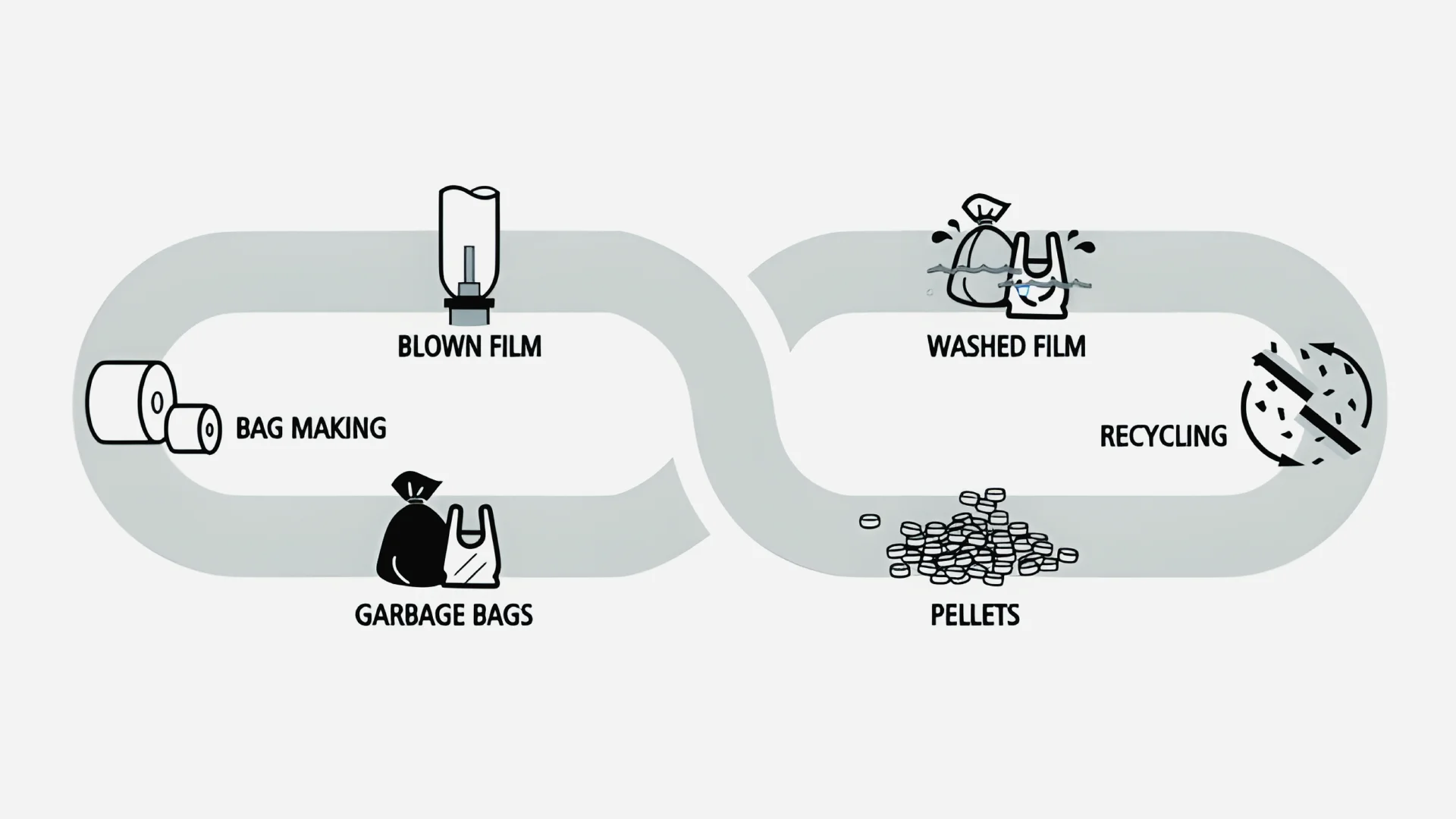
Recupero plastico in azienda (anche chiamato riciclo interno o post-industriale, PIR) permette a un produttore di recuperare scarto di produzione pulito e rientrarlo nel processo— invece di pagare per lo stoccaggio, lo spostamento e lo smaltimento. Per un flusso di rifiuti a monopolimero stabile, il risultato è solitamente una riduzione dell'acquisto di resine vergini, meno manovra e un controllo più stretto sulla qualità del materiale riciclato.
Questa guida è stata scritta per iniettometrici, estrusori, convertitori film/bag e impianti per tubi/profilo—not per i riciclatori commerciali che acquistano balle miste di post-consumo. Copre quale scarto è adatto, quale attrezzatura è necessaria, come stimare i risparmi, e quando un sistema in azienda supera il noleggio esterno o la vendita dello scarto come rifiuto.
Per il budget di capitale a livello di impianto per linee commerciali complete, utilizza il separato Analisi del ROI della macchina per la riciclaggio plasticoPer confrontare le macchine compatte rispetto alle linee complete, vedere macchina di riciclaggio plastica piccola vs linea industriale.
Cosa è la Riciclaggio Plastico In-Plant (Post-Industrial)?
La riciclaggio in azienda cattura le scartate, i tagli, lo scarto di avvio, le parti rifiutate e altri conosciuto Rifiuti produttivi prima che si mescolino con materiale esterno. Lo scarto viene selezionato per polimero e colore, ridotto dimensioni, e—ove necessario—lavato, essiccatato e pelletizzato. Le flake o pellet recuperate vengono poi mescolate in una formulazione approvata o vendute come un flusso industriale documentato.
Questa è diversa dalla riciclaggio post-consumo: già conoscete la classe di resina, il pacchetto di additivi e la storia di produzione. Il rischio di qualità è inferiore – ma solo se si mantengono separati i polimeri, i colori e il materiale degradato.
Quali scorie di produzione sono adatte?
| Tipo di scarto | Esempi | Passo di processo tipico iniziale |
|---|---|---|
| Pellicola e sacchetti di PE | Tappetino LDPE/LLDPE/HDPE, rotoli di film, scarto di sacchi | Shredder / tagliapacchetti → pelletizzatore |
| PP rafia & tessuto | Tira di nastro, scartelli di sacchi tessuti, rifiuti non tessuti | Taglia + densificare/pellettizzare |
| Scarto di produzione rigido | Correnti, scintille, tagli di tubi/profilo, parti rifiutate | Granulatore / macchina per schiacciare → rigrigno |
| Pulire prodotto non conforme | Gradi di resina noti, separabili da metalli/altri polimeri | Riduzione delle dimensioni ± lavaggio leggero |
Non mescolare polimeri diversi, confezioni di additivi incompatibili o scarti di avvio fortemente degradati in un flusso che prevedete di riutilizzare in conformità. Un flusso di scarto pulito e documentato è molto più facile da reintrodurre rispetto ai rifiuti misti sul pavimento.
Quattro Benefici Aziendali del Riciclaggio degli Scarti di Produzione
1. Ridurre i costi di smaltimento, trasporto e stoccaggio
I rifiuti ingombranti occupano spazio sul pavimento e creano costi di manodopera e trasporto ripetuti. Il trattamento vicino alla linea di produzione riduce i carichi in uscita e la necessità di acquistare materiale riciclato da un terzo parte.
2. Sostituire parte delle necessità di resina vergine
Quando le specifiche del prodotto lo consentono, il riciclatto verificato o le granulate possono essere mescolate con resina vergine. La percentuale ammessa deve provenire da prove, controllo qualità e richieste del cliente, non da un'assunzione generica come “X% va bene”.
3. Controllare la qualità del materiale riciclato
Conosci la resina originale, il masterbatch di colore e la storia del processo. Questa tracciabilità rende più facile gestire colore, umidità, contaminazione e comportamento di fusione rispetto all'acquisto di riciclato misto sconosciuto.
4. Sostenere la circolarità e la segnalazione del contenuto riciclato
Recuperare i rifiuti di produzione mantiene il materiale in uso produttivo e crea dati misurabili per gli obiettivi di riduzione dei rifiuti e del contenuto riciclato. Il surplus che soddisfa la specifica di un convertitore può anche essere venduto.
Quali attrezzature necessita un sistema in loco?
Abbinare la linea alla forma del scarto, alla contaminazione, all'umidità, al picco kg/h e alla qualità che il processo accetterà.
| Condizione dei rifiuti | Attrezzatura tipica | Materiale in uscita |
|---|---|---|
| Pulizia di componenti rigidi, profili | Granulatore / frantumatore, protezione metallica, controllo della polvere | Regrind a dimensione controllata |
| Pulizia di pellicole, raffia, sacchi a maglie | Trinciatore o compattatore + linea di pellettizzazione | Pellet riutilizzabile |
| Pellicola sporca o stampata | Linea di lavaggio, estrattore/dessiccatore, granulazione | Flocchi o pelletti lavati |
| Scarto rigido a sezione vuota o spessa | Trituratore → frantumatore → lavaggio opzionale | Fette uniformi |
Dimensiona il sistema da tassi di scarto picco e medio misurati—not only l'output indicato sulla targa del macchinario di produzione. Lascia spazio per l'ingestione sicura, l'accumulo a buffer, il controllo della polvere e l'accesso per manutenzione.
Un semplice modello di ROI in fabbrica
Inizia con lo scarto recuperabile annuo, poi calcola il valore creato e i costi evitati:
Benefit annuale = evitamento dell'acquisto di resine vergini + evitamento dei costi di smaltimento/trasporto + valore di vendita del riciclo eccedente − potenza elettrica, lavoro, manutenzione e consumabili annuali.
Rendimento semplice (anni) = costo installato del progetto ÷ beneficio annuale.
Utilizza rendimenti di recupero conservativi. Includi le perdite di selezione, i cambi di siepi, le lame, i filtri, i servizi, lo spazio a terra e i controlli di qualità. Per un quadro commerciale più ampio, vedi il Guida all'analisi del costo-beneficio.
Esempio pratico (solo illustrativo)
| Assunzione | Valore illustrativo |
|---|---|
| Scarti produttivi recuperabili | 180.000 kg/anno |
| Valore materiale creato | $0.30/kg → $54,000/anno |
| Evitato trasporto e smaltimento | $12.000/anno |
| Potenza, manodopera, manutenzione, consumabili | −$24.000/anno |
| Beneficio annuale stimato | $42.000/anno |
| Costo del progetto installato | $105,000 |
| Rimborso semplice | 2.5 anni |
Eseguire almeno tre scenari: conservativo, atteso e a massima utilizzazione. Se il progetto funziona solo con l'assunzione più ottimista sul prezzo della resina o sull'uptime, il rischio è troppo alto.
Quando la riciclaggio in azienda fa senso
- La planta genera un volume prevedibile di scarto plastico separabile.
- Materiale recuperato ha un uso interno definito oppure un acquirente esterno affidabile.
- QC può verificare il polimero, il colore, l'umidità e la contaminazione.
- C'è spazio per l'ingestione sicura, l'archiviazione, il controllo della polvere e la manutenzione.
- Spari economici rimangono attrattivi sotto conservativo prezzi della resina e ipotesi di utilizzo.
Se i volumi sono irregolari, i polimeri sono misti o il prodotto finito non può tollerare il contenuto riciclato, la lavorazione a pagamento o un riciclator specializzato potrebbe essere più economica.
Elenco controllo RFQ: Cosa inviare prima di richiedere un preventivo
- Polimeri, colori e confezioni di additivi che devono rimanere separati
- Tassi medi e massimi di scarto in kg/h (fotografie delle dimensioni delle parti aiutano)
- Contaminazione, stampa, etichette, oli e umidità presenti
- Output desiderato: riciclati per miscela di cestello, granuli per uso interno o vendita
- Test di qualità e contenuto riciclato massimo % permesso nel prodotto finito
- Spazio disponibile a pavimento, fornitura di energia e ore di funzionamento
- Esempi di scarto rappresentativi per una prova di esercizio
FAQ
Ha bisogno di lavaggio lo scarto di produzione pulita?
Non sempre. Correttori di polimero puliti e singoli o tagli di margine possono necessitare solo di riduzione delle dimensioni e protezione contro il metallo. Materiali stampati, polverosi, oliati o contaminati dal pavimento possono richiedere lavaggio e asciugatura.
Dovrebbe lo scarto in fabbrica essere riutilizzato come riciclati o granuli?
Il riciclati è più semplice quando il processo può fornirlo in modo costante. La granulazione migliora la densità volumica, la miscelazione e la filtrazione ma aggiunge costi di capitale, energia e manutenzione.
Come dovrebbe essere selezionata la capacità dell'attrezzatura?
Misura i kg/h massimi, la densità volumica, la dimensione delle parti, l'umidità e le ore di funzionamento. Chiedi al fornitore di testare esempi di scarto rappresentativi e di specificare l'output completo della linea non solo la valutazione del frantumatore o dell'estensore.
Qual è l'errore di ROI più grande?
Utilizzando il valore lordo del resina ignorando la perdita di resa, il lavoro, le utenze, la manutenzione, le sostituzioni di schermo, i test di qualità e i periodi in cui la linea non è completamente utilizzata.
Riciclaggio in fabbrica rispetto all'acquisto di una completa impianto di riciclaggio?
Sistemi in fabbrica mirano il tuo alla produzione pulita di scarto. Un impianto commerciale è progettato per alimenti esterni misti, contaminazione più alta e specifiche di scaglie/granuli vendibili. Scegli in base all'origine dei rifiuti e all'uso finale non solo alla dimensione della macchina.
Prossimo Passo
Pianificando un progetto di riciclaggio in fabbrica? Invia foto dei materiali, il tipo di polimero, i kg/h massimi e l'output desiderato per una raccomandazione di livello di linea. Esplora le guide relative all'attrezzatura: selezione del granulatore in plastica, guida al granulatore di plastica, e Costo della macchina per il riciclaggio della plastica.
