


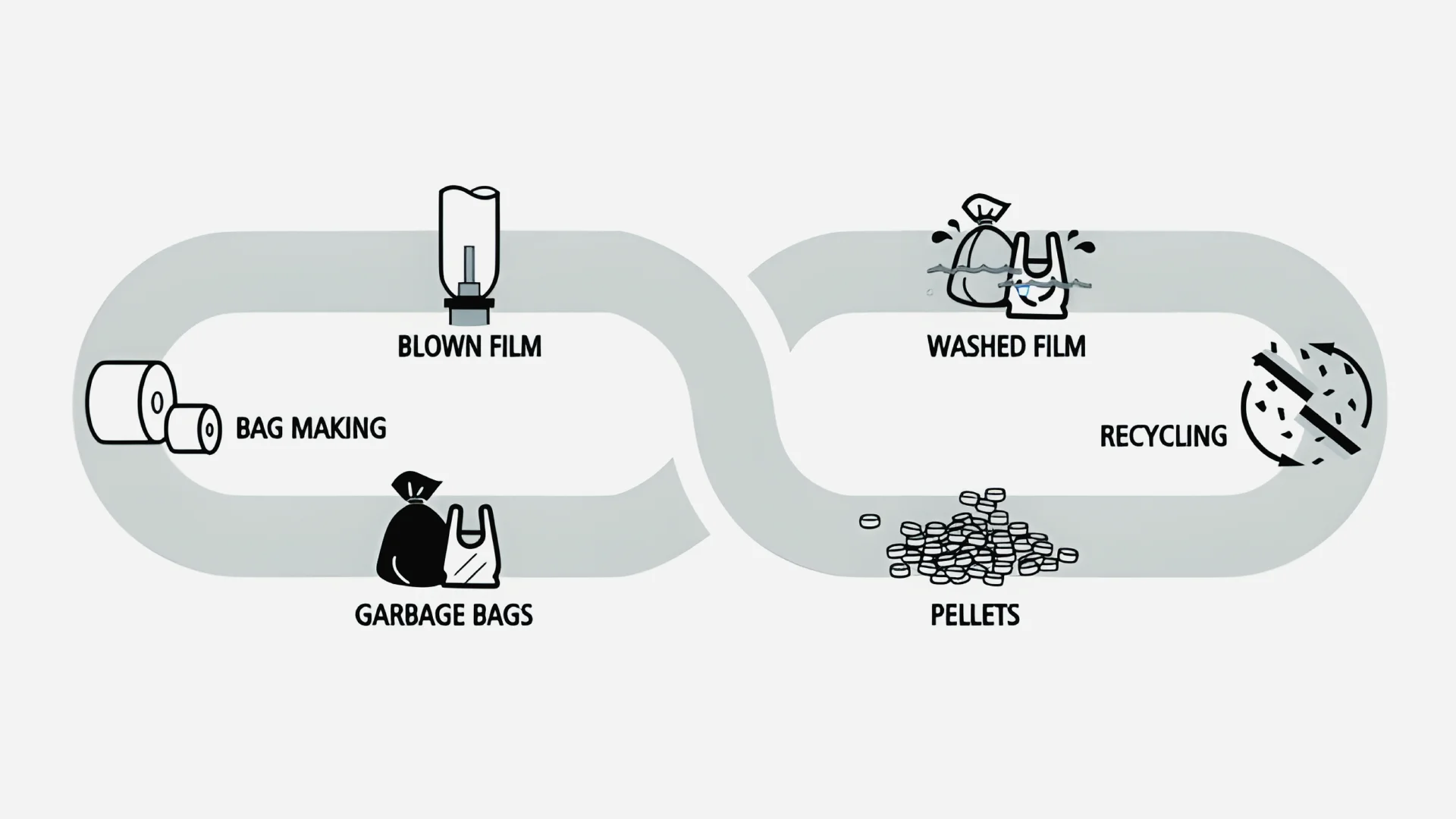
Pengolahan PlastikЛОM di Pabrik (melalui pengolahan dalam pabrik atau pengolahan plastik industri, PIR) memungkinkan pembuat untuk memulihkan sampah produksi yang bersih dan kembali meletakkan dalam proses—sebagai ganti membayar untuk menyimpan, angkut, dan membuangnya. Bagi aliran sampah satu-polimer yang stabil, hasilnya biasanya adalah pengurangan pembelian resin mentah, pengolahan yang lebih sedikit, dan kontrol yang lebih ketat terhadap kualitas bahan ulang.
This guide is written for pembuat cetakan injeksi, extruder, pabrik konversi film/bung, dan pabrik pipa/ profil—tidak untuk pihak komersial pengumpul sampah yang membeli balai kongsi post-consumer. Ini mencakup mana sampah yang sesuai, peralatan yang diperlukan, cara menganggarkan besaran penjimuan, dan kapan sistem dalam pabrik lebih unggul daripada penyewaan atau menjual sampah sebagai sampah.
Untuk perencanaan kapital perusahaan tingkat pabrik pada pabrik komersial penuh, gunakan yang terpisah Analisis ROI mesin pengolahan plastikUntuk membandingkan mesin kompak vs pabrik lengkap, lihat mesin pemrosesan plast kecil vs jalur industri.
Apa itu Pengolahan Plastik di Pabrik (Plastik Pasca-Industri)?
Pengolahan ulang dalam pabrik mengambil potongan kotor, potongan pemotong, sampah awal, bagian yang ditolak, dan lainnya dikenal Bahan produksi sebelumnya campur dengan bahan luar. Scrap diurutkan berdasarkan polimer dan warna, dicukur ukurannya, dan—dalam kasus diperlukan—dikeringkan, dikeringkan, dan dipelletkan. Ember atau pellet yang diperoleh lalu dicampur kembali ke formulasi yang disetujui atau dijual sebagai aliran industri yang terdokumentasi.
Itu berbeda dengan pengolahan sampah konsumen: Anda sudah tahu grade resin, paket penambahan, dan sejarah produksi. Resiko kualitas lebih rendah—tetapi hanya jika Anda melekatkan polimer, warna, dan bahan yang rusak.
Apa Sisa Produksi Yang Cocok?
| Jenis sampah | Contoh-contoh | Langkah proses pertama yang umum |
|---|---|---|
| Film & bag plastik | Trim LDPE/LLDPE/HDPE, rol keping film, sampah tas | Shredder / pemecah-kompaktor → pelletizing |
| PP rafia & jala plastik | Ripas kain, potongan tas kain weft, sampah non-woven | Shredder + densifier/pelletizer |
| Bahan sampah produksi kaku | Penggerak, flas, potongan pipa/ profil, bagian yang ditolak | Granulator / penghancur → regrind |
| Membersihkan produk non-specifik | Bahan baku yang dikenal, dapat dipisahkan dari logam/other polymers | Reduksi ukuran ± permandikan ringan |
Tidak campur Berbagai jenis polimer, paket bahan tambahan yang tidak kompatibel, atau purge awal yang berantakan signifikan ke dalam alur yang Anda rencanakan untuk digunakan kembali sesuai spesifikasi. Alur sampah yang bersih dan dokumentasi yang lengkap jauh lebih mudah untuk dikembalikan daripada sampah lantai campur.
Empat Manfaat Bisnis dari Pengolahan Beku Produksi
1. Pengurangan biaya pengelolaan, pengangkutan, dan penyimpanan
Beban sampah besar mengambil ruang lantai dan menimbulkan biaya pengangkutan ulang. Pengolahan di dekat garis produksi mengurangi muatan keluar dan perlunya membeli bahan kembali yang telah direcycle dari pihak ketiga.
2. Ganti sebagian dari kebutuhan resin mentah
Saat spesifikasi produk memungkinkan, regrind yang telah diverifikasi atau bahan pellet dapat dicampur dengan resin mentah. Persentase yang diizinkan harus berasal dari percobaan, QC, dan kebutuhan pelanggan—bukan dari asumsi generik “X% sudah baik”.
3. Kontrol kualitas bahan kembali
Andai tahu resin asli, campuran pewarna, dan riwayat prosesnya. Ketercatatan ini membuat pengelolaan warna, kelembaban, kontaminasi, dan perilaku larut lebih mudah daripada saat membeli bahan pemanfaatan ulang campuran yang tak dikenal.
4. Dukung kelancaran dan laporan kandungan kembali yang terulang
Pengembalian sampah manufaktur menjaga bahan dalam penggunaan produktif dan menciptakan data yang dapat diukur untuk target pengurangan sampah dan kandungan ulang. Sisa yang memenuhi spesifikasi konverter juga dapat dijual.
Apa Alat Berat Yang Diperlukan oleh Sistem Berada di Dalam Pabrik?
Sesuaikan garis dengan bentuk sampah, kontaminasi, kelembaban, puncak kg/h, dan kualitas yang proses Anda menerima.
| Kondisi sampah | Perabotan standar | Hasil Cacahan |
|---|---|---|
| Pemadatkan bagian-bagian dan profil kaku yang bersih | Granulator / Penghancur, perlindungan logam, pengendalian debu | Ukuran rekamen yang diawasi |
| Film bersih, rafia, tas kain plastik | Shredder atau pemecah-kompaktor + garis pelet | Pellet yang dapat digunakan kembali |
| Film kotor atau film yang tercetak | Lini pencuciansqueezer/pemadaman, pelletizing | Flakes atau bột kering |
| Beban kosong / dinding tebal plastik kaku | Mesin penghancur → pemecah → pilihan pengambuhan | Kerak yang seragam |
Ukuran sistem dari Tingkat sampah puncak dan rata-rata yang diukur—tidak hanya output nameplate dari mesin produksi. Biarkan ruang untuk pengecekan aman, penyimpanan buffer, kontrol debu, dan akses perawatan.
Model ROI Sederhana di Pabrik
Mulai dengan sampah kaya yang dapat dikembalikan secara tahunan, lalu hitung nilai yang terbuat dan biaya yang terhindarkan:
Manfaat tahunan = pengurangan pembelian resin mentah + pengurangan biaya pengelolaan/pengangkutan + nilai penjualan kembali sampah ulang − biaya listrik, tenaga kerja, perawatan, dan konsumsi tahunan.
Waktu pengembalian (tahun) = biaya proyek yang terpasang ÷ manfaat tahunan.
Gunakan keuntungan pengembalian yang konservatif. Termasuk kerugian pengurangan, perubahan screen, pisau, filter, utilitas, ruang lantai, dan pengujian kualitas. Untuk kerangka kerja garis komersial yang lebih luas, lihat Panduan analisis keuntungan rugi.
Contoh kerja (hanya untuk ilustrasi)
| Asumsi | Nilai yang diilustrasikan |
|---|---|
| Kotoran produksi yang dapat dikembalikan | 180,000 kg/tahun |
| Nilai material yang dihasilkan | $0.30/kg → $54,000/tahun |
| Melawan pengangkutan & pengelolaan sampah | USD 12,000/tahun |
| Tenaga, tenaga kerja, perawatan, konsumen | −USD 24,000/tahun |
| Manfaat tahunan perkiraan | USD 42,000/tahun |
| Biaya proyek yang telah dipasang | $105,000 |
| Pembayaran kembali yang sederhana | 2,5 tahun |
Jalankan setidaknya tiga scenario: konservatif, yang diharapkan, dan penggunaan tinggi. Jika proyek hanya bisa berjalan di bawah asumsi harga resin yang paling optimis atau waktu beroperasi, risikonya terlalu tinggi.
Kapan Pengolahan Internal Memang Tepat
- Pabrik menghasilkan sebuah volume yang dapat diprediksi untuk sampah plastik yang dapat dipisahkan
- Bahan baku yang diperoleh memiliki gunaan internal yang ditentukan atau seorang pembeli eksternal yang dapat diandalkan.
- QC dapat memvalidasi polimer, warna, kelembaban, dan kontaminasi.
- Ada ruang untuk pengepakan aman, penyimpanan, kontrol debu, dan perawatan.
- Penyusutan yang diantisipasi tetap menarik di bawah conservatif harga resin dan asumsi penggunaannya.
Jika volatilitas volume, polimer tercampur, atau produk akhir tidak dapat menahan kandungan kembali, maka pemrosesan sewa (toll processing) atau pemanfaatan ulang spesialis mungkin lebih ekonomis.
Daftar Permintaan RFQ: Apa yang Harus Dikirim Sebelum Meminta Penawaran
- Polimer, warna, dan paket penambahan yang harus dipisahkan
- Tingkat kotoran rata-rata dan puncak dalam kg/h (foto ukuran benda membantu)
- Kotoran, cetakan, label, minyak, dan kelembaban yang ada
- Hasil yang diinginkan: rebahan untuk campuran penyangga, granul untuk penggunaan internal, atau penjualan
- Pengujian kualitas dan maksimum kandungan material terkering yang diizinkan dalam produk akhir %
- Ruang lantai yang tersedia, pasokan listrik, dan jam operasional
- Contoh sampel kotoran untuk jalur uji
Pertanyaan Umum
Apakah kotoran produksi yang bersih memerlukan pemilihan?
Tidak selalu. Penyangga polimer tunggal yang bersih dan potong pinggir yang hanya memerlukan pengurangan ukuran dan perlindungan logam. Material yang dicetak, kotor, berminyak, atau kontaminasi lantai mungkin memerlukan pemilihan dan penambahan air.
Apakah kotoran internal harus diulang guna rebahan atau granul?
Rebahan lebih mudah ketika proses dapat memasoknya secara konsisten. Granulasi meningkatkan kepadatan volum, campuran, dan penapisan—tetapi menambah biaya modal, energi, dan pemeliharaan.
Bagaimana memilih kapasitas peralatan?
Uji tingkat puncak kg/h, kepadatan bulk, ukuran benda, kelembaban, dan jam operasional. Ajak pemasok untuk menguji sampel kotoran yang mewakili dan menyatakan output jalur penuh—not hanya penilaian pemecah atau ekstruder.
Apa kesalahan ROI terbesar?
Menggunakan nilai resin bersih sementara mengabaikan kerugian pengeluaran, tenaga kerja, utilitas, pemeliharaan, pergantian papan penapis, pengujian kualitas, dan periode saat jalur tidak digunakan penuh.
Pemrosesan pengembalian dalam tempat kerja vs membeli pabrik pengembalian penuh?
Sistem dalam tempat kerja bertujuan milikmu untuk kotoran produksi yang bersih. Pabrik komersial dirancang untuk bahan baku campuran eksternal, kontaminasi yang tinggi, dan spesifikasi flake/granul yang dapat dijual. Pilih berdasarkan sumber limbah dan penggunaan akhir—not hanya ukuran mesin.
Langkah Berikutnya
Merancang proyek pemrosesan pengembalian dalam tempat kerja? Kirim foto material, jenis polimer, tingkat puncak kg/h, dan hasil yang diinginkan untuk rekomendasi tingkat jalur. Telusuri panduan peralatan yang berhubungan: pemilihan pemecah plastik, panduan granulator plastik, Dan biaya mesin daur ulang plastik.
