
المنتجات البلاستيكية مصنوعة من العديد من البوليمرات المختلفة، وكل منها يتظاهر بشكل مختلف أثناء الترتيب، والتنظيف، والقطع، والفصل، والمعالجة مرة أخرى. لذلك، التعرف على نوع البلاستيك بشكل صحيح هو أحد أهم الخطوات في أي عملية إعادة التدوير.
أرقام تُظهر عادةً على منتجات البلاستيك — من 1 إلى 7– تُعرف بـ أكواد التعريف بالمواد البلاستيكية. They help identify the primary resin used to manufacture a plastic article.
إجابة سريعة: رقمي الـ 1–7 للبلاستيك يحدد فئات مختلفة من المواد المُعاد تدويرها. لا الإشارة إلى أن المنتج قابل للإعادة التدوير لا تعني بالضرورة أن المنتج قابل للإعادة التدوير. يعتمد القابلية الفعلية للإعادة التدوير على المركب البلاستيكي، تصميم المنتج، مستوى التلوث، نظام جمع المخلفات، والتكنولوجيا المتاحة لإعادة التدوير.
For recyclers, understanding these plastic types also helps determine which sorting method, washing process, shredder, crusher, separator, and pelletizing system should be used.
ماذا يعني أرقام البلاستيك في التدوير؟
نظام رمز التعريف بالمواد البلاستيكية تم تطويره في الأصل لمساعدة التعريف ببوليمرات بلاستيكية مختلفة ودعم عملية الفرز.
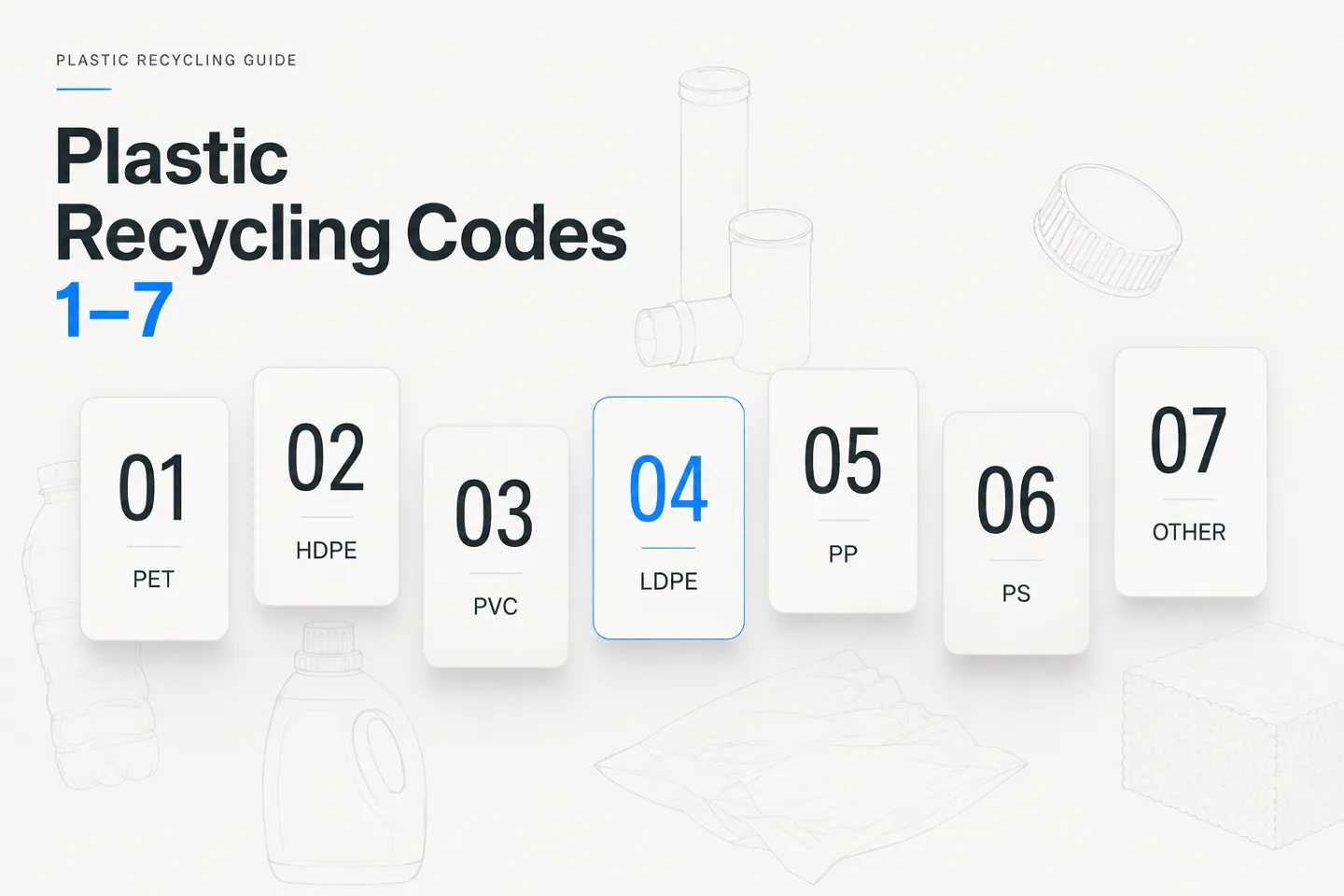
السبعة فئات الرئيسية هي:
- PET أو PETE — بولي إيثيلين تيرفثالات
- البولي إثيلين عالي الكثافة — البولي إيثيلين العالي الكثافة
- بولي كلوريد الفينيل — البولي فينيل كلوريد
- البولي إثيلين المنخفض الكثافة — البولي إيثيلين منخفض الكثافة
- ص — بولي propylene
- ملاحظة — البوليستايرين
- غير مصنف — غير البلاستيكيات الأخرى مثل ABS، PC، PA، PMMA، PLA، والمواد متعددة الطبقات
من المهم التمييز بين كود معرف المواد البلاستيكية من طلب إعادة التدوير. وفقًا لمعيار ASTM D7611/D7611M، يحدد الرمز المادة البلاستيكية المستخدمة في العنصر؛ فإن وجود رمز لا يضمن أن المنتج يمكن أو سيتم إعادة تدويره.
أنواع البلاستيك 1-7: مقارنة سريعة
| شفرة | البلاستيك | مستوى الكثافة القياسي* | سلوك في الماء | التطبيقات الشائعة | صعوبة إعادة التدوير |
|---|---|---|---|---|---|
| #1 | حيوان أليف | 1.34–1.39 غ/سم³ | Sinks | زجاجات المشروبات، صناديق الطعام، البولي إستر | منخفض - متوسط |
| #2 | البولي إثيلين عالي الكثافة | 0.94–0.97 جرام/سم³ | فلاتر | الزجاجات، الدروع، الصناديق، الأنابيب | قليل |
| #3 | بولي كلوريد الفينيل | ~1.16–1.45+ جرام/سم³ | عادةً تغرق | الأنابيب، الأنظمة المعدنية، الأرضيات، عازلة الأسلاك | متوسط – مرتفع |
| #4 | البولي إثيلين المنخفض الكثافة | 0.91–0.94 جرام/سم³ | فلاتر | الشريط، الأكياس، الشريط الضاغط | واسطة |
| #5 | ص | 0.89–0.92 جرام/سم³ | فلاتر | القبعات، الصناديق، صناديق التغليف، الأكياس المدمجة | منخفض - متوسط |
| #6 | ملاحظة | ~1.04–1.07 جرام/سم³ | Rigid PS usually sinks | منتجات HIPS، صحن، رغوة EPS | متوسط – مرتفع |
| #7 | غير مصنف | يختلف | يختلف | ABS، PC، PA، PMMA، PLA، البلاستيك متعدد الطبقات | يختلف |
*قيم الكثافة تقريبية. الكثافة الفعلية تختلف وفقاً لنوع الرسومي، المملأ، تعزيز، مضافة، وبنية المنتج.
الكثافة مفيدة بشكل خاص في إعادة التدوير لأنها تسمح بفصل بعض البلاستيك الفرز بين السائل والسائل. ومع ذلك، لا يمكن للفصل بالكثافة وحده أن يفرق بين كل البوليمرات.
على سبيل المثال، كلاً من PP ومعظم أنواع PE لديها كثافة أقل من الماء وتبقى عادةً في خزان الماء القياسي.
#1 PET — البولي إيثيلين تيريفثاليت
PET, also written as PETE, is one of the most widely recycled plastics.
منتجات PET الشائعة
البلاستيك المقاوم للحرارة (PET) يوجد غالباً في:
- PET bottle recycling washing line
- PET بطاقات الماء ال gazي
- علب زيت الطهي
- معلقات الطعام
- مقابض PET
- ألياف ومواد النسيج البوليسترية
- PET حبال التغليف
PET is strong, lightweight, transparent, and has excellent barrier properties, making it particularly suitable for beverage and food packaging.
مكثف كثافة PET وفرز PET
معدل كثافة PET هو حوالي 1.34–1.39 غ/سم³، مما يعني أن PET يطفو عادة في الماء.
هذه الخاصية مفيدة جداً أثناء إعادة تدوير العبوات.
بعد أن تُحطم عبوات البلاستيك البترولي (PET) إلى شرائح، يمكن لسداسانٍ مسبار للفصل بالكتلة المائية المساعدة في فصل:
- PET flakes — تانك لفصل الكتلة
- كابلات PP — تطفو
- كابلات HDPE — تطفو
هذا يسمح بمرحلة فصل الكثافة البسيطة نسبيًا بتعديل معظم تلوث PP و PE من الرقائق PET.
عملية إعادة تدوير البلاستيك PET
عملية إعادة تدوير زجاجات PET الشائعة قد تتضمن:
تجميع النفايات → الفرز → إزالة العلامات → الخلط → فصل الجاذبية المائية → الغسل بالحرارة العالية → الغسل بالفائض الحراري → الغسل المتكرر → الجفاف الميكانيكي → التجفيف → فرز الرقائق
Clean PET flakes can then be used for applications including polyester fiber, strapping, sheet extrusion, or further pelletizing.
للإعادة تدوير عبوات المستهلكين على نطاق واسع، يجب استخدام خط كامل نظام إعادة تدوير زجاجات PET يدمج الترتيب، تقليل الحجم، الغسل، الفصل المبني على الكثافة، والجفاف في عملية متواصلة.
التحديات الرئيسية في إعادة تدوير PET
مواد العبء الشائعة تشمل:
- بولي كلوريد الفينيل
- كابلات PP و PE
- العلامات
- مطاطيات
- نواتج الأغذية والمشروبات
- المعادن
- PET ملون
- مواد بوليميرية أخرى
تلوث بولي فين كلوريد هو غير مرغوب فيه بشكل خاص في إعادة تدوير بولي إيثيل تيريفثاليت لأن بولي إيثيل تيريفثاليت وبولي فين كلوريد لهما خصائص حرارية مختلفة ويجب تفريقهما بعناية قبل معالجة عالية الجودة.
#2 بولي إيثيلين عالي الكثافة — بولي إيثيلين عالي الكثافة
بولي إيثيلين عالي الكثافة هو أحد أنواع البلاستيك الصلب الأكثر شيوعًا المستخدمة في التعبئة الاستهلاكية والتطبيقات الصناعية.
منتجات بولي إيثيلين عالي الكثافة الشائعة
النفايات البوليميرية البولي إيثيلين عالي الكثافة الشائعة تشمل:
- زجاجات الحليب
- زجاجات الصابون
- زجاجات الشامبو
- مخزونات الكيمياء
- القارورات العسكرية
- القارورات الصناعية
- صناديق البلاستيك
- المنصات
- صناديق القمامة
- أنابيب HDPE
بولي إيثيلين عالي الكثافة يدمج قوة، مقاومة الكيمياء، مقاومة الارتطام، وكتلة منخفضة نسبيًا.
كثافة بولي إيثيلين عالي الكثافة والتفريق
كثافة بولي إيثيلين عالي الكثافة النموذجية تكون حوالي 0.94–0.97 جرام/سم³، حيث أن البولي إيثيلين العالي الكثافة غير الممتلئ يطفو عادة في الماء.
هذا يجعل الفصل المبني على الكثافة باستخدام الماء مفيدًا عندما يختلط HDPE مع مواد البلاستيك الثقيلة مثل PET أو PVC.
ولكن، يمكن للملصقات والمضافات أن يغيرا كثافة منتج HDPE المكتمل.
عملية إعادة تدوير البولي إيثيلين العالي الكثافة
إعادة تدوير البلاستيك الصلب للـ HDPE يُشمل عادةً:
الفرز → تكسير أو تقطيع → غسل → تنظيف بالفرك → فصل الجاذبية المائية → تجفيف → جفاف → تقطيع البلاستيك إلى حصص
مثل الادوات الكبيرة مثل البراميل، الابحاث العريضة، الصلصالات، الكتل، وال انابيب قد تحتاج إلى تقليل الحجم الأول قبل التجريز.
أ كسارة البلاستيك للخدمة الشاقة أو يمكن استخدام محمصة بلاستيك صلب لمعالجة المواد ذات الجدران العالية، بينما غالباً ما تحتاج أنابيب الـ HDPE الطويلة إلى نظام محمصة أنابيب متخصص.
للأغراض الملوثة من البلاستيك الصلب المستهلك بعد الاستخدام، محل غسل البلاستيك الصلب لـ PP، HDPE و PVC يمكن دمج عملية تقليل الحجم، والتنظيف، والفصل، والجفاف.
التحديات الرئيسية في إعادة تدوير HDPE
مشاكل شائعة تشمل:
- مؤشرات ورقية ومؤشرات ورقية
- مادة مطبقة
- زيوت
- مواد كيميائية
- مكونات معدنية
- ألوان مختلفة
- PP contamination
- مواد البلاستيك المملحة بالمعادن
إذًا، يعتمد المعدات المطلوبة بشكل كبير على ما إذا كانت المادة الخام تتكون من قمامة صناعية نظيفة أو مادة مستهلكة بعد الاستخدام بنوعية مختلطة.
#3 PVC — بولي فينيل كلوريد
البولي فينيل كلوريد (PVC) هو بوليمر متعدد الاستخدامات يُستخدم على نطاق واسع في البناء، والبنية التحتية، والأرضيات، والمنتجات الكهربائية، والتطبيقات الصناعية.
يتواجد في كلا الحالتين قابل للإجهاد PVC و بلاستيك PVC مرن شكل.
منتجات PVC الشائعة
تتضمن النفايات البلاستيكية PVC الشائعة:
- أنابيب المياه والصرف الصحي
- مفاصل النوافذ
- مفاصل الأبواب
- لوحات الجدران
- الارضيات
- عزل الأسلاك
- شرائح الفينيل
- أنابيب مطاطية قابلة للتمدد
- منتجات طبية
لماذا يختلف إعادة تدوير البوليفينيل الكلوريد (PVC) عن غيره
يحتوي البوليفينيل الكلوريد (PVC) على الكلور كجزء من بنية البوليمر الخاص به وقد يحتوي أيضًا على كميات كبيرة من المضافة مثل:
- مضافات مركبة
- مضادات التآكل
- ملئات
- ألوان
- معدلات التأثير
لذلك يمكن أن تتصرف أنواع مختلفة من صيغ البوليفينيل الكلوريد بشكل مختلف جدًا أثناء عملية إعادة التدوير.
يعد النفايات النظيفة المنتجة من تصنيع أنابيب البوليفينيل الكلوريد أو المفاصل بشكل عام أسهل في إعادة التدوير من النفايات المختلطة من البوليفينيل الكلوريد القابل للتمدد بعد الاستخدام النهائي.
كثافة البوليفينيل الكلوريد
عادة ما يكون كثافة البوليفينيل الكلوريد أعلى من 1.0 جرام/سم³ ولذلك يغرق عادة في الماء.
كثافة هذا المادة تختلف بشكل كبير بناءً على المواد المضافة والمكملات.
عملية إعادة تدوير البولي فين كلوريد
يمكن معالجة القمامة الصلبة البولي فين كلوريد النقي من خلال:
تصنيف → تكسير → إزالة المعادن → طحن ناعم عند الحاجة → تصنيف → إعادة الطباعة
أطوال الأنابيب والشقوق البولي فين كلوريد التقليدية تمثل تحديًا كبيرًا للكسارات التقليدية. يتيح كسارة مخصصة للأنابيب والشقوق البولي فين كلوريد تقديم المواد الطويلة بشكل أفقي للحد من حجمها بشكل متحكم.
تتطلب بعض تطبيقات البولي فين كلوريد أيضًا تقليل المواد المكسرة إلى مسحوق ناعم باستخدام طاحونة ناعمة.
تحديات إعادة تدوير البولي فين كلوريد الرئيسية
التحدي الرئيسي هو الحفاظ على تدفق البولي فين كلوريد متسق.
يمكن أن يؤدي خلط البولي فين كلوريد مع بوليمرات مثل البولي إيثيلين أو البولي إثيلين أو البولي بروبيلين إلى تقليل جودة المادة المكتسبة وتحقيق مشاكل في معالجة المراحل التالية.
لذلك، يُعتبر التعرف على البوليمرات والتصنيف الفعّال مهمًا للغاية عند معالجة النفايات البلاستيكية المختلطة.
#4 LDPE — البولي إثيلين منخفض الكثافة
البولي إثيلين منخفض الكثافة هو بوليمر بلاستيكي مرن يستخدم على نطاق واسع في الأفلام التعبئية.
على عكس الأوعية الصلبة البولي إثيلين، يكون نفايات البولي إثيلين منخفض الكثافة غالبًا رقيقًا، خفيفًا، قذرًا، وضيقًا في التغذية بشكل متسق إلى الآلات المعدة لإعادة التدوير.
منتجات البولي إثيلين منخفض الكثافة الشائعة
يُعثر على البولي إثيلين منخفض الكثافة والبلاستيك المرن المرتبط به بشكل شائع في:
- السلالة
- الأفلام التعبئية
- امتداد الفيلم
- شريط التقلص
- فيلم زراعي
- شريط البستنة
- النافذة الهوائية
- التغليف المرن
- نفايات الأفلام الصناعية
كثافة LDPE
كثافة LDPE النموذجية تتراوح حوالي 0.91–0.94 جرام/سم³, لذا فإنها عادة ما تطوف في الماء.
لماذا يعتبر إعادة تدوير الأفلام تحديًا
تسبب الأفلام البلاستيكية المرنة عدة مشاكل معالجة:
- كثافة حجمية منخفضة للغاية
- رطوبة عالية بعد الغسل
- تلوث بالأتربة والرمل
- صعوبة التغذية المستمرة
- التغليف حول المكونات الدوارة
- كمية نقل عالية
- تدفق مادة غير متسق
قد تحتوي الأفلام الزراعية على مستويات عالية خاصة من التربة والرمل والمادة العضوية والرطوبة.
عملية إعادة تدوير أفلام LDPE
العملية التقليدية هي:
تصنيف → تقطيع → غسل → غسل بالتآكل → الفصل بالطفو → إزالة الماء → ضغط/تجفيف → تثقيف → تحويل إلى كريات
للنفايات المرنة الملوثة بشدة، يفضل استخدام خط غسيل لإعادة تدوير أغشية البولي بروبيلين/البولي إيثيلين على أن المعدات المصممة للبلاستيك القاسي.
بعد الغسل، يمكن لل مضخة الأفلام أو التثقيق خفض الرطوبة وزيادة الكثافة الحجمية قبل الطباعة.
#5 PP — بوليبروبلين
البوليبروبلين هو بلاستيك حراري قابل لإعادة التدوير آخر يستخدم على نطاق واسع في المنتجات الصلبة والمرنة.
منتجات PP الشائعة
تتضمن التطبيقات العادة:
- غطاء زجاجة
- حاويات الطعام
- حوض
- صندوق
- مكونات السيارات
- حافظات البطاريات
- منتجات منزلية
- أكياس منسوجة PP
- حقائب جومبو للبولي إيثيلين عالي الكثافة (FIBC)
- الرافيا
- المواد غير النسيجية
- مخلفات قولبة الحقن
كثافة البولي بروبيلين (PP)
البولي بروبيلين يملك من أقل الكثافات بين المواد البلاستيكية الشائعة، عادة ما تكون حوالي 0.89–0.92 جرام/سم³.
لذلك فهو عادة ما يطفو في الماء.
هل يمكن فصل البولي بروبيلين والبولي إيثيلين باستخدام الماء؟
ليس بشكل موثوق باستخدام الماء العادي فقط.
كلاهما البولي بروبيلين وأغلب أنواع البولي إيثيلين لديهما كثافات أقل من 1.0 جرام/سم³ ويكونان عادة ما يطفوان في خزان معياري للغرق والطفو.
ذلك يعني أن خزان الماء البسيط فعال جدًا لفصل البولي بروبيلين والبولي إيثيلين عن البلاستيكيات الأثقل مثل البولي إيثيلين التريبيتيك أو البولي فينيل كلوريد، ولكن عادة لا يمكنه تقديم فصل دقيق بين البولي بروبيلين والبولي إيثيلين.
عندما يجب فصل البولي بروبيلين والبولي إيثيلين عن بعضهما البعض، قد تحتاج إلى تقنيات إضافية تعتمد على حالة المواد والمعايير النقية اللازمة.
عملية إعادة تدوير البولي بروبيلين
بالنسبة للبولي بروبيلين القاسي:
ترتيب → تقطيع/كسر → غسل → فصل → تجفيف → تحويل إلى كريستاليات
بالنسبة للحقائب المنسوجة من البولي بروبيلين أو المواد المرنة:
تقطيع → غسل → تنظيف بالتماس → إزالة الماء → ضغط/كثافة → تحويل إلى كريستاليات
يحتاج إنتاج القمامة النظيفة من البولي بروبيلين إلى تقليل الحجم والتصفيح فقط، بينما يتطلب البولي بروبيلين المعاد تدويره بعد الاستخدام النهائي نظام غسيل أكثر شمولاً.
#6 PS — البوليستايرين
يُعتبر البوليستايرين غالباً مرتبطاً بعبوات التغليف بالهواء البلاستيكي، لكن ليس جميع البوليستايرين هو الهواء البلاستيكي.
الأنواع الشائعة تشمل:
- البوليستايرين العادي (GPPS)
- البوليستايرين ذو التأثير العالي (HIPS)
- البوليستايرين الممتد (EPS)
- البوليستايرين المضغوط (XPS)
منتجات البوليستايرين الشائعة
تتضمن التطبيقات:
- صناديق الأطعمة الصلبة
- منتجات استهلاكية مرة واحدة
- حافظات HIPS
- مكونات الأجهزة
- مقاعد الثلاجة
- تعليقات الحماية
- صناديق الهواء البوليستايرينية
- مواد العزل
كثافة البوليستايرين
يكون راتنج البوليستايرين السائل عادةً ذا كثافة أعلى قليلاً من الماء ويكون غالباً يغرق.
تتصرف المنتجات الهوائية مثل EPS بشكل مختلف لأن بنيتها تحتوي على كمية كبيرة من الهواء، مما يعطي المنتج النهائي كثافة حجمية مرتفعة جداً.
لماذا يختلف تدوير EPS
البوليستايرين الممتد خفيف الوزن وضخم.
لذلك يمكن أن يكون نقل القمامة غير المعالجة من EPS غير فعال لأن الشاحنة أو الحاوية قد تصل إلى الحد الأقصى للكمية قبل أن تصل إلى الحد الأقصى للوزن.
يشمل تدوير EPS عادةً مرحلة تقليل الحجم مثل:
كسر → تقليص أو صهر ساخن → تحويل إلى كريستال
يقلل التثخين من حجم التخزين والنقل قبل المعالجة المقبلة.
التحديات الرئيسية للتدوير البوليستايرين
قد تشمل التحديات:
- الكثافة الحجمية منخفضة
- تلوث الغذاء
- مختلطة الأصناف
- مضادات الحريق في بعض التطبيقات
- تلوث البوليمرات الأخرى
- صعوبة اقتصاد جمع القمامة
على الرغم من ذلك، يمكن إعادة تدوير القمامة الصناعية النظيفة من البوليستايرين أو HIPS بشكل ميكانيكي عند تحديدها بشكل صحيح وتمييزها.
#7 OTHER — ABS، PC، PA، PMMA، PLA وغيرها من البلاستيك
يُعتبر رمز 7 غالبًا غير مفهوم.
لا يعني ذلك لا أن البلاستيك هو مادة مختلطة تلقائيًا أو أن لا يمكن إعادة تدويره.
بدلاً من ذلك، يعمل رمز 7 كفئة واسعة للبلاستيك الذي لا يقع تحت الأرقام من 1 إلى 6.
أمثلة على البلاستيك برمز 7
اعتمادًا على المنتج ونظام الترميز، يمكن أن يشمل هذا الفئة ما يلي:
- ABS — إكريلونيتريل بوتاديين ستايرين
- PC — بوليكربونات
- PA — بولياميد / نايلون
- PMMA — أكريليك
- PLA — حمض اللاكتيك
- البلاستيك الهندسي المختلف
- هياكل متعددة الطبقات
- مزيجات بوليمرات معينة
هذه المواد لها خصائص مختلفة جداً ولهذا لا يمكن التعامل معها كقناة إعادة تدوير واحدة.
هل يمكن إعادة تدوير البلاستيك الرمز 7؟
غالباً، نعم.
поток чистого и хорошо отсортированного промышленного ABS, PC, PA или PMMA отходов может быть подходящим для механической переработки.
يحدث الصعوبة عندما يتم دمج أنواع مختلفة من البوليمرات المدرجة في المجموعة السابعة معًا، أو عندما تكون تكوين الرزين الدقيق غير معروف.
للألياف البلاستيكية الهندسية، قد يتطلب التعريف الدقيق استخدام طرق تصنيف أو تحليل أكثر تعقيدًا قبل تكسيرها، وتفصيلها، واست extrusion.
كيف يتم التعرف على أنواع مختلفة من البلاستيك في مصنع إعادة التدوير؟
أكواد المواد الصلبة مفيدة عندما تكون مرئية، ولكن محطات إعادة التدوير الصناعية لا يمكنها الاعتماد كلياً على الأرقام المطبوعة.
يمكن أن تفتقر العلامات، قد تتعرض المنتجات للكسر، و قد لم يحمل المخلفات الصناعية دائمًا رمز التعريف بالبوليمر.
لذلك، تستخدم عدة طرق لتحديد وفرز.
1. رمز التعريف بالمواد البلاستيكية
تُعطي علامات RIC إشارة أولية سريعة عن نوع البوليمر.
إنها مفيدة بشكل خاص لتحديد العبوات المصنوعة بالكامل والمشغولة بشكل يدوي.
However, they should not be treated as a complete sorting solution.
2. الفرز البصري واليدوي
المشغلون الخبراء يمكنهم غالبًا تحديد المواد باستخدام خصائص مثل:
- نوع المنتج
- لون
- صلابة
- الشفافية
- مظهر سطحي
- التطبيق النموذجي
الفرز اليدوي بسيط ولكنه يصبح أقل عملية عند تدفق عالٍ أو عند وجود بوليمرات متشابهة من الناحية البصرية.
3. الفصل المبني على الكثافة والفصل بالغمر والصعود
فصل الكثافة هو واحد من أكثر التقنيات شيوعًا في إعادة تدوير البلاستيك.
في خزان غسيل غامق غامق معياري:
- PP غالباً يطفو
- LDPE usually floats
- HDPE غالباً يطفو
- البلاستيك PET يغرق عادةً
- PVC غالباً يغرق
- البوليستاير الصلب غالباً يغرق
هذا يجعل تقسيم الجاذبية العائمة مفيدًا بشكل خاص في تطبيقات مثل إعادة تدوير زجاجات PET، حيث يمكن فصل فقاعات PET عن العناصر العائمة مثل الأغطية البلاستيكية PP و PE.
لكن يمكن تغيير الكثافة بواسطة المملوءات، والمضافات، والمقوى، والهواء المضغوط، أو بناء متعدد الطبقات، يجب أن يتم النظر فيها كجزء من عملية تصنيف كاملة بدلاً من كونها مفرزة بوليمر عالمية.
أ خزان فصل الطفو والغوص لذلك يجب النظر فيها كجزء من عملية تصنيف كاملة بدلاً من كونها مفرزة بوليمر عالمية.
4. تصنيف الضوء البعيد الأحمر (NIR)
نظام تصنيف الضوء البعيد الأحمر، أو NIR، يتحلل الضوء المنعكس لتحديد أنواع بوليمر متعددة تلقائيًا.
تُستخدم تقنية NIR على نطاق واسع في عمليات تصنيف ذو قدر كبير من التدفق.
لكن الأداء يعتمد على عوامل مثل:
- حالة السطح
- لون المادة
- تلوث
- هندسة المنتج
- تكوين المستشعر
قد تجد أن أنظمة NIR التقليدية صعوبة في تحديد بعض البلاستيك الأسود.
5. تحليل FTIR
تحليل الأشعة تحت الحمراء التحويلية، أو FTIR، يمكن استخدامه لتحديد البوليمرات غير المعروفة عن طريق تحليل طيف امتصاص الأشعة تحت الحمراء الخاصة بها.
يُستخدم FTIR بشكل خاص لـ
- تحليل مختبري
- تحقق من المادة
- نفايات صناعية غير معروفة
- ضمان الجودة
يُعتبر أداة تحديد عادةً وليس عملية تقسيم ميكانيكي جماعي.
6. الفصل الكهربائي
بعد تحديد حجم البلاستيك بشكل صحيح، وتنظيفه وتجفيفه، يمكن استخدام الفصل الكهربائي في تطبيقات معينة لفصل رقائق البوليمر المختلطة بناءً على الاختلافات في السلوك الكهربائي.
يتميز توافر العملية بشكل كبير بـ
- مزيج البوليمر
- حجم الجسيمات
- الرطوبة
- نظافة السطح
- تركيب المواد
يُنصح عادةً بفحص المواد قبل اختيار نظام الفصل الكهربائي.
لماذا يهم الفصل الصحيح للبلاستيك
تقوم خط الإعادة التدوير بفعل أكثر من تحويل البلاستيك إلى حجم أصغر.
الهدف هو إنتاج مادة إعادة التدوير تحتوي على نقاء، مستوى رطوبة، حجم جزيء، وتركيب متساوٍ بشكل كافٍ للاستخدام التالي.
يمكن أن يؤدي الفصل غير الصحيح للبوليمر إلى
- تشوهات في الطباعة
- تقليل الخصائص الميكانيكية
- عيوب السطح
- تناقض في اللون
- إغلاق الفلاتر
- معدلات رفض عالية
- انخفاض قيمة المادة الإعادة التدوير
يتوقف النقاء المطلوب على المنتج النهائي.
يستطيع مصنع إنتاج منتجات مطبوعة من الفئة المنخفضة التسامح لدرجة أكبر من التلوث مقارنة بمصنع ينتج كرات، شرائح، ألياف، أو مادة مستخدمة في إنتاج القوارير.
لذلك، يجب دائمًا تصميم عملية إعادة التدوير الصحيحة حول كلا من المواد الخام و المنتج النهائي المطلوب.
الطريقة العادية لإعادة التدوير بناءً على نوع البلاستيك
| البلاستيك | الطريق العادي لإعادة التدوير |
| زجاجات البولي إيثيلين تيريفثالات | ترتيب → إزالة العلامات → تكسير → فصل الكثافة → غسل ساخن → تجفيف |
| زجاجات بولي إيثيلين عالي الكثافة (HDPE) | ترتيب → تكسير → غسل → فصل الكثافة → تجفيف → تحويل إلى كرات |
| صناديق/صناديق بولي إيثيلين عالي الكثافة (HDPE)/مقاطع | تقطيع → تكسير → غسل → تجفيف → تحويل إلى كرات |
| أنابيب/مقاطع بولي فينيل الكلور (PVC) | كسر → إزالة المعادن → تكسير/طحن → إعادة المعالجة |
| بولي إيثيلين منخفض التشابك (LDPE) فيلم | تقطيع → غسل → تجفيف → سحب الماء/تضخيم → تقطيع البلاستيك إلى حصص |
| بلاستيك PP صلب | تحطيم → غسل → فصل → جفاف → تقطيع إلى حصص |
| أكياس منسوجة PP | تقطيع → غسل → تجفيف/تضخيم → تكسير الحصص |
| EPS | تحطيم → تضخيم/تضييق → تكسير الحصص |
| ABS/PC/PA/PMMA | تعريف → تصنيف → تكسير/طحن → فصل حسب الحاجة → تكسير البلاستيك |
لا يوجد آلة لإعادة تدوير بلاستيك واحدة مثالية لكل مادة خام.
كيف تختار المعدات المناسبة لإعادة تدوير البلاستيك
قبل انتخاب المقطع، أو المكسر، أو خط الغسل، أو نظام التفصيل، أو خط التجميع، يجب تقييم عدة عوامل.
نوع البلاستيك
حدد ما إذا كانت المادة هي:
- حيوان أليف
- البولي إثيلين عالي الكثافة
- البولي إثيلين المنخفض الكثافة
- ص
- بولي كلوريد الفينيل
- ملاحظة
- عضلات المعدة
- الكمبيوتر
- السلطة الفلسطينية
- PMMA
- مكعبات بلاستيكية مختلطة
عندما يكون ذلك ممكناً، تجنب تصميم عملية إعادة التدوير حول مواد مختلطة غير معروفة.
شكل المادة
الشكل الفيزيائي للبوليمر قد يتطلب معدات مختلفة تمامًا.
على سبيل المثال، قد يصل HDPE كـ:
- زجاجات
- القوائم
- صندوق
- المنصات
- الكتل الكبيرة
- الأنابيب
LDPE قد يصل كالتالي:
- الشريط الحر
- الشريط المعبأ
- فيلم زراعي
- امتداد الفيلم
- القطع الزائدة في إنتاج الحد
حجم المواد، سماكة الجدار، كثافة الحجم، وسلوك التغذية يؤثر مباشرة على اختيار الآلة.
تلوث
تحديد ما إذا كان المواد تحتوي على:
- التراب
- الرمل
- ورقة
- العلامات
- مادة مطبقة
- زيوت
- الأغذية
- المعدن
- زجاج
- الخشب
- مواد بلاستيكية أخرى
النفايات الصناعية النظيفة قد تحتاج فقط إلى الطحن والتحويل إلى كرات، بينما قد تحتاج النفايات المستهلكة الملوثة بشدة إلى خط غسل كامل وسحب.
المنتج النهائي المطلوب
يجب تصميم عملية التدوير حول الناتج المطلوب:
- قطع مفرومة
- رقائق نظيفة
- النفايات المعاد تدويرها
- الغبار الناعم
- مادة مكثفة
- الكرات المعاد تدويرها
المعدات التي تناسب إنتاج مادة مقطعة حجمها بين 20-50 مم تختلف بشكل كبير عن النظام المخطط لإنتاج كرات الطحن النظيف.
سعة
تحديد قدرة الإنتاج المطلوبة في كغ/ساعة أو طن/ساعة.
تأثير التدفق على:
- حجم الآلة
- قوة المحرك
- أبعاد الناقل
- أبعاد خزان الغسل
- قدرة المجفف
- حجم الطباخة
- تخطيط المصنع
- إحتياجات الخدمات الأساسية
الخدمات الأساسية والظروف الموقعية
مشروع إعادة التدوير الكامل يجب أن يأخذ في الاعتبار أيضًا:
- الفولتية
- تكرار
- توفر التيار الثلاثي
- توفير المياه
- معالجة الصرف الصحي
- هواء مضغوط
- إحتياجات التدفئة
- مساحة الأرضية المتاحة
- ارتفاع السقف
- تخزين المواد
تقييم هذه العوامل قبل اختيار المعدات يمكن منع التعديلات الباهظة الثمن لاحقًا.
أسئلة شائعة حول شفرات إعادة التدوير البلاستيكية
ماذا تعني الأرقام من 1 إلى 7 على البلاستيك؟
هي رموز تحديد البلاستيك التي تستخدم لتحديد البلاستيك الأساسي. الرموز 1-6 تمثل عدة عائلات رئيسية من البلاستيك، بينما تغطي الرمز 7 البلاستيك خارج هذه الفئات.
هل يعني الرقم المتعلق بالبلاستيك أنه قابلة لإعادة التدوير؟
لا. يحدد رقم البلاستيك المادة، ولكنه لا يضمن وجود نظام تجميع أو إعادة تدوير لذلك المنتج الخاص.
قدرة إعادة التدوير تعتمد على البوليمر، تصميم المنتج، التلوث، بنية البنية التحتية المحلية للجمع، والتكنولوجيا المعالجة المتاحة.
أي أنواع البلاستيك تطوف في الماء؟
البلاستيك غير المصنوع من البولي بروبيلين غير المملوء، والبولي إيثيلين الخفيف، والبولي إيثيلين عالي الكثافة تطوف عادة لأن كثافتها تكون أقل من 1.0 جرام/سم³.
PET, PVC, and solid PS generally sink.
العوامل المضافة، والمضافات، والتفريغ، والبناء المزدوج يمكن أن يغيروا هذا السلوك.
هل يمكن فصل PP و PE باستخدام خزان غسيل غامق عادي؟
ليس بفعالية في معظم الحالات لأن كلاً من PP ودرجات PE الشائعة يطفوان عادة في الماء.
خزان غسلي غامق غامق معياري أكثر فعالية في فصل PP/PE العائم من المواد الأثقل مثل PET أو PVC.
ما هي المواد البلاستيكية التي تكون أسهل في إعادة التدوير؟
تت обработة تدفقات نظيفة، ذات مادة بوليمر واحدة من PET، HDPE، PP، و PE بشكل واسع من خلال التدوير الميكانيكي.
ولكن، حالة المادة قد تكون أكثر أهمية من رمز البوليمر وحده. قد يكون إعادة تدوير الـ PP الصناعي النظيف أسهل بكثير من إعادة تدوير الـ PET المستهلك بعد الاستخدام المزدوج، على سبيل المثال.
هل بلاستيك رمز 7 قابل للإعادة تدوير؟
بعض أجزاء كود 7 البلاستيكية قابلة للإعادة التدوير.
يمكن إعادة تدوير المخلفات الصناعية للبوليمرات الميكانيكية مثل ABS و PC و PA و PMMA وغيرها من البوليمرات الهندسية عادةً إذا تم التعرف على البوليمر بشكل صحيح والحفاظ عليه منفصلاً.
مواد مختلطة، متعددة الطبقات، أو غير معروفة بم رمز 7 تكون عملية معالجتها بشكل كبير أكثر صعوبة.
لماذا يعتبر التلوث بالـ PVC أمرًا يثير القلق في إعادة تدوير PET؟
البولي فينيل كلوريد (PVC) والبوتانول الاصطناعي (PET) لديهما خصائص معالجة مختلفة. يمكن أن يؤثر التلوث بالبولي فينيل كلوريد (PVC) سلباً على إعادة المعالجة للبوتانول الاصطناعي (PET) ونوعية المنتج النهائي، مما يجعل الترتيب الفعال مهماً في إعادة التدوير للبوتانول الاصطناعي (PET) ذات النقاوة العالية.
ماكينات ما تُستخدم في إعادة تدوير البلاستيك؟
يعتمد على المواد الخام، قد تتضمن خط إعادة التدوير التالي:
- ناقلات
- تمزيق الورق
- مكثفات البلاستيك أو محطات تكسير البلاستيك
- ترميلا سريع
- مصافي المغناطيسية
- مغسلة فائقة الاهتزاز
- أنظمة الغسل الحراري
- مصارف غسلية
- معدات تجفيف المياه
- مواد جافة حرارية
- مضخمات الأفلام
- مكثفات
- مُصنَّعات فصل ليزري أو كهربائي
- أنظمة تقطيع البلاستيك إلى حصص
التركيب الصحيح يعتمد على نوع البلاستيك، التلوث المطلوب، الطاقة المطلوبة، والمنتج النهائي المستهدف.
من تحديد المواد البلاستيكية إلى عملية إعادة التدوير الشاملة
فهم رموز إعادة تدوير البلاستيك هو نقطة بداية مفيدة، ولكن إعادة التدوير الصناعي تتطلب أكثر من مجرد التعرف على رقم على منتج.
نوع البوليمر، الكثافة، التلوث، شكل الجسيم، الرطوبة، وتطلبات النقاء النهائية جميعها تؤثر على تصميم خط التدوير المناسب.
مصنع إعادة تدوير زجاجات PET قد يعتمد بشكل كبير على الفصل المبني على الكثافة والتنظيف بالحرارة. يحتاج مصنع пленات LDPE إلى تنظيف فعال، تجفيف، وتكثيف. تحتاج الأنابيب الطويلة من PVC أو HDPE إلى معدات تحجيم متخصصة. قد تحتاج البلاستيكيات المختلطة إلى تحديد وتفصيل متقدم قبل التشكيل.
في Rumtoo، ن thiết kế ونتصنيع معدات إعادة تدوير البلاستيك لعدة تطبيقات بلاستيكية صلبة ومتطايرة، بما في ذلك مكثفات البلاستيك، مقشرات البلاستيك، خطوط الغسل، أنظمة الفصل بالترشيح السطحي، معدات التجفيف، وخطوط التشكيل بالبوليمرات.
إذا كنت تنوي تنفيذ مشروع إعادة تدوير، يرجى تزويدي نوع البلاستيك، صور للمادة، أقصى أبعاد، مستوى التلوث، حجم الإخراج المطلوب، قدرة الهدف، و الجهد/الчастота المحليبناءً على هذه المعلومات، يمكن تطابق عملية إعادة التدوير وتصميم المعدات مع المواد الخام الفعلية بدلاً من الاعتماد على حل يناسب كل شيء.
