


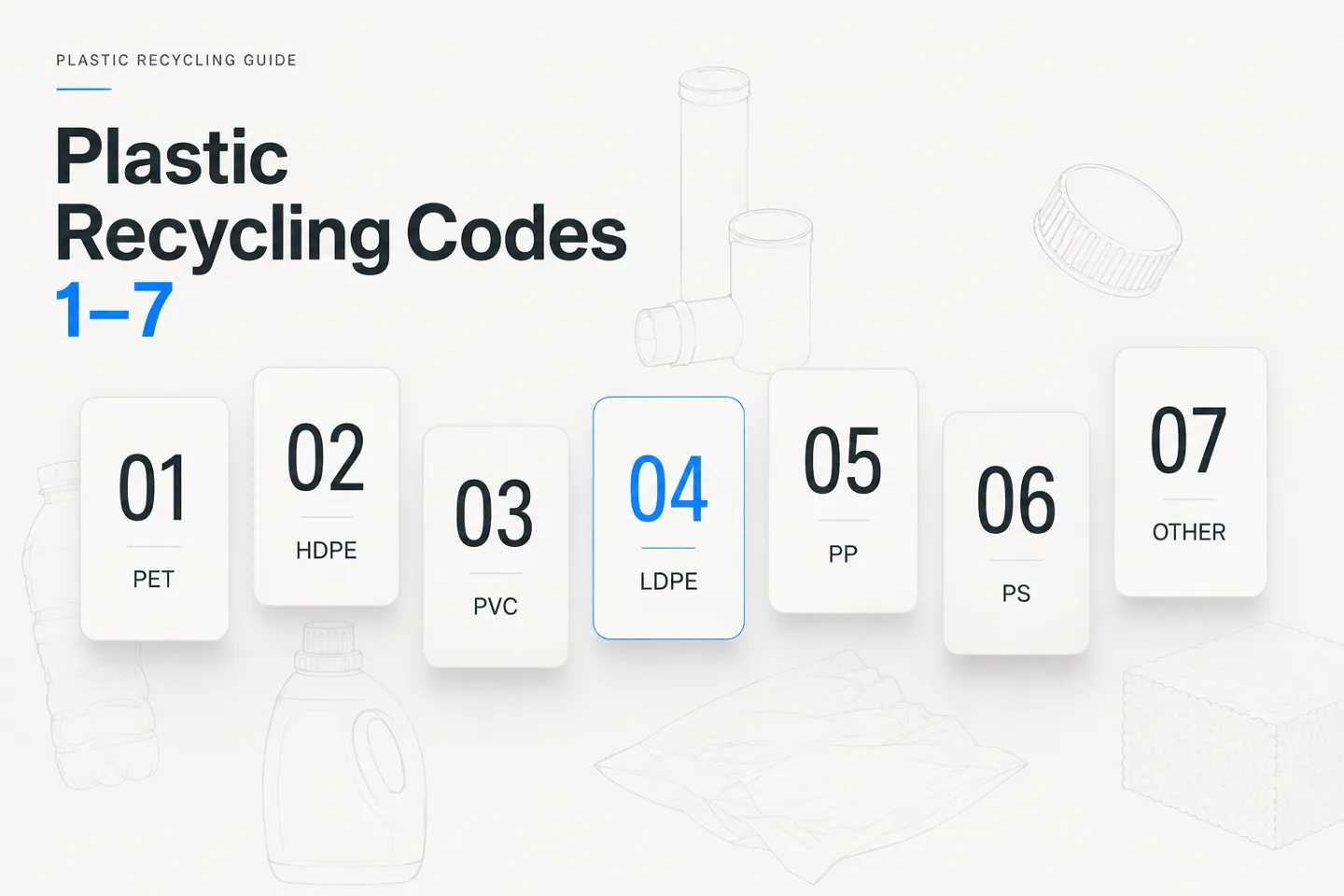
플라스틱 제품은 다양한 폴리머로 만들어지며, 각각은 정렬, 세척, 쇠너, 분리 및 재처리 과정에서 다르게 동작합니다. 따라서 플라스틱 종류를 올바르게 식별하는 것은 어떤 재활용 작업에서도 가장 중요한 단계 중 하나입니다.
플라스틱 제품에 흔히 찾아볼 수 있는 숫자부터 1부터 7까지는 알려져 있습니다 유전체 식별 코드 (RIC). 주요 플라스틱 원료를 식별하는 데 도움이 됩니다.
빠른 답변: 플라스틱 번호 1~7은 다른 성분 카테고리를 식별합니다. 안녕하세요 자동으로 제품이 재활용 가능하다는 의미는 아닙니다. 실제 재활용 가능성은 고분자, 제품 설계, 오염 수준, 수집 시스템, 그리고 보유 중인 재활용 기술에 따라 달라집니다.
재활용업체에서는 이 플라스틱 종류를 이해하는 것이 어떤 정렬 방법, 세척 공정, 쇼더, 크래셔, 분리기, 그리고 펠릿 제조 시스템을 사용해야 할지 결정하는 데 도움이 됩니다.
플라스틱 리サイ클링 번호는 무엇을 의미하나요?
리전 식별 코드 시스템은 원래 다양한 플라스틱 성분을 식별하고 정리를 지원하기 위해 개발되었습니다.
일곱 가지 주요 분류는 다음과 같습니다:
- PET 또는 PETE — PET
- HDPE HDPE
- PVC — 폴리비닐황음성
- LDPE LDPE
- PP — 폴리프로필렌
- 추신 — 아세틸렌 복합 플라스틱
- 기타 — ABS, PC, PA, PMMA, PLA 등 다른 플라스틱 및 다층 재질
핵심은 shredder와 crusher를 구별하는 것입니다. 유전체 식별 코드 재활용 선언서에 따르면. ASTM D7611/D7611M에 따르면, 코드는 특정 물체에 사용된 플라스틱 성분을 식별합니다; 코드의 존재는 제품이 재활용될 수 있거나 재활용될 것임을 보장하지 않습니다.
플라스틱 유형 1~7: 간단한 비교
| 암호 | 플라스틱 | 표준 밀도* | 물 속에서의 행동 | 일반적인 응용 프로그램 | 재활용 어려움 |
|---|---|---|---|---|---|
| #1 | 애완 동물 | 1.34–1.39 g/cm³ | 저희는 플라스틱 재활용 장비 및 산업 재활용 장비 전문 번역가입니다. 한국어 번역을 요청하셨지만, 'Sinks'라는 단어는 재활용 장비의 기술 용어가 아니므로 직접 번역하기 어렵습니다. 이 단어가 구체적인 상황이나 문맥을 알려주시면 더 정확한 번역을 도와드릴 수 있습니다. 예를 들어, '물통', '분수대', '저수조' 등으로 해석될 수 있는 경우가 있으며, 이는 해당 상황에 따라 다를 수 있습니다. | 음료병, 식품 용기, 폴리에스터 | 낮음-중간 |
| #2 | HDPE | 0.94–0.97 g/cm³ | 부유 | 병, 탱크, 크래트, 파이프 | 낮은 |
| #3 | PVC | ~1.16–1.45+ g/cm³ | 보통 떠있음 | 파이프, 프로파일, 바닥재, 케이블 점성체 | 중간–고 |
| #4 | LDPE | 0.91–0.94 g/cm³ | 부유 | 필름, 백, 수축봉투 | 중간 |
| #5 | PP | 0.89–0.92 g/cm³ | 부유 | 캡, 크래트, 컨테이너, 휘어진백 | 낮음-중간 |
| #6 | 추신 | ~1.04–1.07 g/cm³ | 빈대 PS는 보통 떠있음 | HIPS 제품, 트레이, EPS 폼 | 중간–고 |
| #7 | 기타 | 다양하다 | 다양하다 | ABS, PC, PA, PMMA, PLA, 다층 플라스틱 | 다양하다 |
*밀도 값은 추정치입니다. 실제 밀도는 수지 등급, 채우물, 강화, 첨가제, 제품 구조에 따라 다릅니다.
밀도는 재활용에서 특히 유용합니다. 특정 플라스틱을 분리하는 데 도움이 됩니다. 침강-부유 분리. 그러나 밀도 분리만으로는 모든 폴리머를 구분할 수 없습니다.
예를 들어, PP와 대부분의 PE 등급은 물보다 밀도가 낮기 때문에 일반적으로 표준 물 탱크에서 떠있습니다.
#1 PET — 폴리에틸 테레프탈레이트
PET, PETE 로도 쓰이는 것이며, 가장 널리 재활용되는 플라스틱 중 하나입니다.
일반 PET 제품
PET는 일반적으로 다음과 같은 곳에 찾아볼 수 있습니다:
- 물병
- 소프트 드링크 병
- 유리병
- 식품 용기
- PET 저재질 플라스틱 용기
- 폴리에스터 섬유 및 텍스타일
- PET끈
PET는 강하고 가볍고 투명하며 우수한 방수성을 가지고 있어 음료와 식품 포장에 특히 적합합니다.
PET 밀도 및 분리
표준 PET 밀도는 약간입니다. 1.34–1.39 g/cm³, 즉 PET은 일반적으로 물속에 침수합니다.
이 성질은 병 재활용 시 매우 유용합니다.
PET 병이 깨지면 플레이트로 만들어지면, 밀도 분리 탱크를 이용해 분리할 수 있습니다:
- PET 찢어진 플라스틱 — 부유
- PP 모자 — 부유
- HDPE 모자 — 부유
이를 통해 상대적으로 간단한 밀도 분리 단계에서 PET 플레이트에서 대부분의 PP와 PE 오염물질을 제거할 수 있습니다.
PET 재활용 공정
일반적인 PET 병 재활용 공정은 다음과 같은 단계를 포함할 수 있습니다:
분리 → 정렬 → 라벨 제거 → 압착 → 침수-부력 분리 → 열 세척 → 마찰 세척 → 세척 → 분수 제거 → 건조 → 플레이트 정렬
정리된 PET 플레이크는 폴리에스터 섬유, 밧줄, 시트 압출, 또는 추가 펠릿화와 같은 용도로 사용될 수 있습니다.
대규모 소비자용 병 재활용을 위해서는 전체 페트병 재활용 시스템 정렬, 크기 감소, 세척, 밀도 분리 및 건조를 연속적인 과정으로 결합합니다.
주요 PET 재활용 도전 과제
일반적인 오염물질은 다음과 같습니다:
- PVC
- PP 및 PE 캡
- 라벨
- 접착제
- 식품 및 음료 쓰레기
- 궤조
- 색상 PET
- 기타 포리머
PET 재활용에서 PVC 오염은 특히 불만스럽습니다. 왜냐하면 PET와 PVC는 다른 열 특성을 가지고 있으며, 고품질 재처리 전에 주의 깊게 분리되어야 합니다.
#2 HDPE — 고농도 폴리에틸렌
HDPE는 소비자 포장 및 산업 응용 분야에서 가장 일반적으로 사용되는 고정성 플라스틱 중 하나입니다.
일반 HDPE 제품
일반 HDPE 쓰레기는 다음과 같습니다:
- 우유 병
- 세제 병
- 샴푸 병
- 화학 용기
- 지리병
- 산업 드럼
- 플라스틱 크레이킹
- 팔레트
- 폐통
- HDPE 파이프(고밀도 폴리에틸렌)
HDPE는 튼튼함, 화학 저항성, 충격 저항성, 그리고 상대적으로 낮은 밀도를 결합하고 있습니다.
HDPE 밀도 및 분리
일반 HDPE 밀도는 약 0.94–0.97 g/cm³따라서, 빈 HDPE는 일반적으로 물에 뜹니다.
이는 HDPE가 PET이나 PVC와 같은 무거운 플라스틱과 섞여 있을 때 물 기반 밀도 분리가 유용하다는 것을 의미합니다.
그러나 첨가제와 보강제는 완성된 HDPE 제품의 밀도를 변화시킬 수 있습니다.
HDPE 재활용 공정
엄격한 HDPE 재활용은 일반적으로 다음과 같은 과정을 포함합니다:
정렬 → 쇼트나 부숨 → 세척 → 마찰 세척 → 침수-부력 분리 → 분수기 제거 → 건조 → 펠릿 제조
드럼, 두꺼운 컨테이너, 패킹, 덩어리, 파이프와 같은 큰 제품은 granulation 전에 초기 크기 축소가 필요할 수 있습니다.
ㅏ 고강도 플라스틱 분쇄기 또는 단단한 플라스틱 쇼트너는 두꺼운 벽재에 사용할 수 있으며, 긴 HDPE 파이프는 종종 전용 파이프 쇼트너 시스템이 필요합니다.
오염된 소비자용 단단한 플라스틱에 대해서는 유연성 없는 플라스틱 세척 라인 (PP, HDPE, PVC용) 크기 축소, 세척, 분리 및 건조를 통합할 수 있습니다.
주요 HDPE 재활용 도전 과제
표준 문제점은 다음과 같습니다:
- 종이 및 필름 라벨
- 접착제
- 유전유
- 화학물질
- 금속 부품
- 다른 색상
- PP 오염물질
- 미네랄 첨가 플라스틱
따라서 필요한 장비는 주입원료가 깨끗한 산업 폐자재인지 오염된 소비자 폐자재인지에 따라 매우 크게 달라집니다.
#3 PVC — 폴리비닐황음성재
PVC는 건설, 인프라, 바닥재, 전기 제품 및 산업 적용에 널리 사용되는 다재다능한 플라스틱입니다.
둘 다 존재합니다 단단한 PVC 그리고 유연한 PVC 모양.
일반 PVC 제품
표준 PVC 폐기물에는 다음이 포함됩니다:
- 물과 배수관
- 창문 프로파일
- 문프로파일
- 벽 판널
- 바닥
- 케이블 이불링
- 비닐 시트
- 유연한 호스
- 의료 제품
PVC 재활용은 왜 다른가요
PVC는 염소를 폴리머 구조의 일부로 포함하고, 또한 플라스틱 성분을 포함할 수 있습니다.
- 플라스틱제
- 안정제
- 체재물
- 색소
- 충격 조절제
따라서 다양한 PVC 형태는 재활용 시 매우 다르게 동작할 수 있습니다.
PVC 파이프 또는 프로파일 제조 과정에서 발생하는 정화 생산 폐자재는 일반적으로 혼합된 소비자 후기 유연한 PVC 폐자재보다 훨씬 쉽게 재활용하기 쉽습니다.
PVC 밀도
PVC는 보통 밀도가 1보다 높습니다. 1.0 g/cm³ 그래서 일반적으로 물속으로 침수됩니다.
그의 실제 밀도는 추가물질과 채종에 따라 매우 다릅니다.
PVC 재활용 과정
정화된 단단한 PVC 쓰레기는 다음과 같이 처리될 수 있습니다:
분류 → 분쇄 → 금속 제거 → 필요한 경우 미세 분쇄 → 분류 → 재가공
긴 PVC 파이프와 프로파일은 전통적인 압축기에 공급이 어려움. 특별한 PVC 파이프 & 프로파일용 압축기 긴 재료를 수평으로 공급하여 균일한 크기 감소를 가능하게 합니다.
Some PVC applications also require the crushed material to be reduced further into fine powder using a pulverizer.
주요 PVC 재활용 도전 과제
주요 도전 과제는 일관된 PVC 스트림을 유지하는 것입니다.
PVC를 PET, PE, 또는 PP와 같은 포리머와 혼합하면 회수된 재료의 품질을 저하시키고 하류 처리 문제를 일으킬 수 있습니다.
따라서, 혼합 플라스틱 쓰레기를 처리할 때는 효과적인 포리머 식별 및 정리가 매우 중요합니다.
#4 LDPE — 저밀도 폴리에틸렌
LDPE는 포장 필름에 널리 사용되는 유연한 폴리에틸렌입니다.
단단한 HDPE 컨테이너와 달리, LDPE 쓰레기는 종종 얇고 가벼우며 더러우며, 재활용 기계에 일관되게 공급하는 것이 어렵습니다.
일반 LDPE 제품
LDPE와 관련된 유연한 PE 재료는 다음과 같이 일반적으로 발견됩니다:
- 쇼핑백
- 포장 필름
- 스트레치 필름
- 축축 필름
- 농업 필름
- 온실 필름
- 폼봉
- 유연한 포장
- 산업 필름 쓰레기
LDPE 밀도
일반적인 LDPE 밀도는 약 0.91–0.94 g/cm³, 그래서 물에 떠 있습니다.
필름 재활용이 어려운 이유
유연한 플라스틱 필름은 여러 처리 문제를 일으킵니다:
- 매우 낮은 볼륨 밀도
- 세척 후 높은 습도
- 진흙과 모래 오염
- 연속 공급 어려움
- 필름이 회전 부품을 감싸고 있습니다.
- 높은 운송량
- 불규칙한 재료 흐름
농업용 필름에는 흙, 모래, 유기물, 습기 등이 특히 높은 수준으로 포함될 수 있습니다.
LDPE 필름 재활용 공정
일반적인 공정은 다음과 같습니다:
정렬 → 쇠너 → 세척 → 마찰 세척 → 부유 분리 → 배수 → 짜기/건조 → 밀도 증가 → 펠릿 제조
중량 오염된 유연 폐자재에 대해서는 전용 PP/PE 필름 재활용 빨래 건조대 보통 단단한 플라스틱을 위한 장비보다 더 적합합니다.
빨래 후에는 필름 스크위저 또는 밀도 증대기가 추출 전에 습기를 줄이고 부피 밀도를 높일 수 있습니다.
#5 PP — 폴리프로필렌
폴리프로필렌은 또 다른 주요 재활용 가능한 열가소성 플라스틱이며, 단단한 제품과 유연한 제품 모두에 널리 사용됩니다.
일반 PP 제품
표준 적용 분야는 다음과 같습니다:
- 병뚜껑
- 식품용기
- 컵
- 상자
- 자동차 부품
- 배터리 케이스
- 가정용 제품
- PP 짠 가방
- FIBC 자막 백
- 라피아
- 비 woven 텍스처
- 사출 성형 스크랩
PP 밀도
PP는 일반 플라스틱 중 가장 낮은 밀도를 가지고 있으며, 일반적으로 약 0.89–0.92 g/cm³.
따라서 일반적으로 물에 뜹니다.
PP와 PE는 물로만 분리될 수 있을까요?
일반 물만 사용하면 신뢰할 수 없습니다.
PP(폴리프로필렌) 및 대부분의 PE(폴리에틸렌) 등급의 밀도는 1.0 g/cm³ 미만이므로, 표준적인 부유-침강 탱크에서 부력을 띠는 경향이 있습니다.
이는 PP/PE를 더 무거운 폴리머로부터 분리하는 데 매우 효과적이지만, 일반적으로 정확한 PP 대비 PE 분리를 제공할 수 없다는 것을 의미합니다..
PP와 PE가 서로 분리되어야 할 때, 재료 상태와 순도 요구 사항에 따라 추가적인 기술이 필요할 수 있습니다.
PP 재활용 과정
고정형 PP를 위해:
정리 → 자르기/압축 → 씻기 → 분리 → 건조 → 펠릿화
PP woven 백이나 유연한 재료를 위해:
자르기 → 씻기 → 마찰 청소 → 물 제거 → 압축/밀도 증가 → 펠릿화
정제된 PP는 크기 감소와 Extrusion만 필요할 수 있지만, 오염된 소비자 후 PP는 더 완전한 씻기 시스템이 필요합니다.
#6 PS — 폴리스티렌
폴리스티렌은 종종 폼 패키징과 연관되지만, 모든 PS가 폼이 아닙니다.
일반적인 형태는:
- 일반적인 폴리스티렌 (GPPS)
- 고출력 폴리스티렌 (HIPS)
- 확장 폴리스티렌 (EPS)
- 추출 폴리스티렌 (XPS)
일반 PS 제품
응용 분야는:
- 고정형 식품 트레이
- 사용 후 폐기품
- HIPS 주스닝
- 가전제품 부품
- 냉장고 라이너
- 보호 포장
- EPS 발포 상자
- 절연재료
PS 밀도
단단한 PS 재질은 일반적으로 물보다 밀도가 약간 높아서 대체로 침수합니다.
EPS와 같은 환경성 제품은 구조에 많은 양의 공기가 포함되어 있어 완성된 제품의 명백한 부피 밀도가 매우 낮아 다르게 행동합니다.
EPS 재활용은 왜 다른가요
EPS는 매우 가볍고 부피가 큽니다.
EPS 폐기물을 운송하는 것은 그래서 비효율적일 수 있습니다. 트럭이나 컨테이너가 중량 용량에 도달하기 전에 부피 한계에 도달할 수 있기 때문입니다.
EPS 재활용은 종종 부피 감소 단계를 포함합니다. 예를 들어:
추출 → 압축 또는 열융화 → 펠릿화
밀도화는 추가 처리 전에 저장 및 운송 부피를 크게 줄입니다.
주요 PS 재활용 도전 과제
어려움이 있을 수 있습니다:
- 낮은 부피 밀도
- 식품 오염
- 혼합 등급
- 플라스틱에 사용되는 방화제
- 기타 포맨드 플라스틱 오염
- 수집 경제학이 어렵다
정리된 산업용 PS나 HIPS 쓰레기는 올바르게 식별되고 분리되면 기계적으로 재활용될 수 있다.
#7 OTHER — ABS, PC, PA, PMMA, PLA 및 기타 플라스틱
코드 7는 자주 오해받는다.
그렇지만 안녕하세요 플라스틱이 자동적으로 혼합 재료이거나 재활용할 수 없다는 것은 아니다.
대신, 코드 7는 코드 1에서 6에 속하지 않는 플라스틱을 위한 넓은 범주로 작용한다.
코드 7 플라스틱의 예시
제품과 코드 시스템에 따라 이 카테고리에는 포함될 수 있다:
- ABS — 아クリ놀렌 브락시드 스틸렌
- PC — 폴리카보네이트
- PA — 폴리아미드 / 나일론
- PMMA — 아크릴
- PLA – 폴리락트산
- 다양한 공학용 플라스틱
- 다층 구조
- 특정 포맨드 혼합물
이 재료들은 매우 다른 성질을 가지기 때문에 하나의 재활용 흐름으로 다루어질 수 없다.
코드 7 플라스틱은 재활용될 수 있을까?
때로는 예.
정리되고 잘 정리된 산업용 ABS, PC, PA, 또는 PMMA 쓰레기는 기계적으로 재활용에 적합할 수 있다.
문제는 다른 코드 7 포맨드가 혼합되거나 정확한 레시너 구성이 알려지지 않을 때 발생한다.
공학용 플라스틱의 경우, 썬딩, 분리, extrusion 전에 정확한 식별을 위해 더 복잡한 정리나 분석 방법이 필요할 수 있다.
재활용 공장에서 다른 플라스틱은 어떻게 식별되는가?
레시너 코드는 보이면 유용하지만, 산업 재활용 공장은 인쇄된 숫자에 전적으로 의존할 수 없다.
라벨이 빠지거나 제품이 깨지거나, 산업 쓰레기가 레시너 식별 기호를 가지지 않았을 수도 있다.
따라서 여러 식별 및 분리 방법이 일반적으로 사용된다.
1. 레시너 식별 코드
RIC 기호는 폴리머 종류에 대한 초기 간단한 가이드를 제공합니다.
특히 손으로 완전한 포장과 성형 제품을 식별하는 데 유용합니다.
그러나 이는 완전한 정리 솔루션으로 취급되어서는 안 됩니다.
2. 시각 및 수동 정리
경험 많은 운전원은 종종 재료를 재료의 특성과 같은 것들을 사용하여 식별할 수 있습니다.
- 제품 유형
- 색
- 단단함
- 투명도
- 면적 외관
- типичное применение
수동 정리는 간단하지만 처리 용량이 높거나 시각적으로 유사한 고분자가 혼합되면 실용성이 떨어집니다.
3. 밀도 및 싱크-플로트 분리
밀도 분리는 플라스틱 재활용에서 가장 널리 사용되는 기술 중 하나입니다.
표준 수 기반 부력분리탱크에서:
- PP는 보통 부유합니다
- LDPE는 보통 부유합니다.
- HDPE는 보통 부유합니다
- PET 일반적으로 침수합니다.
- PVC는 보통 침수합니다.
- 단단한 PS는 보통 침수합니다.
이는 PET 병 재활용과 같은 응용 분야에서 PET 플레이크가 부유하는 PP와 PE 커버에서 분리될 수 있으므로 침수-부유 분리가 특히 유용하게 사용됩니다.
그러나 밀도는 첨가제, 보강재, 발포 또는 다층 구조에 의해 변경될 수 있습니다.
ㅏ 싱크-플로트 분리 탱크 따라서, 이는 완전한 정렬 공정의 일부로 고려되어야 하며, 전반적인 폴리머 분리제로 간주해서는 안 됩니다.
4. NIR 광학 정리
나침반 빛, 또는 NIR, 정리 시스템은 반사 빛을 분석하여 다양한 폴리머 유형을 자동으로 식별합니다.
NIR 기술은 고성능 정리 작업에서 널리 사용됩니다.
그러나 성능은 다음과 같은 요인에 따라 달라집니다:
- 표면 상태
- 재료 색상
- 오염
- 제품 지형
- 센서 구성
전통적인 NIR 시스템은 일부 카본 블랙 폴리머를 식별하는 데 어려움을 겪을 수 있습니다.
5. FTIR 분석
푸리에 변환 적외선 분광법(FTIR)은 알려지지 않은 고분자를 분석하여 얻은 적외선 흡수 스펙트럼을 통해 식별하는 데 사용될 수 있습니다.
FTIR는 다음과 같이 특히 유용합니다:
- 실험실 분석
- 재료 검증
- 알 수 없는 산업 폐기물
- 품질 관리
대체로 식별 도구로서 대량의 기계적 분리 과정이 아닙니다.
6. 전기적 분리
플라스틱이 적절히 크기 줄여지고, 깨끗이 되고, 건조되면, 전기적 분리는 특정 응용에서 혼합 폴리머 플라크를 전기적 행동의 차이에 따라 분리하는 데 사용될 수 있습니다.
이 과정의 적합성은 다음과 같은 요인에 따라 강하게 달라집니다:
- 폴리머 조합
- 파티클 크기
- 습도
- 표면 깨끗함
- 재료 구성
전기적 분리 시스템을 선택하기 전에 재료 검사가 일반적으로 권장됩니다.
정확한 플라스틱 분리의 중요성
재활선은 플라스틱을 작은 것으로 만드는 것 이상의 역할을 합니다.
목표는 특정 용도에 적합한 충분한 순도, 수분 함량, 입자 크기 및 조성의 일관된 재료를 생산하는 것입니다.
폴리머 분리 불량은 다음과 같은 문제를 일으킬 수 있습니다:
- 불안정한 압출
- 축소된 기계적 성질
- 표면 결함
- 색상 불일치
- 필터 차단
- 과도한 반품율
- 재생된 재료의 가치가 낮음
필요한 순도는 최종 제품에 따름.
저급 모델링 제품을 생산하는 재활용 공장은 고품질 펠릿, 시트, 섬유, 또는 병 등급 재료를 생산하는 공장보다 더 많은 오염을 용납할 수 있습니다.
이 때문에, 올바른 재활용 과정은 항상 원료 및 필요한 최종 제품.
플라스틱 유형별 표준 재활용 과정
| 플라스틱 | 표준 재활용 경로 |
| PET 병 | 정리 → 레이블 제거 → 치환 → 밀도 분리 → 뜨거운 씻기 → 건조 |
| HDPE 병 | 정리 → 치환 → 씻기 → 밀도 분리 → 건조 → 펠릿화 |
| HDPE 드럼/crate | 분쇄 → 압착 → 세척 → 건조 → 압축 |
| PVC 파이프/profile | 분쇄 → 금속 제거 → 갈기/분쇄 → 재활용 |
| LDPE 필름 | 잘라내기 → 세척 → 분수탈출 → 짜기/밀도증가 → 펠릿화 |
| PP 고정성 플라스틱 | 추출 → 세척 → 분리 → 건조 → 펠릿화 |
| PP 짠 가방 | 잘라내기 → 세척 → 짜기/밀도 증가 → 펠릿 제조 |
| EPS | 추출 → 밀도 증가/압축 → 펠릿 제조 |
| ABS/PC/PA/PMMA | 식별 → 정렬 → 쇼트/파쇄 → 필요시 분리 → 압출 |
모든 주입재에 이상적인 단일 플라스틱 재활용 기계는 없습니다.
정확한 플라스틱 재활용 장비 선택 방법
섞은더, 크래셔, 세척 라인, 분리 시스템, 또는 펠렛라이저를 선택하기 전에 몇 가지 요소를 평가해야 합니다.
플라스틱 종류
재료가 무엇인지 확인하십시오:
- 애완 동물
- HDPE
- LDPE
- PP
- PVC
- 추신
- 고객님께서 문의하신 ABS 소재 처리를 위한 특수 가공 장비는 다음과 같습니다.
- PC
- 아빠
- PMMA
- 혼합 플라스틱
가능한 경우, 불확정된 혼합 재료를 중심으로 회수 공정을 설계하지 마십시오.
물질 형태
동일한 폴리머라도 물리적 형태에 따라 완전히 다른 장비가 필요할 수 있습니다.
예를 들어, HDPE는 다음과 같이 도착할 수 있습니다:
- 병
- 통조림통이
- 상자
- 팔레트
- 큰 덩어리
- 관광지
LDPE는 다음과 같이 도착할 수 있습니다:
- 이동성 플라스틱 필름
- 압목된 플라스틱 필름
- 농업 필름
- 스트레치 필름
- 생산 가장자리 트리밍
재료 크기, 벽 두께, 부피 밀도, 그리고 공급 행동이 기계 선택에 직접 영향을 미칩니다.
오염
재료에 다음이 포함되어 있는지 확인하십시오:
- 진흙
- 모래
- 종이
- 라벨
- 접착제
- 유전유
- 식품
- 금속
- 유리
- 목재
- 기타 플라스틱
정화된 공장 스캇은 단순히 치환하고 펠릿화만이 필요할 수 있으며, 심하게 오염된 소비자 후폐물은 완전한 씻기와 분리 라인이 필요할 수 있습니다.
필요한 최종 제품
재활용 과정은 원하는 출력을 중심으로 설계되어야 합니다:
- 파쇄 조각
- 깨끗한 플레이크
- 재귀인
- 미세 분말
- 고밀도 소재
- 재활용 펠릿
20~50mm 크기의 잘게 썬 재료를 생산하는 데 적합한 장비는 깨끗한 압출용 알갱이를 생산하도록 설계된 시스템과 매우 다릅니다.
용량
필요한 생산 용량을 지정하십시오 kg/h 또는 톤/h.
처리량은 다음과 같이 영향을 미칩니다:
- 기계 크기
- 모터 파워
- 컨베이어 크기
- 세척 탱크 크기
- 건조기 용량
- 에크스트루더 크기
- 공장 레이아웃
- 사용성 요구사항
공급 및 현장 조건
완전한 재활용 프로젝트는 다음을 고려해야 합니다:
- 전압
- 빈도
- 삼상전력 사용 가능성
- 물 공급
- 폐수 처리
- 압축공기
- 가열 요구사항
- 가용한 바닥 공간
- 천정 높이
- 재료 저장
이러한 요인을 장비 선택 전에 평가함으로써 나중에 비용이 많이 드는 수정을 방지할 수 있습니다.
플라스틱 재활용 코드에 대한 자주 묻는 질문
플라스틱에 1에서 7까지의 숫자는 무엇을 의미하나요?
이들은 주요 플라스틱 재질을 식별하는 용접 인식 코드입니다. 코드 1~6은 여러 주요 재질 가족을 대표하며, 코드 7은 이 분류 외의 다른 플라스틱을 포함합니다.
재활용 번호는 플라스틱이 재활용 가능하다는 것을 의미하나요?
아니요. 용접 인식 번호는 재료를 식별하는 것이며, 특정 제품에 대해 수집이나 재활용 시스템이 존재하는 것을 보장하지 않습니다.
재활용 가능성은 포리머, 제품 설계, 오염, 지역 수집 인프라, 사용 가능한 처리 기술에 따라 다릅니다.
물에 떠는 플라스틱 유형은 무엇인가요?
비취성 PP, LDPE, HDPE는 일반적으로 물에 떠서 그 밀도가 일반적으로 1.0 g/cm³ 미만입니다.
PET, PVC, 고체 PS는 일반적으로 빠지게 됩니다.
채색제, 추가제, 풍부화, 복합 구조는 이러한 행동을 변경할 수 있습니다.
PP와 PE는 일반적인 심지어 탕수리 탱크를 사용하여 분리할 수 있나요?
대부분의 경우 효과적으로 분리되지 않습니다. 왜냐하면 PP와 일반 PE 등급이 일반적으로 물에 떠서 그 밀도가 낮기 때문입니다.
표준 물 기반 심지어 탱크는 떠 있는 PP/PE를 더 무거운 재료와 같은 PET나 PVC로부터 효과적으로 분리하는 데 더 효과적입니다.
재활용하기 가장 쉬운 플라스틱은 무엇인가요?
PET, HDPE, PP, PE의 깨끗한 단일 포리머 스트림은 광범위하게 기계 재활용을 통해 처리됩니다.
그러나 재료의 상태는 용접 코드만으로도 중요할 수 있습니다. 예를 들어, 깨끗한 산업용 PP 쓰레기는 오염된 소비자 후 플라스틱보다 훨씬 더 쉽게 재활용될 수 있습니다.
코드 7 플라스틱은 재활용 가능하나요?
일부 코드 7 플라스틱은 재활용 가능합니다.
정화된 ABS, PC, PA, PMMA 및 다른 공학 플라스틱 생산 쓰레기는 포리머가 올바르게 식별되고 분리되면 일반적으로 기계적으로 재활용될 수 있습니다.
혼합, 다층, 또는 불명확한 코드 7 재료는 처리가 상당히 어렵습니다.
PET 재활용에서 PVC 오염이 왜 문제인가요?
PVC와 PET은 다른 처리 특성을 가집니다. PVC 오염은 PET 재처리와 최종 제품 품질에 부정적인 영향을 미치므로, 고순도 PET 재활용에서 효과적인 정리가 중요합니다.
플라스틱 재활용에 사용되는 기계는 무엇인가요?
원료에 따라 재활용 라인에는 다음과 같은 기계가 포함될 수 있습니다:
- Conveyor
- 파쇄기
- 플라스틱 크러셔나 그란ولا이저
- Trommel screens
- magnetics separator
- 부드러운 청소기
- 핫 워싱 시스템
- 시ンク-플로트 탱크
- 수분 제거기
- 열 건조기
- 필름 슬리밍기
- 밀도제
- 옵티컬이나 전기적 분리기
- pelletizing 시스템
적절한 구성은 플라스틱 유형, 오염, 필요한 용량, 목표 최종 제품에 따라 달라집니다.
플라스틱 식별부터 완전한 재활용 과정까지
플라스틱 재활용 코드 이해는 유용한 시작점이지만, 산업 재활용은 단순히 제품에 있는 숫자를 식별하는 것 이상이 필요합니다.
폴리머 유형, 밀도, 오염, 물리적 형태, 입자 크기, 습도, 최종 순도 요구 사항이 재활용 라인 설계에 미치는 영향을 모두 결정합니다.
PET 병 재활용 공장은 밀도 분리와 열 세척에 크게 의존할 수 있습니다. LDPE 필름 공장은 효율적인 세척, 분수 제거 및 밀도 증가가 필요합니다. 긴 PVC 또는 HDPE 파이프는 전문적인 크기 감소 장비가 필요합니다. 혼합 엔지니어링 플라스틱은 추출 전에 고급 식별 및 분리가 필요할 수 있습니다.
루모투에서는 단단한 플라스틱과 유연한 플라스틱의 다양한 응용 분야용 플라스틱 재활용 장비를 설계하고 제조합니다. 플라스틱 쇼더, 크래셔, 세척 라인, 침수-부력 분리 시스템, 건조 장비, 및 펠릿 제조 라인.
재활용 프로젝트를 계획 중이시면 플라스틱 종류, 재료 사진, 최대 크기, 오염 수준, 요구 출력 크기, 목표 용량, 지역 전압/주파수이 정보에 따라 재활용 공정 및 장비 구성을 실제 주입 재료에 맞게 조정할 수 있습니다. 일괄 적용 해결책에 의존하기보다는 그렇습니다.
