


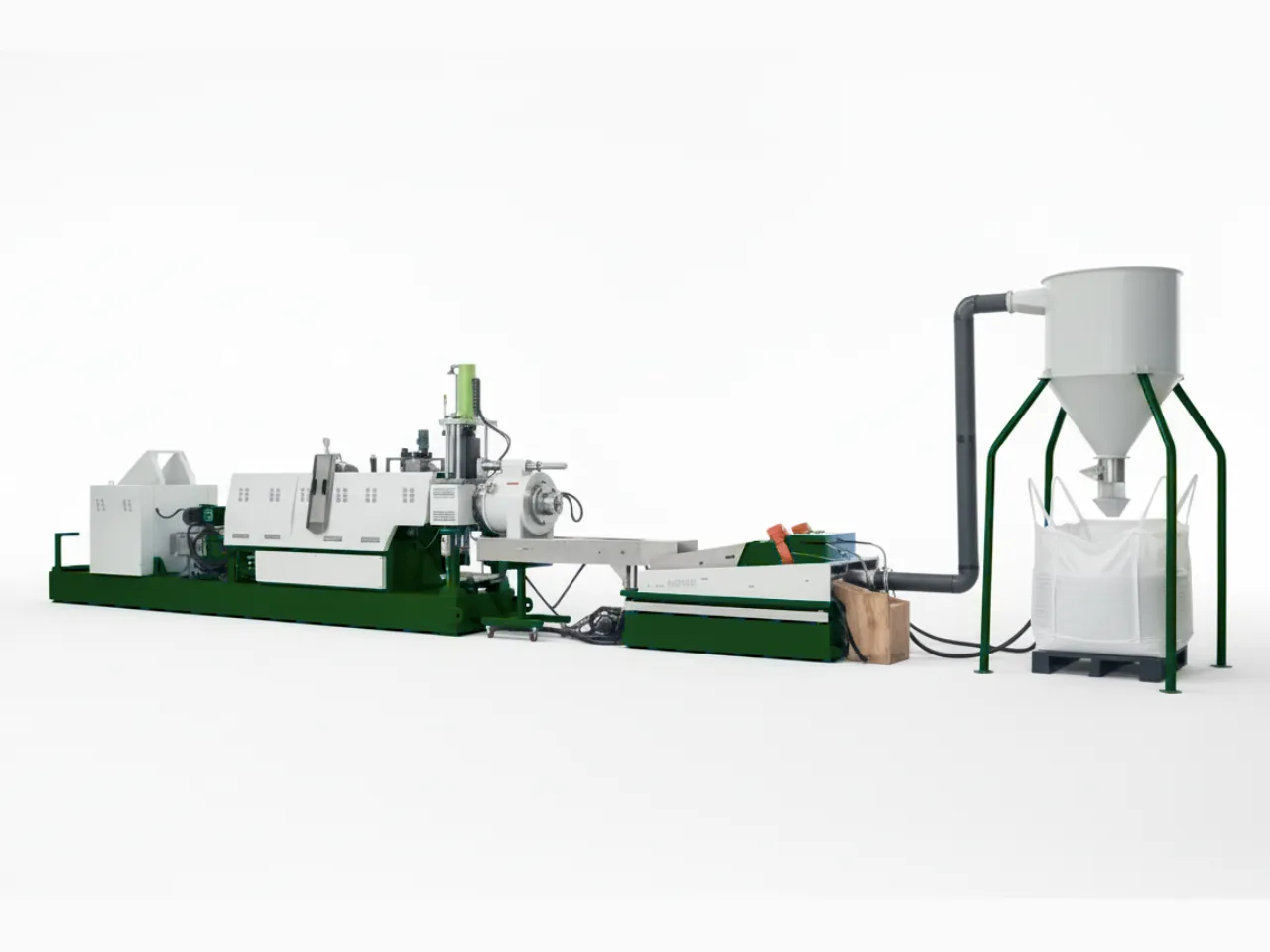
PET 병 플라크 싱글 스크루 펠릿 라인
압축기 공급식 단추 압출기 라인에 2구역 진공 분해가스 제거 및 수중 펠릿 제조 장치가 장착되어, 세척된 PET 병 플레이크를 균일한 rPET 펠릿으로 변환하며, 300–1,200 kg/h의 처리 용량을 가지면서 상대적인 비율도(IV) 하락을 0.05 dL/g 이하로 제한합니다.
- 압축기는 플라스틱 펄프를 사전 열처리하고 밀도 증가시켜 안정적이고 일관된 엑스트루더 공급을 제공합니다.
- 2구역 진공 건조는 잔여 수분과 증발물을 제거하여 IV를 보존합니다.
- 수중 펠릿화는 섬유, 시트, 사출 성형용 균일 3–5 mm 원통형 펠릿을 만듭니다.
300–1,200
kg/h 출력 범위
≤0.05
dL/g IV 떨어짐 (유도도 유지)
4단계
컴팩트 → 압출 → 필터링 → 펠렛화
1년
핵심 부품에 대한 한정된 보증
장비개요
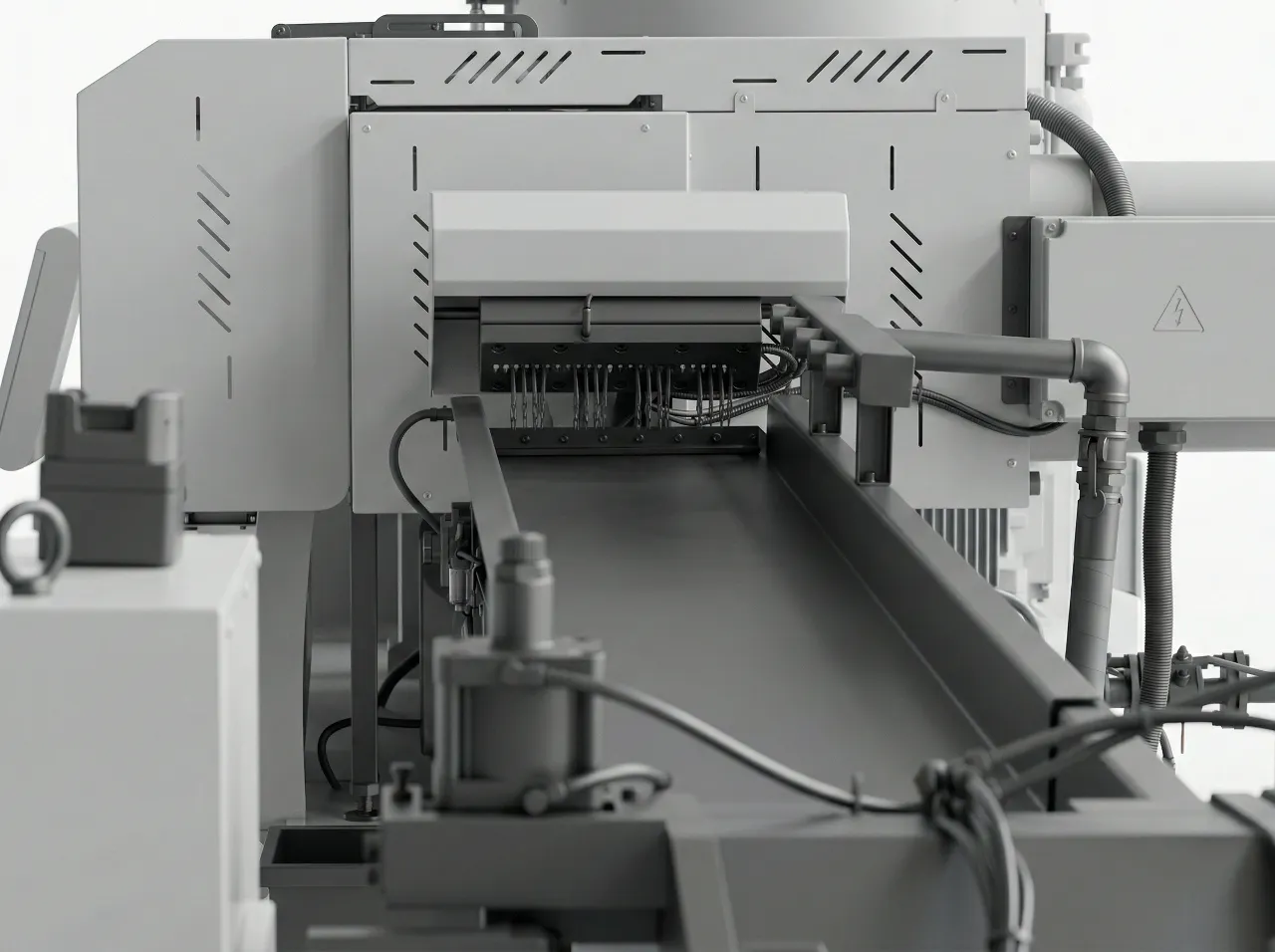
전체 플라스틱 펠릿 제조 시설
라인은 압축기/전열기, 단추 스크류 압출기, 2구간 진공 배출, 용융 필터링, 수중 펠릿 제조 헤드, 중심축 건조기를 하나의 연속 생산 레이아웃에 통합합니다. PET 병 플레이크가 한쪽 끝에 입력되고, 건조하고 균일한 rPET 펠릿이 다른 쪽 끝에서 출력됩니다.
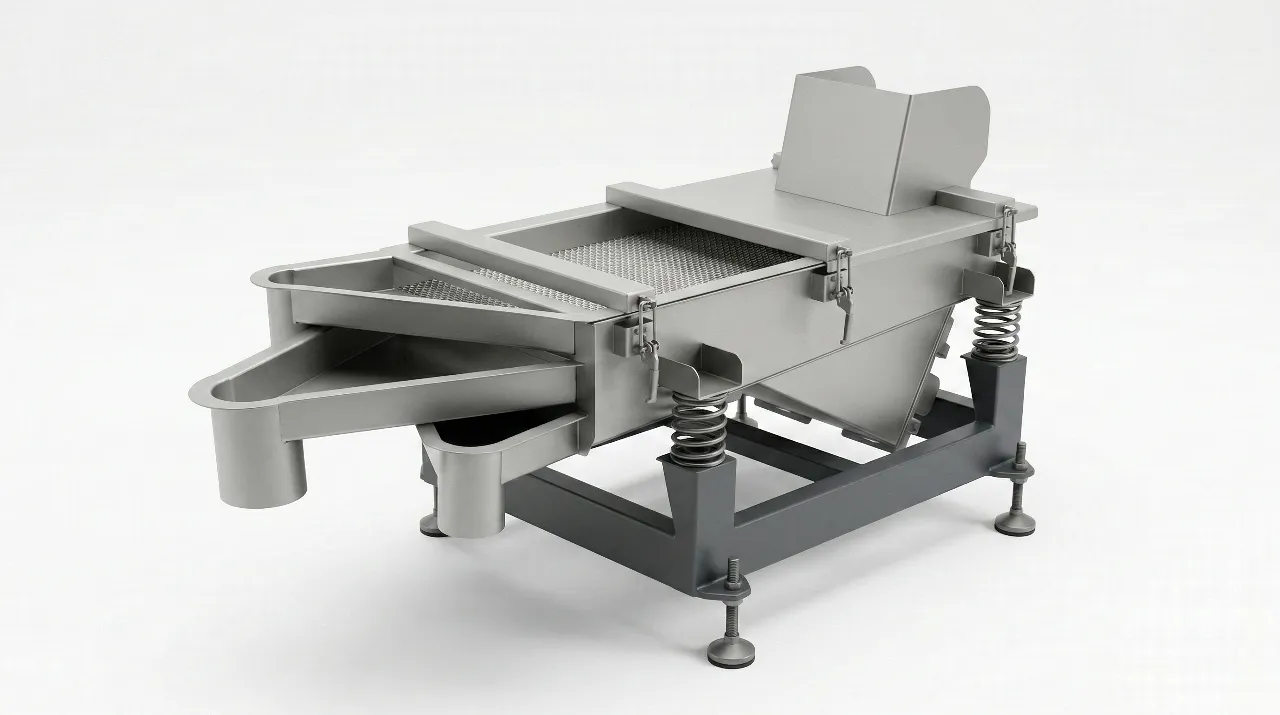
수중 펠렛팅 및 건조 부시스템
수중 펠렛타이저는 용융물을 3–5 mm 원통형 펠렛으로 자른 후, 즉시 순환수에 담그어 굳는 것을 방지합니다. 그 다음 중심력 건조기는 표면 습기를 제거하고, 펠렛이 포장 전에 진동 스크린으로 미세 입자를 분리합니다.
핵심 구성 요소
각 단계는 재활용 PET의 특정 열 및 유체학적 요구사항에 맞게 목적 설계되었습니다.
압축기 / 전열기
PET 플레이크의 부유한 상태를 마찰 열로 밀도를 높이고, 재료가 엑스트루더 바벨로 들어가기 전에 표면 습기를 배출합니다. 이 중요한 단계는 공급 속도를 안정화하고 일관된 용융 압력을 가능하게 합니다.
단축 스크류 압출기(질화강)
정밀 연마된 질화강 스크류(L/D 30:1–36:1)가 전단을 제어하면서 PET를 용융·균질화합니다. 전단은 사슬 분해와 IV 저하를 제한할 만큼 낮게 유지됩니다. 운전 온도는 용융 품질에 따라 보통 265–285 °C입니다.
2구역 진공 배출
두 개의 독립적인 밀폐구는 용융물에서 잔여 수증기 가스, 아세탈데하이드 및 다른 저분자량 휘발성 물질을 빼내옵니다. 압축기 사전 건조와 함께 이는 IV 하락을 보통 ≤0.05 dL/g으로 제한합니다.
녹여 필터링 (자동 스크린 챙저)
유압 자동 스크린 체인저(백플러시 방식)는 생산을 멈추지 않고 용융 흐름에서 고형 오염물을 지속적으로 제거합니다. 필터 정밀도는 산출 순도에 따라 40–150 µm 중에서 선택할 수 있습니다.
수중 펠렛팅 헤드
면접 쇳날 가공기는 잠수식으로 작동하며, 각 줄을 즉시 일정한 3–5 mm 원통형 플라스틱 펠릿으로 식힌다. 수냉식 펠릿 가공은 변형과 굳는 것을 방지하여 일관성 있고 먼지 없는 제품을 생산한다.
센트리피불 브레이커 + 진동 스크린
센트리퓨지 드라이어는 펠릿에서 표면수를 제거하여 <0.5% 수분까지 줄입니다. 표준에 맞는 펠릿이 대량포장이나 silo 저장으로 이동하기 전에 하류 진동 시리스가 미세분과 과대부분을 분리합니다.
작동 원리
당사의 PET 펠릿화 라인은 정밀한 다단계 공정을 통해 PET 플레이크를 고품질 펠릿으로 변환합니다.
1. 공급 및 습도 제거
자동 시스템은 공급 속도를 제어하며, 압축기는 파이프에서 습도를 제거합니다.
2. 단일 스크루 압출
PET 소재는 고성능 압출기에서 압축, 용융 및 균질화 과정을 거칩니다.
3. 배럴 처리
니트로겐 강 배럴은 정확한 온도 제어로 플라스틱을 가열하여 일관된 녹이를 보장합니다.
4. 공기압축 배기
이 단계는 용융된 PET에서 저분자량 물질과 잔류 수분을 제거합니다.
5. 녹이 필터링
별도의 여과 단계를 통해 용융된 플라스틱의 순도를 향상시킨 후 펠릿 형태로 성형합니다.
6. 펠릿화
수중 펠릿화 시스템은 용융된 PET 플레이크를 균일하고 고품질의 과립으로 변환합니다.
7. 건조 및 포장
펠릿은 진동 시리즈와 중압 건조기로 건조되며, 배포를 위해 포장됩니다.
싱글 스크루 대 트윈 스크루
표준 PET 병 플레이트 재활용에는 단추 압출기가 선호되는 선택입니다. 다음은 그 비교입니다.
| 요인 | 단추식 압출기 | 쌍축 압출기 |
|---|---|---|
| 기계식 잘라내기 | PET 용융액에 대한 낮은 절단 스트레스는 PET의 열 및 기계적 연쇄 절단 위험을 줄입니다. | 높은 절단력 — 분산 혼합에 유리하지만, PET의 IV 손상을 가속화할 수 있으므로 주의 깊게 관리해야 합니다. |
| IV 보존 | 표준 rPET 재활용 적용에 있어 내재 점도를 보존하는 데 더 적합합니다. | 조심스러운 온도 및 상주 시간 제어 필요; IV 재건에 체인 연장제가 추가될 때 더 적합합니다. |
| 혼합 능력 | 제한적 — 주로 깨끗한 플레이크의 녹이기, 배출가스 제거 및 필터링에 사용됨. | 초월 — 첨가제, 색소, 불연재료, 또는 연장체를 용융체에 첨가할 때 선호. |
| 비용 및 복잡도 | 낮은 자본 비용, 간단한 기계 설계, 쉬운 운전자 유지보수. | 높은 자본 및 운영 비용; 더 복잡한 스크류 기하학 및 마모 부품. |
| 가장 적합합니다 | 표준 후소비 PET 병 플레이트 → 섬유, 시트, 또는 주입성형 펠릿. | 반응성 혼합, 색상 마스터벨트 첨가 또는 특수 rPET 합금. |
귀사의 공정이 요구한다면 쌍축 혼합 기능 — 이와 같이 용융액에 연쇄확장제나 색상마스터백을 추가하는 것 — 비교를 위해 우리의 쌍축 혼합 라인을 참조하십시오.
적용 분야
이 라인에서 생산되는 출력 플라스틱 펠렛의 IV와 순도는 이 세 가지 주요 최종 시장의 요구사항을 만족합니다.
-
폴리에스터 섬유 & 스테플 섬유
IV 범위: 0.40–0.65 dL/g. 이 라인에서 생산된 rPET 입자는 재생 편옷용 원료로 텍스처, 비단방, 부재료에 널리 사용됩니다. 이것은 전 세계적으로 소비자용 rPET의 가장 큰 수출 시장입니다.
-
PET 시트 및 열가공
IV 범위: 0.70–0.85 dL/g. 음식 트레이, 용기, 클램셀에 사용되는 A-PET 또는 RPET 포장용지에 적합합니다. 이 라인의 용융 필터링 단계에서는 투명 용지에 결함으로 나타날 수 있는 점성 입자와 오염물질을 제거합니다.
-
사출 성형
IV 범위: 0.72–0.85 dL/g. rPET 펠릿은 비식품 용기, 스트래핑, 캡, 엔지니어링 부품의 사출 성형에 적합합니다. 수중 커팅으로 얻은 균일한 펠릿 형상은 사출기에 안정적으로 투입됩니다.
-
병 등급 rPET (SSP 포함)
IV 범위: >0.80 dL/g. 식용 접촉 병 응용 프로그램 (병에서 병으로의 재활용)에 대한 펠릿은 이 라인에서 하류 Solid State Polymerization (SSP) 반응기로 이동하여 IV를 재건할 수 있습니다. 이는 가장 높은 가치의 rPET 출구로 IV ≥0.80 dL/g가 요구됩니다.
기술 사양
일반 라인 파라미터. 정확한 구성은 주문에 따라 원료 품질과 목표 출력 등급에 따라 지정됩니다.
| 항목 | 사양 |
|---|---|
| 적용 가능한 재료 | 씻은 포스트 컨슈머 PET 병 플라크, ≤14 mm |
| 투입 수분 | ≤3% (w/w)가 인피드에 추천됩니다 |
| 출력 펠릿 형태 | 주사형, 3–5 mm 직경 |
| IV 보존 | 일반적인 IV 강하 ≤0.05 dL/g (투입 IV 0.72–0.80 → 산출 IV 0.68–0.76 dL/g) |
| 나사 직경 | 100 mm – 160 mm (모델에 따라 다름) |
| L/D 비율 | 30:1 – 36:1 |
| 바렐 존 | 6–8 독립적으로 제어되는 온도 존 |
| 탈기 시스템 | 2존 백플러스 배기 (두 개의 포트) |
| 용융 여과 | 수동 자동 스크린 체인저 (백플러스 유형); 40–150 µm 선택 가능 |
| 펠릿화 방법 | 물 아래 펠릿화 |
| 제어 시스템 | PLC + HMI 컬러 터치스크린 |
| 출력 용량 범위 | 300 – 1,200 kg/h |
기술 사양
가용 모델
| 모델 | 나사 직경 | 메인 모터 전원 | 출력(kg/h) |
|---|---|---|---|
| CT-100 | 100 mm | 90kW | 300 |
| CT-130 | 130 mm | 132kW | 600 |
| CT-140 | 140 mm | 160 kW | 900 |
| CT-160 | 160 mm | 250 kW | 1,200 |
CT-100
CT-130
CT-140
CT-160
자주하는 질문
펠릿화는 세척된 PET 플레이크를 균일하고 밀도가 높은 알갱이(보통 3–5 mm)로 바꿉니다. 이 규격화된 형태는 폴리에스터 섬유 방사, PET 시트 압출, 사출 성형 등 플레이크를 바로 쓰기 어려운 고부가 후공정을 가능하게 합니다. 펠릿은 후단 설비에서도 더 안정적으로 흐르고, 플레이크보다 운송·보관이 쉽습니다.
PET는 매우 수분 흡수성이 높습니다. 혼합물에 300–500 ppm의 잔여 수분이 있으면 수분 해리 반응 - 장기 포리머 체인을 끊고 내재적 유체 지수 (IV)를 낮추는 것 -가 유발됩니다. 낮은 IV는 약한 기계적 성질과 고요구 응용 프로그램에 대한 적합성이 낮아집니다. 이 라인은 두 가지 방면에서 수분을 다룹니다: 컴팩터는 초기 사전 건조와 밀도화를 제공하고, 2존 백플러스 배기 시스템은 혼합물에서 잔여 기체를 빼내어 일반적인 IV 감소를 ≤0.05 dL/g로 유지합니다.
네. 용융 필터 시스템은 입력 흐름의 오염 수준에 맞게 다른 스크린 세분성(40–150 µm)과 필터 교체 메커니즘으로 구성할 수 있습니다. 산업 후발생 플라스틱이나 잘 분류된 소비자 후발생 플레이트는 표준 스크린 팩을 사용할 수 있으며, 심하게 오염된 흐름은 생산 중단 없이 출력 속도를 유지하기 위해 수력 자동 스크린-체인저(백플러시 유형)로 이용하는 것이 유리합니다.
시중 회수 PET 병 플레이크는 보통 IV 0.72–0.80 dL/g로 라인에 들어갑니다. 적절한 압축, 진공 탈기, 배럴 온도 제어를 하면 산출 펠릿 IV는 보통 0.68–0.76 dL/g을 유지합니다. 이는 폴리에스터 섬유 규격(0.40–0.65 dL/g)을 충족하고, PET 시트 및 사출 성형 등급(0.70–0.85 dL/g)의 임계값에 근접합니다. 병-투-병 등급처럼 IV >0.80 dL/g이 필요하면 후단에 고상중합(SSP)이 필요합니다.
단추 압출기는 용융물에 낮은 기계적 절단을 적용하여 표준 PET 병 플레이트 재활용 시 IV를 더 잘 보존합니다. 쌍추 압출기는 용융물에 첨가제(연장체, 염료, 첨가물)를 혼합할 때 우수한 분산 혼합을 제공하며 선형 플레이트-알갱이 재활용 시 선호됩니다. 하지만 그들의 높은 절단과 복잡성은 비용을 증가시키고 직접적인 플레이트-알갱이 재활용 시 IV 하락 위험을 추가합니다. 대부분의 소비자용 PET 알갱이 제조 설비는 이유로 단추 구성을 사용합니다.
네. 원격 테스트 지원 및 운영자 교육이 모든 라인에 제공됩니다. 모든 기계는 주요 기계 및 전기 부품의 제조 결함에 대해 1년 한정 보증으로 제공됩니다. 보증 기간 후에는 부품 및 지속적인 기술 지원이 가능합니다. 설치 요구 사항에 대해 논의하려면 연락 주십시오.
보증서약
-
1년 제한 보증
모든 기계에는 주요 기계 및 전기 부품의 제조 결함에 대한 일년 한도 보증이 포함되어 있으며, 보증 기간 후에는 부품 및 기술 지원이 제공됩니다.
-
사용자 요구사항에 맞게 조정 가능합니다
스크류 직경, 필터 유형, 탈기 강도, 펠릿화 방식을 포함한 라인 구성은 원료 오염도, 필요 처리량(kg/h), 목표 펠릿 등급(섬유, 시트, 사출 성형)에 따라 주문별로 정합니다.
-
원격 테스트 및 교육
설치 안내, 라인 테스트 지원, 및 운영자 교육이 제공되어 안정적인 생산 출력을 가장 빨리 달성하도록 도와줍니다.
-
완전한 PET 재활용 라인 통합
이 플라스틱 펠릿 제조 라인은 완전한 PET 병 재활용 시스템의 최종 단계로 작동하도록 설계되었습니다. 전문 플라스틱 펠릿 제조기 전문품목 우리는 귀사의 운영에 맞는 올바른 구성을 찾기 위해 제안합니다.
견적 받기
지금 바로 연락주시면 PET 펠릿 제조 라인의 가격, 납기 및 맞춤형 레이아웃 제안서를 받아보실 수 있습니다.
