


Выбор правильного промышленного шредера — одно из самых важных решений в линии переработки. Шредер контролирует размер сырья, защищает оборудование на downstream, стабилизирует производительность и часто определяет, насколько гладко работает весь комплекс.
Это руководство объясняет, как перерабатывающие предприятия могут сравнивать типы шредеров, производительность, конструкцию резцов, методы подачи, системы безопасности и интеграцию с системами промывки, грануляции или гранулирования перед запросом коммерческого предложения.
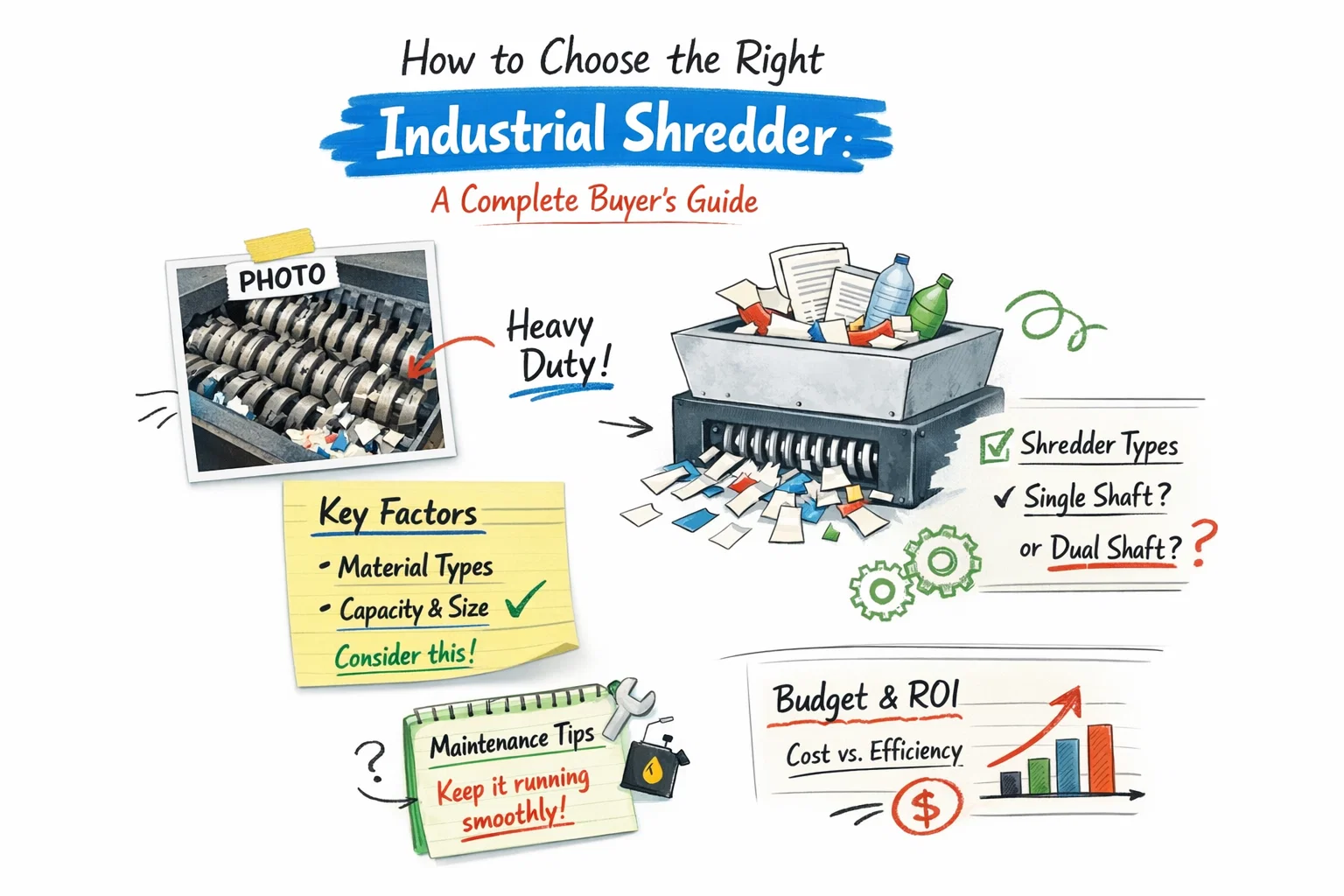
Что такое промышленный шредер пластика?
Промышленный пластикорезка — это тяжелонагруженный размероразмерный станок, используемый для резки больших отходов пластика на более мелкие, управляемые части. Она чаще всего используется перед грануляторами, системами промывки, системами сушки или линиями гранулирования.
Unlike a small crusher or granulator, a shredder is designed to accept bulky, irregular, or difficult plastic waste such as purgings, pipes, films, woven bags, barrels, sheets, and mixed post-consumer materials.
Зачем нужна измельчающая машина в пластиковой переработке
Правильно подобранный шредер улучшает стабильность всего процесса переработки. Крупногабаритный или неровный отход может заблокировать конвейеры, перегрузить грануляторы, снизить эффективность промывки и создать неравномерное качество конечного продукта. Предварительная резка снижает эти риски.
- Улучшает стабильность подачи материала в грануляторы или линии промывки.
- Снижает риск повреждения downstream оборудования крупными кусками.
- Помогает операторам контролировать размер частиц перед дальнейшей переработкой.
- Обеспечивает более стабильный поток и снижает ручной труд.
- Снижает трудности при транспортировке, мытье, сушке или гранулировании объемного пластикового отхода.
Single-shaft vs Dual-shaft Plastic Shredding Machines
Большинство покупателей вторсырья сначала сравнивают одноштанговые и двухштанговые шредеры. Оба могут быть полезны, но они решают разные проблемы.
| Тип измельчителя | Лучшее для | Типовая производительность | Ключевое преимущество |
|---|---|---|---|
| Одновальный шредер | Пленка, куски, обрезки, бочки, жесткие пластмассы, контролируемое предварительное измельчение | Более однородные фракции или ленты с контролируемой ситовой обработкой | Хорошее управление перед гранулированием или мытьем |
| Двухвальный шредер | Крупногабаритные предметы, смешанные отходы, паллеты, бочки, высокоточное грубое измельчение | Более грубый выход без сита для sizing во многих конструкциях | Высокий момент сопротивления и сильная способность подачи |
| Четырехшарфовый шредер | Сложные смешанные материалы, требующие более жесткого контроля | Средний до крупного выхода в зависимости от настройки экрана и ножа | Сочетает момент силы с лучшим контролем размера |
Для многих линий по переработке пластика одношестеронный шредер выбирают, когда следующим этапом является грануляция, промывка или гранулирование и требуется более контролируемый размер выходного продукта. Двухшестеронный шредер часто лучше подходит для больших, прочных или загрязненных материалов, которые требуют первичного уменьшения объема.
Основные факторы при выборе шредера для пластика
1. Тип материала и форма
Start with the actual waste stream. Plastic film, rigid flakes, PET bottles, HDPE drums, PP woven bags, PVC pipes, injection lumps, and purge blocks behave very differently in the cutting chamber.
Поставщик должен понимать не только тип полимера, но и форму, толщину, уровень загрязнения, уровень влажности и то, является ли материал рассыпным, связанным пучками, спрессованным в тюки или крупными кусками.
2. Требуемая производительность
Производительность должна основываться на реальных условиях эксплуатации, а не только на цифрах в каталоге. Запросите производительность с учетом вашего материала, целевого размера вывода, размера сита, метода подачи и количества рабочих часов в день.
Если шредер подает материал на линию промывки или линию гранулирования, выбранный моделью должен соответствовать номинальной мощности всего системы. Перемощение тратит энергию и капитал; недомощение вызывает узкие места.
3. Размер целевого выхода
Размер конечного продукта влияет на следующую машину. Гранулятор может потребовать однородных предварительно измельченных кусков. Линия промывки может потребовать материала, который можно эффективно очищать без излишка фракций. Система гранулирования требует стабильного подачу и объемной плотности.
Для одношестовых шредеров размер сита является важным фактором. Меньшие размеры сита улучшают контроль размера, но могут снизить производительность и увеличить тепло, износ и энергопотребление.
4. Конструкция ротора, ножа и сита
Диаметр ротора, размер резца, материал резца, размер отверстий на сите и геометрия cutting chamber (камеры резки) всё влияют на производительность. Твердые или абразивные материалы требуют более прочной защиты от износа. Пластиковая пленка требует конструкции, предотвращающей намотку и мостиковое образование.
- Фильмы и мешки: дизайн противоупаковочного ротора и эффективное давление подачи важны.
- Твердые пластмассы и бочки: сильные ножи и хорошая доступность сита помогают в обслуживании.
- Трубы и профили: может потребоваться длинный бункер или система подачи для труб.
- Очистные блоки и толстые комки: высокий крутящий момент, прочные ножи и гидравлическая защита имеют значение.
5. Способ подачи и конструкция загрузочного ковша
Плохая подача является распространенной причиной, по которой проекты измельчителей работают неэффективно. Крупные пустотелые части могут прыгать в бункере. Фільм может образовывать мостик. Длинные трубы могут потребовать специальной системы боковой подачи или подачи для труб.
Before buying, confirm how the material will enter the shredder: forklift, belt conveyor, manual loading, bale breaker, or automatic feeding system. The hopper should match the real workflow in your plant.
6. Система привода и энергопотребление
Мощность двигателя сама по себе не определяет производительность. Качество коробки передач, крутящий момент, скорость ротора, контроль гидравлического толкателя и защита от перегрузки также определяют, насколько эффективно измельчитель перерабатывает пластиковые отходы.
Для цехов, работающих в несколько смен, потребление энергии, срок службы ножей и простои могут быть важнее, чем минимальная цена покупки.
7. Обслуживание и безопасность
Хороший промышленный измельчитель пластика должен быть легким для осмотра, чистки и обслуживания. Замена ножей, замена сита, дверцы доступа, гидравлические системы, датчики и экстренные остановы должны быть спроектированы для безопасной ежедневной работы.
- Проверьте, можно ли вращать или повторно использовать ножи.
- Спросите, сколько времени обычно занимает замена сита и ножей.
- Подтвердите логику перерыва перегрузки и защиты двигателя.
- Проверьте функции блокировки, защиты, экстренной остановки и безопасности дверцы доступа.
- Спросите о рекомендованных запасных частях на первый год работы.
Как измельчители работают с линиями мытья и грануляторами
Измельчитель не должен выбираться в качестве изолированной машины. В большинстве перерабатывающих предприятий он работает вместе с конвейерами, детекцией металлов, грануляторами, трением моющих машин, плавающими-тонущими резервуарами, сушилками, силосами или системами гранулирования.
Если измельчитель слишком агрессивен, он может создать чрезмерное количество фракций. Если выход слишком большой, этап мытья или грануляции может стать нестабильным. Лучшее оборудование балансирует производительность, размер частиц, производительность мытья и последующую подачу.
Для полного проекта мытья рассмотрите такие варианты, как Моечные системы для переработки пластика. Для дальнейшей экструзии сравните, как измельченный материал будет уплотняться, сушиться и подается в линию грануляции.
Общие ошибки при покупке измельчителя пластика
- Выбор только по мощности двигателя вместо тестирования материалов и производительности линии.
- Пренебрежение формой сырья, объемной плотностью и уровнем загрязнения.
- Выбор слишком маленькой сетки и потеря производительности.
- Забывание о подаче, конвейерах, детекции металлов и планировке разгрузки.
- Не проверка времени замены лезвий, доступности запчастей и безопасности доступа.
- Покупка измельчителя без подтверждения того, как он подключается к грануляции, мытью или грануляции.
Информация для подготовки перед запросом цены
Ясное RFQ помогает поставщикам быстрее предложить подходящий измельчитель. Перед запросом цены подготовьте простую техническую справку.
- Тип материала, фотографии, видео и максимальные размеры.
- Текущая форма: свободный, сваленный, свитый, грязный, мокрый или смешанный.
- Целевая размерность выходного продукта и последующий процесс.
- Необходимая производительность в кг/ч или тоннах/ч.
- Рабочий день и уровень автоматизации.
- Доступное электропитание, планировка цеха и высота подачи/разгрузки.
- Стандарты безопасности, требования к шуму и ожидания запчастей.
Для более детального списка покупок, см. наш чеклист поставщика RFQ для машин переработки пластика.
Рекомендуемые области применения измельчителя
| Применение | Типичный материал | Рекомендуемое внимание |
|---|---|---|
| Recycling of film | ЛДПЭ-пленка, сельскохозяйственная пленка, полипропиленовые мешки-пакеты | Антипакетная конструкция, стабильная подача, интеграция с линией мытья |
| Переработка жесткого пластика | HDPE бочки, PP ящики, детали ABS | Сильный дизайн лезвий, управление сеткой, совместимость с гранулятором |
| Recycling of pipes and profiles | HDPE/ПВХ трубы, профили, длинные изделия | Специальный загрузочный бункер, высокий крутящий момент, безопасная загрузка труб |
| Утилизация очищенных и брикетированных материалов | Очищение экструзионных отходов, брикеты инжекции | Надежный ротор, усиленные ножи, защита от перегрузки |
| Утилизация смешанных пластиков | Постпотребительские или промышленные смешанные отходы | Предварительная сортировка, защита от металлов, гибкая конфигурация downstream |
Часто задаваемые вопросы: Руководство по покупке промышленного измельчителя пластиков
Какого размера промышленный измельчитель пластика мне нужен?
Start with your real hourly throughput, feedstock size, bulk density, and downstream equipment. A shredder should be sized for stable continuous feeding, not only for the largest motor power on the quotation.
Какой измельчитель лучше для переработки пластика: одноступенчатый или двуступенчатый?
Single-shaft shredders are often preferred when you need controlled particle size before granulation or washing. Dual-shaft shredders are useful for bulky, mixed, or contaminated materials where high torque and coarse size reduction are the priority.
Какую информацию следует отправить поставщику измельчителей перед запросом цены?
Отправьте фотографии или видео материалов, тип отходов, максимальные размеры, размер целевых гранул, часовая производительность, рабочие часы, уровень загрязнения, доступное электропитание и машины до и после измельчителя.
Может ли один измельчитель пластика обрабатывать пленку, бутылки, трубы и комки?
Одна машина может обрабатывать несколько материалов, но оптимальная установка ротора, сита, бункера и привода может отличаться. Если ваше предприятие обрабатывает очень разные сырьевые материалы, попросите поставщика подтвердить каждый материал и провести пробный запуск, если возможно.
Заключение
Правильный промышленный измельчитель пластиков не является просто самой большой или самой дешевой машиной. Это машина, которая соответствует вашим материалам, производительности, размеру выходного продукта, способу подачи, ожиданиям безопасности и downstream процессу утилизации.
Если вы планируете создание новой линии утилизации или обновление существующего завода, поделитесь деталями о материалах и целевым выходом с Rumtoo. Наша команда поможет оценить конфигурацию измельчителя и необходимое оборудование до и после уменьшения размера.
