


Alegerea shredderului industrial corect este una dintre cele mai importante decizii într-o linie de reciclare. Shredderul controlează dimensiunea surselor de alimentare, protejează echipamentul downstream, stabilizează capacitatea și de multe ori determină cât de fluent funcționează întregul parc.
Acest ghid explică cum pot compara unitățile de reciclare tipurile de shredder, capacitatea, designul tăierii, metodele de alimentare, caracteristicile de siguranță și integrarea cu sistemele de spălare, granulare sau pelitizare înainte de solicitarea unei oferte.
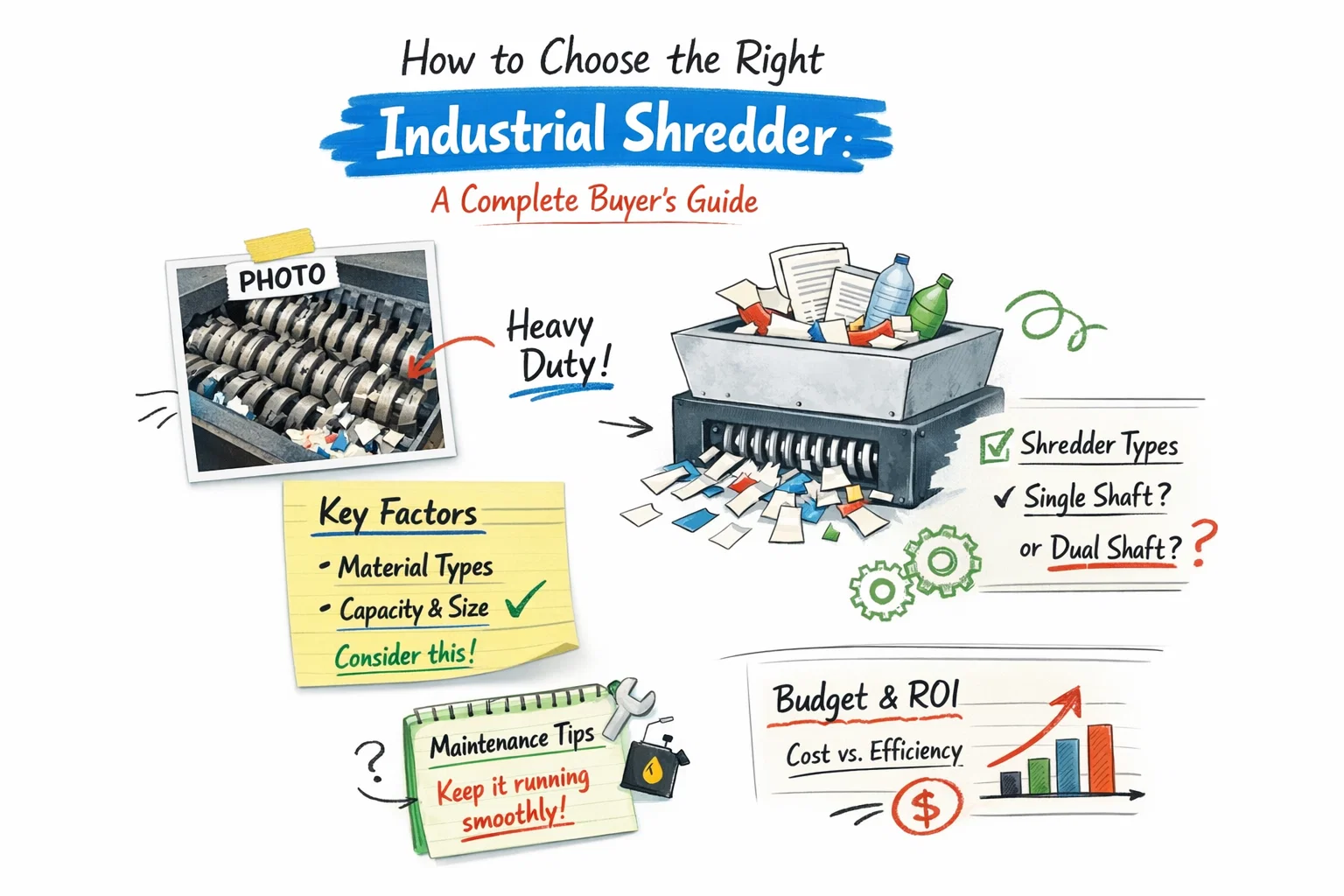
Ce este un shredder industrial de plastic?
Un shredder industrial pentru plastic este o mașină de reducere a dimensiunii de capacitate mare, folosită pentru a tăia deșeurile plastice mari în bucăți mai mici, mai ușor de gestionat. Este folosit în mod comun înainte de granulatori, sisteme de spălare, sisteme de uscare sau linii de producere a pelletei.
Diferit de un mic macarag sau granulator, un shredder este proiectat pentru a accepta deșeurile plastice voluminoase, neregulate sau dificile, cum ar fi extragerile, tuburile, foliile, sacoșele tricotate, cilindrii, foile și materialele post-consumator amestecate.
De ce este important tăierea în reciclarea plasticului
Un shredder bine selectat îmbunătățește stabilitatea întregului proces de reciclare. Deșeurile prea mari sau neregulate pot bloca transportoarele, suprasolicita granulatorii, reduce eficiența spălării și creează o calitate a outputului inconstantă. Pre-shredding reduce aceste riscuri.
- Îmbunătățește consistența alimentării în granulatori sau linii de spălare.
- Reducează riscul ca bucățile mari să strică echipamentul downstream.
- Ajută operatorii să controleze dimensiunea particulelor înainte de procesarea ulterioară.
- Sprijină un flux de lucru mai stabil și o efort mai redus la manipularea manuală.
- Permite transportul, spălarea, uscarea sau granularea mai ușoară a deșeurilor plastice voluminoase.
Shreddere cu o singură axă vs Shreddere cu două axe plastice
Cea mai mare parte dintre cumpărătorii de reciclare compară în primul rând shreddere cu ax unic și cu axe duble. Ambele pot fi utile, dar rezolvă probleme diferite.
| Tip tocator | Cel mai bun pentru | Output size | Avantaj cheie |
|---|---|---|---|
| Distrugător cu un singur arbore | Filme, aglomerări, purghe, containere, plastice rigide, reducere pre-izometrică controlată | Flakeuri sau benzi mai uniforme, controlate de strat de sârmă | Control bun înainte de granulare sau spălare |
| Distrugător cu arbore dublu | Articole mari, deșeuri amestecate, paleți, cilindri, reducere grossieră la volum mare | Output fără ecran de măsurare în multe designuri | Torque ridicat și capacitate de alimentare puternică |
| Shreddere cu patru axe | Materialuri mixte dificile care necesită control mai puternic | Output size mediu până la gros, în funcție de configurația filtrului și a tăietorului | Combină momentul torțional cu un control mai bun al mărimii |
Pentru multe linii de reciclare a plastictelor, se alege o mașină de tăiere cu un singur ax atunci când următorul pas este granularea, spălarea sau producerea de biloguri și este necesar un dimensiune de ieșire mai controlată. O mașină de tăiere cu doi axe este adesea mai bună pentru materiale mari, dure sau contaminate care necesită reducere primară a volumului.
Factoare cheie la alegerea unui shredder plastic
1. Tipuri de material și formă
Începeți cu fluxul de deșeuri real. Filmele plastice, flake-urile rigide, sticlele PET, cilindrii HDPE, sacoșele tricotate PP, tuburile PVC, masele de injectare și blocurile de purjare se comportă foarte diferit în camera de tăiere.
Un furnizor ar trebui să înțeleagă nu doar tipul de resină, ci și forma, grosimea, nivelul de contaminare, nivelul de umiditate și dacă materialul este liber, împreună, bălțat sau în bucăți mari.
2. Capacitate necesară
Capacitatea ar trebui să se bazeze pe condițiile reale de funcționare, nu doar pe un număr din broșură. Solicitați capacitatea bazată pe materialul dvs., dimensiunea țintă a producției, dimensiunea ecranelor, metoda de alimentare și orele de funcționare pe zi.
Dacă mulcitorul alimentează o linie de spălare sau o linie de granulare, modelul selectat ar trebui să se potrivească cu capacitatea de rating a întregului sistem. Suprasolicitarea consumă energie și capital; subdimensionarea cauzează blocaje.
3. Dimensiunea țintă a producției
Dimensiunea producției afectează următoarea mașină. Un granulator poate avea nevoie de bucăți pre-mulcite consistente. O linie de spălare poate avea nevoie de material care poate fi curățat eficient fără flocuri excesive. Un sistem de granulare necesită alimentare stabilă și densitate volumetrică.
Pentru mulcitori cu un singur ax, dimensiunea ecranelor este un factor major. Ecrane mai mici îmbunătățesc controlul dimensiunii, dar pot reduce randamentul și pot crește căldura, uzura și consumul de energie.
4. Designul roților, tăietorilor și ecranelor
Diametrul roții, dimensiunea tăietorilor, materialul tăietorilor, deschiderea ecranelor și geometria camerei de tăiere afectează performanța. Materialele mai dure sau abrazive necesită o protecție împotriva uzurii mai puternică. Filmul flexibil necesită un design care să prevină înfășurarea și traversarea.
- Film și saci: designul roților anti-înfășurare și presiunea de alimentare eficientă sunt importante.
- Plastice rigide și barili: tăietori puternici și un acces bun la ecran ajută la întreținere.
- Tuburi și profile: poate fi necesar un foseu lung sau un sistem de alimentare specific pentru tuburi.
- Blocuri de curățare și grumuri groase: un moment de torsiune mare, tăietori robusti și protecție hidraulică sunt esențiale.
5. Metoda de alimentare și designul foseului
O alimentare slabă este un motiv comun pentru care proiectele de mulcitori nu performă la capacitatea maximă. Părți goale mari pot să sară în foseu. Filmul poate traversa. Tuburile lungi pot avea nevoie de un sistem de alimentare lateral sau de alimentare specific pentru tuburi.
Înainte de a cumpăra, confirmați cum va intra materialul în mulcitor: încărcător frontal, transportor de benzi, încărcare manuală, decompresor de faleze sau sistem de alimentare automată. Foseul ar trebui să se potrivească cu fluxul real de lucru din fabrica dvs.
6. Sistemul de propulsie și consumul de energie
Puterea motorului nu definește singur performanța. Calitatea cutiei de viteză, momentul, viteza roții, controlul hidraulic al pusher-ului și protecția împotriva suprasolicitării determină cât de eficient procesează mulcitorul deșeurile de plastic.
Pentru fabricile care rulează mai multe schimburi, consumul de energie, durata de viață a tăietorilor și timpul de întrerupere pot conta mai mult decât cel mai mic preț de achiziție.
7. Întreținere și siguranță
Un mulcitor industrial de plastic bun ar trebui să fie ușor de inspectat, curățat și întreținut. Înlocuirea tăietorilor, schimbarea ecranelor, uși de acces, sisteme hidraulice, senzori și opriri de urgență ar trebui să fie proiectate pentru o operațiune zilnică sigură.
- Verificați dacă tăietorile pot fi rotite sau reutilizate.
- Întrebări despre cât timp de obicei durează schimbarea ecranelor și a tăietorilor.
- Confirmați logicile de inversare a suprasolicitării și de protecție a motorului.
- Revizuiți caracteristicile de blocare, garduri, opriri de urgență și siguranța ușilor de acces.
- Solicitați piese de schimb recomandate pentru primul an de funcționare.
Cum funcționează mulcitorii cu linii de spălare și granulatori
Mulcitorul nu ar trebui să fie selectat ca mașină izolată. În majoritatea fabricilor de reciclare, lucrează împreună cu transportoare, detectoare de metale, granulatori, vase de spălare prin frecare, vase de flotare și scufundare, uscătoare, silozuri sau sisteme de granulare.
Dacă mulcitorul este prea agresiv, poate crea flocuri excesive. Dacă producția este prea mare, etapele de spălare sau granulare pot deveni instabile. Cel mai bun setaj echilibrează randamentul, dimensiunea particulelor, performanța spălării și alimentarea downstream.
Pentru un proiect complet de spălare, revizuiți opțiuni precum sistemele de spălare de reciclare a plasticului. Pentru extrudarea downstream, comparați cum va fi densificat, uscat și alimentat materialul granulat în linia de granulare.
Eroare comune la cumpărarea unui mulcitor de plastic
- Alegând doar după puterea motorului, în loc de testarea materialului și a capacității liniei.
- Neglijând forma sursă, densitatea volumică și nivelul de contaminare.
- Alegând un filtru prea mic și apoi pierderea capacității de procesare.
- Uități-vă de alimentare, transportoare, detectoare de metale și layout-ul de descărcare.
- Nu se verifică timpul înlocuirii foilelor, disponibilitatea pieselor de schimb și accesul la siguranță.
- Cumpărarea unui granulator fără a confirma modul în care se conectează la granulare, spălare sau omologare.
Informațiile de pregătit înainte de a solicita o ofertă
Un RFQ clar ajută furnizorii să recomande mai rapid shredder-ul potrivit. Înainte de a cere prețuri, pregătiți un scurt rezumat tehnic.
- Tipul materialului, fotografii, videoclipuri și dimensiunile maxime.
- Forma curentă: liber, balat, grupat, murdar, umed sau mixt.
- Dimensiunea țintă a ieșirii și procesul ulterior.
- Capacitate necesară în kg/h sau t/h.
- Ore de funcționare pe zi și nivelul de automatizare.
- Furnizarea de energie electrică disponibilă, planul atelierului și înălțimea de alimentare/desemnare.
- Standardele de siguranță, cerințele de zgomot și așteptările privind piesele de schimb.
Pentru o listă de cumpărături mai detaliată, consultați checklistul furnizorului de RFQ pentru mașina de reciclare a plasticului.
Aplicații recomandate de tăiere în cuburi
| Domeniu de aplicare | Material tipică | Focus recomandat |
|---|---|---|
| Reciclare a filmelor | film LDPE, film agricol, pungi țesute din PP | Design anti-întortochează, alimentare stabilă, integrare în linia de spălare |
| Reciclarea plasticului rigid | Cârți HDPE, coșuri PP, piese ABS | Design puternic al tăietorului, controlul ecranelor, compatibilitatea granulatorului |
| Reciclare a conductelorilor și a profilurilor | Tuburi și profile HDPE/PVC, piese lungi | Hopper de alimentare special, înalt moment, încărcare sigură a tuburilor |
| Purging și reciclare a aglomeratelor | Spulberi de extruzie, aglomerări de injectie | Roto robust, foarți grele, protecție împotriva suprasolicitării |
| Reciclare plastic mixt | Deșeuri mixte post-consumator sau industriale | Pre-sortare, protecție împotriva metalelor, amplasament flexibil la ieșire |
Întrebări frecvente: Ghid de cumpărare pentru mașina de tăiat plastic industrial
Ce dimensiune de macină industrială de plastic am nevoie?
Începeți cu rata reală de producție orară, dimensiunea materiilor prime, densitatea bulk și echipamentul de la scară inferioară. Un granulator ar trebui să fie dimensionat pentru alimentare continuă stabilă, nu doar pentru puterea maximă a motorului menționată în ofertă.
Este mai bun un mulciutor cu un singur ax sau cu doi axe pentru reciclarea plasticului?
Shredere cu un singur ax se preferă adesea atunci când este necesară o dimensiune a particulelor controlată înainte de granulare sau spălare. Shredere cu dublu ax sunt utile pentru materiale voluminoase, mixte sau contaminate, unde prioritatea este un torque mare și reducerea la dimensiuni coase.
Ce informații ar trebui să trimit unui furnizor de mașini de tăiat înainte de a solicita o ofertă?
Trimiteți fotografii sau videoclipuri cu materialul, tipul de deșeu, dimensiunile maxime, dimensiunea țintă a producției, capacitatea orară, orele de funcționare, nivelul de contaminare, alimentarea cu energie electrică disponibilă și mașinile înainte și după granulator.
Poate un granulator de plastic să proceseze film, sticle, conducte și grumji?
O mașină poate procesa uneori mai multe materiale, dar cel mai bun rotor, ecran, capac și configurație de transmisie pot varia. Dacă fabrica dvs. gestionează feedstocks foarte diferite, cere producătorului să confirme fiecare material și să ruleze un test atunci când este posibil.
Concluzie
Mașina de tăiat plastic industrial potrivită nu este doar cea mai mare sau cea mai ieftină mașină. Este mașina care se potrivește materialului dvs., capacității, dimensiunii iesirii, metodei de alimentare, așteptărilor de siguranță și procesului de reciclare la ieșire.
Dacă plănuiți să construiți o nouă linie de reciclare sau să îmbunătățiți o uzină existentă, împărtășiți detaliile materialelor și ținta de ieșire cu Rumtoo. Echipa noastră vă poate ajuta să evaluați configurația tăietorului și echipamentul necesar înainte și după reducerea la dimensiuni.
