


적절한 산업용 플라스틱 쇼드러의 선택은 재활용 라인에서 가장 중요한 결정 중 하나입니다. 쇼드러는 원료의 크기를 조절하고 하위 장비를 보호하며 용량을 안정화하고, 종종 전체 공장의 운영이 원활하게 이루어지는지를 결정합니다.
이 가이드는 재활용 공장이 쇼드러 유형, 용량, 커터 디자인, 공급 방법, 안전 기능, 그리고 씻기, granulation, 또는 pelletizing 시스템과의 통합을 비교하는 방법을 설명합니다.
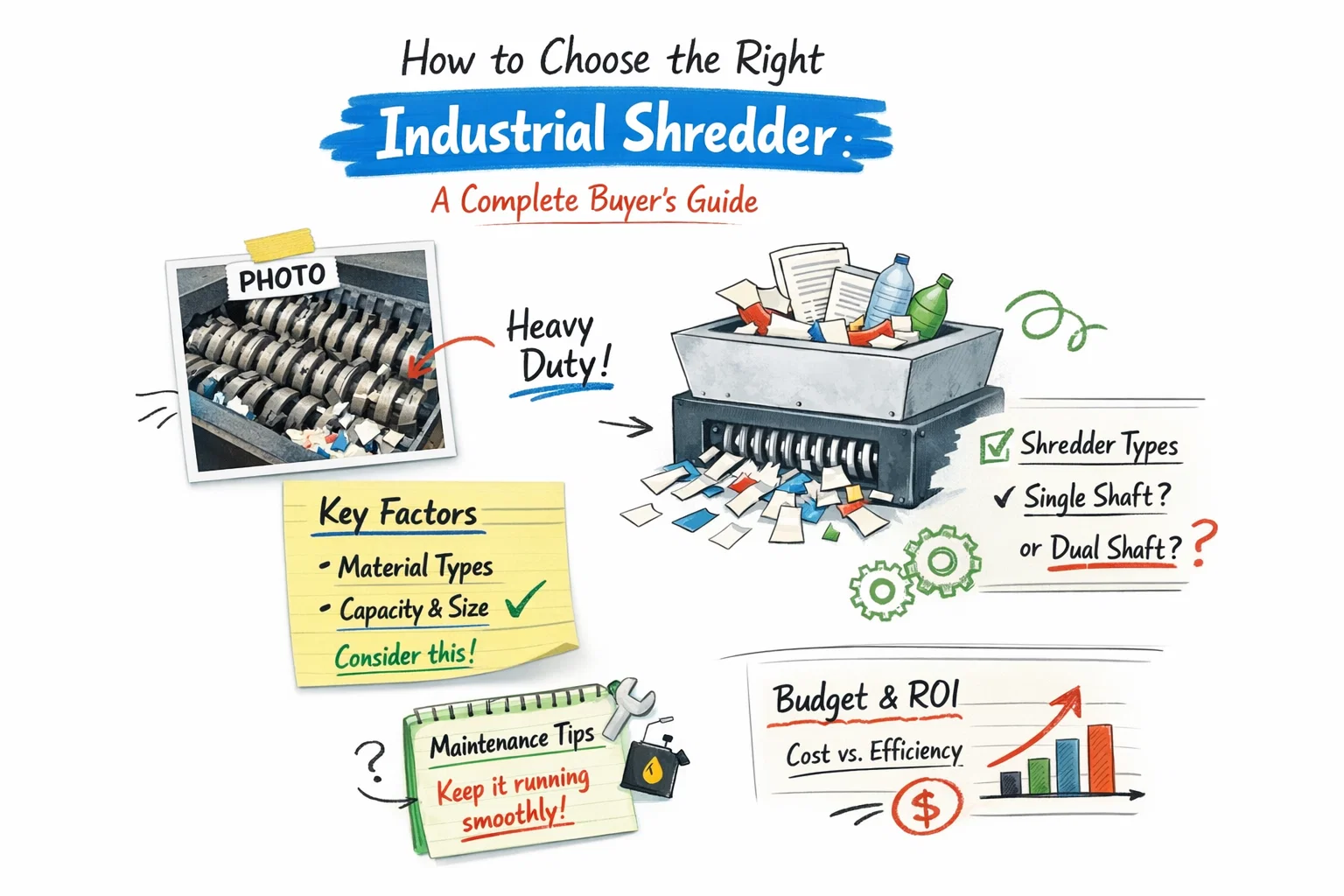
산업용 플라스틱 쇼드러는 무엇인가요?
산업용 플라스틱 쇼드러는 큰 플라스틱 폐기물을 작은, 관리하기 쉬운 조각으로 자르는 중공업용 크기 감소 장비입니다. 그것은 종종 granulators, 씻기 시스템, 건조 시스템, 또는 pelletizing 라인 전에 사용됩니다.
소형 크러셔나 granulator와 달리, 쇼드러는 두꺼운, 불규칙하거나 어려운 플라스틱 폐기물을 받아들이기 위해 설계되었습니다. 그것은 purge, 파이프, 필름, 휘어진 가방, 배럴, 시트, 혼합된 후소비자 재료와 같은 플라스틱을 받아들입니다.
플라스틱 재활용에서 쇼딩의 중요성
적절히 선택된 쇼드러는 전체 재활용 과정의 안정성을 향상시킵니다. 과대 또는 불규칙한 폐기물은 콘베이어에 막히거나 granulators에 과부하를 주고, 씻기 효율성을 줄이고, 일관성 없는 출력 품질을 만들 수 있습니다. 사전 쇼딩은 이러한 위험을 줄입니다.
- granulators나 씻기 라인에 대한 공급 일관성을 향상시킵니다.
- 대형 조각이 하위 장비를 손상할 위험을 줄입니다.
- 사후 처리 전에 파티클 크기를 조절하는 데 도움을 줍니다.
- 더 안정된 생산량과 더 낮은 수동 처리 노력을 지원합니다.
- 두꺼운 플라스틱 폐기물을 쉽게 운반, 씻기, 건조, 또는 pelletize하기 쉽게 합니다.
단쇼트 vs 더블쇼트 플라스틱 쇼드러
대부분의 재활용 구매자는 단쇼트와 더블쇼트 쇼드러를 먼저 비교합니다. 두 가지 모두 유용할 수 있지만, 다른 문제를 해결합니다.
| 파쇄기 유형 | 가장 적합한 | типичное выхождение | 핵심 이점 |
|---|---|---|---|
| 단일 샤프트 분쇄기 | фильм, комки, purge, бочки, жесткие пластмассы, контролируемое предварительное уменьшение размера | более однородные, экраном контролируемые хлопья или полосы | хорошее управление перед грануляцией или мытьем |
| 이중축 분쇄기 | большегабаритные предметы, смешанные отходы, поддоны, бочки, высоковolume coarse уменьшение | грубый выход без экрана размера во многих конструкциях | высокий крутящий момент и сильная способность подачи |
| четырехшпindельная дробилка | трудные смешанные материалы, требующие более сильного контроля | средний до грубый выход в зависимости от экрана и setups кромкообрезного станка | сочетает крутящий момент с лучшим контролем размера |
для многих линий переработки пластика, выбирается один шпиндельная дробилка, когда следующий шаг грануляция, мытье или pelletizing и требуется более контролируемый размер выхода. Двухшпиндельная дробилка часто лучше для больших, жестких или загрязненных материалов, которые требуют первичного объема уменьшения.
важные факторы при выборе пласмассового шредера
1. тип материала и форма
начните с реального потока отходов. Пластиковые пленки, жесткие хлопья, бутылки из PET, бочки из HDPE, тканные сумки из PP, трубы из PVC, инжекционные комки, и блоки purge ведут себя очень по-разному в камере резания.
доставщик должен понимать не только тип резина, но и форму, толщину, уровень загрязнения, уровень влажности, и то, является ли материал свободным, связанным, сваленным или в больших кусках.
2. 필요 용량
용량은 실제 운영 상황에 기반해야 합니다. 단순히 브로셔 번호만으로는 안 됩니다. 자료, 목표 출력 크기, 스크린 크기, 공급 방법, 하루 운영 시간에 따른 용량을 요청하세요.
취기기가 씻기선이나 펠릿 라인에 공급하면, 선택된 모델은 전체 시스템의 등급 용량과 일치해야 합니다. 과대 설계는 에너지와 자본을 낭비하며, 소형 설계는 부정적이 됩니다.
3. 목표 출력 크기
출력 크기는 다음 기계에 영향을 미칩니다. 그란ولا이저는 일관된 사전 취기된 조각이 필요할 수 있습니다. 씻기선은 과도한 미세 입자 없이 효과적으로 청소할 수 있는 재료가 필요할 수 있습니다. 펠릿화 시스템은 일관된 공급과 볼륨 밀도가 필요합니다.
단일 축 취기기에서 스크린 크기는 주요 요인입니다. 작은 스크린은 크기 제어를 개선하지만, 투출량을 줄이고 열, 손상, 에너지 소비를 증가시킬 수 있습니다.
4. 루터, 커터, 스크린 설계
루터 직경, 커터 크기, 커터 재료, 스크린 구멍, 컷칸 지형 모두 성능에 영향을 미칩니다. 더 힘든 혹은 가소성 재료는 더 강한 손상 보호가 필요합니다. 유연한 필름은 감싸거나 교차하지 않도록 설계가 필요합니다.
- 필름과 백스: 감싸지 않는 루터 설계와 효과적인 공급 압력이 중요합니다.
- 고정 플라스틱과 배럴: 강력한 커터와 좋은 스크린 접근이 유지보수를 돕습니다.
- Pipes and profiles: a long hopper or pipe-specific feeding system may be required.
- 청소 블록과 두꺼운 덩어리: 높은 토크, 강력한 칼, 히드랄릭 보호가 중요합니다.
5. Feeding Method and Hopper Design
부족한 공급은 썬더러저 프로젝트가 저조한 성능을 낼 흔한 이유입니다. 큰 중공 부품은 허프어(hopper) 안에서 튕기게 될 수 있습니다. 필름은 다리 형성할 수 있습니다. 긴 파이프는 특수한 옆 공급(side-feed) 또는 파이프 공급(pipe-feed) 시스템이 필요할 수 있습니다.
Before buying, confirm how the material will enter the shredder: forklift, belt conveyor, manual loading, bale breaker, or automatic feeding system. The hopper should match the real workflow in your plant.
6. 드라이브 시스템과 에너지 소비
모터 파워만으로 성능을 정의할 수는 없습니다. 기어박스 품질, 토크, 루터 속도, 히드랄릭 푸시어 제어, 과부하 보호도 취기기가 플라스틱 폐기물을 얼마나 효율적으로 처리하는지 결정합니다.
For plants running multiple shifts, energy consumption, cutter life, and downtime can matter more than the lowest purchase price.
7. 유지보수와 안전
좋은 산업용 플라스틱 취기기는 점검, 청소, 유지보수가 쉬워야 합니다. 칼 교환, 스크린 변경, 접근 문, 히드랄릭 시스템, 센서, 긴급 정지가 안전한 일상 운영을 위해 설계되어야 합니다.
- 칼이 회전하거나 재사용될 수 있는지 확인하세요.
- 스크린과 커터 변경이 일반적으로 얼마나 오래 걸리는지 물어보세요.
- 과부하 반전 및 모터 보호 로직을 확인하세요.
- 락아웃, 보호장치, 긴급 정지, 접근 문 안전 기능을 검토하세요.
- 운영 첫해에 필요한 추천 부품을 요청하세요.
취기기가 씻기선과 그란ولا이저와 함께 작동하는 방법
취기기는 단일 기계로 선택되지 않아야 합니다. 대부분의 재활용 공장에서는 콘베이어, 금속 검출기, 그란ولا이저, 마찰 씻기기, float-sink 탱크, 드라이어, silos, 또는 펠릿화 시스템과 함께 작동합니다.
취기기가 너무 공격적이면 과도한 미세 입자를 생성할 수 있습니다. 출력이 너무 크면 씻기나 그란ولا이저 단계가 불안정해질 수 있습니다. 최적의 설정은 투출량, 입자 크기, 씻기 성능, 하류 공급을 균형 잡습니다.
전면 씻기 프로젝트를 위해 다음과 같은 옵션을 검토하세요. 플라스틱 재활용 세척 시스템. 하류 extrusion에 대해, 취기된 재료가 얼마나 밀도가 높아지고 건조되고 펠릿화 라인에 공급되는지 비교하세요.
플라스틱 취기기 구매 시 일반적인 실수
- 모터 파워만으로 선택하는 것 대신 재료 시험과 라인 용량을 고려하는 것.
- 피드스톡 모양, 부피 밀도, 오염 수준 무시하고.
- 너무 작은 스크린을 선택하고 처리량이 감소하는 경우.
- 피드링, 컨베이어, 금속 검출기, 배출 레이아웃에 대해서는 잊어버리십시오.
- 칼날 교체 시간 확인, 부품 확보, 안전 접근 확인하지 않음.
- 쇼더러를 구매할 때 그것이 어떻게 씬화, 세척, 또는 펠렛화에 연결되는지 확인하지 않고.
요청 전에 준비해야 할 정보
명확한 RFQ는 공급자가 적합한 shredder를 더 빨리 추천하는 데 도움이 됩니다. 가격을 요청하기 전에 간단한 기술 요약서를 준비하세요.
- 재료 종류, 사진, 영상, 최대 크기.
- 현재 형태: 흩어진, 장기막대로 묶인, 묶인, 오염된, 젖은, 혹은 혼합된.
- 목표 출력 크기 및 하류 공정.
- 필요 용량은 kg/h 또는 t/h입니다.
- 하루당 운영 시간 및 자동화 수준.
- 가용 전원 공급, 작업장 레이아웃, 및 공급/배출 높이.
- 안전 기준, 소음 요구 사항, 부품 기대치.
더 자세한 구매 체크리스트는 저희의 플라스틱 재활용 기계 RFQ 공급업체 체크리스트.
추천 셀러더 적용 분야
| 적용 분야 | 표준 재료 | 추천 집중점 |
|---|---|---|
| 필름 재활용 | LDPE 필름, 농업 필름, PP 용접 가방 | 반납 방지 설계, 안정적인 주입, 세척 라인 통합 |
| 경질 플라스틱 재활용 | HDPE 통조림, PP 상자, ABS 부품 | 강력한 자르기 설계, 스크린 제어, 그랜불러 호환성 |
| 파이프 및 프로파일 재활용 | HDPE/PVC 파이프, 프로파일, 긴 부품 | 특수급입함, 높은 토크, 안전한 파이프 로딩 |
| 정제 및 뭉치 재활용 | 초출물, 주입 덩어리 | 강력한 로터, 무거운 칼, 과부하 보호 |
| 혼합 플라스틱 재활용 | 포스트커너머셜 또는 산업 폐기물 혼합물 | 선별 처리, 금속 보호, 유연한 하부 설계 |
자주 묻는 질문: 산업용 플라스틱 쇼트컷기 구매 가이드
어떤 규모의 산업용 플라스틱 쇼드러를 필요로 합니까?
시간당 실제 처리량, 원료 크기, 밀도, 그리고 하류 장비를 명확히 기재하세요. 쇼어더는 견적서에서 가장 큰 모터 파워에 맞추기 위해서만 아니라, 안정적인 지속적인 공급을 위해 크게 해야 합니다.
단좌식 또는 양좌식 쇼드러가 플라스틱 재활용에 더 좋을까요?
일반축 쇼드러터는 granulation이나 washing 전에 조절된 파티클 사이즈가 필요할 때 많이 선호됩니다. 두개축 쇼드러터는 두꺼운, 혼합된, 오염된 재료에서 고 토크와 거친 크기 감소가 중요할 때 유용합니다.
최종 고객님께서 쿼트를 요청하기 전에 쇼더 공급업체에 보내야 할 정보는 무엇인가요?
자료 사진이나 영상, 쓰레기 유형, 최대 크기, 목표 출력 크기, 시간당 용량, 작업 시간, 오염 수준, 사용 가능한 전력 공급, 그리고 쇼더 전후의 기계를 보내주세요.
일반 플라스틱 쇼더가 필름, 병, 파이프, 덩어리를 다 처리할 수 있나요?
일대일 기계는 여러 재료를 처리할 수 있지만, 최적의 루터, 스크린, 하프, 드라이브 설정이 다를 수 있습니다. 공장이 매우 다른 원료를 처리하는 경우, 공급업체에게 각 재료를 확인하고 가능한 경우 테스트를 요청하십시오.
결론
적절한 산업용 플라스틱 쇼트커터는 단순히 가장 큰 기계나 가장 저렴한 기계가 아닙니다. 자신의 재료, 처리 용량, 출력 크기, 공급 방법, 안전 기대치, 그리고 하류 재활용 공정과 일치하는 기계입니다.
새로운 재활용 라인을 계획하거나 기존 공장을 업그레이드 중이시라면 Rumtoo와 자재 상세 정보와 목표 출력을 공유해 주세요. 우리 팀은 크기 축소 전후로 필요한 장비를 평가하고 썬더링 구성을 도와드릴 수 있습니다.
