


Die Auswahl des richtigen industriellen Kunststoffschredders ist eine der wichtigsten Entscheidungen in einer Recyclinganlage. Der Schredder kontrolliert die Futtergröße, schützt das nachgelagerte Equipment, stabilisiert die Kapazität und bestimmt oft, wie reibungslos die gesamte Anlage läuft.
Diese Anleitung erläutert, wie Recyclinganlagen verschiedene Schreddertypen, Kapazität, Schnittgattergestaltung, Fütterungsmethoden, Sicherheitsmerkmale und die Integration mit Wasch-, Granulations- oder Pelletieranlagen vergleichen können, bevor ein Angebot angefordert wird.
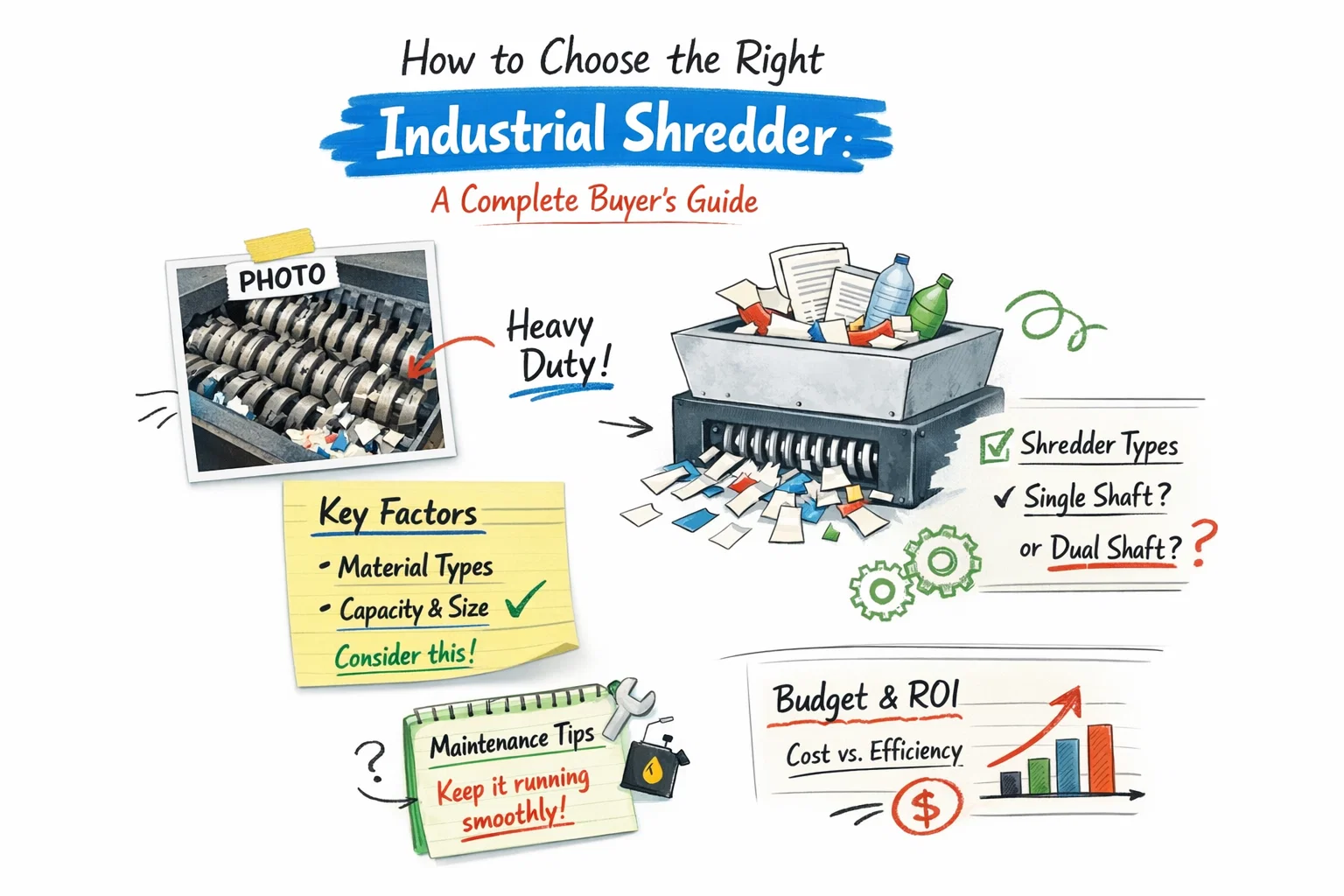
Was ist ein Industrieller Kunststoffschredder?
Ein industrieller Kunststoffschredder ist eine leistungsstarke Maschine zur Reduzierung der Größe, die große Kunststoffabfälle in kleinere, besser handhabbare Stücke schneidet. Er wird häufig vor Granulatoren, Waschsystemen, Trockensystemen oder Pelletieranlagen verwendet.
Im Gegensatz zu einem kleinen Zerkleinerer oder Granulator ist ein Schredder so konzipiert, dass er voluminösen, unregelmäßigen oder schwer zu zerkleinernem Kunststoffabfall wie Abgußteilen, Rohren, Filmen, gewebten Taschen, Fässern, Platten und gemischten nachverbrauchtem Material zerkleinern kann.
Warum das Schreddern im Kunststoffrecycling wichtig ist
Ein gut ausgewählter Schredder verbessert die Stabilität des gesamten Recyclingprozesses. Übergrößen oder unregelmäßige Abfälle können Förderbänder blockieren, Granulatoren überlasten, die Waschleistung verringern und eine unconsistente Ausgangsqualität erzeugen. Vorzuschreddern reduziert diese Risiken.
- Verbessert die Fütterungskonsistenz in Granulatoren oder Waschlinien.
- Reduziert das Risiko, dass große Stücke nachgelagerte Equipment beschädigen.
- Hilft den Bedienern, die Partikelgröße vor der weiteren Verarbeitung zu kontrollieren.
- Unterstützt einen stabileren Durchsatz und weniger manueller Handhabung.
- Macht voluminösen Kunststoffabfall einfacher zu fördern, zu waschen, zu trocknen oder zu pelletieren.
Einachsiger vs. Zweiachsiger Kunststoffschredder
Die meisten Recyclingkäufer vergleichen zunächst Einachs- und Zweiachsenschredder. Beide können nützlich sein, aber sie lösen verschiedene Probleme.
| Aktenvernichtertyp | Am besten für | Typischer Ausgang | Hauptvorteil |
|---|---|---|---|
| Einwellenzerkleinerer | Film, Klumpen, Abgußteile, Fässer, starre Kunststoffe, kontrollierte Vorgrößenreduzierung | Mehr gleichmäßige, durch Sieb gesteuerte Schuppen oder Streifen | Gute Kontrolle vor Granulation oder Waschung |
| Zweiwellenzerkleinerer | Voluminöse Gegenstände, gemischter Müll, Paletten, Fässer, hochvolumiger grober Abbau | Körniger Ausgang ohne Größenfilter in vielen Designs | Hohe Drehmoment und starke Fütterungsfähigkeit |
| Vierachsiger Schredder | Schwere gemischte Materialien, die stärkere Kontrolle benötigen | Mittlerer bis grober Ausgang je nach Sieb und Schnittgattereinstellung | Kombiniert Drehmoment mit besserer Größenkontrolle |
Für viele Kunststoffrecyclinganlagen wird ein Einachsenschredder gewählt, wenn der nächste Schritt Granulation, Waschung oder Pelletierung ist und ein kontrollierteres Ausgangsmaß erforderlich ist. Ein Zweiachsenschredder ist oft besser für große, harte oder kontaminierte Materialien geeignet, die eine primäre Volumenreduzierung benötigen.
Wichtige Faktoren bei der Auswahl eines Kunststoffschredders
1. Materialart und Form
Beginnen Sie mit dem tatsächlichen Abfallstrom. Kunststofffolie, starre Schuppen, PET-Flaschen, HDPE-Fässer, PP-gewebte Taschen, PVC-Rohre, Spritzgussklumpen und Abgußblöcke verhalten sich im Schnittkammer sehr unterschiedlich.
Ein Lieferant sollte nicht nur den Harztyp verstehen, sondern auch die Form, Dicke, Kontaminationsgrad, Feuchtigkeitsgrad und ob das Material lose, gebündelt, gebündelt oder in großen Stücken ist.
2. Erforderliche Kapazität
Die Kapazität sollte auf den tatsächlichen Betriebsbedingungen basieren, nicht nur auf einer Katalognummer. Fragen Sie nach der Kapazität basierend auf Ihrem Material, der Zielgröße der Ausgabe, der Siebgröße, der Füllmethode und der Anzahl der Betriebsstunden pro Tag.
Wenn der Shredder eine Waschanlage oder eine Pelletisierungslinie versorgt, sollte die ausgewählte Maschine der Nennleistung des gesamten Systems entsprechen. Eine Überdimensionierung verschwendet Energie und Kapital; eine Unterdimensionierung verursacht Engpässe.
3. Zielproduktgröße
Die Ausgrößen beeinflussen die nächste Maschine. Ein Granulator benötigt möglicherweise konsistente vorgeschredderte Stücke. Eine Waschanlage benötigt Material, das effektiv gereinigt werden kann, ohne zu viele Feinstückchen. Ein Pelletisationsystem benötigt eine stabile Förderung und eine Dichte.
Für Single-Shaft-Shredder ist die Siebenöffnung ein wichtiger Faktor. Kleinere Sieben verbessern die Größenkontrolle, können die Verarbeitungskapazität jedoch reduzieren und die Wärmeentwicklung, den Verschleiß sowie den Energieverbrauch erhöhen.
4. Rotor-, Schnittwerk- und Siebentyp
Der Rotor-Durchmesser, das Messersystem, das Messermaterial, die Maschenweite des Siebs und die Geometrie des Schneidraums beeinflussen die Leistung. Härtere oder abriebende Materialien erfordern stärkere Abnutzungsschutzmaßnahmen. Flexible Folie benötigt eine Gestaltung, die Verwinkelungen und Verklammern verhindert.
- Filme und Sackerne: Anti-wickel Rotor-Design und effektiver Fülldruck sind wichtig.
- Rigidplastik und Fässer: starke Schneidwerkzeuge und gute Siebzugänglichkeit erleichtern die Wartung.
- Rohre und Profile: Es может потребоваться ein langer Schaber oder eine Rohr-spezifische Fütterungssystem.
- Block- und Klumpenentfernung: Hoher Drehmoment, robuste Messer und hydraulische Schutzfunktion sind entscheidend.
5. Fütterungsmethode und Schutzeinhausung
Eine schlechte Füllung ist ein häufiger Grund, warum Shredder-Projekte unter den Erwartungen bleiben. Große Hohlräume können im Förderer schlagen. Folie kann sich überspannen. Längere Rohre können einen speziellen Seitenförderer oder Rohrversorger benötigen.
Bevor Sie kaufen, bestätigen Sie, wie das Material in die Shredder-Maschine eingebracht wird: mit Hubwagen, Band conveyer, manuell, Ballezerreißer oder automatisiertem Füllsystem. Der Förderbehälter sollte der tatsächlichen Arbeitsabfolge in Ihrer Anlage entsprechen.
6. Antriebssystem und Energieverbrauch
Die Motorleistung allein definiert nicht die Leistung. Die Qualität des Getriebes, der Drehmoment, die Rotor-Geschwindigkeit, die hydraulische Pusher-Steuerung und die Überlastschutzfunktion bestimmen ebenfalls, wie effizient der Shredder das Kunststoffmüll abarbeitet.
Für Betriebe, die mehrere Schichten laufen lassen, kann die Energieverbrauch, die Lebensdauer der Schneidemesser und der Stillstandsaufwand mehr beweisen als der niedrigste Kaufpreis.
7. Wartung und Sicherheit
Eine gute industrielle Kunststoffzerkleinerungsmaschine sollte leicht zu prüfen, zu reinigen und zu warten sein. Der Messerschneidenaustausch, die Siebwechsel, die Zugangsöffnungen, die Hydrauliksysteme, die Sensoren und die Notauslösungen sollten für eine sichere tägliche Betriebsführung konzipiert sein.
- Prüfen Sie, ob die Messer rotiert oder wiederverwendet werden können.
- Frage nach der üblichen Dauer von Screen- und Klingenwechseln.
- Stellen Sie die Überlastumkehr und die Motorreparaturlogik bestätigen.
- Prüfen Sie die Sicherheitsmerkmale für Sperrung, Abschirmung, Notausschaltung und Klappeingang.
- Bitten um Empfehlungen für Ersatzteile für das erste Betriebsjahr.
Wie Shredder mit Waschanlagen und Granulatoren zusammenarbeiten
Der Shredder sollte nicht als isoliertes Gerät ausgewählt werden. In den meisten Recyclinganlagen arbeitet er zusammen mit Förderbändern, Metallschleudern, Granulatoren, Reibungswaschmaschinen, Dicht-Entdicht-Tanks, Trocknern, Silos oder Pelletisierungssystemen.
If the shredder is too aggressive, it may create excessive fines. If output is too large, the washing or granulation stage may become unstable. The best setup balances throughput, particle size, washing performance, and downstream feeding.
Für ein vollständiges Waschprojekt prüfen Sie Optionen wie Waschsysteme für Kunststoffrecycling. For downstream extrusion, compare how shredded material will be densified, dried, and fed into the pelletizing line.
Häufige Fehler beim Kauf einer Kunststoffzerkleinerung
- Eine Auswahl nur nach Motorleistung anstatt Materialprüfung und Linienkapazität zu treffen.
- Die Form des Rohmaterials, die Schüttgutdichte und den Kontaminationsgrad zu ignorieren.
- Zu kleine Siebe auszuwählen und dann den Durchsatz zu verlieren.
- Den Fütterungs-, Förderer-, Metallerkennungs- und Entladungsplan zu vergessen.
- Die Zeit für den Messertausch, die Verfügbarkeit von Ersatzteilen und den Zugang zur Sicherheit zu vernachlässigen.
- Einen Schredder ohne zu überprüfen, wie er an das Granulieren, Waschen oder Pelletieren angeschlossen wird.
Informationen zur Vorbereitung vor der Anfrage eines Angebots
Eine klare Anfrage hilft den Lieferanten, schneller den richtigen Schredder zu empfehlen. Bevor Sie nach dem Preis fragen, bereiten Sie eine einfache technische Zusammenfassung vor.
- Materialart, Fotos, Videos und maximale Abmessungen.
- Aktuelle Form: lose, gebündelt, gebündelt, verschmutzt, nass oder gemischt.
- Geplante Ausgangsgröße und Nachverarbeitungsprozess.
- Benötigte Kapazität in kg/h oder t/h.
- Betriebsstunden pro Tag und Automatisierungsniveau.
- Verfügbare Stromversorgung, Werkstattanordnung und Fütterungs-/Entladungshöhe.
- Sicherheitsnormen, Geräuschanforderungen und Erwartungen an Ersatzteile.
Für eine detaillierte Kaufliste, siehe unsere Plastikrecyclingmaschine RFQ Lieferantencheckliste.
Empfohlene Schredderanwendungen
| Anwendung | Typisches Material | Empfohlener Fokus |
|---|---|---|
| Filmrecycling | LDPE-Film, Agrarfilm, PP-gewebte Taschen | Antiwickel-Design, stabiler Fütterung, Integration in die Waschanlage |
| Recycling von Hartkunststoffen | HDPE-Fässer, PP-Kisten, ABS-Teile | Starke Schneiderei-Design, Siebkontrolle, Granulatierer-Kompatibilität |
| Rohr- und Profilrecycling | HDPE/PVC-Rohre, Profile, lange Teile | Spezieller Fütterungsbehälter, hoher Drehmoment, sicheres Rohrloading |
| Purge und Klumpenrecycling | Extrusionsabfälle, Spritzgussklumpen | Robuster Rotor, robuste Messer, Überlastungsschutz |
| Mischkunststoffrecycling | Post-konsumgültiger oder industrieller Mischmüll | Vorsortierung, Metallschutz, flexible Nachlaufgestaltung |
FAQ: Kaufanleitung für industrielle Kunststoffschredder
Welche Größe an industrieller Kunststoffschredder benötige ich?
Beginnen Sie mit Ihrer tatsächlichen Stundenleistung, der Größe des Rohmaterials, der Schüttmasse und dem nachgelagerten Equipment. Ein Schredder sollte für eine stabile kontinuierliche Fütterung dimensioniert werden, nicht nur für die größte Motorleistung im Angebot.
Ist ein Einachsen- oder Zweiwellenzerkleinerer besser für den Kunststoffrecycling geeignet?
Einachsige Schredder werden oft bevorzugt, wenn eine kontrollierte Partikelgröße vor dem Granulieren oder Waschen erforderlich ist. Zweischneidige Schredder sind nützlich für voluminöse, gemischte oder kontaminierte Materialien, bei denen hoher Drehmoment und grobe Zerkleinerung im Vordergrund stehen.
Welche Informationen sollte ich einem Schredderlieferanten vor der Anfrage eines Angebots zukommen lassen?
Senden Sie Materialbilder oder -videos, den Abfalltyp, maximale Abmessungen, gewünschte Ausgangsgröße, Stundenleistung, Betriebsstunden, Kontaminationsgrad, verfügbare Stromversorgung und die Maschinen vor und nach dem Schredder.
Kann ein Plastikschredder Folie, Flaschen, Rohre und Klumpen verarbeiten?
Eine Maschine kann manchmal mehrere Materialien verarbeiten, aber die beste Rotor-, Sieb-, Schüttel- und Antriebskonfiguration kann unterschiedlich sein. Wenn Ihre Anlage sehr unterschiedliche Rohstoffe verarbeitet, lassen Sie den Lieferanten bitte jedes Material bestätigen und führen Sie bei Möglichkeit einen Test durch.
Abschluss
Der richtige industrielle Kunststoffschredder ist nicht einfach die größte oder billigste Maschine. Es ist die Maschine, die zu Ihrem Material, Ihrer Kapazität, der Ausgangsgröße, der Fütterungsmethode, Ihren Sicherheitsanforderungen und Ihrem Nachlaufrecyclingprozess passt.
Wenn Sie eine neue Recyclinganlage planen oder eine bestehende Anlage modernisieren, teilen Sie Ihre Materialdetails und Ihre Zielmenge mit Rumtoo. Unser Team kann Ihnen dabei helfen, die Schredderkonfiguration und das benötigte Equipment vor und nach der Größeinminderung zu bewerten.
