
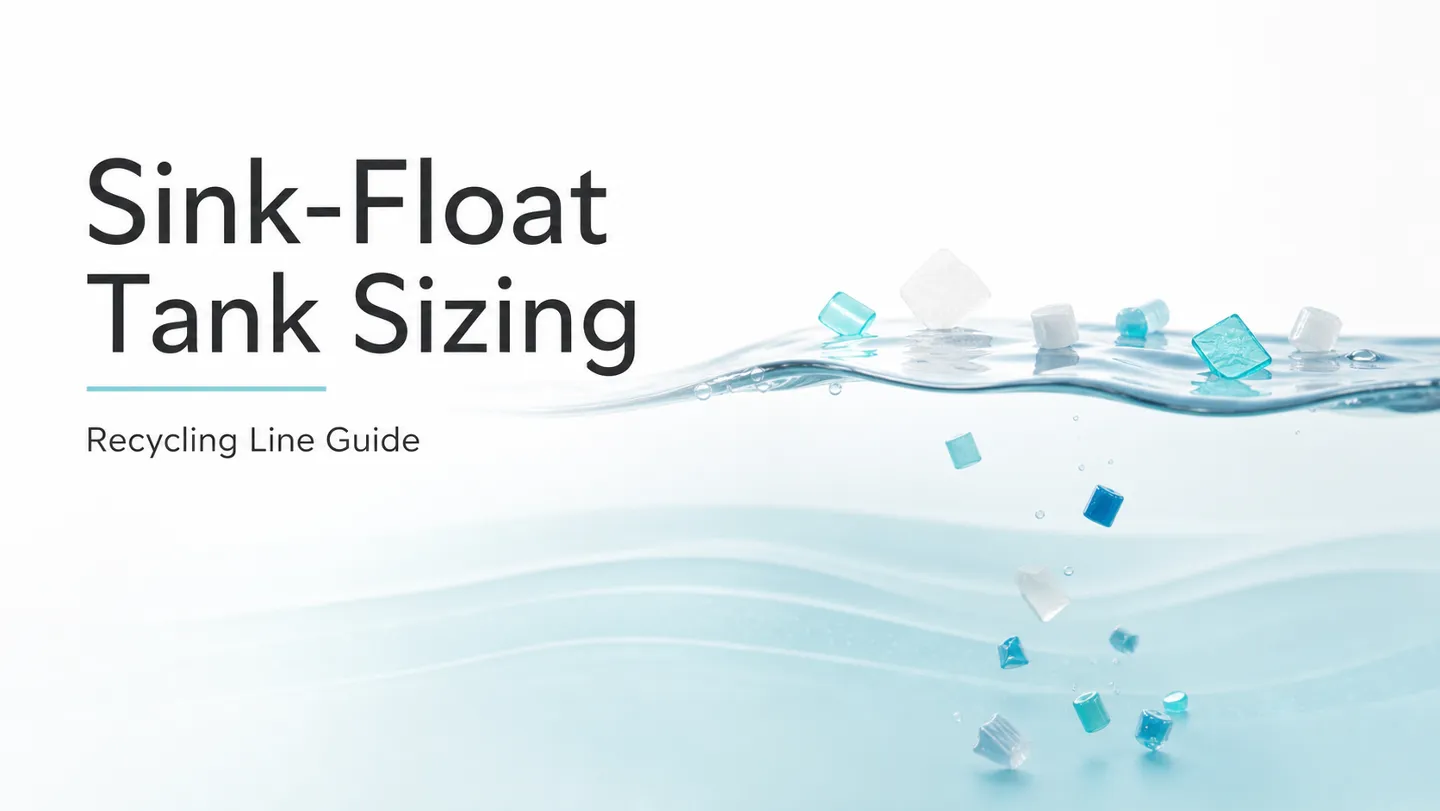
Meestal worden zink-drijf separatie tanks gekocht op één getal — een doelverwerking in kg/h — en dat is precies waarom zoveel ervan onderprestent als er echt post-consumer materiaal begint te stromen. Een tank die op papier correct geschaald lijkt kan je nog steeds vervuilde vlokken, onbeheersbare waterrekeningen of een sludgeprobleem geven dat niemand had gepland. Een goede schaalvoering van een zink-drijf tank betekent deze aanpassen aan uw gedrag van de grondstof, uw zuiverheidsdoel, en de machines aan weerszijden ervan — not just to a capacity figure. This guide walks through how to do that before you issue an RFQ. For background on how these tanks work, see wat een sink-float scheidingstank is.
Wat een drijf-zinktank werkelijk doet (en wat hij niet kan’)
A drijf-zinkscheidingstank — ook wel een float-sink tank, floatwastank of drijvende wasmachine genoemd — scheidt plastics puur op basis van dichtheid ten opzichte van water (1,0 g/cm³). Lichte polymeren drijven en worden van de oppervlakte afgehaald; dichtere polymeren en zware vervuilende stoffen zakken en worden van de bodem afgetrokken. Er zijn geen zeven of sensoren die de scheiding bepalen — zwaartekracht en opwaartse kracht doen het werk, wat de tank zo betrouwbaar en goedkoop in bedrijf maakt, en ook de reden is waarom deze een harde grens heeft.
| Materiaal | Dichtheid (g/cm³) | Gedrag in water |
|---|---|---|
| PP | '0,90–0,92' | Drijft |
| PE (HDPE / LDPE) | 0.91–0.96 | Drijft |
| PS | 1.04–1.07 | Zinkt |
| ABS | 1.04–1.07 | Zinkt |
| PET | '1,38–1,40' | Zinkt |
| PVC (hard) | 1.35–1.45 | Zinkt |
De les voor dimensionering: een watertank scheidt drijvers (PP/PE) netjes van zinkers (PET/PVC/PS/ABS), maar hij kan niet Twee materialen scheiden die beide zinken. PET en PVC hebben overlappende dichtheden, dus gaan beide naar de bodem. Als uw specificatie sub-50-ppm PVC in rPET vereist, heeft u een elektrostatische of NIR-polijststap nodig. na de tank — dimensioneer daar nu op, niet later.
Stap 1: Breng eerst uw grondstof in kaart
Het meest nuttige wat u kunt doen voordat u de afmetingen bepaalt, is de stof die daadwerkelijk in de tank wordt gevoed te karakteriseren. Drie variabelen zijn het belangrijkst:
- Polymeermix. Een schone PP/PE-drijfstroom gedraagt zich volledig anders dan een gemengde harde post-consumerstroom. Hoe breder de dichtheidsverspreiding die u wilt afvangen, hoe meer scheidingsgangen u wilt.
- Bulkdichtheid en vorm. Lichte folie en pluis blijven op het oppervlak drijven en hebben sterke, goed geplaatste peddels nodig om onder te duiken en te transporteren; zware harde vlok zinkt snel en belast de bodemschroef zwaarder.
- Verontreinigingsbelasting. Papieren etiketten, lijm, zand, fijnstof en organisch residu komen allemaal in het water en het slib terecht. Zware verontreiniging is de belangrijkste reden waarom een tank die qua doorvoer “groot genoeg” is, toch faalt op zuiverheid.
Als u kunt, voer dan een drijf-zinktest uit op een representatief monster in een emmer met water. Het geeft u uw werkelijke drijf-zinkverhouding, wat direct de afmetingen van de skimmer en de bodemafvoer beïnvloedt.
Stap 2: Leg uw werkelijke doorzetband vast — niet uw piek
De doorvoer moet worden uitgedrukt als een bandbreedte gekoppeld aan een specifiek materiaal, niet als één enkel getal. Een tank met een nominaal vermogen van “2000 kg/h” op schoon PP-maalgoed haalt dat tempo niet op nat, vervuild post-consumer PET, omdat de verblijftijd — hoe lang elke vlok in het water blijft — bepalend is voor de scheidingskwaliteit. Voer het materiaal te snel door en drijvers worden naar beneden getrokken voordat ze boven komen.
Als planningsreferentie vallen gangbare enkelrijige tankbanden grofweg in:
- 300–1,500 kg/h — de meeste folie- en flessenwaslijnen, schone tot matig verontreinigde invoer.
- 1,500–3,000 kg/h — lijnen met hogere capaciteit en sterk verontreinigde post-consumerstromen (meestal een drierijige tank, zie hieronder).
- 3,500–5,000 kg/h — industriële bottle-to-bottle-fabrieken, doorgaans met meerdere of verlengde tanks.
De werkelijke capaciteit hangt altijd af van de voedingsgeometrie, bulkdichtheid, vervuiling en hoe strikt uw zuiverheidsdoelstelling is — dus behandel deze als startpunten voor een ingenieursgesprek, niet als garanties.
Stap 3: Enkelrij vs. drierij — de beslissing die de footprint bepaalt
Dit is meestal de werkelijke dimensioneringsbeslissing. Een enkelrijige tank geeft elke flake één passage door het water. Een drierijige drijf-zinktank maakt het materiaal drie keer zoveel afstand afleggen en drie keer zo lang weken in één chassis, wat het mogelijk maakt om een hogere zuiverheid te bereiken bij vervuilde invoer zonder drie aparte tanks in serie te plaatsen.
| Kriteria | Enkelrijige tank | Drierijige tank |
|---|---|---|
| Doorzetband | 300–1,500 kg/h | 1.000–3.000 kg/h (één unit vervangt ~3 enkelrijige tanks in serie) |
| Scheidingspassages | 1 passage | 3 passages — 3× langere weg- en weektijd |
| Gangbare zuiverheid | 98–99% in één fase | 99,5%+ zelfs bij zware post-consumerverontreiniging |
| Beste grondstof | Schoon post-industrieel regrind; voorgesorteerde PET/HDPE-flessenflake | Sterk verontreinigd post-consumer PET, gemengde hards, WEEE, automotive ASR |
| Geïnstalleerd vermogen | ~5,5–15 kW | ~15–22 kW |
Vuistregel: als uw lijndoelstelling hoger is dan 1.500 kg/h, of uw feedstock afkomstig is van huisvuilinzameling of statiegeldbalen, verdient de drievoudige configuratie meestal zijn premie binnen het eerste jaar terug door zuiverheidsverhoging en veel minder extruder scherm-filter wijzigingen in de keten.
Stap 4: Dimensioneer de waterkringloop en slibverwerking, niet alleen de tank
De tank is het goedkope deel. Het water- en slib-systeem eromheen is waar de bedrijfskosten gewonnen of verloren gaan, en het wordt routineel onvoldoende gespecificeerd.
- Waterverbruik. Zonder een behandelingslus trekt een tank typisch 20-30 m³ vers water per ton capaciteit. Door het toevoegen van een DAF (opgeloste-luchtflotatie) en een sedimentatieklus wordt dit verminderd tot 3-5 m³ per ton — tot ~85% hergebruik. Over een jaar is dit verschil groter dan het prijsverschil tussen de tankmodellen.
- Slib. Papiervezel, etiketlijm, fijnstof en zand moeten ergens heen. Een gespecialiseerde schroefpers ontwatert het slib tot een koek met 60–70% droge stof dat goedkoper is om af te voeren in plaats van een vloeibaar afvalprobleem achter te laten.
Specificeer de waterkringloop en slibpers in dezelfde RFQ als de tank. Ze er later bij bouwen kost bijna altijd meer en past slechter.
Stap 5: Plaats de tank op de juiste plek in de waslijn
Een sink-float tank is een scheidingsstap, geen losse machine. Hij heeft de juiste toevoercondities nodig, zowel inkomend als uitgaand:
- Stroomopwaarts: materiaal moet al verkleind en voorgewassen zijn. Een frictiewasser 'of' warmwassysteem vóór de tank verwijdert het merendeel van lijm en oppervlaktevuil, zodat de drijf-zinkscheiding schoon verloopt.
- Stroomafwaarts: de gescheiden vlokken bevatten nog steeds water. Plan voor ontwatering en droging vóór het pelletiseren, en — als u streeft naar voedselveilig rPET — de eerder genoemde elektrostatische of optische PVC-verwijderingsstap.
Als u een complete lijn in plaats van één machine bekijkt, begin dan bij het wassysteem niveau en laat de tankmaat volgen uit het lijndoel.
Snelle dimensioneringschecklist
Voordat u een RFQ verstuurt, heeft u antwoorden nodig op:
- Welke polymeren zitten in de invoer en wat is ongeveer de drijf:zink-verhouding?
- Wat is de realistische doorzetbandbreedte voor dat materiaal — niet uw beste piek?
- Welke zuiverheid eisen uw koper of extruder werkelijk?
- Is de invoer schoon post-industrieel of verontreinigd post-consumer? (Dit beslist meestal enkel- vs. drierij.)
- Zijn waterhergebruik (DAF) en een slibpers in de scope opgenomen?
- Welke machine voedt de tank en welke machine ontvangt de gescheiden stromen?
Vijf dimensioneringsfouten die u later duur komen te staan
- Dimensioneren op piek-kg/h. Verblijftijd, niet het typeplaatjevermogen, bepaalt de zuiverheid. Dimensioneer op duurzame snelheid bij uw vuilste realistische invoer.
- Verwacht dat water alleen PVC uit PET verwijdert. Dat kan niet’ — beide zinken. Plan de polijststap vooraf.
- De waterkringloop negeren. Een tank zonder DAF kan stilletjes meer kosten aan vers water en lozingsheffingen dan de tank zelf.
- Slib vergeten. Geen ontwatering betekent terugkerende kosten voor vloeibaar afval en stilstand.
- De tank los kopen. Een verkeerde wasstap stroomopwaarts of droger stroomafwaarts laat een perfect gedimensioneerde tank lijken te falen.
Veelgestelde vragen
Kan een drijf-zinktank PET volledig van PVC scheiden?
Nee. PET (1.38–1.40 g/cm³) en PVC (1.35–1.45 g/cm³) zinken beide en hebben overlappende dichtheden, dus een waterbak stuurt ze samen naar de bodem. Voor sub-50-ppm PVC in rPET, voeg een elektrostatische separator of NIR optische sorter toe als een polijststap na de tank.
Hoeveel water verbruikt een drijf-zinktank?
Typisch 20–30 m³ vers water per ton zonder filtratie. Met een DAF en sedimentatiekring, daalt dat meestal naar 3–5 m³ per ton (tot ~85% hergebruik), wat de meeste besparingen in exploitatiekosten oplevert.
Wanneer is een drierijige tank de meerprijs waard?
Over het algemeen hebben HDPE-flessen van straat (huishoudelijk) een hoger vocht- en vuilgehalte dan flessen die van een DRS- of deposito-inzamelpunt komen. Hetzelfde geldt voor gemengd huisvuilinzameling versus bronscheiding. De machine heeft een gecombineerde wrijvings- en flotatiewastank die met een lager toerental draait om de etiketten en lijm te verwijderen. De vervanging van de messen voor de PET-waslijn is afhankelijk van de toevoersnelheid en de verontreiniging. Over het algemeen zou u de messen vaker moeten wisselen bij een hogere doorvoer en meer vuil. De wisselingen van de stroomafwaartse filters verlengen de filterstandtijd, omdat er geen etiketvezels doorheen kunnen gaan. Er is geen afvalwater geproduceerd; het proceswater wordt continu gefilterd en hergebruikt. De waterbehandeling omvat het verwijderen van zware metalen en het neutraliseren van de zuurgraad.
Waar staat de tank in de lijn?
Na het verkleinen en voorwassen/wrijvings- of heet wassen, en vóór het ontwateren, drogen en pelletiseren. Een schone toevoer betekent een schone float-sink-scheiding.
Heeft u hulp nodig bij het afstemmen van een tank op uw specifieke invoer- en lijndoelen? Deel uw polymeermix, verontreinigingsniveau en doorvoerdoel, en onze ingenieurs kunnen een drijf-zinkscheidingstank configuratie — enkel- of drierijig, met de juiste waterkringloop en slibverwerking — gedimensioneerd op uw werkelijke proces in plaats van een getal uit de brochure.
