
Большинство флотационно-осадительных ванн покупают по одному числу — целевой производительности в кг/ч, — и именно поэтому так многие из них недотягивают, когда начинает поступать реальный пост-потребительский материал. Ванна, которая на бумаге подобрана правильно, всё равно может выдать загрязнённые хлопья, неконтролируемые счета за воду или проблему с шламом, которую никто не планировал. Правильный подбор флотационно-осадительной ванны означает согласование её с вашим поведение сырья, ваш целевая чистота, и машины по обе стороны от него — not just to a capacity figure. This guide walks through how to do that before you issue an RFQ. For background on how these tanks work, see что такое флотационно-разделительная ванна.
Что на самом деле делает флотационно-осадительная ванна (а чего она не может)
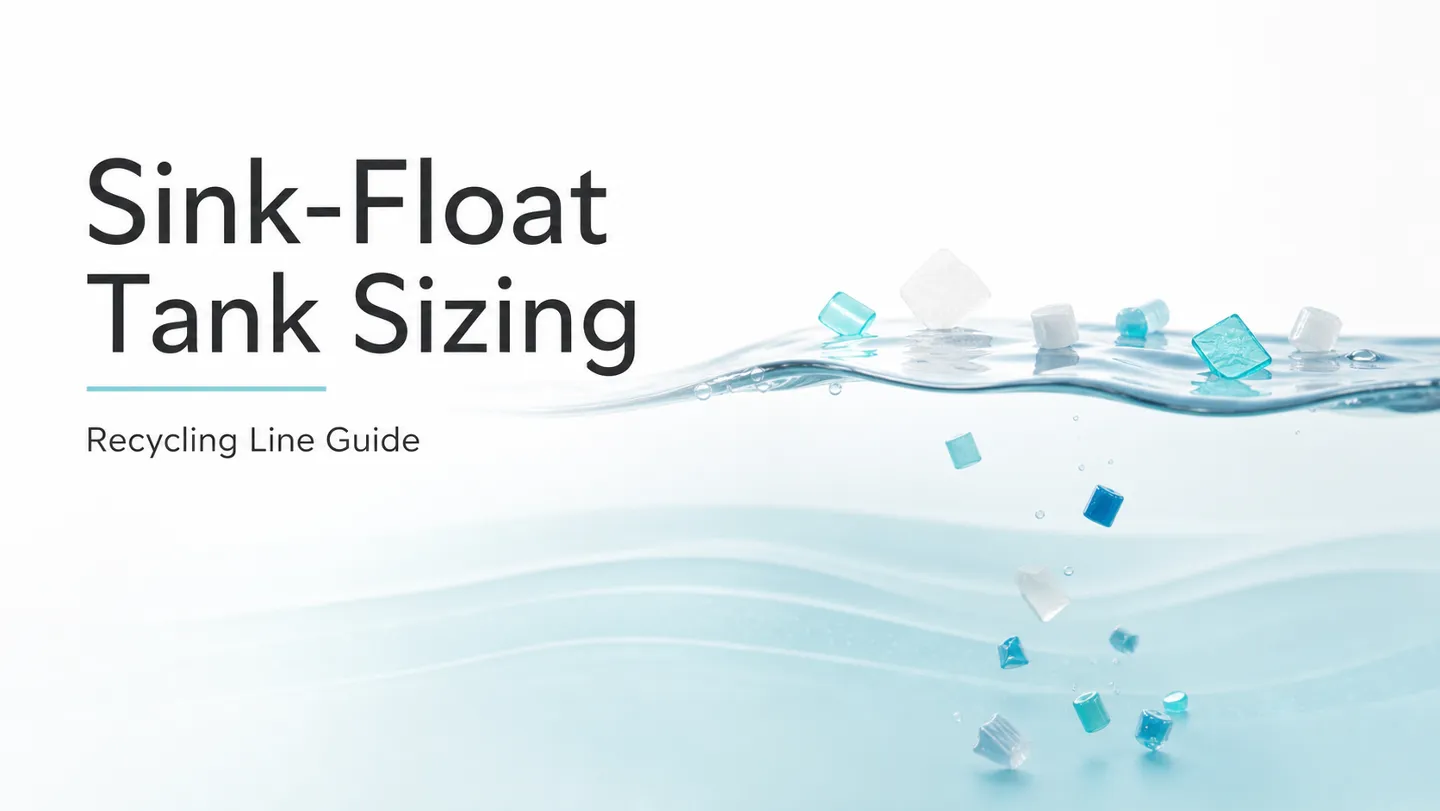
А Резервуар флотационно-седиментационного разделения — также называемая флотационной ванной, ванной флотации или флотационной мойкой, — разделяет пластики исключительно по плотности относительно воды (1,0 г/см³). Полимеры легче воды всплывают и снимаются с поверхности; более плотные полимеры и тяжёлые загрязнения оседают и выгребаются снизу. Никакие сита или датчики не принимают решение о разделении — работают гравитация и выталкивающая сила, поэтому ванна так надёжна и дешёва в эксплуатации, и поэтому же у неё есть жёсткий предел.
| Материал | Плотность (г/см³) | Поведение в воде |
|---|---|---|
| ПП | 0,90–0,92 | Плавает |
| ПЭ (ПЭНД / ПЭВД) | 0,91–0,96 | Плавает |
| ПС | 1.04–1.07 | Sinks |
| АБС | 1.04–1.07 | Sinks |
| ПЭТ | 1,38–1,40 | Sinks |
| ПВХ (жёсткий) | 1.35–1.45 | Sinks |
Вывод для подбора: водяная ванна чисто разделяет всплывающие (ПП/ПЭ) и тонущие (ПЭТ/ПВХ/ПС/АБС), но она не может разделить два материала, которые оба тонут. ПЭТ и ПВХ имеют перекрывающиеся плотности, поэтому оба идут на дно вместе. Если ваша спецификация требует менее 50 ppm ПВХ в rПЭТ, вам понадобится электростатическая или NIR доводочная стадия после бак — рассчитайте размер сейчас, а не потом.
Шаг 1: опишите ваше сырьё прежде всего остального
Самое полезное, что вы можете сделать перед подбором размера, — охарактеризовать, что реально входит в бак. Три переменные важнее всего:
- Смесь полимеров. Чистый всплывающий поток ПП/ПЭ ведёт себя совершенно иначе, чем смешанный жёсткий пост-потребительский поток. Чем шире диапазон плотности, который нужно охватить, тем больше проходов сепарации желательно.
- Насыпная плотность и форма. Лёгкая плёнка и пух сидят на поверхности и нуждаются в сильных, хорошо размещённых лопатках для погружения и транспортировки; тяжёлые жёсткие хлопья тонут быстро и сильнее нагружают нижний шнек.
- Нагрузка загрязнения. Бумажные этикетки, клей, песок, мелочь и органические остатки все оказываются в воде и шламе. Сильное загрязнение — главная причина, по которой ванна, «достаточно большая» по производительности, всё равно проваливается по чистоте.
Если можете, проведите тест флотации-осаждения на представительном образце в ведре воды. Он покажет ваше реальное соотношение всплытие:осаждение, которое напрямую движет размером скиммера и нижней разгрузки.
Шаг 2: зафиксируйте реальный диапазон производительности — не пик
Производительность следует указывать в виде диапазона, привязанного к конкретному материалу, а не одним рекламным числом. Ванна с паспортной производительностью «2000 кг/ч» на чистой ПП-дроблёнке не удержит этот темп на влажном загрязнённом ПЭТ пост-потребительского происхождения, потому что качество разделения определяет время пребывания — то, как долго каждый хлопок находится в воде. Прогоните материал слишком быстро — и всплывающие частицы утянет вниз, не дав им всплыть.
В качестве ориентира для планирования типичные диапазоны одного бака примерно делятся на:
- 300–1500 кг/ч — большинство линий мойки плёнки и бутылок, от чистого до умеренно загрязнённого сырья.
- 1500–3000 кг/ч — higher-capacity lines and heavily contaminated post-consumer streams (usually a triple-row tank, see below).
- 3500–5000 кг/ч — промышленные заводы «бутылка в бутылку», обычно с несколькими или удлинёнными ваннами.
Фактическая производительность всегда зависит от геометрии подачи, насыпной плотности, загрязнения и того, насколько жёстка ваша цель чистоты — поэтому рассматривайте их как отправные точки для инженерного разговора, а не гарантии.
Шаг 3: однорядный против трёхрядного — решение, определяющее занимаемую площадь
Обычно это и есть реальное решение по подбору. Однорядная ванна даёт каждому хлопью один проход через воду. А трёхрядная флотационно-осадительная ванна заставляет материал проходить втрое большую дистанцию и замачиваться втрое дольше в одном корпусе, что и позволяет ему достигать более высокой чистоты на грязной подаче без выстраивания трёх отдельных ванн последовательно.
| Критерии | Однорядная ванна | Трёхрядная ванна |
|---|---|---|
| Диапазон производительности | 300–1500 кг/ч | 1 000–3 000 кг/ч (один агрегат заменяет ~3 однорядных бака последовательно) |
| Проходы сепарации | 1 проход | 3 прохода — путь и время замачивания в 3 раза дольше |
| Типичная чистота | 98–99% за одну стадию | 99.5%+ even on heavy post-consumer contamination |
| Лучшее сырьё | Clean post-industrial regrind; pre-sorted PET/HDPE bottle flake | Сильно загрязнённый ПЭТ от потребления, смешанные жёсткие пластики, WEEE, автомобильный ASR |
| Установленная мощность | ~5,5–15 кВт | ~15–22 кВт |
Rule of thumb: if your line target is above 1,500 kg/h, or your feedstock comes from curbside or DRS bales, the triple-row configuration usually pays back its premium within the first year through purity uplift and far fewer extruder screen-filter changes downstream.
Шаг 4: Рассчитайте контур воды и обработку осадка, а не только бак
Бак — дешёвая часть. Система воды и шлама вокруг него — там, где выигрывается или проигрывается операционная стоимость, и она рутинно недоразмерена.
- Потребление воды. Без контура очистки ванна обычно потребляет 20–30 м³ свежей воды на тонну пропускной способности. Добавление контура DAF (напорная флотация) и отстойника обычно снижает это до 3–5 м³ на тонну — до ~85% повторного использования. За год эта разница затмевает разницу в цене между моделями ванн.
- Шлам. Волокно бумаги, клей этикеток, мелочь и песок должны куда-то деваться. Выделенный шнековый пресс обезвоживает шлам в кек 60–70% твёрдых, который дёшево вывозить, вместо того чтобы оставлять вас с головной болью жидких отходов.
Укажите контур воды и шламопресс в том же RFQ как ванна. Прикручивание их потом почти всегда стоит дороже и подходит хуже.
Шаг 5: правильно разместите бак на линии мойки
Флотационно-осадительный бак — этап сепарации, а не автономная машина. Ему нужно правильное состояние подачи на входе и правильная передача на выходе:
- Upstream: материал уже должен быть измельчён и предварительно вымыт. A фрикционная мойка или система горячей мойки перед ванной удаляет основную массу клея и поверхностной грязи, чтобы разделение всплытие-осаждение было чистым.
- Ниже по потоку: разделённые хлопья всё ещё несут воду. Планируйте обезвоживание и сушку перед пеллетированием, и — если вы гонитесь за пищевым rПЭТ — электростатическую или оптическую стадию удаления ПВХ, упомянутую ранее.
Если вы планируете полную линию, а не отдельную машину, начните с система мойки уровень и пусть размер бака вытекает из целевого показателя линии.
Быстрый чек-лист подбора
Перед отправкой RFQ подготовьте ответы на это:
- Какие полимеры в подаче и каково примерное соотношение всплывающих к тонущим?
- Каков реалистичный диапазон производительности для что материал — не ваш лучший пиковый?
- Какой чистоты на самом деле требует ваш покупатель или экструдер?
- Сырьё чистое промышленное или загрязнённое от потребления? (Обычно это решает вопрос одно- или трёхрядного исполнения.)
- Включены ли рециркуляция воды (DAF) и шнековый пресс для осадка в объём?
- Какая машина питает ванну и какая машина принимает разделённые потоки?
Пять ошибок подбора, которые дорого стоят позже
- Подбор по пиковым кг/ч. Время выдержки, а не паспортная мощность, задаёт чистоту. Рассчитывайте на устойчивую скорость на вашем самом грязном реалистичном сырье.
- Ожидание, что одна вода удалит ПВХ из ПЭТ. Он не может — оба тонут. Планируйте стадию доочистки заранее.
- Игнорирование водяного контура. Ванна без DAF может тихо стоить больше в свежей воде и сбросах, чем сама ванна.
- Забывание о шламе. Отсутствие обезвоживания означает регулярные затраты на жидкие отходы и простои.
- Покупка ванны изолированно. Неправильная мойка на входе или сушилка на выходе заставляют идеально подобранную ванну выглядеть так, будто она провалилась.
Часто задаваемые вопросы
Может ли флотационно-осадительная ванна полностью отделить ПЭТ от ПВХ?
Нет. ПЭТ (1,38–1,40 г/см³) и ПВХ (1,35–1,45 г/см³) оба тонут с перекрывающимися плотностями, поэтому водяная ванна отправляет их на дно вместе. Для ПВХ ниже 50 ppm в rPET добавьте электростатический сепаратор или оптический сортировщик NIR как доводочную стадию после ванны.
Сколько воды потребляет флотационно-осадительная ванна?
Обычно 20–30 м³ свежей воды на тонну без фильтрации. С контуром DAF и осаждения это обычно падает до 3–5 м³ на тонну (до ~85% повторного использования), откуда и происходит большая часть экономии эксплуатационных затрат.
Когда трёхрядный бак стоит своей дополнительной цены?
Обычно, когда ваша линия работает выше ~1500 кг/ч или сырьё — сильно загрязнённый пост-потребительский материал (придорожный сбор, кипы DRS, смешанные жёсткие пластики). Дополнительные два прохода повышают чистоту и снижают нижестоящие смены фильтров, обычно окупаясь в первый год.
Где находится бак на линии?
После измельчения и предмойки/фрикционной или горячей мойки, и перед обезвоживанием, сушкой и пеллетированием. Чистая подача внутрь означает чистое разделение погружением-всплытием наружу.
Нужна помощь в подборе бака под вашу конкретную подачу и цель линии? Поделитесь вашей полимерной смесью, уровнем загрязнения и целью производительности, и наши инженеры могут порекомендовать Резервуар флотационно-седиментационного разделения конфигурация — одно- или трёхрядная, с правильным водяным контуром и обработкой шлама — размеренная вокруг вашего фактического процесса, а не вокруг громкого числа.
