


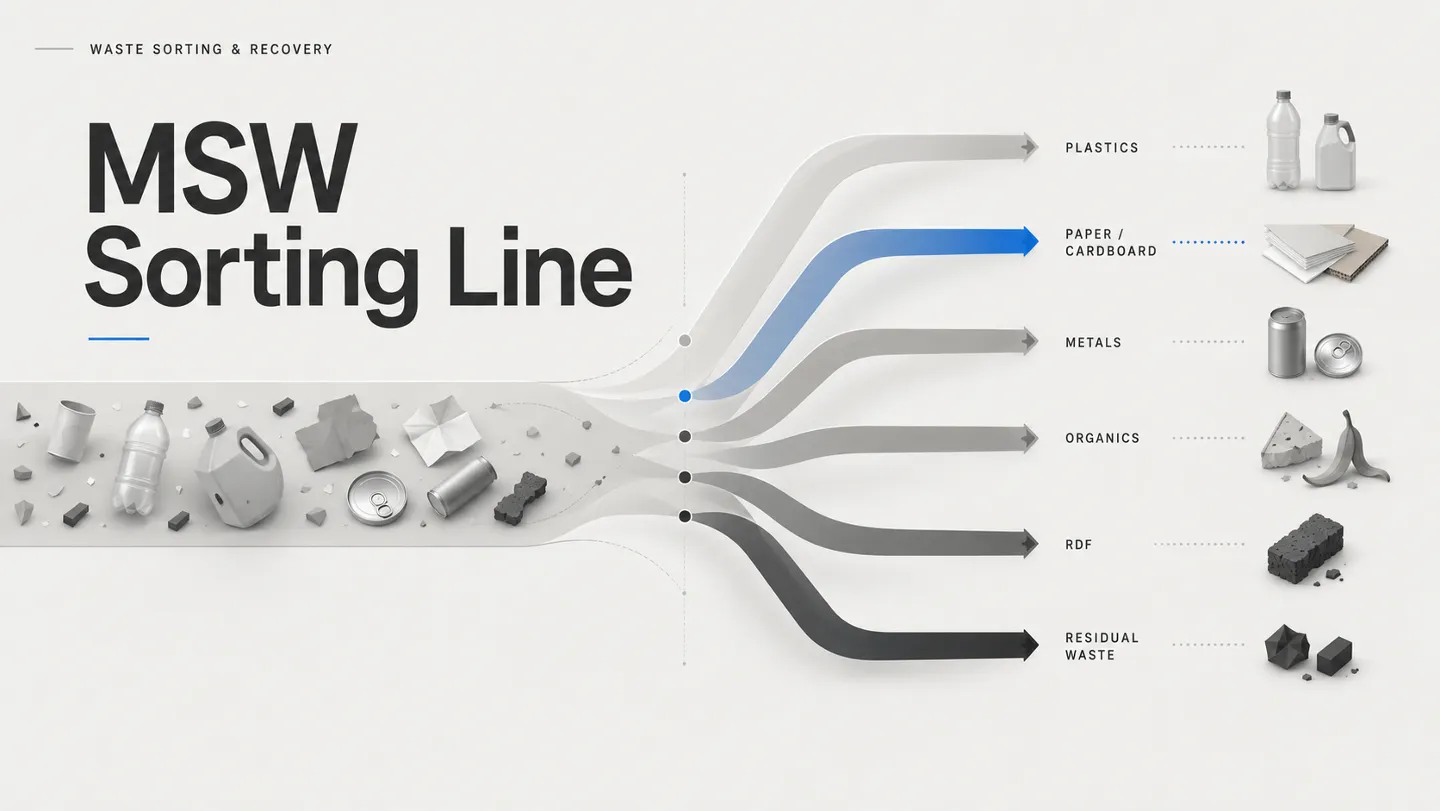
UN Linea di separazione dei rifiuti solidi urbani Separa i rifiuti urbani solidi misti in materiali recuperabili, frazioni processabili e residui controllati. La linea non si basa su un'unica macchina universale. Combinava alimentazione misurata, setacciatura, separazione per densità, recupero dei metalli, selezione da parte di sensori o manuale e gestione del prodotto in base alla composizione effettiva dei rifiuti in arrivo.
Questa guida spiega come funziona il processo, cosa fa ogni stage di attrezzatura, come dovrebbero essere misurate la capacità e le prestazioni, e quali informazioni un acquirente dovrebbe preparare prima di richiedere una layout di impianto. Per le attrezzature disponibili, vedi hub di attrezzature di separazione dei rifiuti solidi urbani o l impianto di selezione a ciclo chiuso di rifiuti misti.
Cosa è una linea di selezione dei rifiuti urbani?
Una linea di selezione di rifiuti misti (MSW) è la sequenza collegata di trasportatori, siepi, separatori, postazioni di selezione manuale, serbatoi e attrezzature per imballaggio o gestione dei residui all'interno di un impianto di trattamento dei rifiuti. Il suo scopo è suddividere una miscela variabile di alimentazione in correnti di materiale che possono essere vendute, riciclate, trattate biologicamente, convertite in RDF o SRF dove consentito, o smaltite in modo sicuro.
La linea di selezione fa parte di un più grande impianto di recuperamento dei materiali (MRF). L'impianto completo include anche la sala di ricezione, le rotte veicolari, la protezione antincendio, il controllo della polvere e dell'odore, i sistemi elettrici, l'accesso per la manutenzione, l'archiviazione dei prodotti, l'archiviazione dei residui e i servizi. Pertanto, una lista di macchine da sola non costituisce un progetto di impianto completo.
Inizia con un'analisi di rappresentanza dei rifiuti
Il progetto affidabile inizia con campioni rappresentativi dell'area di raccolta reale. La composizione dei rifiuti può variare stagionalmente, da quartiere a quartiere, a seconda del metodo di raccolta, dell'attività commerciale e della politica di riciclo locale. Una tabella di composizione generica può portare a un stadio sovradimensionato mentre un altro diventa il punto di blocco.
- Composizione per massa: organici, carta, cartone, film, plastica rigida, metallo ferreo, metallo non ferreo, vetro, tessuti, polvere e rifiuti.
- Proprietà fisiche: umidità, densità di volume, distribuzione delle dimensioni dei granuli, dimensione delle buste, oggetti voluminosi e grado di compattazione.
- Materiali problematici: cavioli, tubi, batterie, cilindri, rifiuti elettronici, contenitori per rifiuti pericolosi, lunghe pellicole e oggetti che possono avvolgere o danneggiare l'attrezzatura.
- Patterno di arrivo: tonnellaggio medio e picco, orario di arrivo dei veicoli, picchi stagionali e il buffer di ricezione richiesto.
- Output targets: le classi che i acquirenti locali o i processori successivi accetteranno, inclusi i limiti di contaminazione e i volumi minimi di spedizione.
La campionatura dovrebbe coprire periodi di funzionamento normali e difficili. Le decisioni progettuali prese da campioni secchi, selezionati a mano, potrebbero non rappresentare il materiale umido, compattato, consegnato dai veicoli di raccolta.
Come funziona una linea di selezione dei rifiuti MSW
1. Ricezione, Controllo e Preliminare
Ibridi scaricano su un piano di ricezione o in un'area di alimentazione controllata. Gli operatori ispezionano il materiale e rimuovono oggetti pericolosi, eccessivamente grandi o non adatti prima che raggiungano la linea di processo. Questa fase protegge i convogli e i separatori e impedisce che un oggetto pericoloso contami un intero lotto di uscita.
2. Introduzione dosata e apertura sacchetti
Un alimentatore e convoyore per rifiuti Creare un letto di materiale stabile. Se lo scarto domestico arriva in sacchi, un apertura sacchi scarica il contenuto limitando la riduzione di dimensione non necessaria. La fornitura stabile è importante perché le cinghie sovraccaricate riducono l'efficienza della selezione, l'accuratezza del separatore e la performance della selezione manuale.
3. Separazione per dimensione
UN schermo a tamburo, la siepe a disco o la siepe a stella suddivide i rifiuti in frazioni di dimensione selezionata. La frazione più piccola contiene solitamente più rifiuti alimentari, terra, vetro rotto e polvere, mentre la frazione più grande trasporta più imballaggi, carta, contenitori e materiale combustibile voluminoso. Le aperture della siepe devono seguire il processo downstream previsto piuttosto che una dimensione standard arbitraria.
4. Separazione per Forma e Densità
Ispirali, aeree o altre separatori a densità possono separare materiali piani e leggeri a due dimensioni, come la carta e il film, dagli oggetti a tre dimensioni rotolanti o più pesanti, come le bottiglie e i contenitori. Il metodo corretto dipende dall'umidità, dalle dimensioni dei particoli, dalla carica di materiale e dai prodotti che l'impianto intende recuperare.
5. Recupero dei metalli ferrosi e non ferrosi
Un'impalcatura o un cilindro separatore magnetico rimuove metalli ferrosi. Dopo che il materiale è stato setacciato e distribuito in un letto adatto, un separatore a correnti parassite può espellere alluminio e altri metalli non ferrosi conduttivi. La posizione e il carico a banda influenzano fortemente la recupero; l'installazione di un separatore non garantisce un prodotto pulito da solo.
6. Sorteggio ottico e Controllo di Qualità Manuale
I sorteggiatori ottici possono identificare polimeri selezionati, colori o gradi di carta quando gli oggetti sono sufficientemente esposti e separati. Le stazioni manuali possono rimuovere contaminanti, recuperare un grado target o controllare l'uscita automatizzata. L'automazione può ridurre la sorteggio ripetitiva, ma richiede comunque una presentazione di alimentazione controllata, pulizia, calibrazione, manutenzione e ispezione dell'uscita.
7. Stoccaggio del Prodotto, Balleggiatura e Gestione dei Residui
I materiali recuperati si spostano verso bunkers separati prima della balleggiatura o del trasferimento al processo successivo. Il design del bunker deve prevenire la contaminazione incrociata e permettere lo scarico sicuro. Un pressa per riciclaggio riduce il volume di stoccaggio e trasporto. I residui infiammabili possono entrare in un processo di preparazione RDF o SRF dove le specifiche locali e le licenze lo permettono; i residui rimanenti seguono il percorso di smaltimento approvato.
Uscite Tipiche e il Prossimo Passo Possibile
| Frazione di Uscita | Contenuti Tipici | Passo Successivo Possibile |
|---|---|---|
| Metallo Ferroso | Scatole di acciaio e oggetti metallici magnetici | Controllo di qualità, compattazione e riciclaggio del metallo |
| Metallo Non Ferroso | Alluminio e altri metalli conduttivi | Pulizia ulteriore e riciclaggio del metallo |
| Plastici rigidi | PET, HDPE, PP e contenitori misti | Sortaggio dei polimeri, balleggiatura, lavaggio o vendita |
| Pellicola e carta | Imballaggi flessibili, cartone e carta mista | Sortaggio di qualità, balleggiatura o preparazione a carburante laddove permesso |
| Frazione organica e fine | Rifiuti alimentari, terra, vetro piccolo e finiture | Trattamento biologico o altro dopo test di idoneità |
| Frazione combustibile | Carta selezionata, plastica, tessuti e legno | Preparazione di RDF o SRF secondo specifiche concordate |
| Rifiuti residui | Materiali non recuperabili o contaminati | Trattamento o smaltimento approvato |
Swipe horizontally to view the full table.
Questi sono flussi possibili, non prodotti garantiti. La configurazione dell'impianto deve seguire la composizione locale dei rifiuti, le specifiche dell'acquirente, le autorizzazioni ambientali e l'infrastruttura infrastrutturale disponibile.
Come Definire la Capacità della Linea di Sortaggio dei Rifiuti Solidi Urbani (MSW)
Una offerta indicata solo in tonnellate/ora è incompleta. Peso, volume, umidità e composizione influenzano il comportamento del materiale. Definire la capacità utilizzando il caso operativo completo:
- Tasso di ricezione medio e di picco
- Tasso di trattamento netto stabile sotto condizioni di alimentazione rappresentative
- Densità volumetrica e intervallo di umidità
- Ore di lavoro programmate e turni
- Tempo di pulizia pianificato e manutenzione preventiva
- Disponibilità della fabbrica target
- Tonnellaggio annuo di processo richiesto
- Variazioni stagionali e di composizione attese
Un'equazione utile per la pianificazione annuale è:
Massa processata annua = throughput netto stabile × ore di funzionamento programmate × disponibilità della fabbrica
La fase critica a capacità minore determina l'effettivo output della linea. Pertanto, nastri trasportatori, schermi, separatori, silos, baliere, trasporto dei residui e operatori devono essere controllati come un sistema.
Metriche di Prestazione: Recupero, Purezza e Resa
La performance della fabbrica dovrebbe essere misurata da un bilancio di massa, non da impressioni visive. Pesi l'ingresso, ogni prodotto recuperato, materiale ricircolato e residuo finale in un periodo rappresentativo.
| Metrico | Quello che Misura | Calcolo di Base |
|---|---|---|
| Tasso di recupero | Quanto del materiale target nel carico raggiunge l'output target | Materiale target recuperato ÷ materiale target entrante |
| Purezza del prodotto | Quanto dell'output è il materiale desiderato | Materiale target nell'output ÷ massa totale dell'output |
| Resa del prodotto | Output vendibile totale rispetto al totale del carico | Massa dell'output vendibile ÷ massa totale dell'ingresso |
| Tasso di residuo | Materiale che esce senza recupero | Massa residua finale ÷ Massa totale di input |
| Disponibilità | Il tempo necessario affinché la linea sia pronta per l'operazione | Tempo di funzionamento disponibile ÷ tempo programmato |
| Capacità di throughput netta | Processato effettivo nel tempo di funzionamento | Massa processata ÷ ore di funzionamento effettive |
Swipe horizontally to view the full table.
La recuperazione e la purezza devono essere valutate insieme. L'eiezione aggressiva può aumentare la recuperazione ma aggiungere contaminazione; il controllo qualità rigoroso può migliorare la purezza ma perdere più materiale target come residuo. Il giusto equilibrio è stabilito dall'acquirente successivo o dalla specifica del processo.
Disponibilità dello spazio e requisiti di funzionamento
| Areea di impianto | Requisito di progettazione | Rischio se trascurato |
|---|---|---|
| Piano di ricezione | Fluss di veicoli sicuri, ispezione, volume di buffer, drenaggio e separazione antincendio | Alimentazione instabile e traffico non sicuro |
| Conveyor belt | Profondità di letto controllata, protezione, pulizia e accesso per le fuoriuscite | Precision ridotta del separatore e bloccaggi frequenti |
| Cabina di sorteggio | Ergonomia, ventilazione, illuminazione, accesso di emergenza e carico sicuro della cinghia | Bassa recuperazione manuale e esposizione dei lavoratori |
| Magazzini di prodotto | Deposito autonomo, controllo di livello e scarico sicuro | Contaminazione incrociata e interruzione della produzione |
| Zone di manutenzione | Piattaforme, punti di sollevamento, spazio di ritiro, pianificazione di bypass e accesso alle parti di ricambio | Longi tempi di inattività per riparazioni di routine |
| Controllo della polvere e dei fumi | Valutazione dei rischi, manutenzione ordinaria, rilevamento, isolamento e spegnimento appropriato | Incendio, accumulo di polvere e arresto non programmato |
Swipe horizontally to view the full table.
L'allestimento finale deve rispettare le normative di sicurezza, edilizie, antincendio, ambientali e di lavoro sul sito di installazione. Gerarchia della gestione dei rifiuti È utile contesto, ma le licenze locali e i contratti di output determinano quali rotte di recupero sono effettivamente disponibili.
Quali sono i fattori che determinano il ROI di una planta di selezione SWM?
Il fatturato può derivare dalle tariffe di ingresso o di carico, dalle vendite di materie prime recuperate e dai costi evitati per lo smaltimento. I costi operativi includono manodopera, elettricità, attrezzature mobili, parti di consumo, pulizia, manutenzione, aria compressa, consumabili per imballaggio, trasporto di residui e smaltimento. I prezzi delle materie prime da soli non dovrebbero sostenere la valutazione dell'investimento.
Contribuzione annuale = entrate da canone d'ingresso + entrate da materie prime + costo evitato dello smaltimento − lavoro − energia − manutenzione − smaltimento rifiuti − altri costi operativi
Simula scenari conservativi con una minore recupero, maggiore umidità, ridotta disponibilità, prezzi minori delle materie prime e più residui. Un progetto robusto dovrebbe rimanere operabile quando le condizioni reali differiscono dal caso migliore di riferimento.
Elenco controllo RFQ per Linea di Sortimento di RSU
- Studio di composizione rappresentativo con intervalli stagionali
- Fotografie, video, pesi campione, umidità, densità di volume e dati dimensionali delle particelle
- Tonnellaggio giornaliero medio e di punta e orario di funzionamento pianificato
- Prodotti recuperati richiesti e specifiche del compratore scritte
- Residui, materiali organici, vetro e percorsi RDF o SRF
- Disegno del sito, area pedonale disponibile, percorsi veicolari e area di espansione futura
- Alimentazione elettrica, aria compressa, acqua, drenaggio e limiti ambientali
- Livello di automazione richiesto e numero operai disponibili per turno
- Protezione antincendio, polvere, odore, rumore e igiene degli ambienti
- Disponibilità di target, strategia di ricambi e risposta servizio
- Installazione, messa in funzione, formazione, prova di performance e ammissione di spettro
- Garanzie di bilancio di massa e le condizioni esatte di alimentazione a cui si applicano
Prima della selezione finale dell'attrezzatura, richiedete un flusso di processo, un bilancio di massa, un elenco di utilità, un disegno generale dell'impianto, un elenco dei motori, una filosofia di controllo, una revisione della manutenzione-accesso e un test di prestazioni chiaramente definito. Inviate questi input del progetto tramite il nostro Pagina contatti per una revisione della configurazione.
Domande frequenti
Richiesta revisione linea di selezione MSW
Inviate dati rappresentativi dei rifiuti, output target, capacità pianificata, area del sito disponibile, orario di funzionamento e condizioni delle utenze locali. Rumtoo può esaminare la sequenza di separazione, identificare i potenziali punti di blocco e preparare una configurazione degli impianti per il progetto.
