


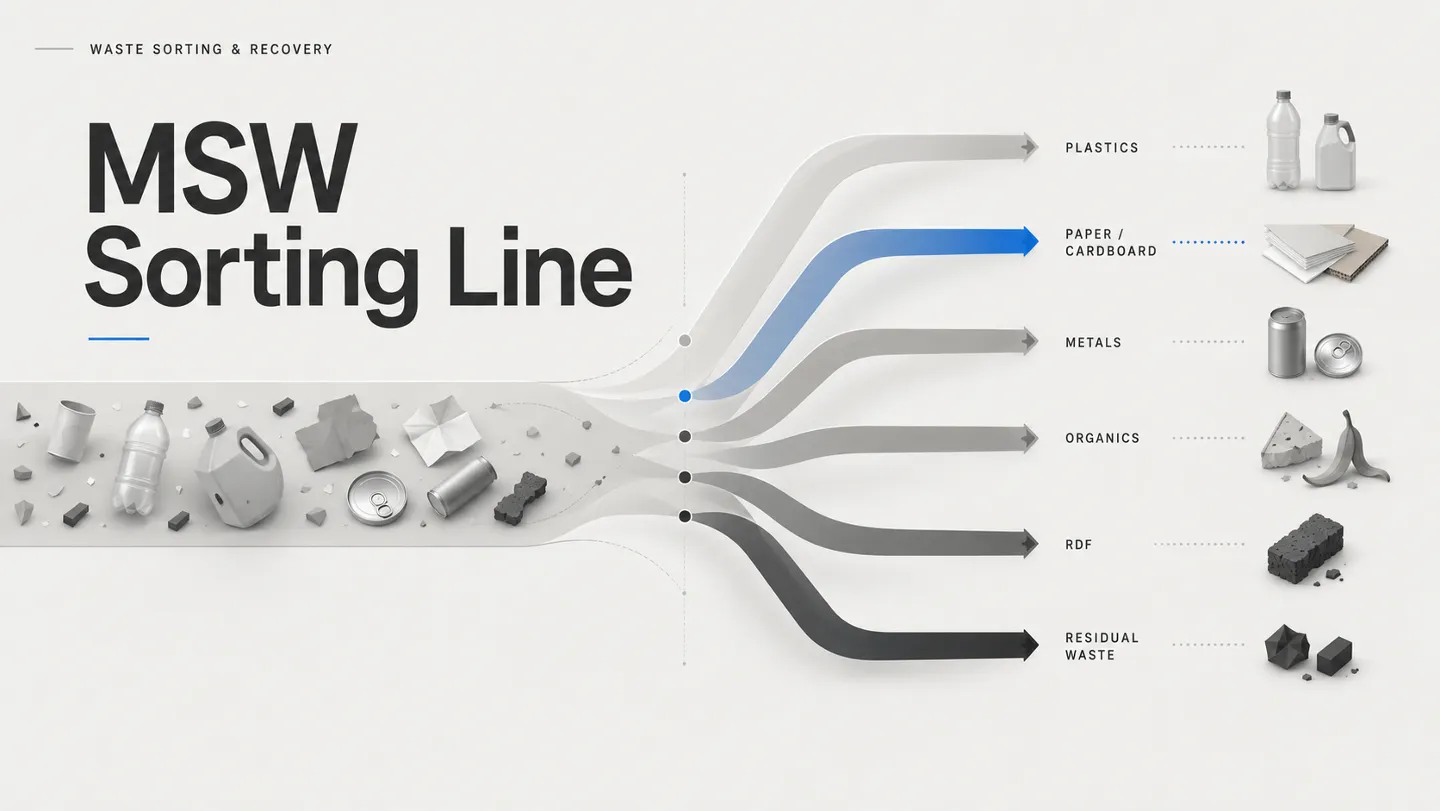
An MSW 정리 라인 혼합된 시설 쓰레기를 회수 가능한 물질, 처리 가능한 부분, 통제된 잔여물로 분리합니다. 선은 하나의 통용 기계에 의존하지 않습니다. 정량 공급, 스크리닝, 밀도 분리, 금속 회수, 센서 또는 수동 정리, 제품 처리를 실제로 들어오는 쓰레기의 구성을 기준으로 결합합니다.
이 가이드는 과정이 어떻게 작동하는지, 각 장비 단계가 무엇을 하는지, 용량과 성능이 어떻게 측정되어야 하는지, 그리고 공장 레이아웃을 요청하기 전에 구매자가 준비해야 할 정보가 무엇인지 설명합니다. 제공 가능한 장비에 대해서는 참조하세요. MSW 정렬 장비 허브 또는 전문가 시설 쓰레기 정리 공장.
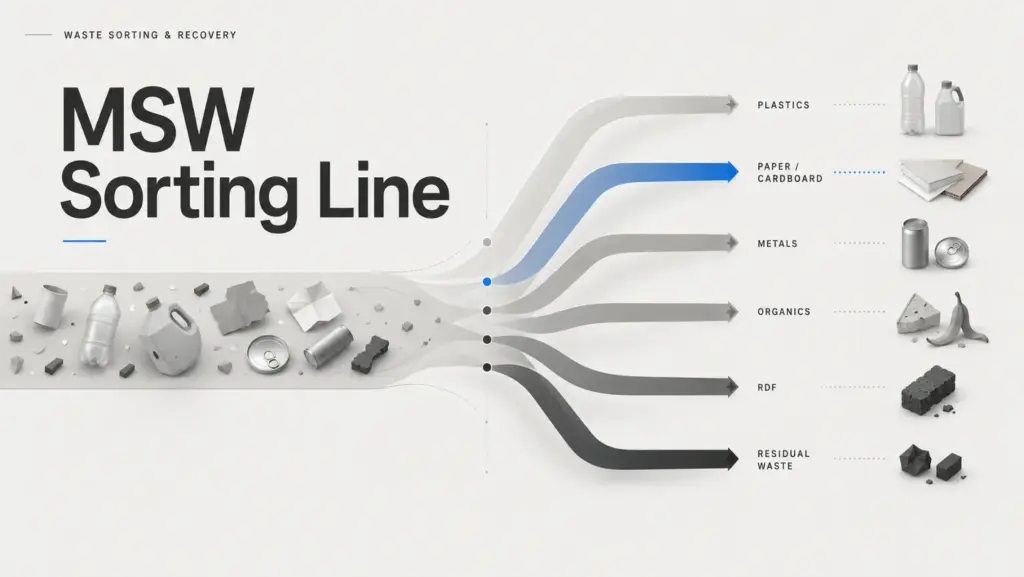
MSW Sorting Line는 무엇인가요?
MSW 정리 라인은 폐기물 처리 시설 내에서 케이블, 스크린, 분리기, 픽팅 스테이션, 버킷, 압박 장치 또는 잔여물 처리 장비가 연결된 순서의 시설입니다. 그 목적은 가변적인 혼합된 원료를 판매, 재활용, 생물학적 처리, 허용된 경우 RDF 또는 SRF로 전환하거나 안전하게 폐기할 수 있는 재료 흐름으로 나누는 것입니다.
정렬 라인은 더 큰 물질 회수 시설(MRF)의 일부입니다. 완전한 시설은 수입 층, 차량 경로, 화재 방지, 먼지 및 냄새 제어, 전기 시스템, 유지보수 접근, 제품 저장, 잔여물 저장 및 공급 시설을 포함합니다. 따라서 기계 목록만으로는 완전한 공장 설계가 아닙니다.
시작은 표본 폐기물 검토부터입니다.
안전한 설계는 실제 수집 지역의 대표적인 표본으로부터 시작됩니다. 폐기물 성분은 계절, 지역, 수집 방법, 상업 활동, 지역 폐기물 재활용 정책에 따라 변할 수 있습니다. 일반적인 성분 차트는 한 단계가 과대 규모로 되면서 다른 단계가 병목 현상이 발생할 수 있습니다.
- 질량 복합률: 유기물, 종이, 카드보드, 필름, 유연 플라스틱, 철금속, 비철금속, 유리, 텍스타일, 미세 입자, 잔여물.
- 물리적 성질: 수분, 부피 밀도, 입자 크기 분포, 가방 크기, 거대한 물품, 및 압축 정도.
- 문제 자재: 줄, 호스, 배터리, 실린더, 전자 폐기물, 유해성 컨테이너, 긴 필름, 그리고 장비를 감쌌거나 손상시킬 수 있는 물체.
- 도착 패턴: 평균 및 피크 톤수, 차량 일정, 계절적 피크, 그리고 필요한 수령 버퍼.
- Output targets: 지역 구매자 또는 하류 공정자가 수용할 수 있는 등급, 포함하여 오염 제한 및 최소 출하 수량.
추출은 정상 및 어려운 작동 기간을 포함해야 합니다. 건조하고 수동으로 선택된 샘플로부터 이루어진 설계 결정은 수집 차량에 의해 공급되는 습윤하고 압축된 재료를 대표하지 않을 수 있습니다.
MSW Sorting Line 작동 방식
수령, 검사 및 사전 정리
차량이 수령 층이나 제어된 공급 구역에 정착합니다. 운전자는 재료를 검사하고 위험한, 크기가 큰, 또는 적합하지 않은 물체를 공정 라인에 도달하기 전에 제거합니다. 이 단계는 전달기와 분리기를 보호하고 하나의 위험한 항목이 전체 출력 배치를 오염시키는 것을 방지합니다.
2. 정량 공급 및 봉투 개폐
급풍기와 폐기물 컨베이어 안정적인 재료 레이를 형성합니다. 가정 폐기물이 가방에 담겨 있으면 가방 개봉기가 내용물을 해방시키면서도 불필요한 크기 축소를 제한합니다. 안정적인 공급은 중요합니다. 과부하된 벨트는 스크리닝 효율, 분리기 정확도, 수동 선택 성능을 저하시킵니다.
3. 크기 분리
ㅏ 트롬멜 스크린, 디스크 스크린이나 스타 스크린은 폐기물을 선택된 크기의 분리 조각으로 나눕니다. 작은 조각은 일반적으로 더 많은 음식물 쓰레기, 흙, 깨진 유리, 미세 입자를 포함하고 있으며, 큰 조각은 더 많은 포장재, 종이, 용기, 거대한 연소 가능한 재료를 포함합니다. 스크린 개구부는 하류 공정의 의도에 따라야 하며 임의의 표준 크기보다는 그렇습니다.
4. 모양과 밀도 분리
공력, 공기 또는 다른 밀도 기반 분리기는 평평하고 가벼운 이차원 재료인 용지와 필름을 굴러가는 또는 무거운 삼차원 물체인 병과 컨테이너와 같은 것을 분리할 수 있습니다. 올바른 방법은 습도, 입자 크기, 재료 부하량 및 공장이 회수하려는 제품에 따라 달라집니다.
5. 철금속 및 비철금속 회수
상부나 드럼 자기 분리기 철성 금속을 제거합니다. 재료가 체를 거쳐 적절한 매트리스 위에 펼쳐지면, 와전류 분리기 알루미늄과 다른 전도성 비철금속을 배출할 수 있습니다. 위치와 벨트 로딩은 회수에 강하게 영향을 미칩니다; 분리기만 설치하면 단순히 깨끗한 제품을 보장하지는 않습니다.
6. 광학 분류 및 수동 품질 검사
광학 분류기는 물체가 충분히 노출되고 분리되면 선택된 포리머, 색상, 또는 종이 등급을 식별할 수 있습니다. 수동 스테이션은 오염물을 제거하고 목표 등급을 회수하거나 자동 출력을 확인할 수 있습니다. 자동화는 반복적인 분류를 줄일 수 있지만, 여전히 제어된 공급 표시, 청소, 캘리브레이션, 유지보수, 출력 검사가 필요합니다.
7. 제품 저장, 백링 및 잔여물 처리
회수된 재료는 백링 전에 별도의 랜드로 이동하거나 다음 과정으로 이동합니다. 랜드 설계는 교차 오염을 방지하고 안전한 배출을 허용해야 합니다. 적절한 재활용 포장기 저장 및 운송 부피를 줄입니다. 연료성 잔여물은 지역 규정 및 허가가 허용되면 RDF 또는 SRF 준비 과정 에 진입할 수 있으며, 나머지 잔여물은 승인된 처리 경로를 따릅니다.
типичные результаты и их следующее направление
| выводная доля | типичное содержимое | возможный следующий шаг |
|---|---|---|
| жесткий металл | стальные банки и магнитные металлические предметы | контроль качества, уплотнение и переработка металла |
| неферrous metal | алюминий и другие проводящие металлы | дополнительная очистка и переработка металла |
| rigid plastic | PET, HDPE, PP, 그리고 혼합 컨테이너 | 폴리머 정리, 백링, 씻기, 또는 판매 |
| 필름과 종이 | 유연한 포장재, 카드보드, 그리고 혼합 종이 | 허용된 경우 품질 정리, 백링, 또는 연료 준비 |
| 기본적 및 미세 분류이 | 식물 쓰레기, 토양, 작은 유리, 그리고 미세 재료 | 적합성 검사 후 생물학적 또는 다른 처리 |
| 연료 분류이 | 선택된 종이, 플라스틱, 섬유, 그리고 나무 | RDF 또는 SRF 준비를 합의된 규격에 따라 |
| 잔여 폐기물 | 회수 불가 또는 오염된 재료 | 인가된 처리 또는 배출 |
Swipe horizontally to view the full table.
이는 가능한 스트림이며, 보장된 제품은 아닙니다. 공장 구성은 현지 쓰레기 구성, 구매자 규격, 환경 허가, 그리고 사용 가능한 하류 인프라에 따라해야 합니다.
MSW 정리 라인 용량을 정의하는 방법
시간당 톤으로만 표시된 견적은 불완전합니다. 중량, 부피, 습도, 그리고 구성이 재료의 행동에 영향을 미칩니다. 전체 운영 상황을 사용하여 용량을 정의하세요:
- 평균 및 최대 수신 비율
- 대표적인 공급 조건하의 안정된 넷 처리 비율
- 체적 밀도 및 습도 범위
- 예정된 운영 시간 및 쉼표
- 예정된 청소 및 예방 유지보수 시간
- 목표 공장 사용 가능성
- 필요한 연간 처리 톤
- 예상된 계절적 및 구성 변화
유용한 연간 계획 방정식은:
연간 처리 질량 = 안정된 넷 처리 비율 × 예정된 운영 시간 × 공장 사용 가능성
최저 용량의 결정적인 단계가 실제 라인 출력을 결정합니다. 콘베이어, 스크린, 분리기, 콘테이너, 잔여물 운반, 그리고 운영자는 하나의 시스템으로 확인되어야 합니다.
성능 지표: 회수율, 정순도, 수익률
공장 성능은 시각적 인상이 아닌 질량 균형으로 평가되어야 합니다. 대표적인 기간 동안 입력, 모든 회수된 제품, 재순환 재료, 그리고 최종 잔여물을 무게로 평가하세요.
| 미터법 | 이는 측정하는 것입니다 | 기본 계산 |
|---|---|---|
| 수리율 | 목표 재료 중 얼마나 많은 것이 목표 출력에 도달하는가 | 목표 재료 수리량 ÷ 목표 재료 입력량 |
| 제품 pureness | 출력에서 얼마나 많은 것이 원하는 재료인가 | 출력 중 목표 재료 ÷ 총 출력 질량 |
| 제품 수율 | 총 판매 가능 출력과 총 입력 질량의 비율 | 판매 가능 출력 질량 ÷ 총 입력 질량 |
| 잔여율 | 수리되지 않은 재료 | 최종 잔여 질량 ÷ 총 입력 질량 |
| 가용성 | 라인이 운영할 준비가 되는 시간 | 가용 운영 시간 ÷ 예정 시간 |
| 순출입량 | 운영 시간 동안 처리된 실제 입력 | 처리 질량 ÷ 실제 운영 시간 |
Swipe horizontally to view the full table.
수리율과 pureness는 함께 평가되어야 합니다. 공격적인 제거는 수리율을 높일 수 있지만 오염을 추가할 수 있으며, 엄격한 품질 관리는 pureness를 향상시킬 수 있지만 잔여물로 더 많은 목표 재료를 잃을 수 있습니다. 올바른 균형은 하류 구매자나 공정 지시에 의해 설정됩니다.
시설 배치 및 운영 요구사항
| 생산 시설 면적 | 설계 요구사항 | 위험 요소 간과 시 |
|---|---|---|
| 수신 층 | 안전한 차량 유로, 검사, 버퍼 용량, 배수 및 화재 분리 | 불안정한 공급 및 안전하지 않은 교통 |
| Conveyor | 제어된 침전 깊이, 보호 장치, 청소, 누수 접근 | 정밀도 저하 및 자주 발생하는 블록킹 |
| 정리 캅신 | 인체공학, 환기, 조명, 비상 접근, 안전 벨트 로딩 | 쓰레기 수거 효율 저하 및 노동자 노출 |
| 제품 보관고 | 독립 저장, 수위 제어 및 안전 배출 | 교차오염과 생산 중단 |
| 유지보수 구역 | 패드, 들어 올리는 지점, 회수 공간, 우회 설계, 부품 접근 | 정기 수리로 인한 장시간 정지 |
| 먼지 및 화재 제어 | 위험성 평가, 정리, 검출, 분리 및 적절한 억제 | 불, 진흙의 쌓임, 예정되지 않은 정지 |
Swipe horizontally to view the full table.
최종 설치 구성은 설치 현장의 안전, 건축, 화재, 환경, 고용 요구 사항에 따라야 합니다. 폐기물 관리 계층 구조 이는 유용한 맥락이지만, 현지 허가와 출력 계약이 실제로 어떤 회수 경로가 사용 가능한지 결정합니다.
MSW 정렬 공장 투자 수익률은 무엇으로 결정되나요?
수익은 게이트 또는 던지는 수수료, 회수된 상품 판매, 예방된 폐기 비용에서 유래할 수 있습니다. 운영 비용에는 노동, 전기, 이동식 장비, 마모 부품, 청소, 유지보수, 압축 공기, 포장 소모품, 잔여물 운송, 폐기가 포함됩니다. 상품 가격만으로는 투자 결정을 뒷받침해서는 안 됩니다.
연간 기여도 = 게이트비 수입 + 상품 수입 + 회피된 폐기 비용 − 노동비 − 전력비 − 유지보수비 − 잔여물 폐기 비용 − 기타 운영 비용
최소한의 회수율, 높은 습도, 감소된 운영 시간, 낮은 상품 가격, 그리고 더 많은 잔여물을 가진 최소한의 시나리오를 모델링하세요. 단단한 프로젝트는 실제 조건이 최상의 사례와 다를 때도 운영될 수 있어야 합니다.
MSW 정렬 라인 RFQ 확인 목록
- 표준 구성 연구, 계절 범위와 함께
- 사진, 영상, 샘플 무게, 습도, 부피 밀도, 입자 크기 데이터
- 평균 및 피크 일일 톤수 및 계획 운영 일정
- 필요한 회수된 제품 및 구매자 사양서
- 잔여물, 유기물, 유리, RDF 또는 SRF 경로
- 공간도면, 사용 가능한 면적, 차량 경로, 미래 확장 구역
- 전력 공급, 압축 공기, 물, 배수, 환경 제한
- 필요한 자동화 수준과 시간당 가능한 운영자 수
- 화재 보호, 먼지, 냄새, 소음, 청소 요구 사항
- 목표 사용 가능성, 예비 부품 전략, 서비스 응답
- 설치, 조업, 훈련, 성능 테스트, 수용 범위
- 질량 균형 보장 및 적용 가능한 정확한 원료 조건
최종 장비 선택 전, 공정 흐름, 질량 균형, 공급 목록, 일반 배치도, 모터 목록, 제어 철학, 유지보수 접근 검토, 명확히 정의된 성능 테스트를 요청하십시오. 이 프로젝트 입력을 연락 페이지 를 통해 구성 검토를 요청하십시오.
자주 묻는 질문
MSW 분리선 검토 요청
대표적인 폐기물 데이터, 목표 출력, 계획된 용량, 사용 가능한 현장 면적, 운영 일정, 현지 공공 설비 조건을 보내십시오. Rumtoo는 분리 순서를 검토하고, 가능한 부정적 요소를 식별하고, 프로젝트를 위해 장비 구성을 준비할 수 있습니다.
