


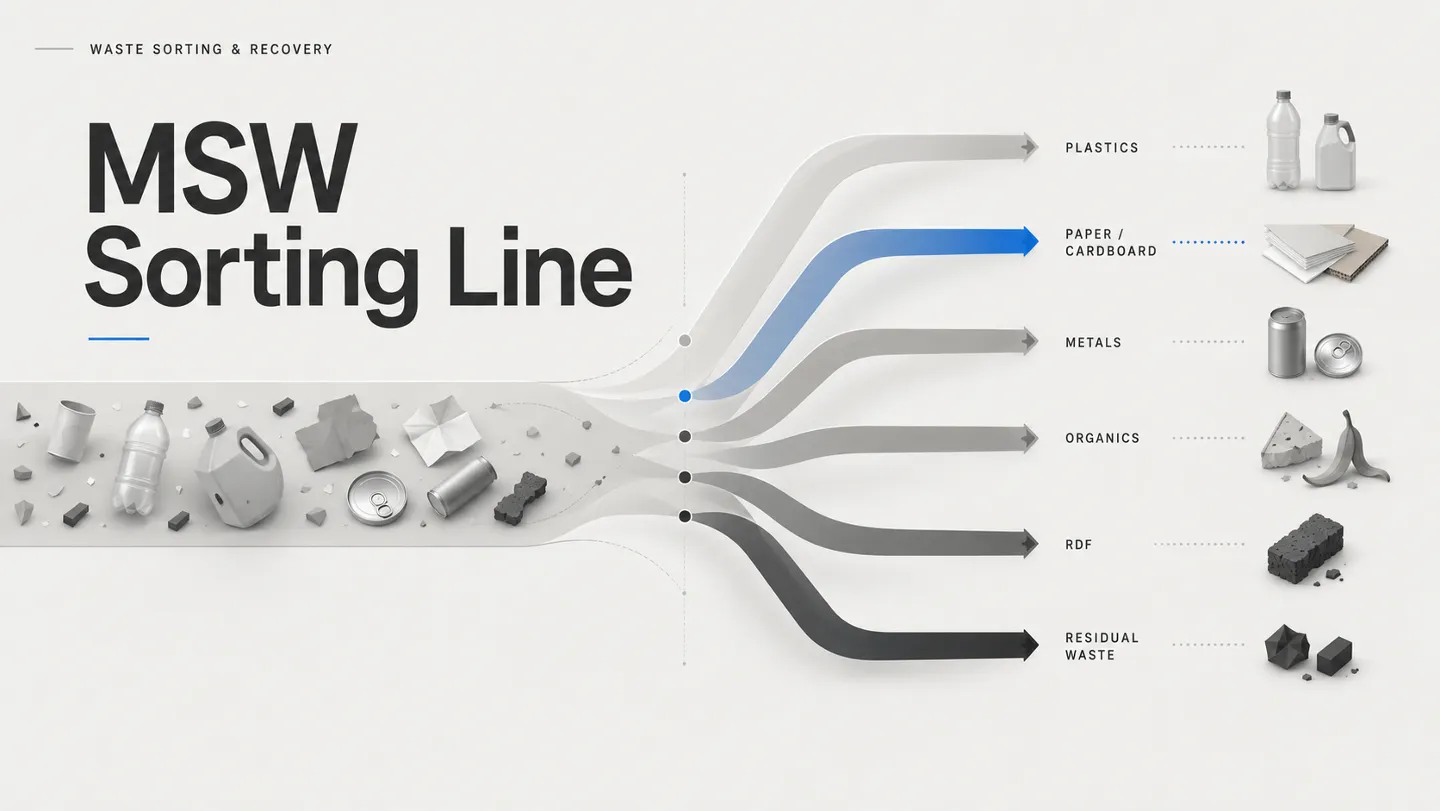
アン MSW分別ライン 混合した市町村ごみを回収可能な材料、処理可能な分画、制御された残留物に分別します。このラインは単一の汎用機械に依存しません。計量供給、分選、密度分別、金属回収、センサーや手動分別、製品処理を実際の入ってくる廃棄物の構成に合わせて組み合わせています。.
このガイドでは、プロセスがどのように動作するか、各機器のステージが何を行うか、容量と性能がどのように測定されるべきか、購入者がプラントレイアウトをリクエストする前に準備すべき情報について説明しています。利用可能な機器については、参照してください。 MSW分別機器ハブ または 一括完成品MSW分別プラント.
MSW分別ラインとは何ですか?
An MSW sorting line is the connected sequence of conveyors, screens, separators, picking stations, bunkers, and baling or residue-handling equipment inside a waste processing facility. Its purpose is to divide a variable mixed feed into material streams that can be sold, recycled, biologically treated, converted into RDF or SRF where permitted, or disposed of safely.
分別ラインは大きな材料回収施設(MRF)の一部です。完全な施設には、受入フロア、車両経路、消防、粉塵と臭気の制御、電気システム、メンテナンスアクセス、製品貯蔵、残留物貯蔵、公共施設も含まれます。したがって、機械リストだけでは完全なプラント設計ではありません。.
代表的な廃棄物監査から始めましょう
信頼性のある設計は、実際の収集エリアからの代表サンプルから始まります。廃棄物の構成は、季節、地域、収集方法、商業活動、地域のリサイクル政策によって変化することがあります。一般的な構成チャートは、あるステージが過大になる一方で、もう一方がボトルネックになる原因になることがあります。.
- 質量による構成: 有機物、紙、紙パック、フィルム、硬質プラスチック、鋼鉄金属、非鋼金属、ガラス、繊維、粉砕物、残留物。.
- 物理的性質: 水分、容積密度、粒子径分布、袋のサイズ、大きな物、圧縮度。.
- 問題材料: ロープ、ホース、バッテリー、シリンダー、電気機器廃棄物、危険な容器、長いフィルム、機械に巻きつけたり損傷を与えたりする可能性のある物体。.
- 到着パターン: 平均およびピークトン数、車両スケジュール、季節のピーク、必要な受入バッファ。.
- 出力目標: 地元の購入者や下流プロセッサーが受け入れ、汚染限度と最低出荷量を含むグレード。.
サンプリングは通常の運用期間と難しい運用期間をカバーする必要があります。乾燥した手選択サンプルから作成された設計決定は、収集車両によって提供される湿った圧縮材料を代表しない可能性があります。.
MSW分別ラインの動作方法
1. 受入、検査、事前分別
車両は受入フロアまたは制御された給餌エリアに荷卸しします。運転手は材料を検査し、プロセスラインに到着する前に危険、大きすぎる、または不適切な物体を取り除きます。このステージは輸送機と分別機を保護し、一つの危険なアイテムが全体の出力バッチに汚染されるのを防ぎます。.
2. 計量供給と袋の開放
給餌機と 廃棄物輸送機 が安定した材料ベッドを作成します。家庭廃棄物が袋に入っていた場合、袋オープナーが内容物を解放しながら不必要なサイズ減少を制限します。安定した供給は重要です。過負荷されたベルトは分選効率、分別機の精度、手動選別のパフォーマンスを低下させます。.
3. サイズ分別
あ トロンメルスクリーン, 、円筒状の分選機、または星状の分選機が廃棄物を選択されたサイズ分画に分別します。小さな分画は通常、食料廃棄物、土、割れたガラス、粉砕物が含まれていますが、大きな分画はパッケージ、紙、容器、大きな可燃物が含まれています。分選機の開口部は任意の標準サイズではなく、下流プロセスに従う必要があります。.
4. 形状と密度分別
弾道、空気、または他の密度に基づく分別機が平らで軽い二次元材料、例えば紙やフィルム、を曲げたり重い三次元物体、例えばボトルや容器から分別できます。正しい方法は水分、粒子径、材料負荷、プラントが回収しようとする製品に依存します。.
5. 鋼鉄金属および非鋼金属の回収
オーバーヘッドまたはドラム 磁気分離器 鋼鉄類を除去します。材料がスクリーニングされ、適切な層に広げられた後、 渦電流分離器 アルミニウムやその他の導電性非鉄金属を排出することができます。位置とベルトロードは回収率を強く影響します;分離機を設置しても、それだけでクリーンな製品を保証するわけではありません。
6. 光学分別と手動品質管理
光学分別機は、物体が十分に露出し分離されている時に、選択されたポリマー、色、または紙のグレードを識別することができます。手動ステーションでは、汚染物質を除去し、ターゲットグレードを回収したり、自動出力を確認することができます。自動化は繰り返し分別を削減することができますが、それでも制御された給料提示、清掃、カリブレーション、メンテナンス、出力検査が必要です。
7. Product Storage, Baling, and Residue Handling
Recovered materials move to separate bunkers before baling or transfer to the next process. Bunker design must prevent cross-contamination and allow safe discharge. A suitable リサイクルベーラー 貯蔵および輸送 объемを削減します。可燃廃棄物は、 RDFまたはSRFの準備プロセス 当地の規格および許可が許す場合に限り;残りの残渣は承認された廃棄ルートに従います。
典型的な出力と次の目的地
| 出力フラクション | 典型的な内容 | 次のステップ |
|---|---|---|
| 鋼鉄 | スチール缶および磁気金属物品 | 品質検査、圧縮、金属再処理 |
| 非鉄金属 | アルミニウムおよびその他の導電性金属 | 追加清掃と金属再処理 |
| 硬質プラスチック | PET、HDPE、PPおよび混合容器 | ポリマー分別、束縛、洗浄、または販売 |
| フィルムおよび紙 | 柔軟包装、紙箱、および混合紙 | 許可された場合の品質分別、束縛、または燃料準備 |
| 有機物および微粒子 | 食品廃棄物、土壌、小さなガラス、および微粒子 | 適合性試験後の生物学的または他の処理 |
| 可燃分 | 選定された紙、プラスチック、繊維、および木材 | RDFまたはSRFの合意された規格への準備 |
| 残渣廃棄物 | 回収不可能または汚染された材料 | 認可された処理または廃棄 |
Swipe horizontally to view the full table.
これらは可能性のあるストリームであり、保証された製品ではありません。プラントの構成は、地元の廃棄物構成、購入者の規格、環境許可、および利用可能な下流インフラに従う必要があります。.
MSW分別ラインの容量を定義する方法
トン/時間で示された見積もりは不完全です。重さ、体積、水分、および構成は、材料の動きに影響を与えます。完全な運転シナリオを使用して容量を定義してください:
- 平均およびピーク受入率
- 典型的な給餌条件での安定したネット処理率
- 大量密度および水分範囲
- スケジュールされた運転時間およびシフト
- 計画された清掃および予防保全時間
- 目標施設の可用性
- 必要な年間処理トン数
- 予想される季節および構成の変化
有効な年間計画方程式は:
年間処理質量 = 稳定した純輸出 × 指定された運転時間 × 植物の可用性
The lowest-capacity critical stage determines the real line output. Conveyors, screens, separators, bunkers, balers, residue transport, and operators must therefore be checked as one system.
パフォーマンス指標:回収率、純度、収率
プラントのパフォーマンスは質量バランスによって測定されるべきであり、視覚的な印象によっては測定されません。代表期間中に原料、回収されたすべての製品、再循環材料、および最終残留物を重量で計量してください。.
| メトリック | 測定内容 | 基本的な計算 |
|---|---|---|
| 回収率 | 目標材料のうち、どれだけの量が目標出力に達するか | 目標材料回収 ÷ 目標材料投入 |
| 製品純度 | 出力のうち、どれだけの量が望ましい材料か | 出力中の目標材料 ÷ 全出力質量 |
| 製品収率 | 総販売可能出力と総原料の関係 | 販売可能出力質量 ÷ 総投入質量 |
| 残留率 | 回収できない材料の量 | 最終残留物質の質量 ÷ 全投入物質の質量 |
| 可用性 | ラインが運用可能になる時間 | 可用運用時間 ÷ 指定時間 |
| 純輸送量 | 運用時間中に実際に処理された原料 | 処理物質の質量 ÷ 実際運用時間 |
Swipe horizontally to view the full table.
回収と純度は同時に評価する必要があります。積極的な排除は回収を高めることができますが、汚染を増加させる可能性があります;厳格な品質管理は純度を向上させることができますが、残留物にさらなるターゲット材料を失う可能性があります。適切なバランスは下流購入者またはプロセス仕様によって設定されます。.
工場配置と運用要件
| 工場面積 | 設計要件 | 見落としなかった場合のリスク |
|---|---|---|
| 受入フロア | 安全な車両の流れ、検査、バッファーボリューム、排水、火災分離 | 不安定な原料と危険な交通 |
| 輸送機 | 制御されたベッド深さ、ガード、清掃、流出アクセス | 分離精度の低下と頻繁な詰まり |
| 分別室 | 人間工学、換気、照明、緊急アクセス、安全なベルトローディング | 手動回収の悪化と労働者の露出 |
| 製品貯蔵庫 | 独立した貯蔵、レベル管理、安全な放出 | 混濁と生産の中断 |
| メンテナンスエリア | プラットフォーム、リフティングポイント、引退スペース、迂回計画、交換部品アクセス | 通常の修理のための長時間のダウンタイム |
| 塵と火の制御 | リスク評価、清掃、検出、隔離、適切な抑制 | 火災、塵の蓄積、計画外のシャットダウン |
Swipe horizontally to view the full table.
最終的な配置は、設置場所の安全、建築、火災、環境、雇用要件に従う必要があります。 The 廃棄物管理の階層 は有用な文脈ですが、地域の許可と出荷契約が実際に利用可能な回収ルートを決定します。.
MSW分別施設のROIは何によって決まるか?
Revenue may come from gate or tipping fees, recovered commodity sales, and avoided disposal costs. Operating costs include labor, electricity, mobile equipment, wear parts, cleaning, maintenance, compressed air, baling consumables, residue transport, and disposal. Commodity prices alone should not support the investment case.
年間貢献額 =ゲートフィー収入 + 商品収入 + 避免された廃棄コスト − 労務費 − 電力費 − メンテナンス費 − 残渣処分費 − その他の運転費
モデルには低い回収率、高い水分、減少した稼働時間、低い商品価格、そして多くの残渣を含む保守的シナリオを設定します。丈夫なプロジェクトは、実際の条件がベストケースサンプルと異なっても、運用可能でなければなりません。
MSW Sorting Line RFQ Checklist
- 代表的な組成研究と季節範囲
- 写真、動画、サンプル重量、水分、体積密度、粒子径データ
- 平均およびピーク日別トン数と計画運転スケジュール
- 必要な回収製品および書面の購入者仕様書
- 残渣、有機物、ガラス、RDFまたはSRFルート
- 現地図、使用可能な床面積、車両ルート、および将来的な拡張エリア
- 電源、圧縮空気、水、排水、環境規制
- 必要な自動化レベルとシフトあたりの利用可能なオペレーター数
- 火災防止、粉塵、臭気、騒音、清掃要求
- ターゲット納期、予備部品戦略、およびサービス対応
- 設置、試運転、研修、性能試験、および引き渡し範囲
- 質量バランスの保証と、それが適用される正確な給料条件
最終設備選定の前に、プロセスフロー、質量収支、利用可能な資源リスト、全体的な配置図面、モーターリスト、制御哲学、メンテナンスアクセスレビュー、明確に定義された性能テストを要求してください。これらのプロジェクト入力を当社に送信してください。 連絡ページ 構成確認のため
よくある質問
MSW分別ラインのレビューを依頼してください
代表的な廃棄物データ、目標出力、計画容量、利用可能な敷地面積、運用スケジュール、地元の公共施設状況を提出してください。Rumtooは分別順序をレビューし、可能性のあるボトルネックを特定し、プロジェクト用の機器構成を作成します。.
