


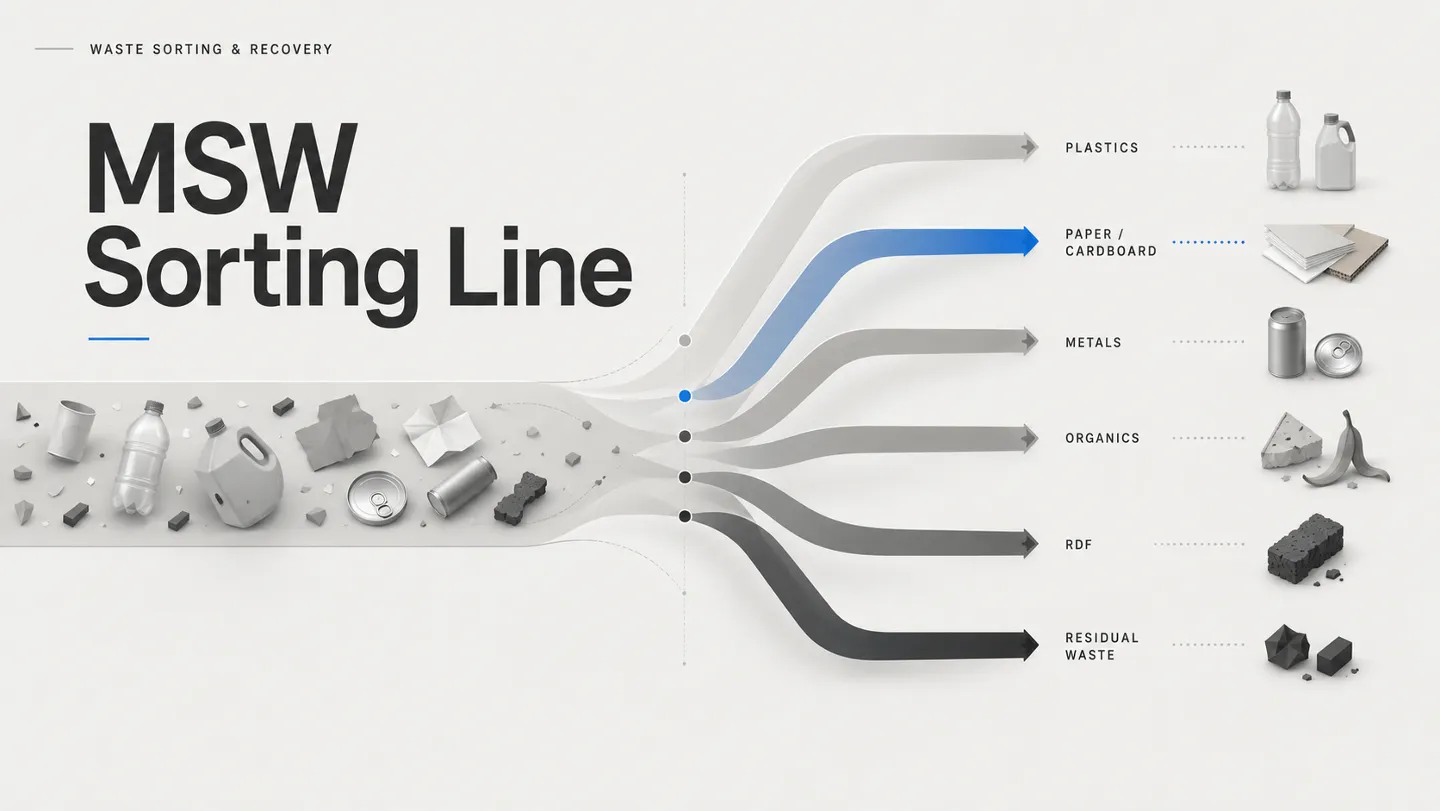
Bir MSW ayrıştırma hattı Karışık belediye atıklarını geri kazanılmaya uygun malzemelere, işlenebilir fraksiyonlara ve kontrol edilmiş atıklara ayırır. Hattın tek bir universal makineye dayanmadığı belirtilmektedir. Ölçülü besleme, sifting, yoğunluk ayrımı, metal geri kazanımı, sensör veya el ile ayırma ve ürün işleme gibi süreçleri, gelen atığın gerçek bileşimine göre birleştirir.
Bu kılavuz, sürecin nasıl çalıştığını, her makineli aşamanın ne yaptığını, kapasite ve performansın nasıl ölçülmesi gerektiğini ve alıcıların tesis düzenlemesi talep etmeden önce hazırlamalı olduğu bilgileri açıklamaktadır. Mevcut makineler için bkz. Atık Sıralama Ekipmanı Merkezi veya anahtar teslim atık ayrıştırma tesisi.
MSW Sıralama Hattı Nedir?
Bir atık işleme tesisi içinde konveyörler, ekranlar, ayırıcılar, seçim istasyonları, silolar ve balama veya atık yönetim ekipmanlarının bağlı bir sırası olan bir MSW (karma atık) ayırma hattıdır. Amacı, değişken karışık girişi satılmaya, geri dönüşüme, biyolojik işleme, izin verilirse RDF veya SRF'ye dönüştürülmesine veya güvenli bir şekilde atılmasına uygun malzeme akışlarına ayırmaktır.
Sıralama hattı daha büyük bir malzeme geri kazanım tesisi (MRF) parçasıdır. Tam tesiste ayrıca kabul alanı, araç rotaları, yangın koruması, toz ve kokular kontrolü, elektrik sistemleri, bakım erişimi, ürün depolama, atık depolama ve temel hizmetler bulunur. Bu nedenle sadece makine listesi tam tesis tasarımı değildir.
Başlayın, Bir Temsilci Atık Denetimi ile
Güvenilir tasarım, gerçek koleksiyon alanından temsil edici numunelerle başlar. Atık kompozisyon mevsim, mahalle, toplanma yöntemi, ticari faaliyet ve yerel geri dönüşüm politikasına göre değişebilir. Genel kompozisyon şeması, bir aşamayı aşırı büyük hale getirebilirken diğerinin darboğaz olmasına neden olabilir.
- Massa bazında bileşenler: organikler, kağıt, karton, filmler, katı plastikler, demirli metal, demirli olmayan metal, cam, tekstil, ince toz ve atık.
- fiziksel özellikler: moisture, hacim yoğunluğu, parçacık boyut dağılımı, torba boyutu, büyük hacimli nesneler ve sıkıştırma derecesi.
- Sorunlu malzemeler: ipuçları, hortumlar, piller, silindirler, e-atık, tehlikeli kaplar, uzun filmler ve ekipmanı sarabilir veya hasar verebilecek nesneler.
- Geliri şekli: ortalama ve pik tonajlar, araç takvim, mevsimlik pikler ve gerekli kabul edici tampon.
- Output targets: yerel alıcıların veya aşağı akış işleme tesislerinin kabul edeceği sınıflar, kirlilik sınırları ve minimum sevk hacimleri dahil.
Örneklemeler normal ve zorlu çalışma dönemlerini kapsamalıdır. Sadece kurumuş, el tarafından seçilmiş numunelerden alınan tasarım kararları, toplama araçları tarafından teslim edilen ıslak, sıkıştırılmış malzemeyi temsil etmeyebilir.
MSW Sıralama Hattının Çalışma Prensibi
1. Alıcı, Kontrol ve Ön Sıralama
Araclar teslimat zemininde veya kontrol edilmiş besleme alanına boşaltılır. Operatörler malzemeyi kontrol eder ve tehlikeli, aşırı büyük veya uygun olmayan nesneleri işlem hattına ulaşmadan çıkarır. Bu aşama taşıma sistemlerini ve ayırıcıları korur ve tek bir tehlikeli nesnenin tüm bir çıktı sepetini kirlenmesine önler.
2. Ölçülü Verme ve Poşet Açma
A besleme ünitesi ve Atık taşıma bandı create a stable material bed. If household waste arrives in bags, a bag opener releases the contents while limiting unnecessary size reduction. Stable feeding matters because overloaded belts reduce screening efficiency, separator accuracy, and manual picking performance.
3. Boyut Ayırma
A tamburlu ekran, disk ekran veya yıldız ekran, atığı seçilmiş boyut fraksiyonlarına ayırır. Daha küçük fraksiyon genellikle daha fazla yiyecek atığı, toprak, kırık cam ve ince maddeler içerirken, daha büyük fraksiyon daha fazla paketleme, kağıt, konteyner ve büyük hacimli yanıcı malzemeler taşır. Ekran açıkları, downstream süreçe göre değil, rastgele standart boyuta uygun olmalıdır.
4. Şekil ve Yoğunluk Ayırma
Balistik, havaiçli veya diğer yoğunluk temelli ayırıcılar, kağıt ve film gibi düz ve hafif iki boyutlu malzemeleri, şişe ve konteyner gibi döner veya ağır üç boyutlu nesnelerden ayırabilir. Doğru yöntem, ıslah oranı, parça boyutu, malzeme yükü ve tesisin geri kazanmak istediği ürünler bağlıdır.
5. Demir ve alaş metal geri kazanımı
Üst üste veya silindirik manyetik ayırıcı removes ferrous metal. After the material has been screened and spread into a suitable bed, an girdap akımı ayırıcı Alüminyum ve diğer iletken demir olmayan metalleri dışarı atabilir. Konum ve band yüklemesi geri dönüşümü güçlü bir şekilde etkiler; bir ayrıştırıcı kurmak kendisiyle temiz bir ürünü garanti etmez.
6. Optik Sıralama ve Elde Ki Kalite Kontrolü
Optik ayırıcılar, nesneler yeterince açık ve ayrıldığında seçilmiş polimerler, renkler veya kağıt sınıflarını tanıyabilir. Manuel istasyonlar kirlilikleri kaldırabilir, hedef sınıfını geri kazanabilir veya otomatik çıktıyı kontrol edebilir. Otomasyon tekrarlı ayırımı azaltabilir, ancak hala kontrol edilmiş besleme sunumu, temizleme, kalibre etme, bakım ve çıktı kontrolü gerektirir.
7. Ürün Depolama, Kağıt Sıkma ve Kalıntı Yönetimi
Kurtarılmış malzemeler baling veya bir sonraki süreceye aktarmadan önce ayrı silolara taşınır. Silo tasarımı kross-kontaminasyonu önlemeli ve güvenli boşaltımı sağlamalıdır. Uygun geri dönüşüm balya makinesi depo ve taşıma hacmini azaltır. Yanıcı kalıntılar depoya girebilir. RDF veya SRF hazırlama süreci yerel spesifikasyonlar ve izinler izin verdiğinde; kalan kalıntılar onaylanmış atık yönetim rotasına takip edilir.
Tipik Outputlar ve Sonraki Teslimat Yeri
| Çıkış Fraksiyonu | Tipik Contents | Gelecek Adım |
|---|---|---|
| Demir metal | Çelik kutular ve manyetik metal öğeler | Kalite kontrolü, sıkıştırma ve metal yeniden işleme |
| Demir olmayan metal | Alüminyum ve diğer iletken metaller | Daha fazla temizleme ve metal yeniden işleme |
| Rigid plasticlar | PET, HDPE, PP ve karışık konteynerler | Polimer sınıflandırma, balyalama, yıkama veya satış |
| Film ve kağıt | Esnek ambalaj, karton ve karışık kağıt | İzin verilen yerlerde kaliteli sınıflandırma, balyalama veya yakıt hazırlama |
| Organik ve ince fraksiyon | Gıda atığı, toprak, küçük cam ve ince | Uygunluk testinden sonra biyolojik veya diğer tedavi |
| Yakılabilir fraksiyon | Seçili kağıt, plastik, tekstil ve ahşap | Anlaşılan bir spesifikasyona göre RDF veya SRF hazırlama |
| Atık malzeme | Kurtarılamaz veya kirli malzeme | Onaylı tedavi veya atık |
Swipe horizontally to view the full table.
Bu olası akışlar, garantili ürünler değildir. Tesisi, yerel atık kompozisyonu, alıcı spesifikasyonları, çevresel izinler ve mevcut alt altyapıya uygun olarak yapılandırılmalıdır.
MSW Sınıflama Hattı Kapasitesini Nasıl Tanımlamak
Saat başına ton olarak ifade edilen bir teklif eksiktir. Ağırlık, hacim, nem ve kompozisyon malzemenin nasıl davrandığını etkiler. Tam işletme vakası kullanarak kapasiteyi tanımlayın:
- Ortalama ve zirve alım hızı
- Reprezentatif besleme koşulları altında istikrarlı net işleme hızı
- Toplu yoğunluk ve nem aralığı
- Planlı işletme saatleri ve çarkları
- Planlanmış temizlik ve önleyici bakım süresi
- Hedef fabrika kullanılabilirliği
- Gereken yıllık işletilmiş tonaj
- Beklenen mevsimsel ve bileşim değişiklikleri
Bir faydalı yıllık planlama denklemi:
Yıllık işletilmiş kütle = sabit net akış × planlanan işletme saatleri × fabrika kullanılabilirliği
En düşük kapasiteli kritik aşama gerçek hat çıktısını belirler. Bu nedenle, bantlar, ekralar, ayırıcılar, yığınlar, balyalar, artık taşıma ve operatörler bir sistem olarak kontrol edilmelidir.
Performans Metrikleri: Kurtarma, Saflık ve Verim
Fabrika performansı, görsel izlenimler yerine bir kütle denge ile ölçülmelidir. Temsil edici bir dönem boyunca girdiyi, her kurtarılan ürünü, döngüsel malzeme ve sonucu ağırlayın.
| Metrik | Ne Ölçüyor | Temel Hesaplama |
|---|---|---|
| Kurtarma oranı | Hedef malzemesinin girdide ne kadarının hedef çıktıya ulaşacağı | Hedef malzeme kurtarımı ÷ hedef malzeme girisi |
| Ürün saflığı | Çıktının ne kadarının hedef malzemesi olduğu | Çıktıdaki hedef malzeme ÷ toplam çıktı kütle |
| Ürün verimi | Toplam satılabilir çıktı, toplam girdi kütleine göre | Satılabilir çıktı kütle ÷ toplam girdi kütle |
| Artıklık Oranı | Kurtarılamayan Malzeme | Son artık kütlesi / toplam giriş kütlesi |
| Uygunluk | Hattın çalışmaya hazır olduğu süre | Kullanılabilir çalışma süresi / planlanan süre |
| Net Çıkış | Çalışma süresi boyunca işlenmiş girdi | İşlenmiş kütlesel / gerçek çalışma saatleri |
Swipe horizontally to view the full table.
Kurtarma ve safiyet birlikte değerlendirilmelidir. Agresif atma, kurtarmayı artırabilirken kontaminasyon ekleyebilir; katı kalite kontrolü, daha fazla hedef malzeme artığına maruz kalmanın yanı sıra safiyeti artırabilir. Doğru denge, aşağı akımdaki alıcı veya iş proses spesifikasyonu tarafından belirlenir.
Fabrika Düzenleme ve İşletme Gereksinimleri
| Fabrika Alanı | Mimari İhtiyaç | İhmal Edilmesi Durumundaki Risk |
|---|---|---|
| Alma katı | Güvenli araç akışı, kontrol, tampon hacmi, drenaj ve yangın ayrımı | Dengesiz girdi ve tehlikeli trafik |
| Belt conveyor | Kontrol edilmiş yataklık derinliği, koruma, temizlik ve sızıntı erişimi | Azaltılmış ayırıcı doğruluğu ve sıkça tıkanmalar |
| Sıralama odası | İnsanbilim, havalandırma, aydınlatma, acil erişim ve güvenli kemer yüklemesi | Kötü manuel kurtarma ve işçi maruziyeti |
| Ürün depoları | Bağımsız depolama, seviye kontrolü ve güvenli boşaltım | Karışık kontaminasyon ve kesintiye uğrayan üretim |
| Bakım bölgeleri | Platformlar, kaldırma noktaları, çekme alanı, atlayma planlama ve yedek parça erişimi | Düzenli bakım onarımında uzun süreli kesinti |
| Toz ve yangın kontrolü | Risk değerlendirmesi, temizlik, tespit, izolasyon ve uygun baskınlama | Yangın, toz birikmesi ve plan dışı kapanış |
Swipe horizontally to view the full table.
Son düzenleme, kurulum yerindeki güvenlik, yapı, yangın, çevre ve istihdam gereksinimlerine uygun olmalıdır. The atık yönetim hiyerarşisi önemli bir bağlamdır, ancak yerel izinler ve çıkarım sözleşmeleri, gerçekten mevcut olan geri kazanım yollarını belirler.
MSW Sıralama Tesisinin ROI'sini Ne Belirler?
Gelir, kapı veya çöpe atma ücretlerinden, geri kazanılan malzemelerin satışlarından ve atıkten kaçınma maliyetlerinden gelebilir. İşletme maliyetleri arasında iş gücü, elektrik, mobil ekipman, aşınma parçaları, temizlik, bakım, kompresli hava, balyalama tüketim maddeleri, artık malzeme nakli ve atık yer alır. Yalnızca malların fiyatları, yatırım durumunu desteklememelidir.
Yıllık katkı = kapı ücreti geliri + mallar geliri + atıkten kaçınma maliyeti − iş gücü − güç − bakım − artık atık − diğer işletme maliyetleri
Tutarlı senaryolarla daha düşük geri kazanım, daha yüksek nem, azalan çalışma süresi, düşük mallar fiyatları ve daha fazla artık malzeme modelleyin. Güçlü bir proje, gerçek durumlar en iyi durum örneğinden farklı olduğunda hala çalışabilir olmalıdır.
MSW Sıralama Hattı RFQ Çekimser Listesi
- Mezuniyet çalışması ile mevsimsel aralıklar
- Fotoğraflar, videolar, örnek ağırlıkları, nem, yoğunluk ve partikül boyutu verileri
- Ortalama ve zirve günlük tonaj ve planlanan işletme programı
- Geri kazanılan mallar ve yazılı alıcı spesifikasyonları
- Artık, organik, cam ve RDF veya SRF yolları
- Mimari çizim, mevcut yer kaplama alanı, araç rotaları ve gelecekteki genişletme alanı
- Güç kaynağı, sıkıştırılmış hava, su, drenaj ve çevresel sınırlar
- İhtiyaç duyulan otomasyon seviyesi ve her döner shift'te mevcut operatör sayısı
- Yangın koruma, toz, kok, gürültü ve ev temizliği gereksinimleri
- Hedefe erişim, yedek parça stratejisi ve servis yanıt hızı
- Yüklenme, kurulum, eğitim, performans testi ve kabul kapsamı
- Masa denge güvencesi ve bunların geçerli olduğu tam olarak besleme koşulları
Son ekipman seçimi öncesinde, bir süreç akış şeması, kütle dengelemesi, tesisat listesi, genel düzenleme çizelgesi, motor listesi, kontrol filozofisi, bakım-erişim gözden geçirmesi ve net tanımlanmış performans testi talep edin. Bu proje girdilerini bizimle paylaşın. İletişim Sayfası bir yapı incelemesi için
Sıkça Sorulan Sorular
MSW Sıralama Hattı Değerlendirmesi İsteniyor
Temel atık verileri, hedef çıktılar, planlanan kapasite, mevcut sit alanı, işletme takvimi ve yerel tesisat koşullarını gönderin. Rumtoo, ayrışma sırasını gözden geçirebilir, olası tıkanıklıkları belirleyebilir ve projeye özel ekipman konfigürasyonu hazırlayabilir.
