
Контроль загрязнения ПВХ — одна из самых сложных задач при переработке ПЭТ-бутылок, особенно если вы нацелены на высококлассные применения и пищевой rPET. Даже при концентрациях около 50 ppm ПВХ может ухудшить качество ПЭТ, вызывая хрупкость, пожелтение и нежелательные побочные продукты при экструзии. Для переработчиков ПЭТ удерживать ПВХ на минимально возможном уровне — не просто техническое требование: это напрямую влияет на цену продажи, принятие продукции клиентами и долгосрочную прибыльность.
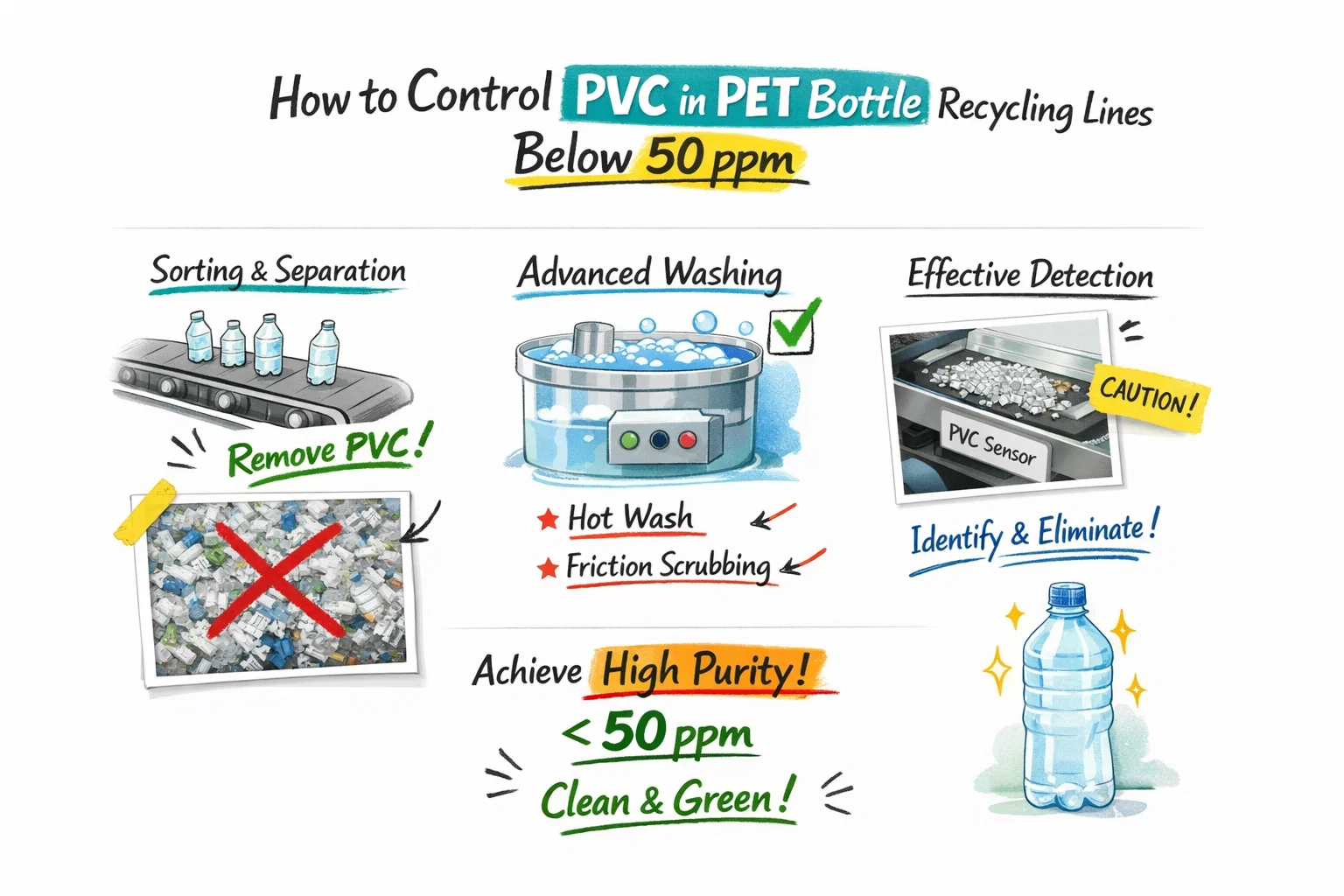
В этой статье мы рассмотрим, откуда берётся ПВХ в типовой линии ПЭТ-бутылок, что означает «хороший» уровень в ppm и как сочетание входной сортировки, мойки и сухой электростатической сепарации помогает стабильно удерживаться ниже 50 ppm.
Коротко (для руководителей заводов и покупателей)
- ПВХ может вызвать серьёзную деградацию ПЭТ даже вокруг 50 ppm.
- Самая эффективная стратегия — предотвратите попадание ПВХ перед измельчением, затем используйте мойка + флотация-осаждение для грубой очистки, и стадия сухой полировки (часто электростатически) для удаления следов ПВХ.
- Докажите производительность с рутинное тестирование + мониторинг трендов, а не разовыми пробами.
Почему 50 ppm ПВХ так важны
Многочисленные отраслевые источники отмечают, что загрязнение ПВХ на уровне 50 ppm и даже ниже уже может вызывать проблемы качества ПЭТ-хлопьев при их повторном плавлении. ПВХ деградирует и выделяет хлорсодержащие соединения при температурах переработки ПЭТ, что может:
- Способствуют разрыву цепей и охрупчиванию ПЭТ-смолы.
- Вызывают пожелтение или отклонение цвета гранул и конечных изделий.
- Вызывают коррозию технологического оборудования и осложняют очистку отходящих газов.
Для высококлассных применений, таких как пищевой rPET, переработка бутылка-в-бутылку и премиальные полиэфирные волокна, покупатели часто требуют уровни ПВХ ниже 50 ppm — а в некоторых случаях ниже 30 ppm — как часть своих спецификаций. Это означает, что переработчикам ПЭТ нужен процесс, стабильно обеспечивающий такое качество, не только в лабораторных образцах, но и в полномасштабной работе 24/7.
Типичные источники ПВХ в потоках ПЭТ-бутылок
В линии переработки ПЭТ-бутылок ПВХ может попадать в систему из нескольких источников:
- Целые бутылки и тара из ПВХ, проскакивающие через входную сортировку.
- Термоусадочные этикетки, этикетки и защитные пломбы из ПВХ или ПЭТГ.
- Крышечные вкладыши, многослойные компоненты и остаточные плёнки в смеси кип.
Даже когда ПВХ составляет лишь малую долю входящих кип, его влияние на качество конечных хлопьев непропорционально велико. Уровень загрязнения 50 ppm соответствует всего примерно 0,05 кг ПВХ на 1 000 кг ПЭТ-хлопьев — крошечное количество по массе, но достаточное, чтобы поставить под угрозу высококлассные применения.
Как «ниже 50 ppm» выглядит на практике
В технических паспортах и спецификациях покупателей высококачественных рПЭТ-хлопьев предельное содержание ПВХ часто указывается в диапазоне 10–50 миллионных долей в сочетании с жёсткими лимитами на другие полимеры. Например, в некоторых спецификациях прозрачных рПЭТ-хлопьев требуется:
- ПВХ ниже 10–50 ppm.
- Всего посторонних полимеров ниже 80–100 ppm.
- Общая чистота хлопьев >99,8% по массе.
Надёжное достижение этих цифр требует больше, чем одну единственную «волшебную» машину. Вместо этого успешные заводы проектируют свои линии как последовательность взаимодополняющих этапов:
- Проверка кип и предсортировка.
- Ручная и/или автоматизированная сортировка бутылок.
- Удаление этикеток и уменьшение размера.
- Холодная и горячая мойка.
- Флотация и сепарация по плотности.
- Стадии сушки и финальной сухой очистки/полировки.
Электростатическая сепарация стоит в самом конце этой цепочки как сухая доводочная технология, удаляя последние следы ПВХ и других полимеров из уже мытых, высушенных ПЭТ-хлопьев.
Начало: максимально не пустить ПВХ
Первая линия обороны против ПВХ — просто не дать ему попасть в поток хлопьев. Типичные стратегии включают:
- Ручная сортировка с УФ или визуальными средствами: Опытные операторы могут идентифицировать ПВХ-бутылки и этикетки, а УФ-подсветка может усилить контраст между ПЭТ и ПВХ.
- Сортировщики бутылок на основе NIR: Ближне-инфракрасные оптические сортировщики классифицируют бутылки по типу полимера и отбрасывают ПВХ, ПЭТГ и другие нежелательные материалы перед измельчением.
- Механические стадии и стадии удаления этикеток: Системы снятия этикеток и стадии предварительной мойки снимают рукава и этикетки, снижая нижележащую нагрузку ПВХ.
Эти технологии высокоэффективны на целых бутылках и крупных кусках, и они могут резко снизить количество ПВХ, доходящего до участков измельчения и мойки. Однако они не идеальны и не полностью решают проблему мелких фрагментов и смешанных хлопьев.
Мойка, флотация и что они могут (и не могут)
Большинство линий ПЭТ-бутылок полагаются на комбинацию горячей мойки, фрикционной мойки и разделения флотацией-осаждением для удаления клеёв, бумаги, органики и низкоплотных загрязнителей. В типичном процессе:
- Мокрые дробилки измельчают бутылки в хлопья.
- Фрикционные мойки и ванны горячей мойки удаляют этикетки, грязь и клеи.
- Флотационно-осадительные ванны разделяйте полиолефины (ПП/ПЭНД) от ПЭТ по плотности.
Эти стадии отлично снижают общую загрязнённость и отделяют ПЭТ от крышек и этикеток. Но разница в плотности между ПЭТ и ПВХ относительно невелика, и многие системы разделения по плотности специально не оптимизированы для удаления ПВХ. Именно поэтому даже хорошо спроектированные моечные линии могут выдавать ПЭТ-хлопья с содержанием ПВХ выше 100–200 ppm, если не используется дополнительная стадия доочистки.
Что реально может удалить каждый шаг (краткая справка)
| Шаг | Лучше всего удаляет | Пределы контроля ПВХ |
|---|---|---|
| Начальная сортировка (ручная / оптическая) | Целые ПВХ-контейнеры, явные некондиционные позиции | Мелкие фрагменты и смешанные хлопья могут проскакивать |
| De-labelling / sleeve removal | Рукава, этикетки, пломбы до того, как они станут фрагментами | Менее эффективно, когда материал измельчён на мелкие куски |
| Горячая мойка + фрикционная мойка | Клей, грязь, органика; улучшает общую чистоту | Мойка не равна сепарации полимеров; ПВХ может остаться |
| Флотация-осаждение | Сепарация ПП/ПЭНД против ПЭТ (крышки/этикетки) | Плотностная сепарация ПЭТ и ПВХ не всегда чёткая |
| Сухая полировка (часто электростатическая) | Следы ПВХ и других полимеров в сухих хлопьях | Требует строгого контроля влажности и размера частиц |
Почему нужна сухая электростатическая сепарация как стадия доочистки
Чтобы снизить уровни ПВХ ниже 50 ppm, многие переработчики добавляют сухая электростатическая сепарация стадия после сушки. Электростатические сепараторы используют различия в электрических свойствах между ПЭТ и ПВХ:
Практический обзор оборудования смотрите: Электростатический сепаратор пластика
- Хлопья подвергаются воздействию зарядного механизма (коронный или трибоэлектрический заряд), который наводит разные полярности на разных полимерах.
- Заряженные хлопья проходят через электрическое поле между электродами или заряженным барабаном.
- Исходя из их заряда и проводимости, ПЭТ и ПВХ следуют по разным траекториям и собираются как отдельные фракции.
Тематические исследования и поставщики оборудования сообщают, что при правильной интеграции электростатическая сепарация может снизить загрязнение ПВХ с около 1000 ppm до значений ниже 50 ppm в ПЭТ-хлопьях, удаляя при этом и другие полимерные загрязнения. Это делает технологию особенно привлекательной в качестве финальной стадии доводки перед контролем качества и упаковкой.
Условия процесса, влияющие на электростатическую эффективность
Чтобы достичь надёжного разделения и оставаться ниже 50 ppm, необходимо контролировать несколько параметров процесса:
- Содержание влаги: Электростатические сепараторы обычно требуют сухой подачи, часто с остаточной влажностью ниже примерно 0,5–0,8%, для предотвращения рассеивания зарядов.
- Размер и форма частиц: Размер хлопьев должен быть в определённом диапазоне (например, ниже 10–12 мм), с ограниченной мелочью, для поддержания стабильных траекторий в электрическом поле.
- Состав смеси: Состав подачи должен быть относительно стабильным, или машина должна регулироваться под разные соотношения ПВХ/ПЭТ, чтобы держать средние и отходные фракции под контролем.
- Напряжение, конфигурация электродов и настройки делителя: Оптимизация этих параметров критична для баланса эффективности удаления ПВХ с выходом ПЭТ и минимизации потерь.
На практике многие заводы реализуют двухстадийную стратегию: первый электростатический проход для разделения продукта с высоким ПЭТ и отхода с высоким ПВХ, за которым следует второй проход по промпродукту для дальнейшего снижения ПВХ и извлечения ПЭТ.
Роль интегрированных линий мойки ПЭТ-бутылок
Комплексные поставщики показывают, что сочетание хорошо спроектированной линии мойки ПЭТ-бутылок с финальной электростатической доводочной стадией может дать чистоту хлопьев выше 99,8% при очень низких уровнях ПВХ. Типовые элементы конструкции включают:
- Открытие кип, удаление металла и предсортировка.
- Автоматическая сортировка бутылок (NIR) плюс ручной контроль качества.
- Высокоэффективное удаление этикеток, горячая мойка и фрикционная очистка.
- Многостадийная флотационно-осадительная и плотностная сепарация для полиолефинов.
- Сушка с низким остатком для достижения требуемого уровня влажности для электростатической сепарации.
- Один или несколько электростатических сепараторов для ПЭТ/ПВХ и других смешанных пластиков.
Когда эти стадии должным образом спроектированы и настроены, результат — стабильный выход чистых ПЭТ-хлопьев, готовых для пищевых или высокопроизводительных применений, с ПВХ значительно ниже порога 50 ppm.
Мониторинг, тестирование и непрерывное улучшение
Достичь целевого ПВХ один раз недостаточно — переработчикам нужно демонстрировать стабильную эффективность со временем. Обычно это включает:
- Регулярное лабораторное тестирование содержания ПВХ, часто с использованием печных тестов или специализированных аналитических методов, на соответствие заданным ppm-лимитам.
- Мониторинг процесса по ключевым переменным, таким как качество тюков, доля отбраковки сортировки, эффективность мойки и настройки электростатического сепаратора.
- Периодические аудиты линии для выявления новых источников загрязнений или дрейфа производительности.
Заводы, формализующие это в систему управления качеством, лучше позиционированы для соответствия требованиям владельцев брендов и обеспечения долгосрочных контрактов на высококачественный rPET.
Приёмка & QA: как доказать удержание < 50 ppm
Чтобы сделать «ПВХ < 50 ppm» защищаемым перед покупателями, определите ваш план приёмки и придерживайтесь его:
- План отбора проб: укажите, где и как часто отбираются пробы (например, после сушки / после полировки / перед упаковкой).
- Тренд, а не снимки: отслеживайте результаты во времени и связывайте отклонения с входными кипами, типами этикеток, дрейфом влажности или настройками сепаратора.
- Process KPIs to log: качество входных тюков, скорости отбраковки оптической сортировки, влажность сушилки, распределение размеров хлопьев (мелочь), напряжение электростатики/настройки делителей и потери выхода ПЭТ.
- Правила эскалации: что происходит, когда вы видите всплеск (удержать партию, переработать промежуточные фракции, скорректировать настройки, проверить источник кип).
Карта многоступенчатого контроля (от бутылки до готовых хлопьев)
Используйте более одного ПВХ-барьера. Каждая стадия ловит разную форму загрязнения; ни одна машина не является полным планом.
| Точка процесса | риск ПВХ | Контроль для оценки | Что проверить |
|---|---|---|---|
| Вскрытие кип & предсортировка | Целые ПВХ-контейнеры, явные термоусадочные рукава | Ручная или сенсорная сортировка бутылок | Презентация подачи и точность отбраковки |
| Удаление этикеток | Термоусадочные рукава и этикетки ПВХ | Механический удалитель этикеток + воздушная сепарация | Удаление рукавов всех размеров бутылок |
| Перед измельчением | Пропущенные бутылки, крышки, этикетки | Проход сортировки ОК | Проверки отбраковки по сменам |
| После мойки/сушки | Хлопья ПВХ, смешанные с ПЭТ | Сортировщик хлопьев + лабораторная идентификация | Метод отбора проб и предел обнаружения |
| Готовый продукт | Остаточное загрязнение | Выпускной тест против спецификации покупателя | Прослеживаемость партий и процедура удержания |
Отбор проб хлопьев & лабораторный контроль (перед сдачей)
| Проверьте | Вопрос поставщику или лаборатории |
|---|---|
| Сбор проб | Как отбираются приращения по времени, мешкам или силосам? |
| Подготовка проб | Сухой ли образец, контролируется ли размер и репрезентативен ли он? |
| Метод идентификации | Какой метод идентифицирует ПВХ (например, практики, связанные с ASTM D5991) и что может мешать? |
| Возможность обнаружения | Может ли метод надёжно оценить лимит покупателя (напр. ≤50 ppm)? |
| Решение о выпуске | Кто удерживает, перетестирует, дорабатывает или отбраковывает партию вне спецификации? |
Что включить в RFQ на линию ПЭТ (контроль ПВХ)
- Состав входящих кип и известные форматы ПВХ на вашем рынке
- Целевая спецификация готовых хлопьев и конечное применение (бутылка в бутылку, волокно, лист)
- Требуемая производительность бутылок и хлопьев
- Контрольный образец удаления этикеток и метод приёмки (включая форматы жёстких рукавов)
- Презентация подачи сенсорного сортировщика, ширина ленты/глубина слоя и протокол теста отбраковки
- План отбора проб, лабораторный метод и прослеживаемость партии
- Место для станций QC и обработки отбракованного материала
- Пусконаладочное испытание на локальный сырьё — а не только чистые демонстрационные бутылки
Собираем всё вместе
Контроль ПВХ в линиях переработки ПЭТ-бутылок ниже 50 ppm достижим, но требует системного взгляда:
- Держите как можно больше ПВХ вне линии путём контроля кип и сортировки на входе.
- Используйте надёжную мойку и плотностную сепарацию для удаления основных загрязнений.
- Добавьте сухую электростатическую сепарацию в качестве заключительной стадии полировки для улавливания последнего ПВХ и посторонних полимеров.
- Подкрепляйте всё испытаниями и контролем процесса, чтобы доказать, что вы стабильно соответствуете спецификации.
Объединяя эти стратегии, переработчики ПЭТ могут производить более качественные хлопья, выходить на более требовательные конечные рынки и улучшать общую экономику своих операций.
Часто задаваемые вопросы
Почему даже небольшое количество ПВХ — такая серьёзная проблема при переработке ПЭТ-бутылок?
ПВХ плавится при гораздо более низкой температуре, чем ПЭТ, поэтому при переработке он разлагается и выделяет хлористый водород. Эта кислота разрушает окружающий ПЭТ, вызывая пожелтение, чёрные вкрапления и потерю прочности в переработанных хлопьях. Одна ПВХ-бутылка, затерявшаяся среди тысяч ПЭТ-бутылок, способна испортить целую партию — поэтому покупатели считают ПВХ загрязнителем номер один.
Откуда взялся предел «менее 50 ppm»?
Он взят из спецификаций покупателей высококачественного рПЭТ, особенно производящих гранулы для замкнутого цикла «бутылка в бутылку» или пищевого контакта. При 50 миллионных долях (0,005 %) уровень ПВХ достаточно низок, чтобы кислотная деструкция оставалась незаметной в готовом продукте. Некоторые бренды устанавливают ещё более жёсткие внутренние лимиты, но 50 миллионных долей — общепринятый коммерческий порог для премиальных хлопьев.
Разве NIR-сортировщики не могут удалить весь ПВХ на входе?
БИК отлично отстреливает целые ПВХ-бутылки и крупные куски, и он всегда должен быть первым барьером. Проблема — мелкие фрагменты ПВХ: этикетки, термоусадочные рукава и обломки, которые проскакивают мимо оптической сортировки или попадают после неё. Поэтому БИК — это первый шаг, а не всё решение: ниже по линии всё равно нужны сепарация по плотности и электростатическая сепарация.
Сколько ПВХ реально может удалить флотационная ванна?
Флотоотсадка очень эффективна против кусков ПВХ-бутылок: они тонут, а ПЭТ-хлопья всплывают — степень извлечения выше 95 % для этой фракции вполне реальна. Но она плохо справляется с ПВХ-этикетками и тонкой плёнкой, чья плотность близка к плотности среды, а также с очень мелкими частицами. Рассматривайте флотоотсадку как мощную стадию грубого удаления, а оставшийся поток доводите электростатически.
Что даёт горячая мойка для контроля ПВХ?
Горячая мойка с каустиком удаляет клей, органику и поверхностные загрязнения, а также ослабляет этикетки, что улучшает последующее разделение. Сам ПВХ она не удаляет — ПВХ переживает мойку химически неповреждённым. Её настоящий вклад — очистка поверхности хлопьев, чтобы сепараторы по плотности и электростатические сепараторы могли точно различать полимеры.
Как должна быть спроектирована линия переработки, чтобы стабильно удерживать ПВХ ниже 50 ppm?
Проектируйте систему послойно: БИК-сортировка на входе для целых бутылок, флотоотсадочные ванны для разделения основной массы по плотности, затем сухая электростатическая сепарация как финишная стадия для мелкой фракции. Подавайте на электростатический блок сухой и равномерный материал — влага и мелочь — это два фактора, которые убивают его эффективность. И ставьте точки контроля после каждой стадии, чтобы точно видеть, где начинается отклонение, а не гадать.
Как проверяют ПВХ и подтверждают соответствие пищевым стандартам?
Для текущего контроля рентгенофлуоресцентный анализ или определение содержания хлора в готовых хлопьях дают быстрый результат в миллионных долях. Для рПЭТ пищевого контакта покупатели обычно требуют лабораторный анализ третьей стороны плюс документацию всего процесса — тесты на миграцию загрязнений или досье по требованиям ЕС и американского Управления по санитарному надзору в зависимости от рынка. Сохраняйте протоколы с ваших точек промежуточного контроля: аудиторам нужна цепочка данных, а не просто финальный сертификат.
