
PVCの混入管理は、PETボトルリサイクルで最も難しい課題の一つです。特に高付加価値用途や食品グレードrPETを目指す場合はなおさらです。50ppm程度の濃度でも、PVCはPETの品質を損ない、押出し時に脆化や黄変、不要な副生成物を引き起こします。PETリサイクル業者にとって、PVCを可能な限り低く抑えることは単なる技術要件ではなく、販売価格、顧客の受け入れ、長期的な収益性に直接影響します。
本記事では、一般的なPETボトルラインでPVCがどこから混入するのか、ppmレベルで「良い」とは何か、そしてフロントエンドの選別、洗浄、乾式静電分離の組み合わせで、いかに確実に50ppm以下を維持できるかを解説します。
TL;DR(プラントマネージャーおよびバイヤー向け)
- PVCは、約でPETの深刻な劣化を引き起こすことがあります。 50 ppm.
- 最も効果的な戦略は PVCを粉砕前に除去する, その後使用します 洗浄 + 浮沈分離 バルク清掃用、および 乾式磨き工程 (しばしば静電的)で微量のPVCを除去する。
- 性能を証明してください 定期的な検査 + トレンド監視、一度きりのお取り寄せサンプルではありません。
なぜ50 ppmのPVCがそれほど重要なのか
複数の業界情報源が指摘するように、50ppm以下であってもPVCの混入は、PETフレークの再溶融時に品質問題を引き起こす可能性があります。PVCはPETの加工温度で劣化し、塩素含有化合物を放出します。これにより、
- PET樹脂の分子鎖切断と脆化を促進します。
- ペレットや最終製品の黄変・変色の原因になります。
- 加工設備を腐食させ、排ガス処理を複雑にします。
食品接触用rPET、ボトルtoボトルリサイクル、高級ポリエステル繊維などの高付加価値用途では、購入者が仕様として50ppm以下、場合によっては30ppm以下のPVCレベルを求めることが多くあります。つまりPETリサイクル業者は、ラボサンプルだけでなく、フルスケールの24時間稼働でも安定してこの品質を出せる工程が必要です。
PVCの主な発生源
PETボトルリサイクルラインでは、次のような経路でPVCが混入します。
- フロントエンドの選別をすり抜けたPVCボトルや容器そのもの。
- PVCやPETG製のシュリンクラベル、ラベル、封印シール。
- ベールに混ざったキャップの内栓、多層部品、残留フィルム。
PVCが投入ベールのごく一部であっても、最終的なフレーク品質への影響は不釣り合いに大きくなります。50ppmの混入レベルは、PETフレーク1,000kgあたりわずか約0.05kgのPVCに相当します。質量としては微量ですが、高スペック用途を損なうには十分な量です。
「50 ppm未満」が実際にはどのように見えるか
技術データシートおよび買い手仕様書では、高品質のrPETフラークには、10~50 ppmの最大PVC含有量が記載されており、他のポリマーに対しても厳格な制限が設けられていることがよくあります。例えば、透明rPETフラークの仕様書には次のような記載があります:
- PVC 10~50 ppm未満。
- 80~100 ppm未満の外国樹脂の総含有量
- 全体フラークの純度は質量ベースで>99.8%。
これらの数値を確実に達成するためには、一つの「魔法の」機械だけでは不十分です。代わりに、成功したプラントはラインを補完的な工程の連続として設計します。
- ベール設計検査と事前分別。
- 手動および/または自動のボトル分別
- ラベル除去とサイズ削減。
- 冷水洗浄と温水洗浄。
- 浮遊分離と密度分離。
- 乾燥および最終乾式清掃/磨き工程。
静電分離はこの連鎖の最後に位置し、乾式磨き技術として、すでに洗浄・乾燥されたPETフラークからPVCや他のポリマーの最後の痕跡を除去します。
フロントエンド:可能な限りPVCを除去する
PVCに対する最初の防衛ラインは、フラークストリームに入らないようにすることです。一般的な戦略には以下のようなものがあります:
- 手動分別:UVまたは視覚的支援を使用 経験豊富なオペレーターはPVCボトルとラベルを識別でき、UV照明はPETとPVCの対比を強化できます。
- NIRベースのボトル分別機: 近赤外線光学分別機は、プラスチックの種類に応じてボトルを分類し、PVC、PETG、その他不要な材料を shredding する前に排出します。
- 機械的およびラベル除去工程: ラベル除去システム そして、前洗浄工程でスリーブやラベルを除去し、下流部のPVC負荷を軽減します。
これらの技術は、整瓶や大型の片割れに対して非常に効果的であり、PVCが粉砕および洗浄セクションに到達する量を劇的に削減することができます。しかし、それらは完璧ではなく、小さな破片や混合フレークには完全に対応していません。
洗浄、浮沈分別、およびそれらが(できずに)できること
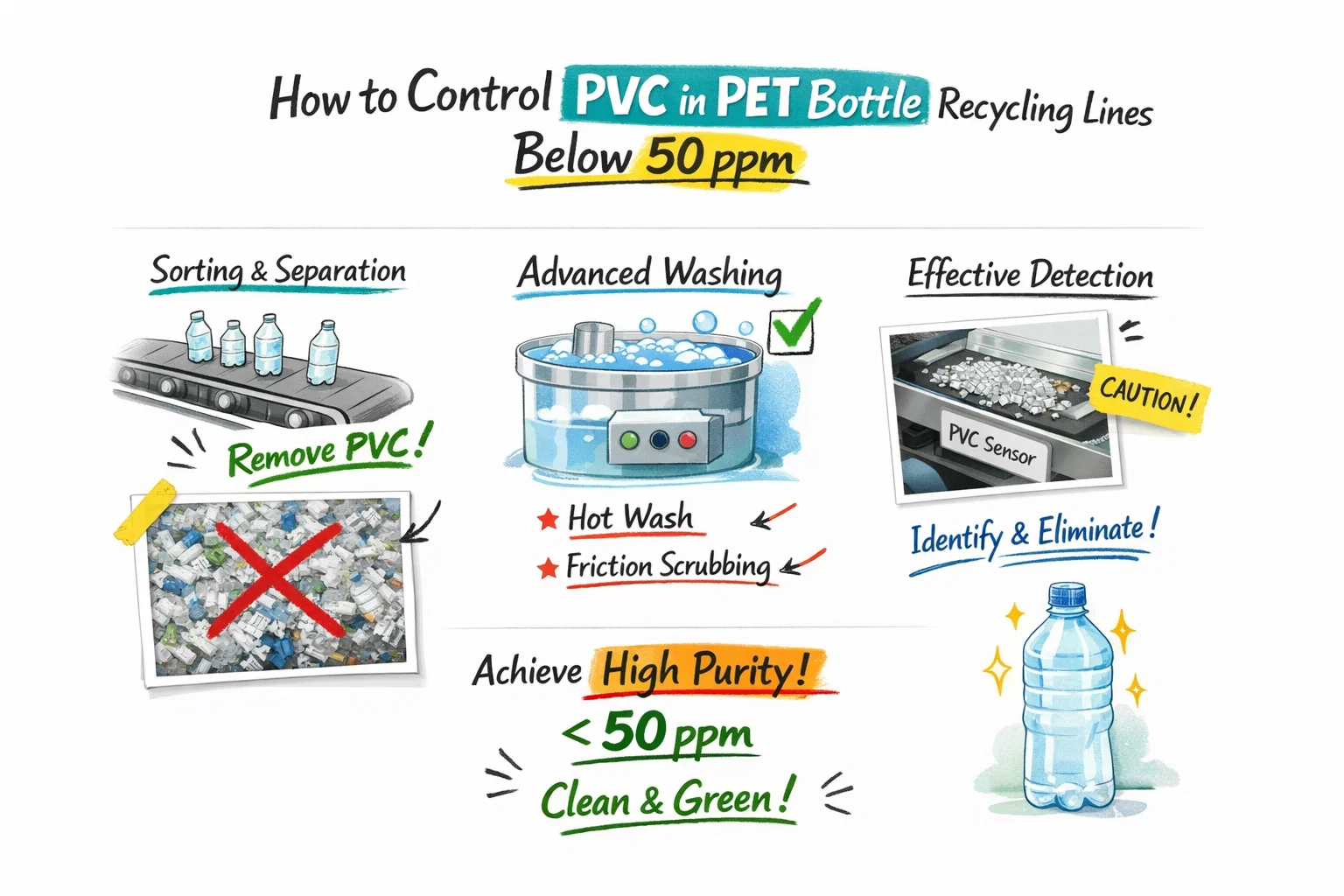
多くのPETボトルラインは、接着剤、紙、有機物や低密度汚染物を除去するために、熱洗浄、摩擦洗浄、浮沈分離を組み合わせて利用しています。典型的なプロセスでは:
- 湿式粉砕機は、ボトルをフレークに粉砕します。
- 摩擦洗浄用のワッシャーと熱洗浄タンクは、ラベル、汚れ、接着剤を取り除きます。
- 浮沈分離タンク 密度に基づいてポリオレフィン(PP/HDPE)をPETから分離します。
これらの工程は、全体の汚染を減らし、PETをキャップやラベルから分離するのに非常に有効です。しかし、PETとPVCの密度差は比較的小さく、多くの密度ベースのシステムはPVC除去に特化して最適化されていません。そのため、追加の仕上げ工程がなければ、設計の良い洗浄ラインでもPETフレークのPVCレベルが100~200ppmを超えることがあります。
各ステップが実際に取り除けるもの(簡単な参照)
| ステップ | 最も除去に長けている | PVC制御の限界 |
|---|---|---|
| フロントエンド分別(手動/光学) | 全体のPVC容器、明らかに規格外のアイテム | 小さな破片や混在したフラックが通過する |
| ラベル除去/スリーブ除去 | スリーブ、ラベル、シールが破片になる前に | 材料が小さなピースに砕かれた後は効果が低くなる |
| 温水洗浄+摩擦洗浄 | 接着剤、汚れ、有機物;全体的な清掃を向上させます | 清掃はポリマーの分離ではありません;PVCは残ります |
| 浮沈分離装置 | PP/HDPEとPETの分離(キャップ/ラベル) | PETとPVCの密度分離は一貫して鮮明ではありません |
| ドライポリッシュ(電気静電式の場合も多い) | 乾燥フレーク中の微量PVCおよびその他のポリマー | 水分と粒子径の厳密な制御が必要です |
乾燥電気静電分離が抛光ステップとして必要な理由
PVCレベルを50ppm以下に押し下げるために、多くのリサイクラーが乾燥後の 乾式静電分離 ステージを追加します。電気静電分離機はPETとPVCの電気的性質の違いを利用します:
実用的な機器の概要についてはこちらをご覧ください: プラスチック静電分離機
- フラックは充電機構(冠充電または摩擦充電)にさらされ、異なるポリマーに異なる極性を引き起こします。
- 充電されたフラックは電極間の電場または充電されたドラムを通過します。
- 充電と導電性に基づいて、PETとPVCは異なる軌跡を辿り、分離された分画として収集されます。
ケーススタディと機器サプライヤーは、適切に統合された場合、電気静電分離はPETフレークのPVC汚染を約1,000ppmから50ppm以下に減少させると報告しており、他のポリマー汚染も除去します。これにより、品質管理とパッケージングの前の最終精製ステップとして、この技術は特に魅力的です。
電気静電性能に影響を与える加工条件
信頼性の高い分離を実現し、50 ppm未満に保つために、いくつかの加工パラメータを制御する必要があります:
- 水分含有量: 電気静電分離機は乾燥した原料が必要であり、残存水分は約0.5–0.8%以下でなければ、充電が消失しないようにします。
- 粒子径と形状: 片状物のサイズは定義された範囲内(例えば10–12 mm以下)で、微粒子が限られているようにして、電場における安定した軌道を維持する必要があります。
- 混合組成: 原料の組成は比較的安定しているか、または機械が異なるPVC/PET比率に調整されて、中間物と却下物を制御する必要があります。
- 電圧、電極構成、およびスプリッタ設定: これらのパラメータの最適化は、PVC除去効率とPET収量のバランスを取るために重要であり、損失を最小化するために必要です。
実際には、多くの工場では二段階戦略を実施しており、最初に高PET製品と高PVC却下物を分離するための第一段階の電気静電分離を、その後中間物に対する第二段階の分離でPVCをさらに減少させ、PETを回収する方法です。
統合型PETボトル洗浄ラインの役割
エンドツーエンドシステムの供給業者は、設計が良いPETボトル洗浄ラインと最終的な電気静電研磨段階を組み合わせることで、99.8%以上の片状物純度と非常に低いPVCレベルを達成できると示しています。典型的な設計要素には以下が含まれます:
- ベールの開梱、金属除去、事前分別。
- 自動ボトル分別(NIR)および手動品質管理。
- 高効率のラベル除去、熱洗浄および摩擦清掃。
- ポリオレフィンの多段階浮沈および密度分離。
- 電気静電分離に必要な水分レベルに達するための低残留物乾燥。
- PET/PVCおよび他の混合プラスチック用の1つ以上の電気静電分離機。
これらの段階が適切に設計および調整されると、食品グレードまたは高性能アプリケーションに適したクリーンなPET片状物の出荷が安定します。PVCは50 ppm以下です。
監視、テストおよび継続的な改善
PVCの目標を一度達成するだけで十分ではありません。リサイクラーは、時間を通じて一貫したパフォーマンスを示す必要があります。これは通常、以下を含みます:
- PVC含量の定期的なラボテスト、オーブンテストや専門的な分析手法を使用して、定義されたppm限界に対して。
- 束の品質、分別却下率、洗浄性能、および電気静電分離機設定などの主要変数のプロセス監視。
- ラインの定期的な監査により、新しい汚染源やパフォーマンスの変動を特定する。
これを品質管理システムに形式化した工場は、ブランドオーナーの要件を満たし、高価なrPETのための長期契約を確保する位置に置かれます。
承認および品質管理:PVC < 50 ppmを証明する方法
「PVC < 50 ppm」を購入者にとって論証可能にするためには、承認計画を定義し、それに従う必要があります:
- サンプリング計画: サンプルをどこでどの頻度で採取するかを指定(例えば、乾燥後/研磨後/包装前に)。
- トレンド、不在の瞬間像: 結果を時間を追って追跡し、逸脱を入荷束、スリーブタイプ、水分変動、分離機設定に結びつける。
- Process KPIs to log: 入荷束の品質、光学分別却下率、乾燥機の水分、片状物のサイズ分布(微粒子)、電気静電電圧/スプリッタ設定、PET収量損失。
- エスカレーションルール: スピークが見られた場合の対応(保持ロット、中間物の再処理、設定の調整、束の源監査)。
マルチバリア制御マップ(ボトルから最終フラック)
PVCバリアを複数使用。各ステージで異なる形態の汚染を捕らえます;単一の機械が完全な計画ではありません。
| プロセスポイント | PVCリスク | 評価に向けた制御 | 確認すべき事項 |
|---|---|---|---|
| ベール開封および事前分類 | 全体のPVC容器、明瞭なスリーブ | 手動またはセンサーによるボトル分類 | 供給物の見せ方と排出精度 |
| ラベル取り外し | PVCシュリンクスリーブおよびラベル | 機械式ラベル取り外し機および空気分離 | 全ボトルサイズ対応のスリーブ除去 |
| 粉砕前 | 見逃しボトル、シール、ラベル | QC分類通過 | シフトごとの却下チェック |
| 洗浄/乾燥後 | PVCフレークとPETが混ざる | フレークソーターおよびラボの識別 | サンプリング方法および検出限界 |
| 完成品 | 残留汚染 | リリーステストと購入者仕様の比較 | ロットトレーサビリティおよびホールド手順 |
フラックサンプリングおよびリリース前のラボチェック
| チェック | 供給元またはラボへの質問 |
|---|---|
| サンプル収集 | 時間、袋、またはサイロごとの増分はどのように取られていますか? |
| サンプル準備 | サンプルは乾燥されており、サイズが制御されており、代表性地質ですか? |
| 特定方法 | どの方法がPVC(例:ASTM D5991関連の実践)を特定し、何が妨げる可能性があるか? |
| 検出能力 | この方法で、買い手の限界(例:≤50 ppm)を確実に判断できますか? |
| リリース決定 | どちらが、規格外のロットを保持し、再検査し、再加工するか、または却下するか? |
PETラインRFQに含めるべき項目(PVC管理)
- 入札品の構成と、貴市場における既知のPVCフォーマット
- ターゲット完成フラーク仕様と最終応用(ビンからビン、繊維、シート)
- 必要なボトルおよびフレークの処理能力
- ラベル除去試験サンプルおよび受入方法(硬いスリーブ形式を含む)
- センサー分別機の給料仕様、ベルト幅/層厚、および却下試験手順
- サンプリング計画、実験室方法、ロット追跡
- 検査ステーションと不良材処理のためのスペース
- 試運転試験中 local 原料—not限于清洁的展示瓶
すべてをまとめて
PETボトルリサイクルラインでPVCを50 ppm以下に制御することは可能ですが、システムレベルの視点が必要です。
- PVCをできるだけラインから排除するために、バレーコントロールとフロントエンドの分別を使用してください。
- 粗い汚染物を取り除くために堅牢な洗浄と密度分別を使用してください。
- 最終的なポリマーの最終分別ステップとして乾燥電気分別を追加し、最後のPVCと異なるポリマーを捕獲してください。
- テストとプロセス管理をバックアップして、指定を一貫して満たしていることを証明してください。
これらの戦略を組み合わせることで、PETリサイクル業者はより高い品質のフラックを生産し、より厳しい終端市場にアクセスし、運営全体の経済性を向上させることができます。
よくあるご質問 (FAQ)
PETボトルリサイクルにおいて、わずかなPVCがなぜこれほど大きな問題になるのですか?
PVCはPETよりもはるかに低い温度で溶融するため、再処理中に分解して塩酸を放出します。その酸は周囲のPETを劣化させ、再生フレークの黄変、黒点、強度低下を引き起こします。数千本のPETボトルの中に隠れた1本のPVCボトルがバッチ全体を台無しにする可能性があり、そのためバイヤーはPVCを最大の汚染源とみなしています。
「50ppm以下」という基準はどこから来たのですか?
これは、高級rPETバイヤー、特にボトルtoボトルや食品接触用ペレットを製造するバイヤーの仕様に由来します。50ppm(0.005%)では、PVCレベルが十分に低く、酸による劣化が最終製品では目に見えません。一部のブランドはさらに厳しい社内基準を設けていますが、50ppmはプレミアムフレークの広く受け入れられている商業的基準値です。
NIRソーターでは前工程ですべてのPVCを除去できないのですか?
NIRはPVCボトル全体や大きな破片の排出に優れており、常に第一のバリアとすべきです。問題は、光学選別をすり抜けたり、選別機の後に到着したりする小さなPVC破片(ラベル、シュリンクスリーブ、破損片)です。そのためNIRはステップ1であり、解決策の全体ではありません。下流では依然として密度分離と静電分離が必要です。
浮沈分離タンクは実際にどれくらいのPVCを除去できますか?
沈浮分離はPVCボトル片に非常に効果的です。PVCは沈み、PETフレークは浮くため、この画分では95%以上の除去率が現実的です。ただし、浮遊媒体と密度が近いPVCラベルや薄いフィルム、非常に細かい粒子には弱い欠点があります。沈浮分離は強力な粗取り工程と位置づけ、残りの流れは静電選別で仕上げてください。
PVC対策において温水洗浄はどのような役割を果たしますか?
苖性ソーダによる温水洗浄は、接着剤、有機物、表面の汚れを除去し、ラベルを緩めるため、下流の分離がより効果的に機能します。PVC自体は除去されません。PVCは洗浄後も化学的に無傷です。その真の貢献は、フレーク表面を清浄化し、密度分離機と静電分離機がポリマーを正確に識別できるようにすることです。
PVCを安定的に50ppm以下に抑えるには、リサイクルラインをどのように設計すべきですか?
層状に設計します。前段でボトル全体用のNIR選別、バルク密度分離用のシンクフロートタンク、そして微粉用の仕上げ工程として乾式静電分離を配置します。静電分離機への供給は乾燥して安定させてください。水分と微粉は性能を損なう2つの要因です。そして各工程の後に検査ポイントを設け、推測ではなく異常がどこで発生したかを正確に把握できるようにします。
PVCをどのように検査し、食品グレード適合をどのように証明しますか?
日常管理には、完成フレークの蛍光X線分析(XRF)や塩素含有量試験で迅速なppm測定ができます。食品接触用途のrPETでは、購入者は通常、第三者機関の分析に加え、プロセス全体の文書化(チャレンジテストや市場に応じたEFSA/FDA形式の dossier)を要求します。インライン試験ポイントからのバッチ記録を保管してください。監査担当者は最終証明書だけでなく、データの追跡性を求めます。
