
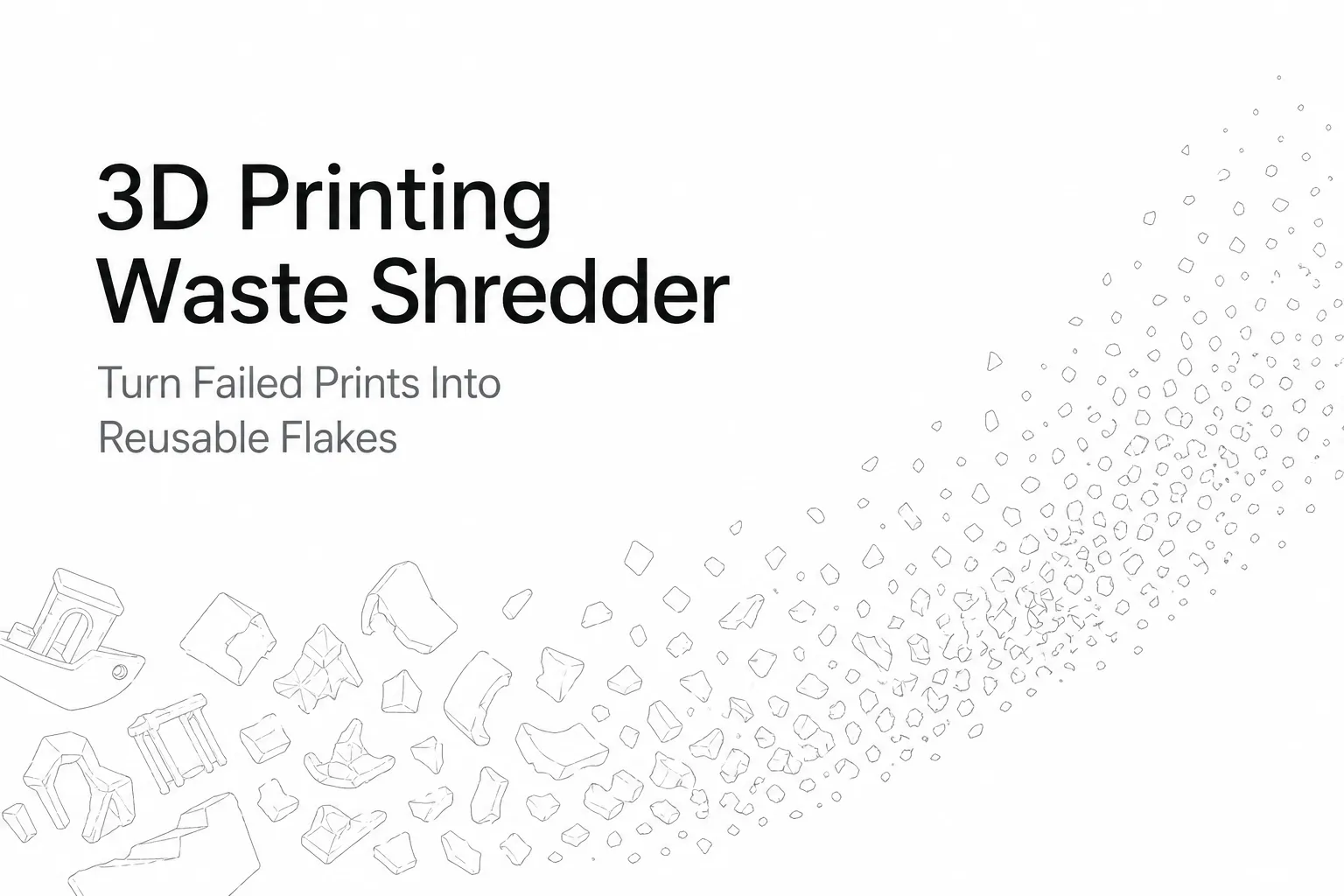
3Dプリンターを使えば必ず廃棄物が発生します — サポート材、ブリム、パージライン、造形に失敗したパーツが瞬く間に溜まっていきます。 3Dプリント廃棄物シュレッダー 嵩張るスクラップを、保管、リサイクル業者への出荷、フィラメント押出機への供給ができる均一なフレークに変えます。
このガイドでは、何を破砕するか、汚染を避ける方法、選定時に注目すべきポイントを解説します。 デスクトップ型3Dプリント廃材用シュレッダー.
この機器は誰に向けているか(避けるべき対象者)
- 良いフィット: 定期的にPLA/ABS/PETGスクラップを排出し、均一なフレークを求めるメーカースペース、教室、スタジオ、小規模ラボ。
- 適合しない 不明なプラスチック、混合材料部品、摩耗性の強い複合材料(繊維充填材料を処理する前にシュレッダーの限界を確認してください)。
なぜ3Dプリンティング廃材のシュレッディングが重要なのか
Shredding is the practical first step in any closed-loop workflow. Whole failed prints are bulky and inconsistent; flakes are easier to:
- 貯蔵し、ラベル付けする ポリマー/色別
- 清潔に保つ プリンター周りの煩雑さを減らす
- 一定に供給する もし後でフィラメントを押出しする場合
What Materials Can a 3D Printing Waste Shredder Handle?
ほとんどのデスクトップユニットは一般的な3Dプリント熱可塑性プラスチックを処理できますが、それぞれ特性が異なります:
| 材料 | 難しさ | 注記 |
|---|---|---|
| PLA | 簡単な手順 | 脆性破壊→均一なフレーク。臭気は最小限。最適な開始材料 |
| ABS | 適度 | PLAとは厳密に分離してください。必要に応じて臭気/換気を管理してください |
| PETG | 適度 | よく破砕できます。PLA/ABSや家庭用PETストリームとは分離してください |
| TPU | 硬い | 柔軟性;ゆっくりと給与し、巻き付けや詰まりを確認してください |
| ナイロン / 繊維充填 | 難しい課題 | 摩耗性あり。小型デスクトップユニットの限界を超える可能性あり—破砕前に確認してください |
目安: フィラメントの種類を自信を持って特定できない場合は、それをバッチに追加しないでください。混合ポリマーは下流工程の結果を破壊する可能性があります。
ステップごとに:3Dプリント廃材を削り刻む方法(クリーンで一貫したフラーク)
ステップ1 — 初めにポリマー(および色)で分別する
各ポリマータイプ(PLA、ABS、PETGなど)ごとに専用のバインを設置してください。再 Extrude(再押出)する予定の場合は、色別に分類して、混ざった混料を避けるようにしてください。
ステップ2 — 汚染物を除去する
Before the shredder, remove anything that is not clean plastic:
- ヒートセットインサート、スクリュー、磁石、ナット
- ビルドプレート由来のテープ/接着剤残留物
- フォーム、ゴム、ラベル、または包装の破片
部品が油汚れや埃っぽい場合は、拭き取って完全に乾燥させます。
ステップ3 — 大きな部品の前処理切断
卓上シュレッダーには実用的なサイズ範囲があります。大きな失敗プリントは小さく切断または折って、スムーズに供給できるようにしてください。ホッパーでブリッジを形成して詰まりの原因となる、長く細いストリップは避けてください。
ステップ4 — 一貫性のために粉砕(塵ではなく)
あなたの目標は 均一なフレーク、粉体ではありません。過剰に粉砕すると、粉塵が発生し、清掃が増加し、押出しのための給料が不安定になる可能性があります。
ステップ5 — ラベル付け、乾燥、および原料と同様に保管
フレークを原料として扱う:
- 密閉容器に保管してください
- ポリマー、ブランド、色でラベル付け
- 湿気の多い環境では吸湿剤を使用してください。
フィラメントを押出する場合、乾燥が重要です。PLAの場合、多くのユーザーがフラークを約乾燥します。 50–55 °C Extrusion前数時間、水分関連の泡や弱い印刷を減らすために。
DIY Shredder vs. Commercial Desktop Shredder
DIY shredders can work, but consistency and safety vary widely. A commercial desktop shredder is often the better choice when you need repeatable flakes in a shared workspace.
| 選定の要素 | DIY Shredder | Commercial Desktop Shredder |
|---|---|---|
| 初期費用 | 下位 (部品ベース) | より高い |
| 動き出す時間です | 10~40+時間 | 直ちに |
| 出力の整合性 | 可変 | より再現性が高い |
| 安全機能 | よく最小限 | 保護装置 + 文書化された手順 |
| メンテナンス | 部品調達は異なります | アクセスと清掃のため設計されています |
閉ループリサイクルワークフロー(メーカースケール)
- 収集 — 各ポリマーごとに近くのプリンター用バインダー
- 検査する —金属や混合材料を除去する
- 破砕 — 均一なフレークを生成する
- 状態 — 乾燥して、ラベル付きコンテナに保管
- 再処理 —糸を押出するか、フラークをリサイクラーに送る
- 印刷を再実行 — 原型機および非重要部品を優先
3Dプリンティング廃材用デスクトップシュレッダーの選び方
コンパクトなフットプリント
もしベンチやルーチンに合わないと、使用されません。
低騒音
教室やスタジオ用に、閉じ込められたカットチャンバーと安定したフレームが重要です。
実用的な安全設計
保護された給餌口、明確なジャム解消手順、そしてアクセスしやすいメンテナンスパネルを探してください。目の保護具を着用し、手を給餌口から遠ざけてください。
バッチ間の迅速な清掃
異なるポリマーや色のものをシュレッダーに投入すると、迅速なクリーニングで汚染を防ぎます。
RUMTOOミニデスクトップ小型シュレッダー
ノイズが少なく、デスクフレンドリーなセットアップで、印刷失敗やサポートからの一貫したフラックを得る目標があれば、 RUMTOOミニデスクトップ小型シュレッダー はメーカースペース、教室、スタジオ、オフィスラボ用に構築されています。
3Dプリンタースクラップワークフローより適している主要な理由:
- デスクトップサイズの設置面積でベンチトップ使用に適しています
- 繰り返し可能で一貫したフラック出力を設計
- 色や材料の間での迅速なクリーニングを促進するメンテナンス志向のデザイン
- 安全と日常操作に対する実践的なアプローチ
トラブルシューティング
不均一なフレーク
一定のペースで給餌し、大きな部品を事前に割り切ります。同じランで硬質と柔軟な材料を混ぜないでください。
材質詰まり
ピースのサイズを縮小します。長く細いスクラップをインレットに強制的に通さないでください。ジャムを解消する前に、機械を完全に停止してください。
過剰なダスト
オーバーシュレッダーを避け、各セッションの後にチャンバーと周辺エリアをクリーニングしてください。
安全チェックリスト
- [ ] 眼の保護具を着用してください
- [ ] 供給口から手を遠ざけてください
- [ ] ジャムを解消する前に、機械を完全に停止してください
- [ ] 不明なまたは混在した材料をシュレッダーに投入しないでください
- [ ] 各セッションの後に作業エリアをクリーニングして、フラックに滑りやすくなるのを防ぎます
FAQ
What is a 3D printing waste shredder?
失敗した印刷、サポート、ブリム、プルラインをフラックにカットし、貯蔵、リサイクル、または再エクストルーダー用に使用するコンパクトな機械です。
Can I use a desktop shredder at home?
はい、ポリマーで分類し、汚染(特に金属)を取り除き、フラックを適切に貯蔵すれば。
どのプラスチックが最も簡単に粉砕できるか?
PLAは通常最も簡単な開始材料です。それはきれいに割れるし、広く使用されています。
どのフレークサイズを目指すべきですか?
目指すものは 均質なフレーク, かすみではありません。均一な原料は最小のサイズよりも重要です。
主要なポイント
- ポリマー別に分類する 前に 破砕
- 金属の部品や汚染物をまず取り除きます
- 均一なフレークを目指し、粉末は避ける
- フレークを原料同様に乾燥・保管します
- SEOの焦点を当てるために、一つのきれいな製品リンクを保ち、分心を最小限に抑えます
関連の記事: 詳しくはこちら: ミニコンパクトシュレッダー、または当社のウェブサイトを参照してください プラスチックシュレッダーライン.
