


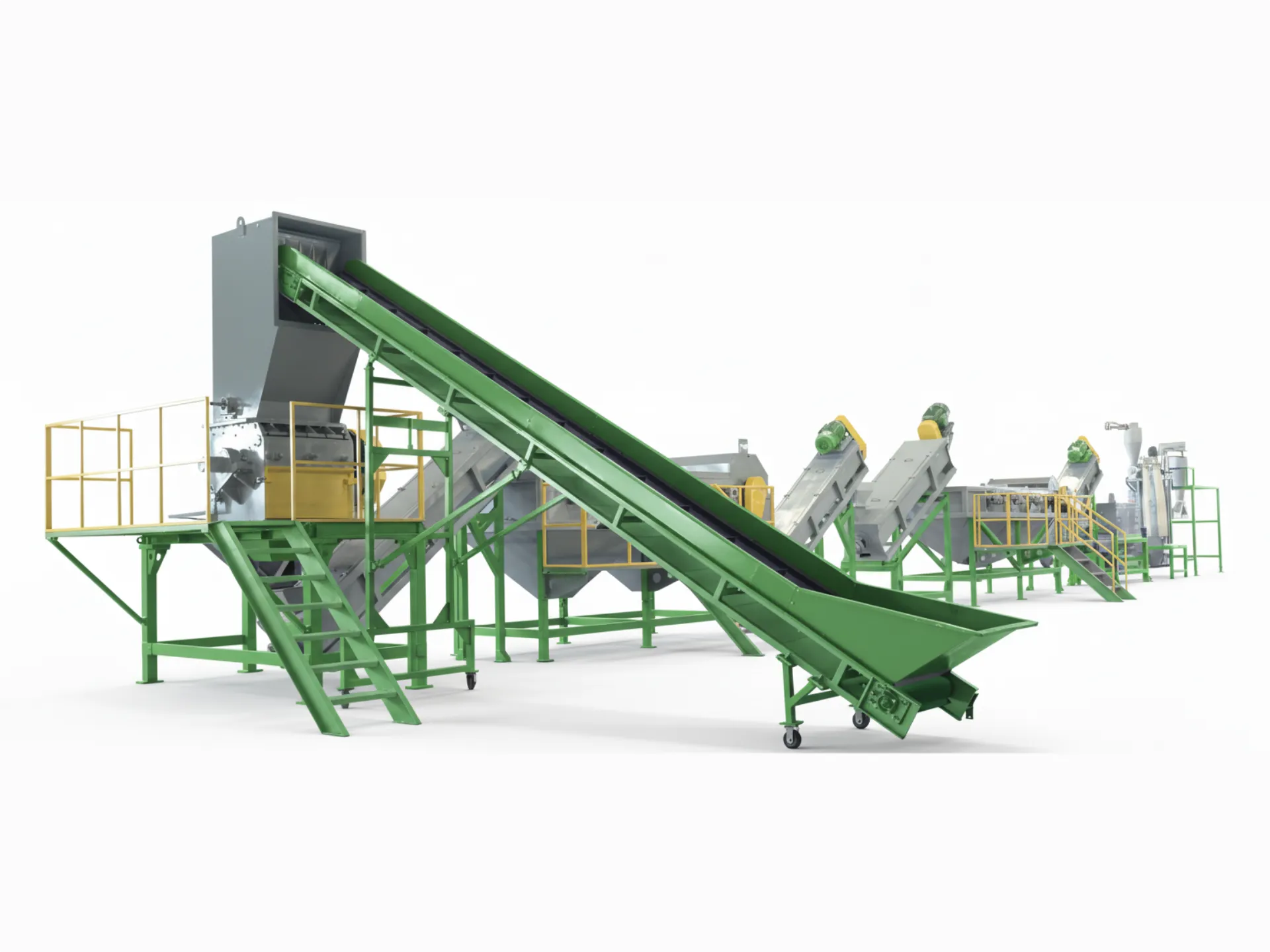
HDPE-Flaschenwasch- und Recyclinglinie
Diese Waschanlage ist so konzipiert, dass sie Verunreinigungen entfernt, die Materialreinheit verbessert und recycelte Kunststoffe für die Trocknung, Granulierung oder direkte Wiederverwendung vorbereitet.
- Die Konfiguration erfolgt nach Materialart, Verschmutzungsgrad und Durchsatzziel.
- Konzipiert für einen stabilen industriellen Betrieb und eine praktische Wartungszugänglichkeit.
- Verfügbar mit projektbezogenen Layout- und Supportoptionen.
Geräteübersicht
Überblick über industrielle Lösungen
Diese Waschanlage ist so konzipiert, dass sie Verunreinigungen entfernt, die Materialreinheit verbessert und recycelte Kunststoffe für die Trocknung, Granulierung oder direkte Wiederverwendung vorbereitet.
Hauptmerkmale
Hochreine Ausgabe
Mehrere Wasch- und Trennstufen tragen zur Verbesserung der endgültigen Reinheit der Flocken bei.
Flexible Materialhandhabung
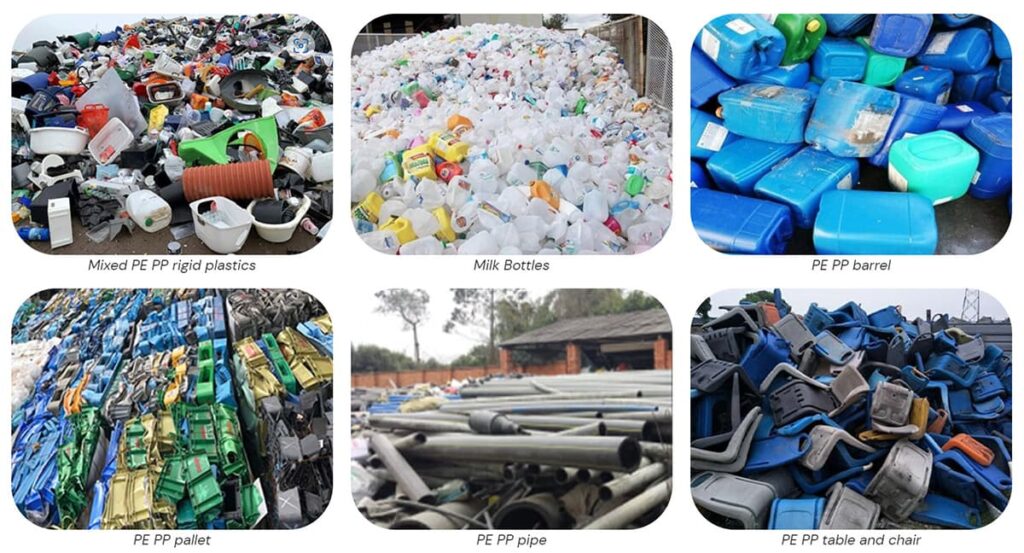
Geeignete Konfigurationen sind für starre Kunststoffe, Flaschen, Folien und gemischte Rohstoffe erhältlich.
Stabiler Dauerbetrieb
Die Prozessschritte sind so angeordnet, dass ein zuverlässigerer Ablauf beim Zerkleinern, Waschen und Trocknen gewährleistet ist.
Projektbasiertes Layout
Die Linienkonfiguration kann je nach Materialbeschaffenheit und Werkstattbedingungen angepasst werden.
Typische Anwendungen
Kontaminierter Kunststoffabfall
Konzipiert für gewaschene Hartkunststoffe, Folien, Flaschen oder gemischte Recyclingmaterialien.
Verbesserte Materialreinheit
Unterstützt die nachgelagerte Trocknung, Pelletierung oder den Wiederverkauf der gereinigten Flocken.
Integrierte Recyclinganlagen
Kann mit Schreddern, Brechern, Trocknern und Wasseraufbereitungsanlagen verbunden werden.
Kundenspezifische Anlagenprojekte
Die Konfiguration erfolgt abhängig vom Verschmutzungsgrad, dem angestrebten Ausgabewert und den Installationsbedingungen.
Prozess der HDPE-Flaschenwaschanlage
| Prozessschritt | Funktion in der Linie |
|---|---|
| Ballenöffner / Zuführband | Öffnet die Ballen (optional) und sorgt für eine gleichmäßige, kontinuierliche Zuführung in die Produktionslinie. |
| Vorwäscher/Trommel (optional) | Entfernt frühzeitig Sand, Steine und losen Schmutz, um nachgelagerte Maschinen zu schützen und die Wasserbelastung zu reduzieren. |
| Nassbrecher/Granulator | Verkleinert Flaschen und spült gleichzeitig lose Verunreinigungen weg, um ein effizientes nachfolgendes Waschen zu ermöglichen. |
| Reibscheibe | Durch Hochgeschwindigkeits-Schrubben werden hartnäckige Rückstände, Papierfasern und verbleibender Schmutz von den Flocken entfernt. |
| Heißwasser-Unterlegscheibe (optional) | Verbessert die Dekontamination von öligen oder mit Reinigungsmitteln stark verschmutzten Flaschen durch Verwendung von erhitztem Wasser und kontrollierter Chemie. |
| Schwimm-Sink-Trennbehälter | Dichtetrennung: HDPE/PP schwimmen typischerweise, während PET/PVC und schwere Verunreinigungen absinken. |
| Spülen & Übertragen Schraube | Spült die Flocken und transportiert das Material zwischen den einzelnen Stufen, wobei die Verweilzeit konstant bleibt. |
| Zentrifugale Entwässerung | Durch mechanisches Entfernen des Oberflächenwassers wird der Energiebedarf für die thermische Trocknung reduziert. |
| Thermischer Trockner & Lufttransport | Durch Heißlufttrocknung wird der Feuchtigkeitsgehalt der Flocken reduziert und sie werden anschließend gelagert. |
| Zickzack-/Luftklassierer | Entfernt Etiketten, Folien und leichte Bestandteile, um die Endreinheit zu verbessern. |
| Silo-/Absackstation | Lagert und verpackt die fertigen HDPE-Flocken für eine einfache Logistik und eine stabile Zuführung zu den Pelletieranlagen. |
| SPS-Steuerungssystem | Zentrale HMI/SPS-Steuerung für Verriegelungen, Rezepturen, Alarme und optionale Ferndiagnose. |
Technische Parameter der Wäscheleine
Die spezifischen technischen Parameter können je nach Modell und Anpassung variieren. Detaillierte Spezifikationen finden Sie in den jeweiligen Produktdatenblättern oder kontaktieren Sie uns.
| Eingangskapazität | 500kg/h | 1000kg/h | 1500kg/h | 2000kg/h |
|---|---|---|---|---|
| Erforderlicher Platz | 42 m x 10 m x 6 m | 50 m x 15 m x 6 m | 55 m x 16 m x 6 m | 60 m x 18 m x 6 m |
| Betreiber | 3-4 Personen | 5-6 Personen | 5-6 Personen | 5-6 Personen |
| Installationsleistung | 150-200 kW | 250-300 kW | 370 kW | 450-500 kW |
| Wasserzirkulation (T/H) | 2 | 3 | 4 | 5 |
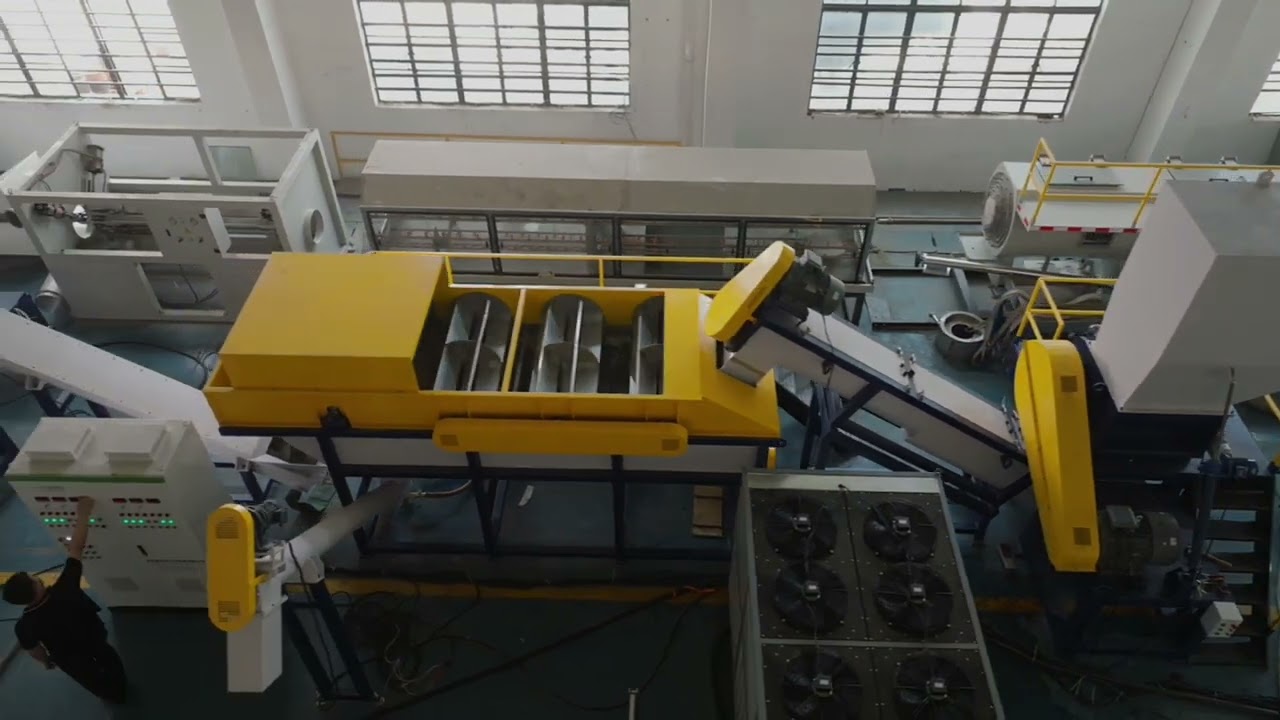
Sehen Sie es in Aktion
Häufig gestellte Fragen
Die HDPE-Flaschenwasch- und Recyclinganlage kann je nach Materialart, Verschmutzungsgrad und Produktionsziel Ihres Projekts konfiguriert werden.
Ja. Layout, Motordimensionierung, Verschleißteile und unterstützende Komponenten können je nach Anwendungsanforderungen angepasst werden.
Ja. Wir bieten Installationsanleitung, Unterstützung bei der Inbetriebnahme, Bedienerschulungen und Kundendienst entsprechend dem Projektumfang an.
Die Auswahl hängt von den Materialeigenschaften, der angestrebten Kapazität, den Installationsbedingungen und den Anforderungen der nachgelagerten Prozesse ab. Nach Prüfung Ihres Projekts können wir Ihnen eine geeignete Konfiguration empfehlen.
Garantie und Installation
Garantieumfang
Für unterstützte Maschinenkomponenten und Herstellungsfehler gilt eine Standardgarantie.
Installation & Support
Wir bieten Installationsanleitung, Unterstützung bei der Inbetriebnahme, Bedienerschulungen und Ersatzteilservice je nach Projektumfang.
Fordern Sie eine individuelle Lösung an
Teilen Sie uns Ihre Materialdetails, die angestrebte Kapazität und die Projektanforderungen mit. Wir empfehlen Ihnen eine passende Konfiguration.
