


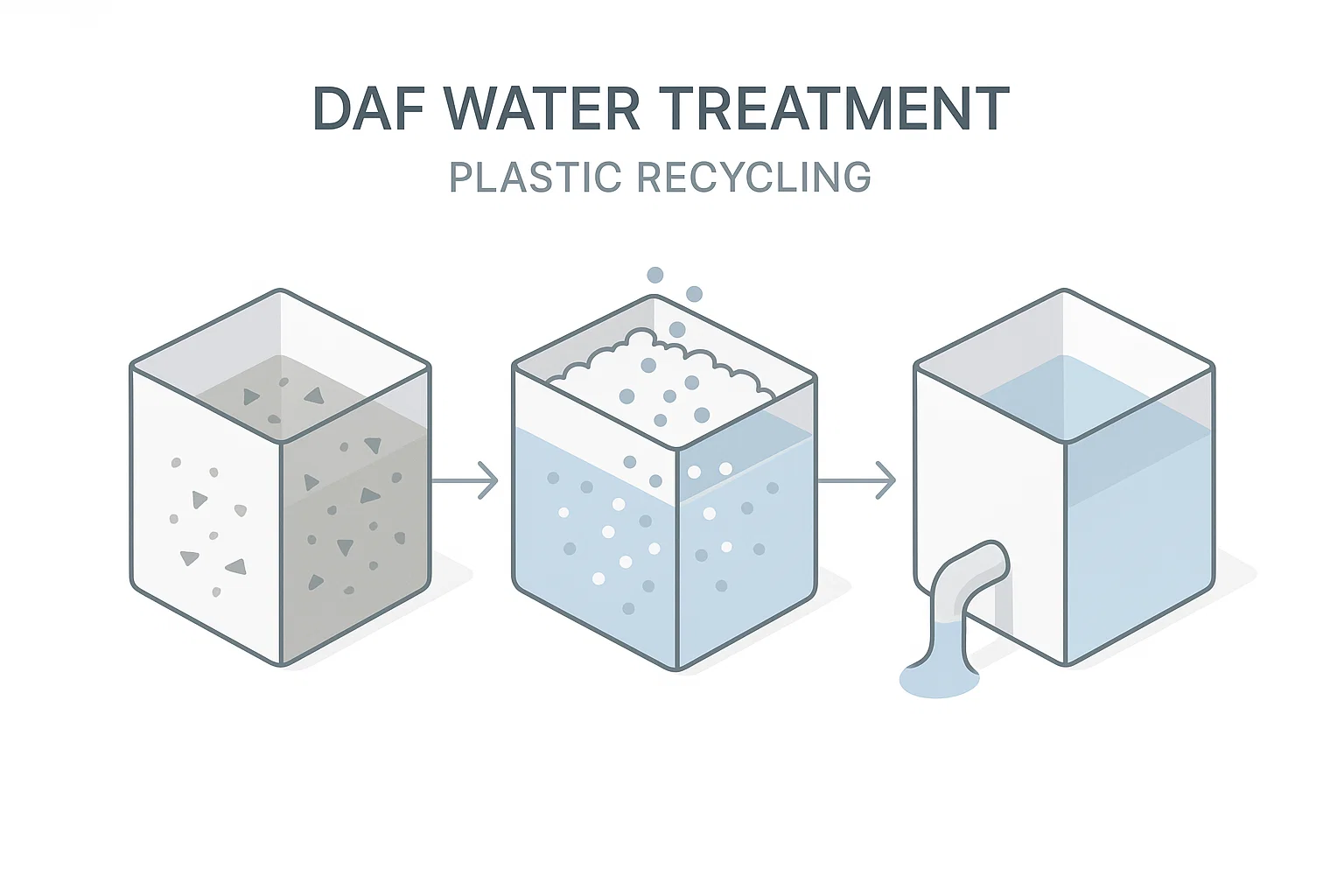
Woda jest podstawowym materiałem eksploatacyjnym w każdej myjni. Standardowa linia PET o wydajności 2000 kg/h zużywa 4-5 ton wody na godzinę, jeśli nie jest poddawana recyrkulacji. Wdrożenie zamkniętego systemu obiegu wody z wykorzystaniem Flotacja rozpuszczonym powietrzem (DAF) jest sprawdzonym sposobem na ograniczenie zużycia przy jednoczesnym zachowaniu jakości prania wymaganej w przypadku środków czyszczących.
W Rumtoo integrujemy systemy DAF, aby skupić się na trzech podstawowych parametrach ścieków przemysłowych: zawiesinie stałej (SS), tłuszczach, olejach i smarach (FOG) oraz biochemicznym zapotrzebowaniu na tlen (BOD).
Wyzwanie inżynieryjne: SS, FOG i BOD
Ścieki pochodzące z recyklingu tworzyw sztucznych nie są po prostu “brudne”; zawierają one określone zanieczyszczenia, które nie wytrzymują standardowej filtracji.
1. Zawiesiny stałe (SS):Mikroplastik i włókna papieru (<50 mikronów) przechodzą przez mechaniczne filtry siatkowe, ale powodują zmętnienie wody, co zmniejsza skuteczność sortowników optycznych.
2. FOG (tłuszcze, oleje, smary): Pozostałości z pojemników na żywność (pojemniki polipropylenowe, kanistry na mleko HDPE). Te hydrofobowe elementy pokrywają płatki plastiku, uniemożliwiając działanie detergentów.
3. BZT (Biologiczne zapotrzebowanie na tlen): Rozpuszczone substancje organiczne, takie jak cukry z butelek po napojach gazowanych. Wysokie BZT prowadzi do rozwoju bakterii i nieprzyjemnych zapachów w zbiornikach z wodą.
Jak działa technologia DAF Rumtoo
Flotacja rozpuszczonym powietrzem działa na zasadzie różnicy gęstości. W przeciwieństwie do osadników, które działają na zasadzie grawitacji (powolne i o dużej powierzchni), DAF wykorzystuje mikropęcherzyki (30-50 mikronów) do unoszenia zanieczyszczeń na powierzchnię.
Proces 4-etapowy
- Dozowanie chemikaliów:Obróbka wody za pomocą koagulantu (np. PAC) i flokulantu (PAM) w celu związania drobnych cząstek w większe skupiska zwane “kłaczkami”.
- Wstrzykiwanie mikropęcherzyków:Do zbiornika wpuszczana jest woda nasycona powietrzem pod wysokim ciśnieniem (5-7 barów). Nagły spadek ciśnienia powoduje powstanie milionów mikropęcherzyków.
- Przyczepność i wzrost:Bąbelki przyczepiają się do tłuszczu, tłuszczu i kłaczków, zmniejszając swoją gęstość pod wodą. Szybko unoszą się ku powierzchni.
- Skimming:Mechaniczny skrobak usuwa pływającą warstwę osadu, a oczyszczona woda jest pobierana z dna w celu ponownego wykorzystania w Plastikowa linka do prania.
Porównanie wydajności: DAF kontra sedymentacja
Dla zakładów recyklingowych DAF jest lepszym rozwiązaniem, ponieważ drobne cząsteczki plastiku i oleje z natury chcą unosić się na powierzchni, a nie tonąć.
| Metryczny | Zbiornik sedymentacyjny | Flotacja rozpuszczonego powietrza |
|---|---|---|
| Usunięcie SS | 40-60% | > 95% |
| Usuwanie mgły | 50-70% | > 97% |
| Obciążenie hydrauliczne | Niski (Powolne osiadanie) | Wysoki (szybkie unoszenie się na wodzie) |
| Ślad stopy | Wymagany duży obszar | Kompaktowa konstrukcja |
Wniosek
Instalowanie Systemy DAF Przekształca ścieki z obciążenia związanego z utylizacją w zasoby nadające się do ponownego wykorzystania. Dzięki odpowiedniemu programowi chemicznemu i doborowi wielkości, DAF może usunąć 90–95%+ zanieczyszczeń docelowych, co może znacząco wydłużyć cykle ponownego wykorzystania wody płuczącej oraz obniżyć koszty dozowania środków chemicznych i opłaty za emisję zanieczyszczeń do środowiska.
