
水はあらゆる洗浄工場において主要な消耗品です。標準的な2,000kg/hのPETラインでは、循環させない場合、1時間あたり4~5トンの水を消費します。 溶解空気浮上法(DAF) 化学洗浄剤に求められる洗浄品質を維持しながら消費量を削減できる実証済みの方法です。.
Rumtoo では、DAF システムを統合して、産業廃水の 3 つの主要指標である浮遊物質 (SS)、脂肪、油、グリース (FOG)、生化学的酸素要求量 (BOD) をターゲットにしています。.
エンジニアリングの課題:SS、FOG、BOD
プラスチックのリサイクルから生じる廃水は単に「汚れている」だけではなく、標準的なろ過では取り除けない特定の汚染物質を含んでいます。.
1. 浮遊物質(SS): 機械式スクリーン フィルターは通過しますが、水を濁らせ、光学選別機の効率を低下させるマイクロプラスチックと紙繊維 (<50 ミクロン)。.
2. FOG(脂肪、油、グリース)食品容器(ポリプロピレン製容器、HDPE製ミルクジャグなど)の残留物。これらの疎水性物質がプラスチック片を覆い、洗剤の効果を阻害します。.
3. BOD(生物学的酸素要求量): ソーダボトルからの糖分などの溶解有機物。BOD値が高いと、水槽内で細菌の増殖と悪臭が発生します。.
Rumtoo DAFテクノロジーの仕組み
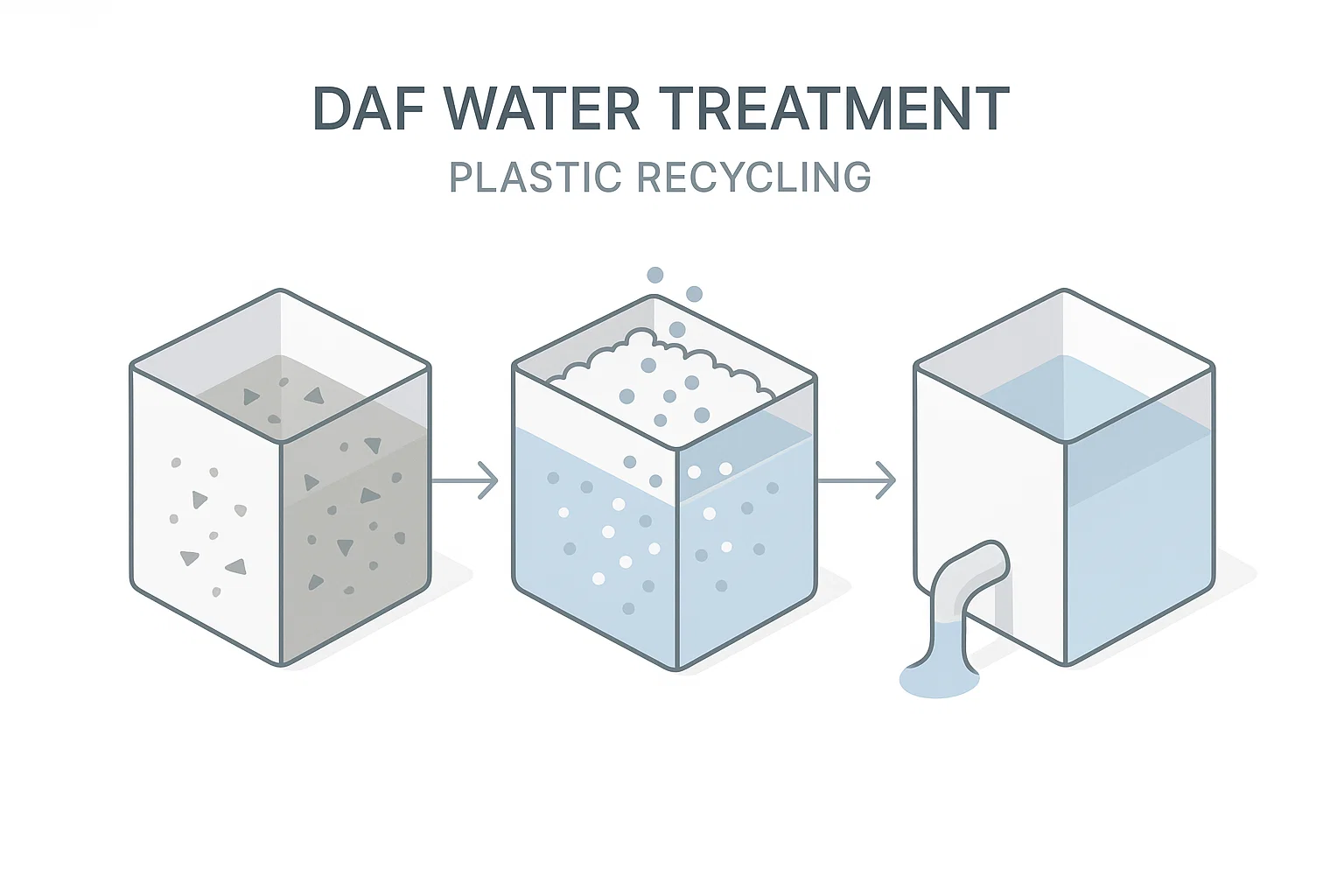
溶存空気浮上法(DAF)は、密度差原理に基づいて動作します。重力(処理速度が遅く、設置面積が大きい)に頼る沈殿槽とは異なり、DAFは微細気泡(30~50ミクロン)を利用して汚染物質を表面に浮上させます。.
4段階のプロセス
- 化学薬品投与凝固剤(PAC など)と凝集剤(PAM)を使用して水を処理し、微粒子を「フロック」と呼ばれる大きなクラスターに結合します。.
- マイクロバブル注入高圧(5~7気圧)の空気で飽和した水がタンク内に放出されます。急激な圧力低下により、数百万個のマイクロバブルが発生します。.
- 接着と上昇: 泡は霧状物質(FOG)と固体フロックに付着し、水面下での密度を低下させます。泡は急速に水面まで上昇します。.
- スキミング機械式スクレーパーで浮遊スラッジ層を除去し、底部から浄化された水を汲み上げて再利用します。 プラスチック洗濯物干し.
パフォーマンス比較:DAF vs. 沈降
リサイクル工場にとって、プラスチックの微粒子や油は沈むのではなく自然に浮いてしまうため、DAF は優れています。.
| メトリック | 沈殿槽 | 溶解空気浮上 |
|---|---|---|
| SS除去 | 40-60% | > 95% |
| FOG除去 | 50-70% | 97% |
| 油圧負荷 | 低(ゆっくり沈下) | 高(急速浮上) |
| フットプリント | 広い面積が必要 | コンパクトなデザイン |
上記の数値について: このような除去率は、典型的なプラスチック洗浄ラインの排水において達成可能です。 適切に計量された凝集剤と架橋剤プログラムで, adequate air-to-solids ratio, and hydraulic load inside the unit’s design range. Without chemical pre-treatment, DAF removal of fine suspended solids drops sharply — the chemistry, not the tank, does half the work.
SS、FOG、BODとは実際に何か——そして洗浄ラインがそれらをどのように除去するか
- SS(懸濁物): 土、粉塵、ラベルパルプ、およびプラスチック粉塵が材料から洗い流される——目に見える濁り。農業フィルムとポストコンシューマーフードがSS負荷をパッケージスカップレベルを大幅に上回らせる。
- FOG(脂肪、油、ガス): ボトルおよびコンテナからの食品残渣、および purge(排ガス処理)からの潤滑油および工業廃棄物。FOG(フライアウト・オイル・ガス)は自然に浮き、そのため浮上分離が沈殿分離よりもFOGに対して優れている。
- BOD(生物化学酸素需要量): 物質ではなく測定値であり——有機負荷が消費する酸素の量です。高いBODは排水許可証当局によって最も厳しく制限され、DAFは主にそれを運ぶ有機固形物を除去することでそれを低減します。
どの除去率に依存するか
- 化学プログラム: 凝集剤の種類と量(PAC、三酸化鉄)および架橋剤の選択——最も大きな調整手段です。
- 空気対固形物比率: 溶解酸素が不足すると、フロックは沈殿しない;飽和器圧力と再循環率は固形物負荷に合わせる必要がある。
- 水力式ローディング: 設計流量を超えた押し流しは、滞留時間を短縮し、スクイーマー下でフロックが逃げることを許します。
- 流入変動 一本線が硬質再利用材から汚れたフィルムに切り替わると、SS負荷は倍数で変化する—投加はその後に行う必要がある。
DAF性能の検証方法:数値を意味のあるものにするテスト条件
- まず化学をジャーテストで確認してください。 機械を責める前に、実際の廃液のベンチサンプルで凝集剤/架橋剤の選択と投与量を確認してください。
- 両面をサンプリングし、同じ日、同じ方法で行う。 流入と流出のサンプリングは変動ライン上で数時間離れて行われた場合、何も証明しない。ペアサンプルまたは24時間混合サンプルを使用する。
- 作動点を示してください。 流量、投与率、サンプリング時の給材と並行して、除去率が意味をなすだけです。
- 購入に際して、受け入れ基準を記入してください。 委託前に、供給業者と流入の仮定、サンプリング手順、目標排出数値について合意します。
バブルの作動原理については、こちらをご覧ください。 溶解空気浮上処理とは; 方法比較のためには DAF と沈殿とろ過; そして購入する前に、 DAF機器を購入する前に尋ねるべき5つの質問.
結論
インストール DAFシステム 廃水を廃棄義務から再利用可能な資産へと転換します。適切な薬剤プログラムとサイズ設定により、DAFは90~95%以上の対象汚染物質を除去でき、洗浄水の再利用サイクルを大幅に延長し、薬剤投与コストと環境排出料金を削減できます。.
