


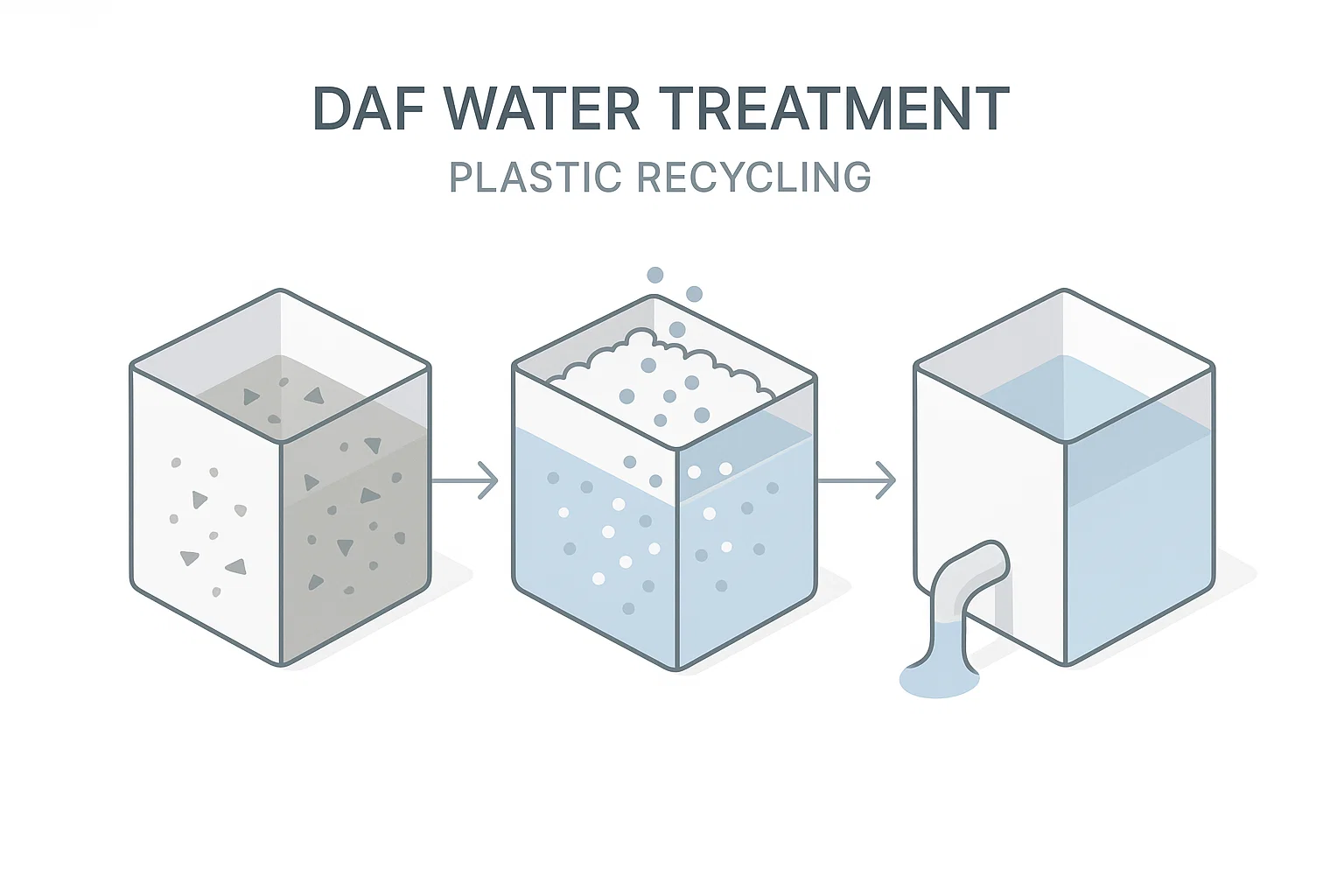
Water is the primary consumable in any washing plant. A standard 2,000 kg/h PET line consumes 4-5 tons of water per hour if not recirculated. Implementing a closed-loop water system using Dissolved Air Flotation (DAF) is a proven way to reduce consumption while maintaining the wash quality required for chemical cleaners.
At Rumtoo, we integrate DAF systems to target the three primary metrics of industrial wastewater: Suspended Solids (SS), Fats, Oils, and Greases (FOG), and Biochemical Oxygen Demand (BOD).
The Engineering Challenge: SS, FOG, and BOD
Wastewater from plastic recycling is not just “dirty”; it carries specific contaminants that defeat standard filtration.
1. Suspended Solids (SS): Micro-plastics and paper fibers (<50 microns) that pass through mechanical screen filters but cloud the water, reducing the efficacy of optical sorters.
2. FOG (Fats, Oils, Grease): Residues from food containers (polypropylene tubs, HDPE milk jugs). These hydrophobic elements coat the plastic flakes, preventing detergents from working.
3. BOD (Biological Oxygen Demand): Dissolved organics like sugars from soda bottles. High BOD leads to bacterial growth and foul odors in the water tanks.
How Rumtoo DAF Technology Works
Dissolved Air Flotation operates on a density differential principle. Unlike sedimentation tanks which rely on gravity (slow and large footprint), DAF uses micro-bubbles (30-50 microns) to float contaminants to the surface.
The 4-Stage Process
- Chemical Dosing: Treating the water with a coagulant (e.g., PAC) and flocculant (PAM) to bind fine particles into larger clusters called “flocs”.
- Micro-Bubble Injection: Water saturated with air at high pressure (5-7 bar) is released into the tank. The sudden pressure drop creates millions of micro-bubbles.
- Adhesion and Rise: Bubbles attach to the FOG and solid flocs, lowering their density below water. They rise rapidly to the surface.
- Skimming: A mechanical scraper removes the floating sludge blanket, while clarified water is drawn from the bottom for re-use in the Plastic Washing Line.
Performance Comparison: DAF vs. Sedimentation
For recycling plants, DAF is superior because plastic fines and oils naturally want to float, not sink.
| Metric | Sedimentation Tank | Dissolved Air Flotation |
|---|---|---|
| SS Removal | 40-60% | > 95% |
| FOG Removal | 50-70% | > 97% |
| Hydraulic Load | Low (Slow settling) | High (Rapid flotation) |
| Footprint | Large Area Required | Compact Design |
About the numbers above: removal rates like these are achievable on typical plastic washing-line effluent with a properly dosed coagulant and flocculant program, adequate air-to-solids ratio, and hydraulic load inside the unit’s design range. Without chemical pre-treatment, DAF removal of fine suspended solids drops sharply — the chemistry, not the tank, does half the work.
What SS, FOG, and BOD Actually Are — and Where a Washing Line Makes Them
- SS (suspended solids): soil, fines, label pulp, and plastic dust washed off the material — the visible cloudiness. Agricultural film and post-consumer feed push SS loads far above packaging-scrap levels.
- FOG (fats, oils, grease): food residue from bottles and containers, plus lubricants from purge and industrial scrap. FOG floats naturally, which is why flotation beats settling for it.
- BOD (biochemical oxygen demand): not a substance but a measurement — how much oxygen the organic load consumes. High BOD is what discharge permits police most tightly, and DAF reduces it mainly by removing the organic solids that carry it.
What Removal Rates Depend On
- Chemical program: coagulant type and dose (PAC, ferric) and flocculant selection — the single biggest lever.
- Air-to-solids ratio: too little dissolved air and flocs stay suspended; saturator pressure and recycle rate must match the solids load.
- Hydraulic loading: pushing flow past design rate cuts residence time and lets flocs escape under the skimmer.
- Influent variability: a line that switches from rigid regrind to dirty film changes SS load by multiples — dosing must follow.
How to Verify DAF Performance: Test Conditions That Make Numbers Meaningful
- Jar-test the chemistry first. Before blaming the machine, verify coagulant/flocculant selection and dose on a bench sample of your actual effluent.
- Sample both sides, same day, same method. Influent and effluent grabs taken hours apart on a variable line prove nothing; use paired samples or 24-hour composites.
- State the operating point. A removal figure only means something alongside the flow rate, dosing rate, and feed material running when the sample was taken.
- Write acceptance criteria into the purchase. Agree the influent assumptions, the sampling protocol, and the target effluent numbers with the supplier before commissioning.
For the working principle behind the bubbles, see what is dissolved air flotation; for the method comparison, DAF vs sedimentation and filtration; and before you buy, five questions to ask before purchasing DAF equipment.
Conclusion
Installing a DAF System transforms wastewater from a disposal liability into a reusable asset. With the right chemical program and sizing, DAF can remove 90-95%+ of target contaminants, which can extend wash-water reuse cycles significantly and reduce chemical dosage costs and environmental discharge fees.
