


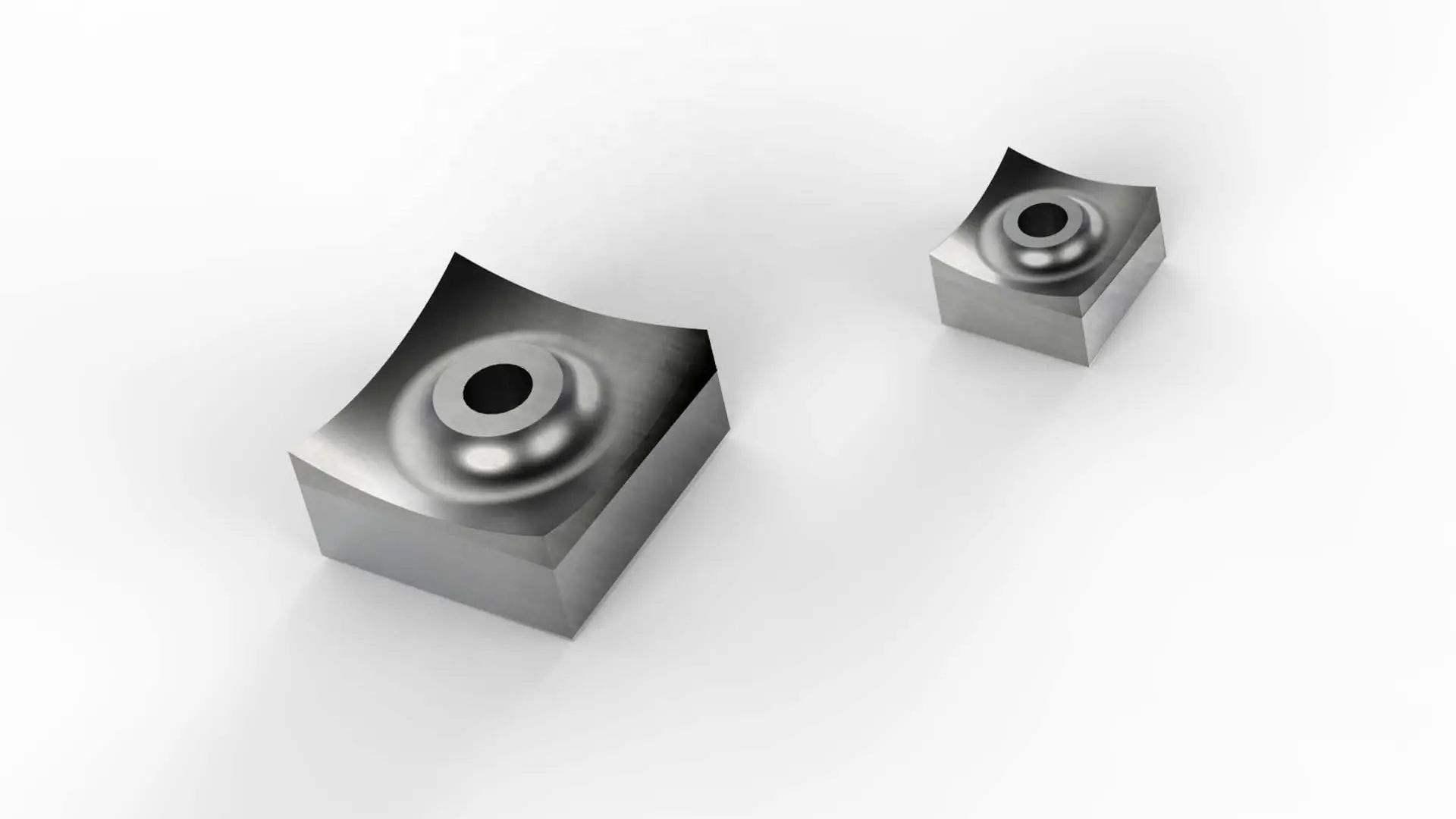
Tungsten Carbide Inlaid Shredder Rotor Knives
Engineered for wear resistance and long service life, our shredder rotor knives are built for demanding plastic recycling duty. A tungsten carbide inlay on a premium tool steel body keeps the cutting edge sharp far longer than standard blades, so your shredder runs more hours between blade changes. Custom sizes fit most major shredder brands.
Key Advantages of Tungsten Carbide Shredder Knives
Tungsten carbide inlays, precision heat treatment, and custom fit for longer knife life in abrasive shredding.
- Tungsten Carbide Inlay
High-grade tool steels (D2, SKD11) with tungsten carbide inlays for extreme cutting durability.
- Heat Treatment
Triple-tempered vacuum heat treatment for optimal hardness (HRC 56-58) and toughness.
- Precision Cutting Edges
CNC machining for accurate fit, balance, and consistent shredding performance.
- Custom Knife Solutions
Fully customized rotor and stator knives for your shredder model and application.
- Wear Resistance
Built for abrasive recycling duty to reduce downtime and replacement frequency.
- Plastic, Wood & Metal
Suitable for plastic recycling machines and other industrial shredding applications.
Why a Carbide Inlay Outlasts Standard Tool Steel
On clean plastic film, a standard D2 blade does fine. The problem starts when your feedstock is not clean.
Glass-filled nylon, WEEE housings with metal inserts, construction waste, agricultural film with sand and soil — these materials grind a standard tool steel edge dull in days. Each dull edge means higher motor load, more fines and dust in your output, and another shutdown to swap blades.
A tungsten carbide inlay changes the math. Carbide is roughly twice as hard as hardened tool steel, so the cutting edge resists abrasion far longer. In practice, our customers processing abrasive feedstock report 3-5 times the service life compared to standard blades. Fewer blade changes means fewer shutdowns, lower labor cost, and a lower cost per ton — even though the knife itself costs more upfront.
The inlay is brazed onto a tough tool steel body (D2, SKD11, or DC53), so you get the best of both: a wear-resistant edge that stays sharp, backed by a body that absorbs shock loads without cracking.
Applications
One knife design does not fit every job. These are the applications our carbide-inlaid rotor knives are built for.
-
Plastic Recycling
Bottles, drums, pipes, and film — including contaminated post-consumer material that wears standard blades quickly.
-
Glass-Filled & Engineering Plastics
Nylon, PC, and other reinforced plastics where glass fiber acts like sandpaper on a plain steel edge.
-
WEEE & Electronic Waste
Housings and mixed e-waste with metal inserts, where impact toughness matters as much as wear resistance.
-
Wood & Biomass
Pallets, offcuts, and waste wood with nails or grit that would chip a standard edge.
-
Light Metal & Cable
Aluminum profiles, copper cable, and other non-ferrous scrap in moderate-duty shredding lines.
-
RDF & General Waste
Mixed municipal and industrial waste streams where the feedstock is unpredictable by nature.
How Our Shredder Knives Are Made
Four controlled steps, from steel selection to final inspection.
1. Steel Selection & Cutting
We start with certified D2, SKD11, or DC53 tool steel bar stock. Blanks are cut oversize to allow for grinding stock after heat treatment.
2. Carbide Inlay Brazing
A tungsten carbide strip is precision-brazed onto the cutting edge. Joint quality is checked before the knife moves to heat treatment.
3. Vacuum Heat Treatment
Triple-tempered vacuum heat treatment brings the body to HRC 56-58 — hard enough to hold an edge, tough enough to survive shock loads.
4. CNC Grinding & Inspection
Cutting edges are CNC-ground to final geometry, then every batch is dimensionally checked against your drawing before packing.
Shredder Rotor Knife Technical Specifications
Reference specifications for standard tungsten carbide inlaid shredder rotor knives. Custom sizes and steel grades available.
| Parameter | Specification |
|---|---|
| Base Materials | D2, SKD11, DC53, and other premium tool steels |
| Inlay Material | Tungsten Carbide |
| Hardness | HRC 56-58 (body) |
| Heat Treatment | Triple Tempered Vacuum Heat Treatment |
| Edge Geometry | Per drawing or sample; standard and custom profiles |
| Stator Knives | Matched sets available |
| Customization | Dimensions, steel grade, and inlay width per application |
Choosing the Right Knife for Your Shredder
Three questions decide which knife you need.
What do you shred? Clean PE film or PET bottles: standard D2/SKD11 is usually enough and costs less. Abrasive or contaminated feedstock — glass-filled plastics, WEEE, construction waste, agricultural film with soil: choose the tungsten carbide inlay. The payback comes from fewer blade changes.
What shredder do you run? Send us the machine brand and model, or better yet a dimensioned drawing or a sample knife. We confirm every critical dimension — mounting holes, overall length, edge angle — before production, so the knife drops in without modification.
Rotor only, or a matched set? If your stator knives are also worn, replace them together. A fresh rotor edge against a worn stator edge cuts poorly and wears unevenly. Matched sets keep the cutting gap consistent and particle size uniform.
Not sure? Read our shredder blades selection guide for the full breakdown of materials, geometry, and manufacturing quality — or just send your drawings for a direct recommendation.
Frequently Asked Questions
Common questions about shredder rotor knives and custom blade orders.
Service life depends on the material processed. Tungsten carbide inlaid knives typically last 3-5 times longer than standard tool steel blades on abrasive feedstock. Inspect cutting edges weekly and rotate or resharpen when you notice increased power draw, larger output particle size, or dust instead of clean cuts.
Yes. We manufacture rotor and stator knives for most major shredder brands. Provide a dimensioned drawing, a sample knife, or your machine model and we will confirm fit before production.
Tungsten carbide creates a cutting edge roughly twice as hard as standard tool steel. On abrasive materials like glass-filled plastics or construction waste, carbide-inlaid knives hold their edge far longer, which means fewer blade changes, less downtime, and lower cost per ton processed.
Our standard process targets approximately HRC 56-58 after triple-tempered vacuum heat treatment. This balances wear resistance with enough toughness to handle shock loads without chipping.
Common base steels include D2, SKD11, and DC53, with tungsten carbide inlay brazed onto the cutting edge. We can also work with other tool steels on request.
Share your shredder model, knife drawings or a sample, the material you process, and quantity. We confirm dimensions, steel grade, and lead time before production begins.
Choose tungsten carbide inlay for abrasive or contaminated feedstock such as glass-filled plastics, WEEE, or construction waste. Standard tool steel (D2/SKD11) is usually enough for clean plastic film or bottles, and costs less upfront.
Standard sizes ship faster; fully custom knives typically take 3-5 weeks depending on complexity, steel grade, and quantity. Share your drawings early so we can confirm the schedule.
Yes. We supply matched rotor and stator knife sets so the cutting gap stays consistent, which keeps particle size uniform and reduces uneven wear.
Yes, as long as enough base material remains. Tungsten carbide edges can be reground several times by a qualified shop. We can advise whether your used knives are worth resharpening or should be replaced.
Warranty & Installation
-
Warranty Coverage
Standard warranty coverage is available for supported machine components and manufacturing defects.
-
Installation & Support
We provide installation guidance, commissioning support, operator training, and spare parts service according to project scope.
Get a Custom Shredder Knives Quote
Send your shredder model, knife drawing or sample, and quantity for pricing and lead time.
