


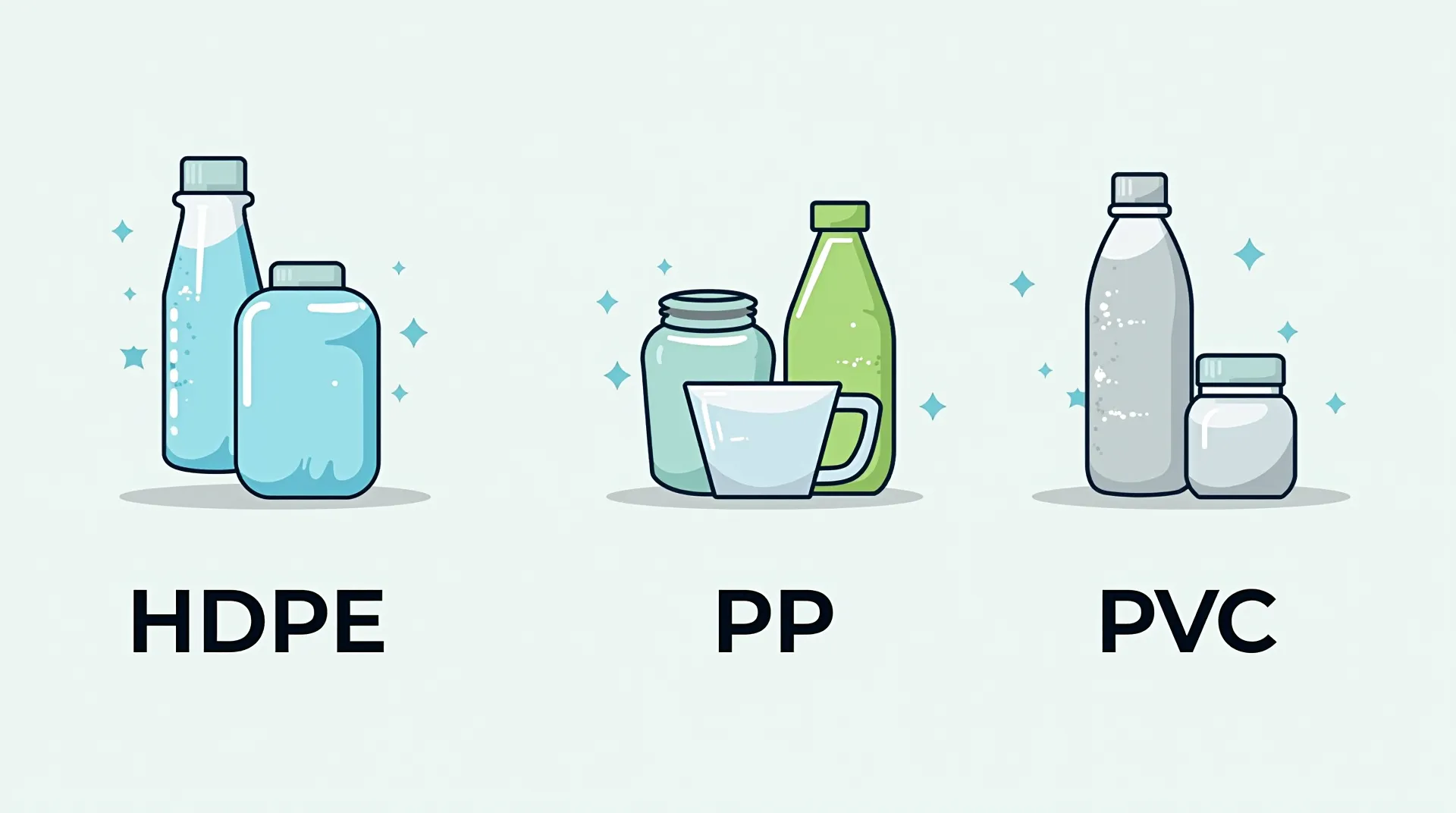
Tipi comuni di plastica rigida per il riciclaggio (HDPE, PP, PVC, PET e altro)
Questa pagina è scritta per i riciclatori e gli acquirenti che vogliono identificare le plastiche rigide, capire classificazione dei rischi,e scegli il flusso di lavoro di riciclaggio corretto—dalla riduzione delle dimensioni al lavaggio e alla pellettizzazione.
Come identificare le plastiche rigide (controlli rapidi per il riciclaggio)
L'identificazione corretta è il fondamento di una qualità di output stabile. Nei flussi rigidi misti, PVC disaggregato è una delle cause più comuni della scarsa qualità dei pellet e dei problemi di lavorazione.
1) Codice resina e prodotto tipico
Cercare gli ID della resina sulla confezione o sui marchi stampati.
- HDPE (#2): bottiglie di detersivo, fusti, casse
- PP (#5): imballaggi rigidi, tappi, componenti per autoveicoli
- PVC (#3): tubi, profili, canaline portacavi
- PET (#1): bottiglie, vassoi (spesso con esigenze di lavaggio più elevate)
2) Suggerimento galleggiamento/affondamento (test dell'acqua)
Un riferimento rapido utilizzato in molte linee di riciclaggio (i risultati possono variare in base ai riempitivi/additivi).
- Di solito galleggia: HDPE, PP
- Spesso affonda: PET, PVC, PC, ABS (varia a seconda della formulazione)
3) Punti di contaminazione comuni
- Etichette e colla: aumenta la difficoltà di lavaggio
- Inserti metallici: necessita di separazione magnetica/metallica
- Olio/grasso: richiede un lavaggio/asciugatura più intensi
- Polimeri misti: riduce la qualità del pellet
4) L'obiettivo di output è importante
- Fiocchi: CAPEX inferiore, comune per il riutilizzo interno
- Pellet: valore più elevato, richiede un'alimentazione stabile e una filtrazione della fusione
Se hai intenzione di vendere pellet, prendi in considerazione un apposito Linea di pellettizzazione della plastica in base al materiale e al livello di pulizia.
Le plastiche rigide più comuni: proprietà, usi e note sul riciclaggio
Di seguito sono elencate le plastiche rigide più comuni presenti nei flussi industriali e post-consumo, con note pratiche sul riciclaggio per aiutarti a pianificare la selezione e le attrezzature.
1) HDPE (polietilene ad alta densità)
Fonti comuni: bottiglie, fusti, casse, tubi (alcune applicazioni)
- Elevato rapporto resistenza/densità
- Eccellente resistenza chimica e all'umidità
- Durevole e resistente agli urti
- Spesso abbinato al PP nei flussi rigidi, ma le migliori prestazioni si ottengono con una selezione pulita
- Processo tipico: riduzione delle dimensioni → lavaggio/asciugatura → fiocchi o pellet
- Percorso consigliato per l'attrezzatura: Trituratore di plastica → Granulatore di plastica → Stendibiancheria in plastica
2) PP (polipropilene)
Fonti comuni: imballaggi rigidi, tappi, componenti per autoveicoli, articoli per la casa
- Alto punto di fusione (buona resistenza al calore)
- Ottima resistenza alla fatica (cerniere/tappi)
- Leggero e resistente agli agenti chimici
- Ottimo candidato per la produzione di pellet se opportunamente selezionato e pulito
- Fare attenzione alla colla per etichette e ai polimeri misti negli imballaggi rigidi
- Flusso di lavoro: Granulatore + Linea di lavaggio → facoltativo Linea di Pellettizzazione
3) PVC (cloruro di polivinile)
Fonti comuni: tubi, profili, telai per finestre, canaline portacavi
- Rigido o flessibile a seconda degli additivi
- Eccellente resistenza chimica e durevolezza
- Buon isolamento elettrico
- Critico: La contaminazione del PVC nei flussi di PP/PE può danneggiare la qualità e causare problemi di lavorazione
- Richiede un ordinamento rigoroso e un approccio di elaborazione dedicato
- Per gli scarti di PVC rigido, iniziare con una riduzione dimensionale controllata: Trituratore / Granulatore
4) PET (polietilene tereftalato)
Fonti comuni: bottiglie, vassoi, imballaggi a conchiglia
- Elevata resistenza alla trazione, robusto e leggero
- Buona barriera contro gas/umidità
- Ampiamente riciclabile
- La qualità del lavaggio è spesso il fattore determinante nel valore di produzione
- Potrebbero essere necessari passaggi di rimozione dell'etichetta e lavaggio a caldo (a seconda della materia prima)
- Iniziare con la riduzione delle dimensioni e la pianificazione del lavaggio prima della pellettizzazione
5) PS (Polistirolo)
Fonti comuni: imballaggi, custodie, prodotti monouso (varia a seconda della regione)
- Rigido e spesso trasparente
- Facile da modellare e modellare
- Buon isolamento termico
- Può essere fragile; la scelta della lama e dello schermo è importante
- Mantenere una selezione pulita per proteggere la qualità dell'output
- Approccio tipico: Granulatore → pulizia secondo necessità
6) ABS (acrilonitrile-butadiene-stirene)
Fonti comuni: alloggiamenti elettronici, componenti per autoveicoli, beni di consumo durevoli
- Elevata resistenza agli urti
- Buona stabilità dimensionale
- Facile da lavorare e da elaborare
- Spesso contiene inserti metallici: pianificare la separazione
- Risultati migliori dei pellet derivano da materie prime coerenti (evitare plastiche miste)
- Riduzione delle dimensioni: Trituratore → Granulatore
7) PC (policarbonato)
Fonti comuni: schermi di sicurezza, componenti elettronici, componenti automobilistici, articoli di qualità ottica
- Eccezionale resistenza agli urti
- Elevata trasparenza (molti gradi)
- Resistente al calore
- La qualità varia in base al grado; mantenere i flussi coerenti
- Prestare attenzione ai rivestimenti e ai materiali misti (influiscono sulle esigenze di filtrazione della massa fusa)
- Quando si prendono di mira i pellet, abbinare attentamente le impostazioni di filtrazione e di processo
Flussi di lavoro e attrezzature di riciclaggio consigliati (plastica rigida)
Di seguito sono riportati i flussi di lavoro più comuni utilizzati in progetti reali. La configurazione esatta dipende dal livello di contaminazione, dalle dimensioni delle scaglie desiderate e dalla tipologia di produzione: scaglie o pellet.
Flusso di lavoro A: PP/HDPE rigido → Scaglie pulite
Ideale per: riutilizzo interno, produzione stabile di scaglie, investimento moderato
- Trituratore di plastica (facoltativo per articoli ingombranti)
- Granulatore di plastica (dimensione uniforme dei fiocchi)
- Stendibiancheria in plastica (rimuovere etichette, sporco, residui)
- Essiccazione e stoccaggio (riduzione dell'umidità, stabilizzazione della produzione)
Flusso di lavoro B: PP/HDPE rigido → Pellet
Ideale per: vendita di pellet, produzione di valore più elevato, controllo di processo più rigoroso
- Pre-selezione e rimozione dei metalli
- Riduzione delle dimensioni (trituratore/granulatore)
- Lavaggio e asciugatura (pulizia e umidità stabili)
- Linea di pellettizzazione della plastica (estrusione + filtrazione + taglio pellet)
Flusso di lavoro C: flusso rigido misto (rischio più elevato)
Ideale per: operatori con elevata capacità di selezione e materie prime costanti
- Eliminare in anticipo il PVC e altre plastiche incompatibili
- Utilizzare una riduzione stabile delle dimensioni per evitare colli di bottiglia a valle
- Pianificare l'intensità del lavaggio in base alla contaminazione di etichette/colla e olio
Approccio chiavi in mano: un fornitore, un sistema
Ideale per: messa in servizio più rapida, minori rischi di integrazione, funzionamento stabile a lungo termine
Se desideri un piano completo che includa la configurazione delle apparecchiature, il layout e il supporto alla messa in servizio, prendi in considerazione un Soluzione completa per il riciclaggio.
Confronto incentrato sul riciclaggio delle comuni plastiche rigide
Questa tabella si concentra su ciò che più interessa ai riciclatori: suggerimenti per l'identificazione, difficoltà di smistamento, esigenze di lavaggio e una direzione di lavorazione consigliata.
| Plastica | Codice Resina | Fonti tipiche | Suggerimento galleggiamento/affondamento | Difficoltà di ordinamento | Bisogno di lavaggio | Direzione consigliata |
|---|---|---|---|---|---|---|
| HDPE | #2 | Bottiglie, fusti, casse | Spesso galleggia | Basso-Medio | medio | Fiocchi → pellet facoltativi (dopo lavaggio/asciugatura) |
| PP | #5 | Tappi, imballaggi rigidi, ricambi auto | Spesso galleggia | medio | medio | Fiocchi o pellet (una selezione pulita migliora la qualità del pellet) |
| PVC | #3 | Tubi, profili, condotte | Spesso affonda | Alto | Basso-Medio | Flusso dedicato; evitare la miscelazione con PP/PE |
| ANIMALE DOMESTICO | #1 | Bottiglie, vassoi | Spesso affonda | medio | Alto | Lavaggio intensivo; il valore di rendimento dipende dalla pulizia |
| PS | #6 | Imballaggi, custodie | Spesso affonda | medio | medio | Granulazione controllata; mantenere i flussi coerenti |
| addominali | — | Elettronica e alloggiamenti per auto | Spesso affonda | medio | Basso-Medio | Pianificare la rimozione del metallo; scaglie → pellet se la materia prima è consistente |
| PC | #7 (spesso "Altro") | Schermi di sicurezza, elettronica | Spesso affonda | medio | Basso-Medio | Mantenere i gradi costanti; i pellet richiedono una filtrazione stabile |
FAQ
Quali plastiche rigide sono più facili da riciclare?
In molte operazioni, HDPE e PP sono tra le plastiche rigide più facili da riciclare se opportunamente selezionate e pulite. La stabilità del flusso in uscita migliora significativamente quando i flussi vengono mantenuti costanti.
Perché la contaminazione da PVC è un problema così grande?
La miscelazione di PVC con flussi di PP/PE è una causa comune di problemi di qualità e instabilità di processo. Se la vostra materia prima potrebbe contenere PVC, date priorità alla pre-selezione e valutate la possibilità di una lavorazione dedicata.
Ho bisogno di uno stendino per la plastica rigida?
Se le plastiche rigide sono post-consumo o contaminate (etichette, colla, olio, sporco), in genere è necessario stenderle su una corda per ottenere scaglie pulite o pellet stabili. Per gli scarti di fabbrica puliti, il lavaggio può essere minimo.
Di quali attrezzature ho bisogno per il riciclaggio della plastica rigida?
La maggior parte dei flussi di lavoro per la plastica rigida prevede prima la riduzione dimensionale (trituratore e/o granulatore), seguita dal lavaggio/asciugatura secondo necessità. Per la produzione di pellet, è necessario aggiungere una linea di pellettizzazione. Vedi: Soluzione completa per il riciclaggio.
Dovrei produrre fiocchi o pellet?
I fiocchi in genere richiedono un investimento inferiore e sono spesso utilizzati per il riutilizzo interno. I pellet possono avere un valore maggiore, ma richiedono una pulizia costante, un controllo dell'umidità e una filtrazione del materiale fuso. Se l'obiettivo è vendere pellet, si consideri un'azienda dedicata. Linea di pellettizzazione della plastica.
Hai bisogno di una configurazione consigliata per le tue plastiche rigide?
Inviateci le foto dei materiali, il livello di contaminazione (etichette/olio/metallo), la capacità desiderata (kg/h) e la produzione desiderata (scaglie o pellet). Possiamo preparare una configurazione completa e un preventivo in base al vostro progetto.
