


正しい選択 産業加工用プラスチックミキサー 溶融体の安定性、色の均一性、添加剤の分散、エネルギー使用量、および下流設備の寿命に影響します。不良な混合は、特にリサイクルされたフラーク、粉末、色専用バッチ、または軟質化合物が関与する場合、ストリーム、機械的強度の低下、不安定な溶融体流動、および不必要な廃材の発生を引き起こすことがあります。
このガイドでは、最も一般的な6種類の産業用プラスチックミキサーを比較します。 垂直シロミキサー、水平リボンミキサー、高速ミキサー、非破壊均化ミキサー、ドラム式ミキサー、および小型マスターバッチミキサー. Use it as a practical selection guide for recycling, compounding, extrusion, injection molding, and color-matching operations.
簡単な答え: 垂直シロ混合機はペレットや再利用フラークの大規模なバッチに最適です;リボン混合機は粉末、添加剤、および粒状ブレンドに最適です;高速混合機はPVCや粉末が多いレシピに最適です;均質化混合機は軟らかい素材や剪断感受性のある素材を保護します;ドラム混合機はラボテストに適しており;小型マスターバッチ混合機は迅速な色変更に役立ちます。
プラスチックミキサータイプを簡単にまとめてみる
| ミキサータイプ | 最適な用途 | 標準処理能力 | 主な利点 | 主な制限 |
|---|---|---|---|---|
| 垂直シロミキサー | リサイクルフラーク、ペレット、大容量の粒の混合 | 500L–20,000L | 高い処理能力と低い労働コスト | 理想的な材料ではない粉末や粘着性のある軟質材料向け |
| 水平リボン混合機 | 粉末、添加剤、粒、色母粒 | 500L–5,000L | 優れた分散性と中程度の剪断力 | 適切なシールおよび刃のメンテナンスが必要です |
| ハイスピードミキサー | PVC樹脂、安定剤、粉末含有率の高いレシピ | 50L–1,000L | 高速混合と摩擦加熱 | より高いエネルギー使用とより厳格な安全制御 |
| 均質混合機 | TPE、TPU、EVA、透明ブレンド、低剪断混合 | 300L–5,000L | 優しい混合により、材料の損傷を少なくします | 高速混合より遅い |
| ドラム式混合機 | サンプル、短納期カラートライアル、簡単な粒状プラスチックブレンド | 50L–300L | シンプルな構造で、清掃が容易です | 生産負荷時の低効率 |
| 小型マスターバッチミキサー | 迅速な色替え、低容量マスターバッチテスト | 150L–300L | コンパクトで経済的、迅速な設置 | 大規模な生産ロット向けではありません |
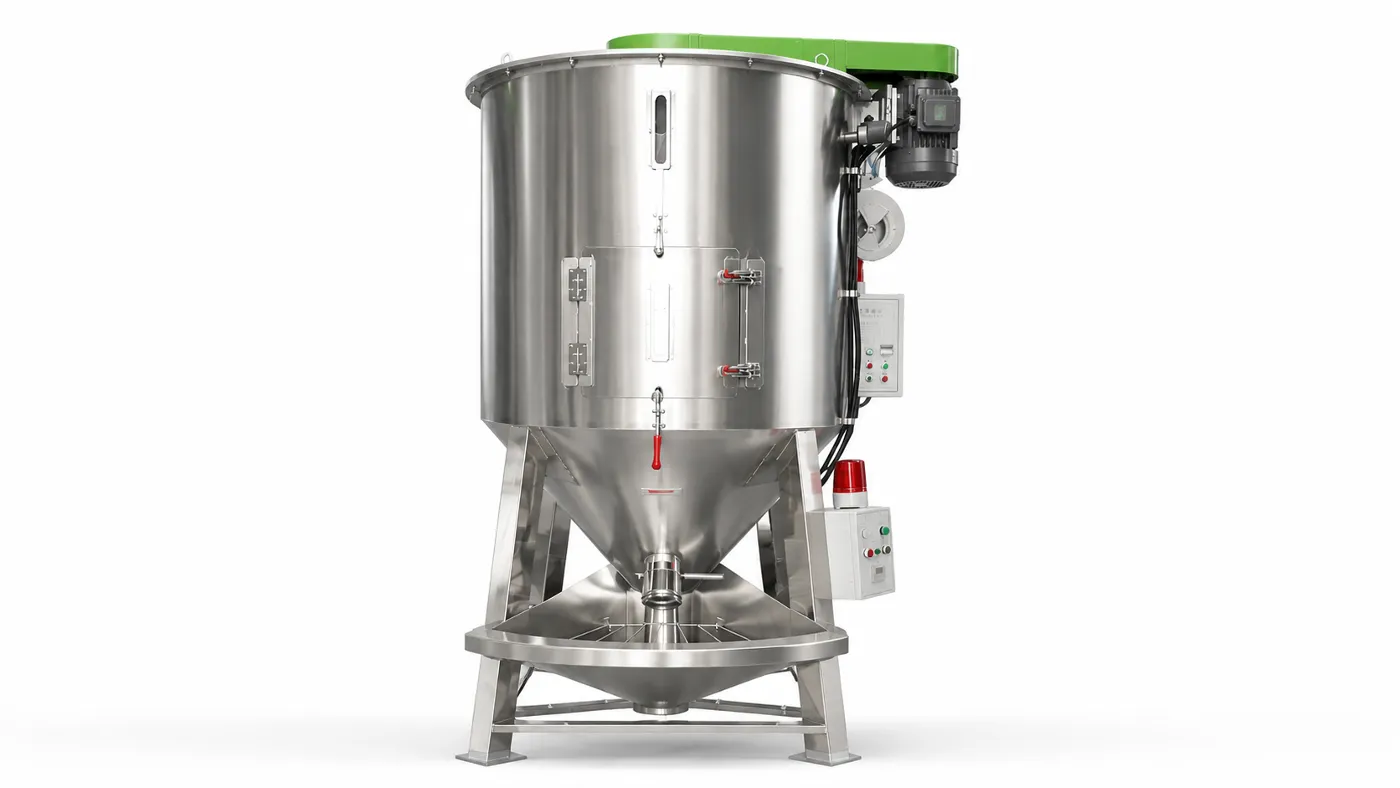
1. ペレットおよび再利用フラーク用垂直シロ混和機
垂直シロ混合機 スクリューまたはスパイラル循環パスを使用して、材料を上に持ち上げ、シロを通って再度落下させる。この繰り返し循環は、プラスチックペレット、再研磨材、洗浄されたリサイクルフラークスのための実用的な体積ブレンドを作成する。
生産規模の垂直混合・乾燥については、Rumtoo社の製品をご覧ください。 垂直混合機,プラスチックの粒状体、フラーク、カラーマスターバッチ、再利用材料を押出しまたは成形する前に混合するのに適しています。
- 使用用途: PE/PPのペレット、PETのフラーク、洗浄再利用材、大型の貯蔵・混合システム。
- 避けるべき場合: レシピには重い粉末、粘着性のTPE、高い塵埃含有量、または容易に架橋する材料が含まれます。
- 選択のヒント: シロの容量を実際のバッチサイズに合わせ、而不是日間出力に合わせる;過剰に詰めると循環効率が低下する。
2. 水平リボン混合機(粉体、添加剤、マスターバッチ用)
水平リボン混合機 内側および外側のスパイラル刃で、材料を逆方向に移動させる。これらはプラスチック処理のための最も多用途な選択肢の一つであり、粒、粉末、充填剤、安定剤、着色剂、色母粒を過剰な熱発生なしでブレンドできるためである。
粉と粒のレシピを処理するプラントの場合、リボン混合機は垂直シロ混合機よりも一般的に安全です。なぜなら、粉は自由な重力流に依存しないためです。また、機械が大型の上部または側面アクセスドアを持っている場合、色の変更時の清掃がより簡単になります。
3. 高速混合機(PVCおよび粉末含有率の高い配合剤用)
ハイスピードミキサー 強い渦巻き流れ、摩擦、およびせん断を発生させます。PVC乾燥ブレンド、安定剤パッケージ、カルシウム炭酸塩充填レシピ、および他の押出しまたは粒成形前に迅速な分散が必要な粉末豊富な化合物に一般的に使用されます。
- 毎回のサイクル中にモーターの負荷と温度を確認してください。
- 熱感性配合剤を処理する際には、冷却またはジャケット設計を使用してください。
- ロータが完全に停止する前に蓋を開けることは決してできません。高速混合機には厳格なインターロックとPPE手順が必要です。
4. 非破壊均質混合機(軟質や敏感プラスチック用)
非破壊均質混合機 設計は柔らかいローリングと循環に適しており、空洞を減少させ、剪切損傷を最小限に抑えるため、柔らかいTPE、TPU、EVA、透明材料、強度を失う際に強く混合されるときに有用です。.
柔らかい材料がサイロ内で混ざっているように見えるが、その後押出しで泡やストライプが現れる場合、問題はエクストルーダー自体ではなく、低剪切均一化が悪い可能性があります。.
5. 実験室試験および小ロット用のドラム型ミキサー
ドラム型ミキサーは回転するバレルの中で材料をゆっくりと転がします。それはシンプルで低コストであり、簡単に清掃できますが、混合エネルギーは限られています。これらは研究室の試験、色のサンプリング、短いロットのテストに使用しますが、均一性が厳しく制御される必要がある高容量の産業生産には適していません。.
6. クイックカラー変更用の小型マスターbatchミキサー
小型マスターbatchミキサーはコンパクトなユニットで、色素やマスターbatchのブレンディングに使用されます。注射成形機、小規模なエクストルージョンライン、試作生産エリアでのオペレーターの迅速なレシピ変更と最小限のダウンタイムが必要な場所で有用です。.
プラスチックミキサーを材料に合わせる方法
| 材質またはレシピ | おすすめのミキサー | どうしてそれは機能するのか | 回避する |
|---|---|---|---|
| 粉末 + 錠剤 | 水平リボン混合機 | 過剰な熱を生じさせない強力な粉体分散 | 垂直シロミキサー |
| PVC乾燥ブレンド | ハイスピードミキサー | 急速安定剤および充填剤分散機 | 非冷却型高速運転 |
| Soft TPE / TPU / EVA | 均質混合機またはリボン混合機 | 低剪切循環で材料構造を保護 | 積極的な高速混合 |
| カラーマスターバッチ | リボン混合機または小型マスターバッチ混合機 | 均一な色素分布と簡単な清掃 | 基本的なドラム混合(生産バッチ向け) |
| リサイクルフラークス | 垂直シロミキサー | フラックやリグリンド用の大容量循環 | 粉体が多いまたは粘着性のある原料 |
| 難燃性化合物 | リボン混合機または高速混合機 | 均一な添加物分布と制御されたサイクルタイム | 過度混合による熱点の発生 |
清掃・メンテナンスチェックリスト
ミキサーの清掃は色の変更、アブレーシブフィラーの処理、添加物が豊富なレシピの実行時に最も重要です。残留するブラックマスターbatch、難燃剤、またはフィラーの粉塵が次のバッチに汚染し、目に見える欠陥を作り出す可能性があります。.
- 起動前: 残留材料を検査し、アクセスドアを確認し、排出バルブが閉じていることを確認してください。.
- 作動中: 振動、モーターロード、ベアリングの温度、異常なノイズを監視してください。.
- 色替え時 乾燥した吸引、拭き取り、または空気吹きを使用し、機械が特に湿式清掃に設計されていない場合は水を避けてください。.
- 週間: リブリブレットブレード、シャフトシール、サイロのスクリュー、安全ロック、センサー、重量計測システムを検査してください。.
- 高速混合機向け: 清掃前に完全に冷却させ、かつキャップのインタロックを迂回することは決して行わないでください。.
購入ガイド:注文する前に確認すべきこと
- 材質形式: ペレット、フラック、粉体、柔らかい化合物、または混合密度の原料.
- バッチサイズ: 実際のバッチ重量に基づいて作業容積を選択する;多くのミキサーは定格容量の70~80%を超えないようにすべきである。
- 混合の目的: 貯蔵均一化、添加剤分散、予熱、色合い調整、または混練準備。
- 清掃頻度: 頻繁な色替えには、より良いアクセスと簡単な内部構造が必要です。
- 下流工程: 押出し、粒成形体製造、射出成形、洗浄ラインの排出またはリサイクルラインの貯蔵。
- 統合要件: スクリュー輸送機、真空ローダー、サイロ、乾燥機、金属分離機、計量システム、または自動給与装置。
完全なリサイクルラインの場合、ミキサーはコンビニューター、乾燥機、分別機、および貯蔵サイロなどの補助システムと協力して作動することが多いです。Rumtooの リサイクルマシン辅助システム ミキシング機器が全体的な生産プロセスにどのように組み込まれるかを計画する。
よくある質問
最も多様な用途を持つ工業用プラスティックミキサーは何ですか?
水平リボンミキサーは、粉体、ペレット、添加剤、マスターバッチを信頼性のある分散と適度な剪切で処理できるため、最も多様なオプションです。.
Which mixer is best for recycled plastic flakes?
垂直サイロミキサーは、特にエキストルーダーやペレット化前に貯蔵の均一化を目的とする場合、クリーンなリサイクルフラックやペレットの大量処理に最適です。.
垂直サイロミキサーは粉体添加物を混ぜることができますか?
粉末は推奨されません。粉末はペレットやフラックのように流れませんので、橋ができたり、沈みたり、無駄な場所に蓄積することがあります。水平リボンミキサーは、粉末と粒のレシピには通常適しています。.
ミキサーの容量はどう選びますか?
実際のバッチボリュームを計算し、機械内に作業スペースを残してください。多くのプラスチックミキサーでは、タンクを完全に満たすよりも、定格容量の約70~80%で運転することでより良い混合が得られます。.
How often should industrial plastic mixers be cleaned?
色または添加物の変更の間に清掃を行い、日々の点検を行い、週に一度または運転時間に応じて深い清掃をスケジュールしてください。高速ミキサーやリボンシャフトシールは特に慎重な点検が必要です。.
結論:材料の周りにミキサーを選択するのではなく、容量のみで選択しないこと
最適のプラスチックミキサーは、材料の形状、配合の感受性、清掃頻度、下流工程に合わせたものです。大型のリサイクルフラークの場合は垂直シロミキサーを選び、粉体や添加剤の場合はリボンミキサーを選び、PVCや粉体含有量の高い配合の場合は高速ミキシングを検討し、軟質または剪断感受性のあるプラスチックの場合は優しい均一化設計を使用してください。正しいミキサー選択は、製品の均一性を向上させ、廃棄物を削減し、プラスチック処理ライン全体の制御を容易にします。
