


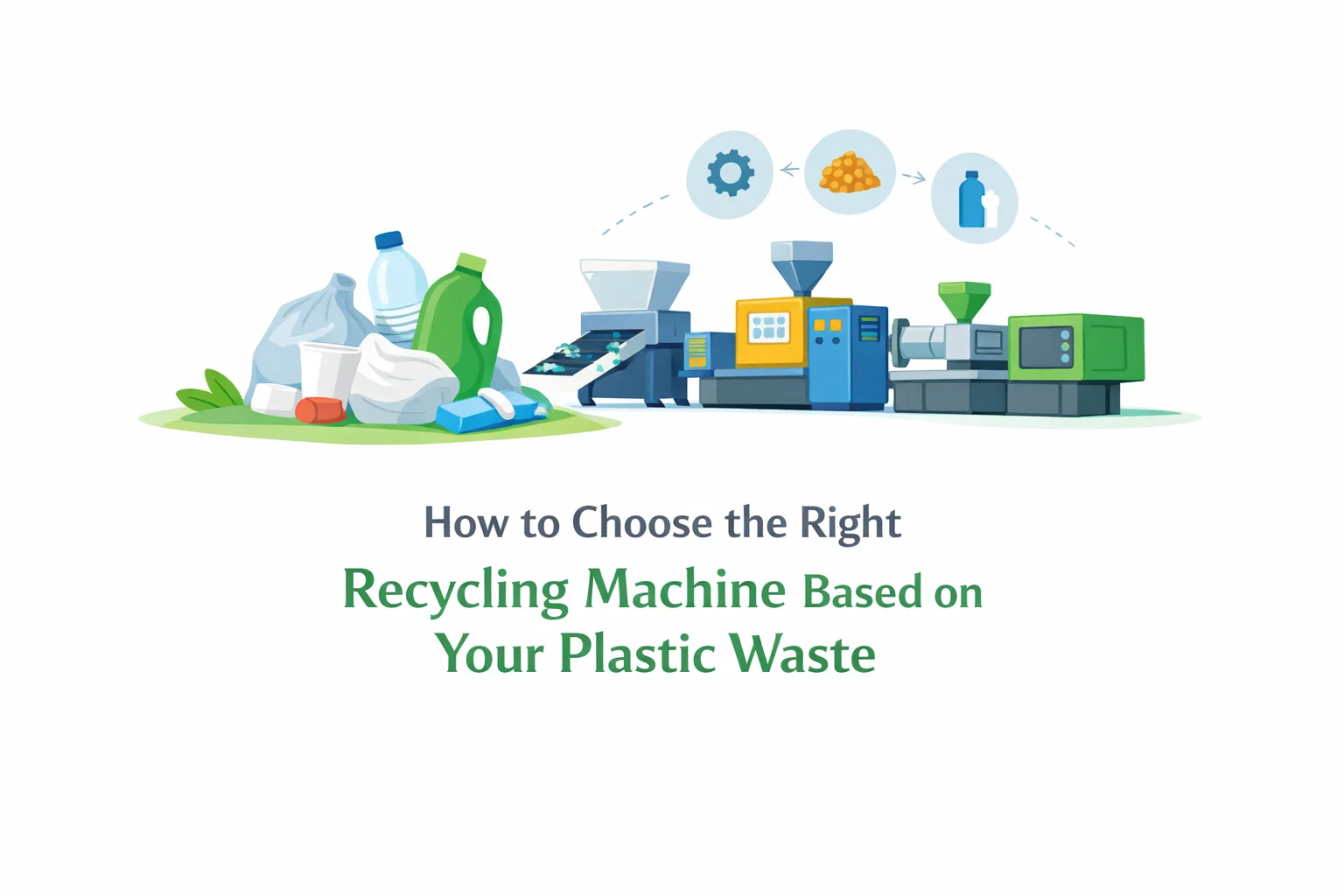
Wybór maszyny do recyklingu zaczyna się od faktów dotyczących materiałów, a nie od nagłówków katalogowych. Jeśli typ maszyny i profil odpadów nie pasują do siebie, skutkuje to niestabilnym podawaniem, dłuższymi przestojami i niższą jakością granulatu. Ten poradnik przedstawia jasną ścieżkę wyboru dla folii, sztywnych, poprzemysłowych i pokonsumenckich odpadów plastikowych.
Jeśli chcesz najpierw szybko przejrzeć kategorie systemu, zobacz nasze maszyny do recyklingu tworzyw sztucznych strona.
1) Zacznij od identyfikacji polimeru
Wymień swoje polimery przed omówieniem modeli maszyn: PE (HDPE/LDPE/LLDPE), PP, PET, PS, ABS, PA, PC i strumienie mieszane. Zachowanie polimeru podczas ogrzewania i filtracji decyduje o konfiguracji ślimaka, zapotrzebowaniu na odpowietrzanie i metodzie granulowania.
- Pojedynczy, czysty strumień polimeru: prostszy układ procesu i mniejsze obciążenie filtracji.
- Polimery mieszane: może wymagać sortowania przed wytłaczaniem w celu ochrony końcowej jakości.
- Materiały wrażliwe na ciepło: wymagają dokładniejszej kontroli temperatury i stałego karmienia.
2) Najpierw zdefiniuj produkt końcowy
Twój docelowy wynik zmienia trasę maszyny:
- Tylko rozdrobniony materiał: linia do redukcji rozmiaru może być wystarczająca.
- Czyste płatki: mycie, oddzielanie i suszenie stają się krytyczne.
- Pellety: Wymagane są procesy wytłaczania, filtracji, odgazowywania i peletyzacji.
Gdy specyfikacje wyjściowe są jasne już na początku, oferty dostawców stają się porównywalne.
3) Dopasuj formę podawania do systemu karmienia
Forma paszy decyduje o stabilności i przepustowości pobieranej paszy.
- Folia, torby, rafia: podawanie za pomocą urządzenia tnąco-zagęszczającego jest zazwyczaj bezpieczniejszym wyborem.
- Sztywny przemiał lub płatki: Bezpośredni podajnik z kontrolowanym dawkowaniem często sprawdza się dobrze.
- Guzki, wydzieliny, zgrubienia: Przed wytłaczaniem zwykle konieczne jest wstępne rozdrobnienie.
Nie dobieraj maszyny wyłącznie na podstawie mocy silnika. Sposób podawania jest często prawdziwym wąskim gardłem.
4) Sprawdź stan odpadów: czyste czy zanieczyszczone
Pochodzenie materiału ma znaczenie: złom poprodukcyjny jest zazwyczaj czystszy niż odpady pokonsumenckie. Stopień zanieczyszczenia decyduje o konieczności pełnego mycia i separacji przed procesem topienia.
- Czysty, suchy złom: można przejść na peletyzację z lżejszą obróbką wstępną.
- Odpady brudne lub mieszane: może wymagać wstępnego prania, prania w wysokiej temperaturze, rozdzielenia gęstości i suszenia.
- Metal, papier, etykiety, piasek: zwiększa zużycie i ciśnienie filtracji, jeśli nie zostanie usunięte wcześnie.
5) Oceń drukowanie, kleje i substancje lotne
Mocno zadrukowane folie i materiały laminowane mogą uwalniać więcej gazu podczas topienia. Ma to wpływ na odpowietrzanie i stabilność filtra.
- Niskie obciążenie wydruku: w wielu przypadkach wystarczające może okazać się jednorazowe odgazowanie.
- Duże obciążenie drukiem lub klejem: często preferowane jest podwójne odgazowywanie i silniejsza filtracja.
Poproś dostawców o wykonanie testów próbek i udostępnienie danych dotyczących ciśnienia stopu i sposobu odpowietrzania podczas testu.
6) Zdecyduj, czy sortowanie jest wymagane
Jeśli wsad zawiera mieszane kolory lub polimery, dodaj etap sortowania przed końcowym wytłaczaniem. Aby uzyskać wysokiej jakości produkt, sortowanie może zmniejszyć liczbę partii niezgodnych ze specyfikacją i reklamacji klientów.
- Separacja polimerów (np. PET vs PP/PE)
- Sortowanie kolorami w przypadku, gdy klasa produktu wymaga ściślejszej kontroli wizualnej
- Usuwanie trudnych zanieczyszczeń przed peletyzacją
7) Ustaw wydajność na podstawie rzeczywistych godzin pracy
Planowanie wydajności powinno opierać się na rzeczywistym harmonogramie elektrowni, a nie na teoretycznej wydajności szczytowej. Zdefiniuj:
- docelowy kg/h
- godzin na zmianę i zmian dziennie
- planowane przerwy konserwacyjne
- przyszłe okno ekspansji (zwykle 12-24 miesiące)
Niewielki margines bezpieczeństwa jest praktyczny. Zbytnie przewymiarowanie może negatywnie wpłynąć na wydajność przy częściowym obciążeniu.
8) Poproś o porównywalne oferty
Użyj jednego szablonu zapytania ofertowego dla wszystkich dostawców, aby uniknąć rozbieżności w zakresie.
- lista polimerów i procent
- zdjęcia/filmy odpadów
- zanieczyszczenie i stan wilgoci
- wymagane limity wydajności i jakości
- docelowa przepustowość (kg/h)
- ograniczenia dotyczące mediów (prąd, woda, przestrzeń)
- zakres komercyjny (tylko maszyna lub linia produkcyjna)
- szczegóły dotyczące uruchomienia, szkolenia, części zamiennych i gwarancji
Typowe błędy wyboru
- Dokonując wyboru należy kierować się wyłącznie ceną zakupu.
- Pominięcie próbnych testów z prawdziwym surowcem.
- Porównywanie ofert o różnych zakresach.
- Ignorowanie potrzeby mycia i suszenia zanieczyszczonych produktów.
- Niedoszacowanie kosztów filtracji, odpowietrzania i zużycia łopatek.
Często zadawane pytania
Która maszyna jest lepsza do odpadów foliowych?
W przypadku miękkich folii i worków powszechnie wybierane są linie z podajnikiem tnąco-zagęszczającym, ponieważ stabilizują one wlot przed wytłaczaniem.
Czy zawsze potrzebuję sznurka do suszenia prania?
Nie. Czysty, suchy, poprodukcyjny złom może nie zostać poddany pełnemu myciu. Brudny materiał pokonsumencki zazwyczaj wymaga mycia i suszenia dla zapewnienia stabilnej jakości wyjściowej.
Jak wybierać między jedną a wieloma liniami?
Jeśli materiały są bardzo zróżnicowane, oddzielne linie często skracają czas przezbrojenia i ryzyko zanieczyszczenia. Jedna linia może działać, jeśli podawanie jest spójne, a cele jakościowe są umiarkowane.
Jak ważne jest odgazowywanie wydrukowanych filmów?
To ważne. Więcej tuszu i kleju zazwyczaj oznacza wyższy ładunek substancji lotnych podczas topienia, co może wymagać silniejszego odpowietrzania i filtrowania.
Co należy wysłać w pierwszej kolejności do dostawcy maszyny?
Prześlij zdjęcia/filmy z surowca, mieszankę polimerów, poziom zanieczyszczeń i docelową wydajność (kg/h). Przyspiesza to dopasowanie techniczne i zmniejsza liczbę błędnych ofert.
Podsumowanie
Właściwa maszyna do recyklingu to taka, która odpowiada rzeczywistemu strumieniowi odpadów, docelowej wydajności i harmonogramowi operacyjnemu. Przejrzysty audyt materiałowy, próbny test i zapytanie ofertowe (RFQ) dostosowane do zakresu projektu zmniejszą ryzyko i poprawią stabilność produkcji od pierwszego dnia.
