


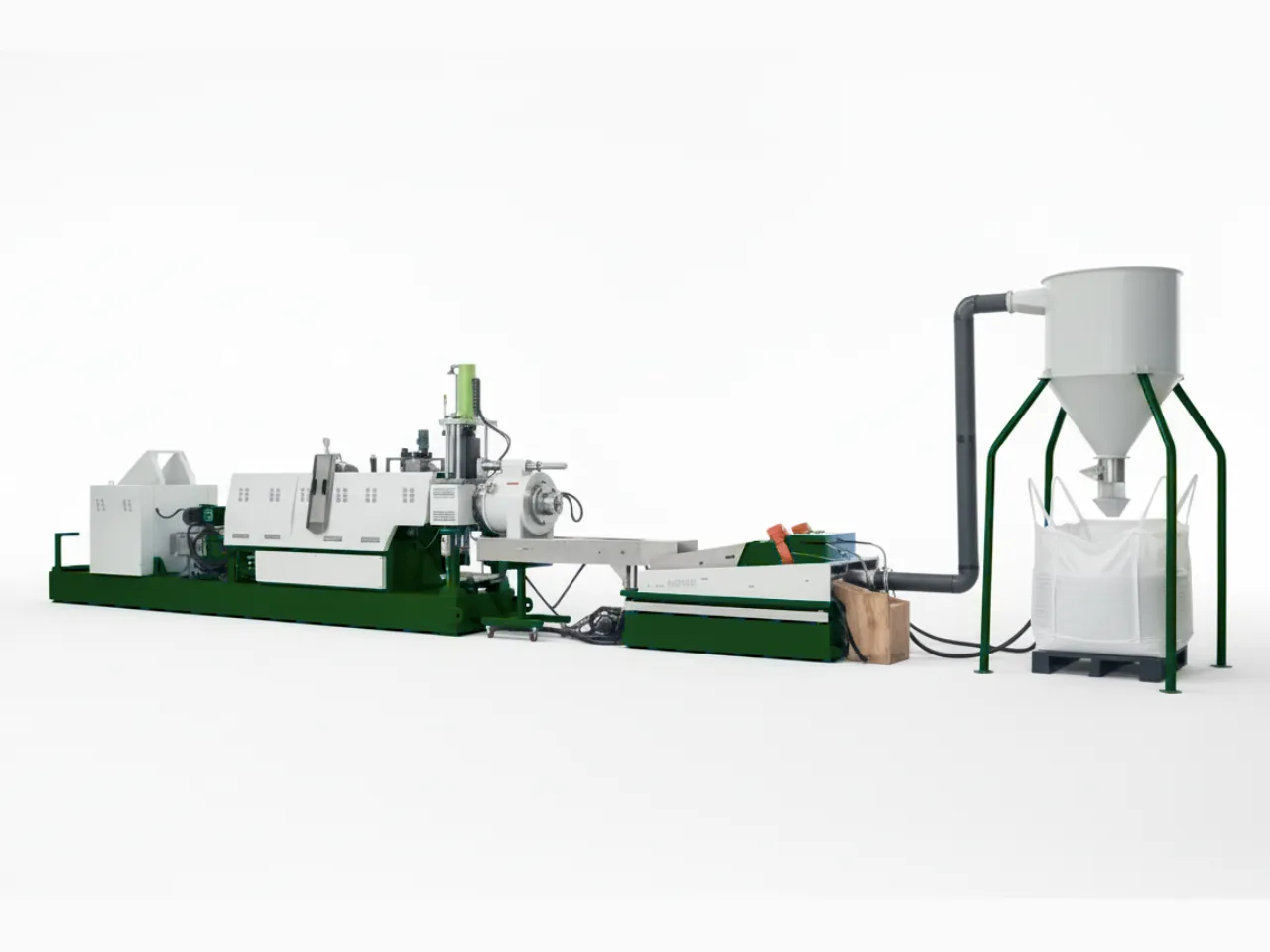
Standard Plastic Strand Pelletizing Line
Turn washed and dried PP and PE film scrap into reusable pellets with a strand pelletizing line designed for stable output, practical control, and downstream reuse.
- Suitable for HDPE, LDPE, LLDPE, PP and related soft plastic scrap streams.
- Designed for integration with shredding, washing, drying, and screening equipment.
- Available in practical capacities from approximately 200 kg/h to 1000 kg/h.
High-Yield Film Recycling
From feedstock preparation to final pellet output, this pelletizing line is arranged for stable throughput and practical day-to-day operation.
High Throughput Control
Configuration options support scalable production while keeping melt quality more stable.
Smart Process Automation
PID temperature control and process monitoring help maintain more consistent operating conditions.
Integrated Recycling Line
Pairs well with shredding, washing, drying, and pelletizing accessories as a full system.
Built-in Safety & Support
Practical protections and service support help reduce downtime and simplify startup.
Engineered for Stable Production
Multiple Screw Designs
Allows continuous and stable production across different plastic types.
Advanced Cooling System
Integrates wind blowing, water cooling, and dewatering for more consistent pellet quality.
Flexible Storage
Stainless steel containers can be adjusted for different production batch sizes.
Scalable Output
Capacity ranges from 200 to 1000 kg/h, suitable for both smaller lines and larger plants.
Streamlined Pelletizing Workflow
The line turns waste film into reusable pellets through a sequence of preparation, extrusion, cutting, and final conditioning steps.
1. Shredding / Crushing
Waste plastic is reduced into smaller pieces for more stable washing and feeding.
2. Washing & Drying
Contaminants and moisture are removed before extrusion to protect pellet quality.
3. Extrusion
The material is melted and homogenized before entering the pelletizing stage.
4. Pelletizing
The melt is cut into uniform pellets for reuse, storage, or sale.
5. Cooling & Final Drying
Pellets are cooled and surface moisture is reduced after cutting.
6. Screening & Packing
Final pellets are screened and prepared for packaging or direct reprocessing.
Solving Common Recycling Challenges
Unstable Input Quality
Mixed post-consumer films can disrupt melt stability. Controlled feeding and filtration help reduce that risk.
Moisture & Contamination
Residual water and dirt reduce pellet quality. Proper washing, drying, and degassing help correct this.
High Energy Consumption
Integrated line design and process control help reduce unnecessary energy loss and operator intervention.
Equipment Overview
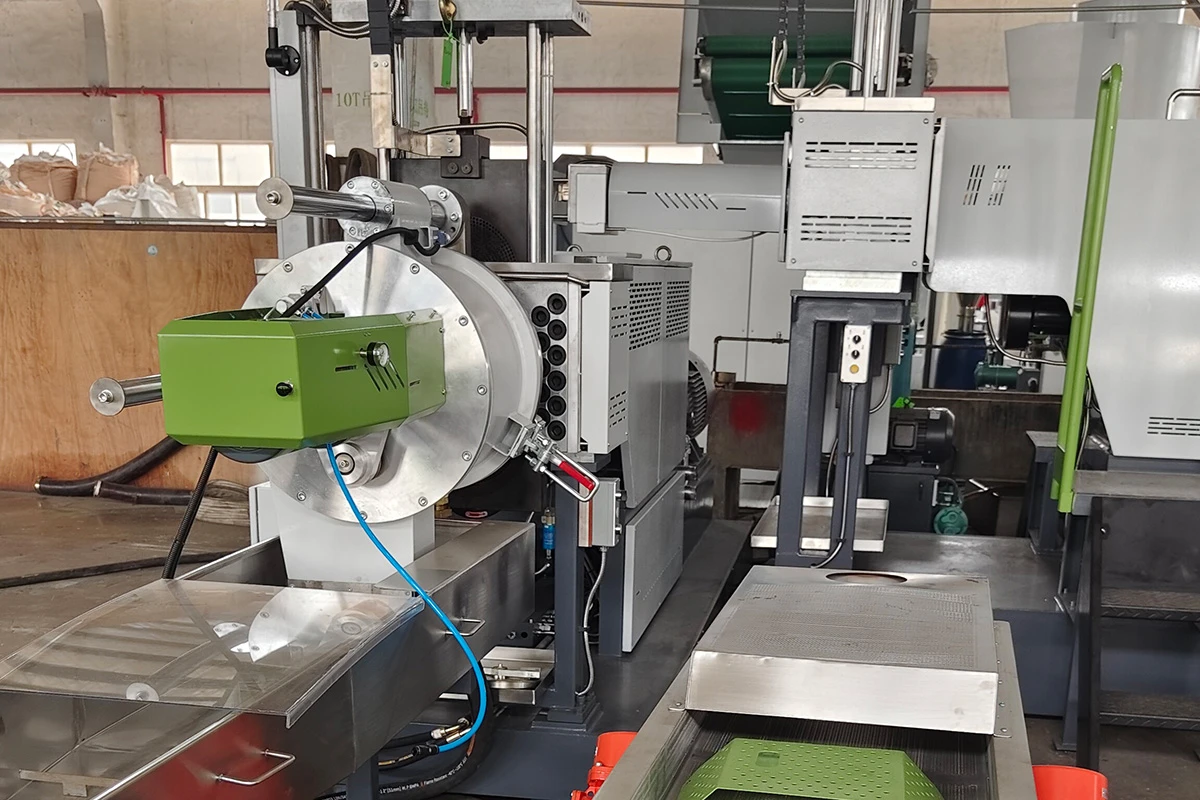
Compact Strand Pelletizing Layout
This configuration combines film feeding, compaction, extrusion, cooling, and pellet cutting in a layout designed for practical installation and continuous production.
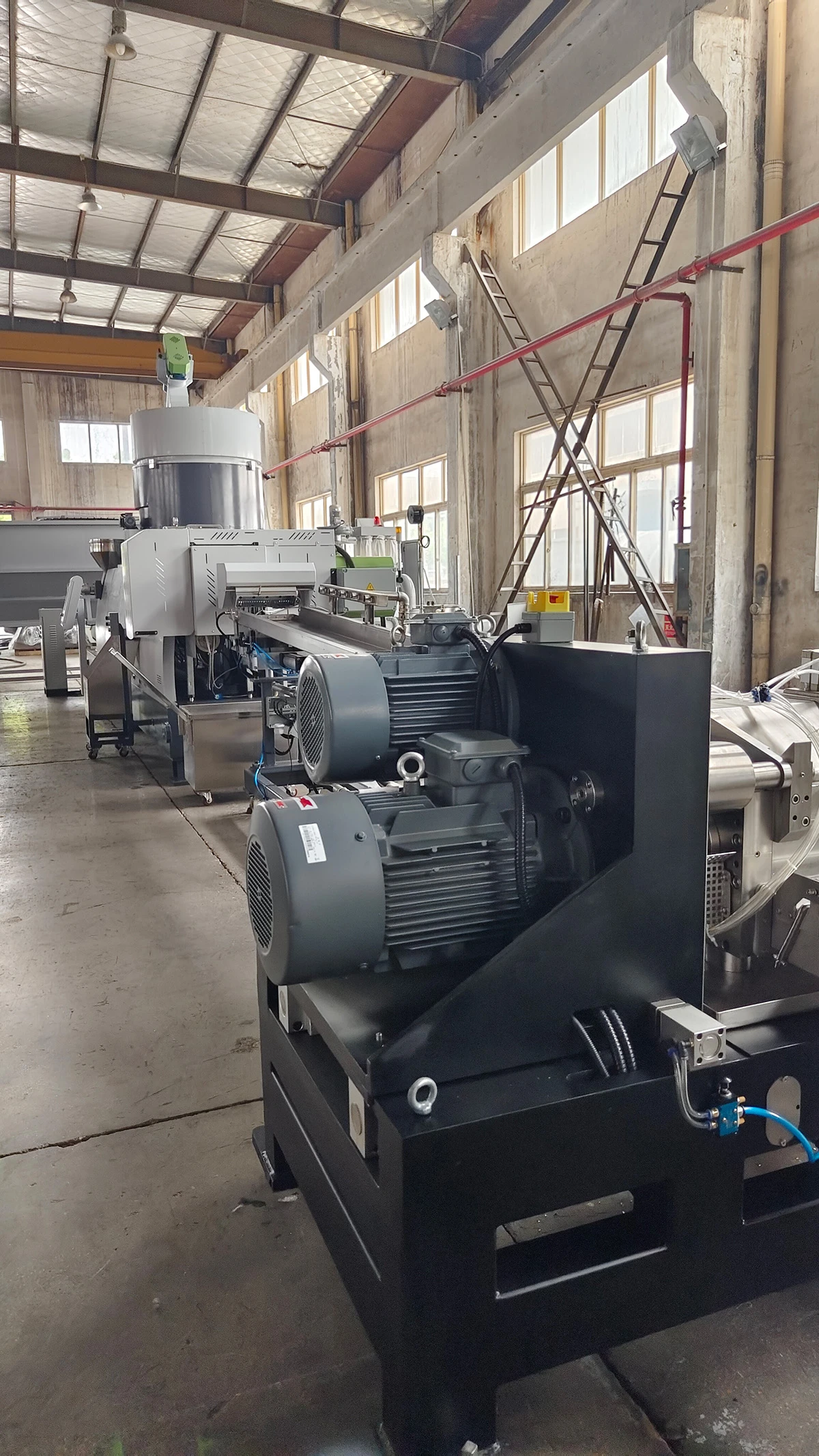
Stable Extrusion and Pellet Output
The strand pelletizing section is arranged for steady melt discharge, consistent cooling, and easier downstream pellet collection for reuse or sale.
Profitability & Sustainability
Lower Virgin Resin Dependence
Reprocessing film waste into pellets helps offset virgin raw material consumption and improve internal recycling rates.
Better Waste Utilisation
Converting scrap film into reusable pellets reduces landfill pressure while creating a more usable secondary material stream.
Versatile Recycling Applications
Film Blown Factories
Recycle production scrap from HDPE, LDPE, and LLDPE film blowing to offset raw material costs.
Bag & Packaging Plants
Turn rejected shopping bags, woven sacks, and stretch wrap into reusable pellets.
Municipal Recycling
Process post-consumer films after sorting, washing, and drying.
Logistics & Warehousing
Recover shrink wrap and pallet wrap waste generated in distribution centres.
Agricultural Films
Handle mulch film and greenhouse cover streams after proper preparation.
Toll Processing Partners
Support contract recyclers handling multiple film waste sources.
Technical Specifications
| Model | RMC2-85 | RMC2-100 | RMC2-120 | RMC2-150 | RMC2-160 | RMC2-180 |
|---|---|---|---|---|---|---|
| Capacity (KG/H) | 100-200 | 200-300 | 300-400 | 500-600 | 700-800 | 800-1000 |
| L/D | 1:33 | 1:33 | 1:33 | 1:36 | 1:36 | 1:36 |
| Install Power (KW) | 110 | 135 | 160 | 310 | 370 | 520 |
| Compactor Power (KW) | 37 | 45 | 55 | 110 | 132 | 180 |
| Main Extruder Power (KW) | 55 | 75 | 90-110 | 185 | 220 | 280-315 |
| Screen Exchanger | 160mm | 200mm | 250mm | 350mm | 400mm | 500+mm |
| Staff Requirement | 2-3 | 2-3 | 2-3 | 2-3 | 2-3 | 2-3 |
| Overall Size (L*W*H) | 9*5*4 | 10*5*4 | 12*5*4 | 13*6*4 | 13*6*4 | 13*6*4 |
See the Pelletizing Line in Action

Frequently Asked Questions
This machine is designed for soft and rigid plastics including HDPE, LDPE, LLDPE, PP, PS, PET, and PC, depending on feed preparation and configuration.
Yes. For post-consumer film waste, washing and drying are usually required before pelletizing to remove dirt, moisture, and unstable contaminants.
Typical capacity ranges cover approximately 200 kg/h to 1000 kg/h depending on material condition, machine model, and process configuration.
Yes. Screw design, heating configuration, filtration, and downstream equipment can be customized for your material and target pellet quality.
Support includes warranty coverage, remote technical service, spare parts supply, and optional on-site commissioning and installation assistance.
Warranty & Installation
1-Year Limited Warranty
Standard warranty support for key components and manufacturing defects.
Expert Installation Support
Commissioning and startup guidance are available based on your project.
Get a Quote
Send your material source, target output, and desired pellet quality. We will recommend the right pelletizing solution for your line.
