


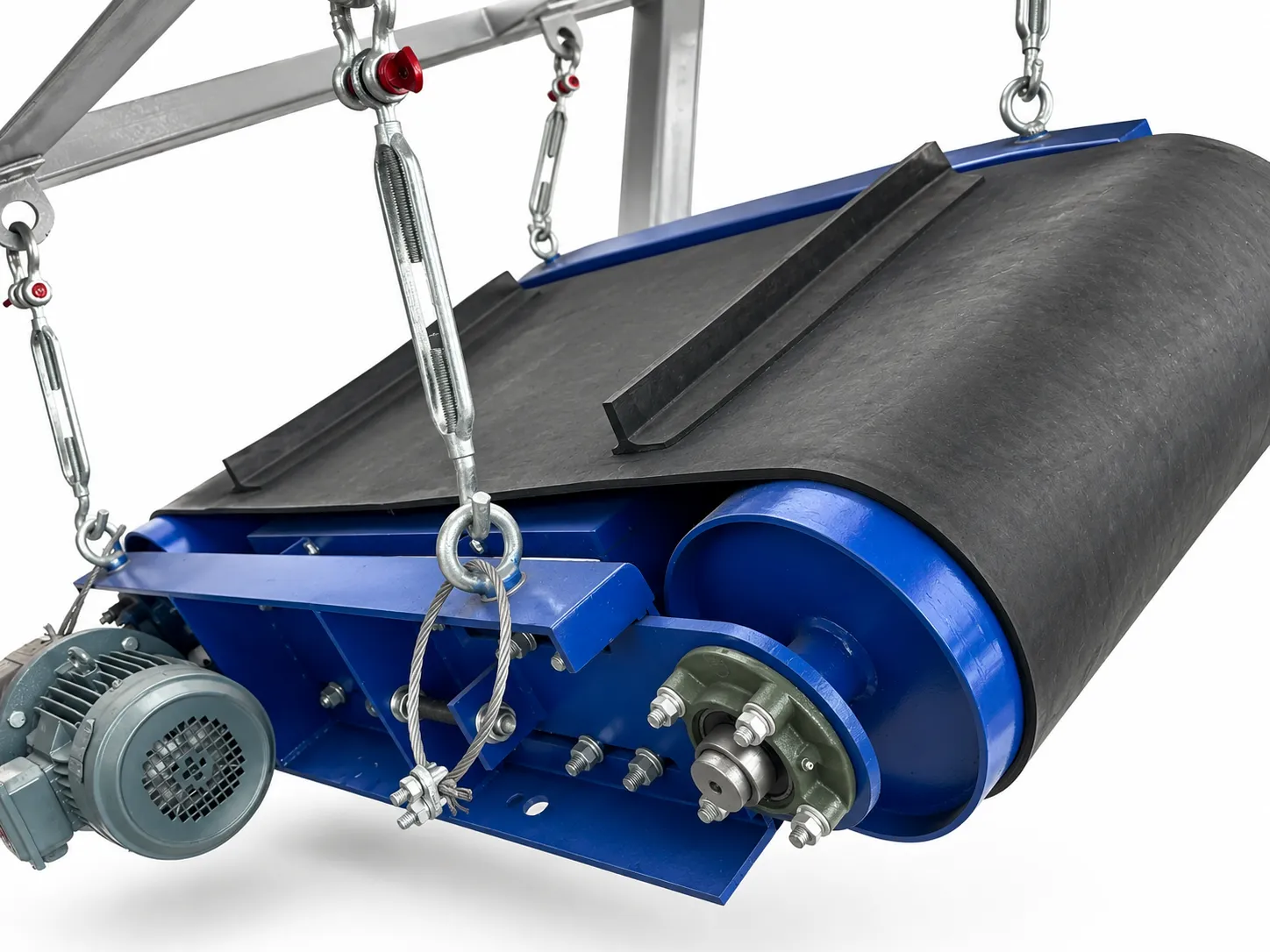
Separador Magnético para Recuperação de Material
Um separador magnético remove metal ferroso de flocos de plástico, resíduos mistos, material de mineração e outros fluxos a granel antes de o metal danificar trituradores, granuladores, extrusoras ou equipamento final de triagem. As configurações incluem ímanes de suspensão de alta intensidade (overband) para remoção de camada profunda em transportadores.
- Captura ferro vagabundo, peças de aço, parafusos, pregos, arame e outra contaminação magnética de fluxos de material em movimento.
- Protege o equipamento a jusante ao mesmo tempo que melhora a pureza e o valor de revenda do material recuperado.
- Disponível como ímanes de suspensão/overband de alta intensidade, ímanes de tambor, polias magnéticas e módulos específicos da linha.
Como Funciona um Separador Magnético
Um separador magnético coloca um campo magnético controlado junto ao fluxo de material. O metal ferroso responde à força magnética e separa-se do plástico, papel, vidro, madeira, minerais ou outro material não magnético.
Alimentação de material
O material move-se sobre um transportador, caleira, superfície de tambor ou polia. Uma camada consistente melhora a separação porque o íman pode alcançar cada partícula de forma mais uniforme.
Captura Magnética
O ferro e o aço são atraídos pelo campo magnético enquanto o material não magnético continua o seu percurso normal.
Descarga separada
O metal capturado é descarregado num ponto de recolha separado, reduzindo a contaminação e protegendo as máquinas a jusante.
Por que isso importa
Na reciclagem de plásticos, um pequeno fragmento de aço pode danificar facas do britador, crivos, componentes do peletizador ou fusos da extrusora. Um separador magnético bem posicionado reduz este risco antes de o metal chegar a equipamento caro a jusante.
Para metas de pureza mais altas, a separação magnética é frequentemente usada antes da separação por densidade, classificação por ar, triagem ótica ou peletização.
Tipos de Separadores Magnéticos.
O separador magnético certo depende de onde o metal aparece, da profundidade da camada de material e de necessitar de descarga manual ou contínua.
Separador Magnético Overband / Suspensão
Instalado acima de uma correia transportadora (também chamado íman de suspensão de alta intensidade). Projeta um forte campo magnético em camadas profundas de material para elevar ferro vagabundo antes de trituradoras, moinhos ou granuladores. Ideal para plásticos, resíduos, madeira, agregados e linhas de reciclagem de alta carga.
Tambor Magnético
Tambor magnético com descarga contínua. Útil quando o material passa diretamente sobre o tambor e a linha necessita de separação automática de peças ferrosas de material seco a granel.
Polia Magnética
Instalada como a polia de cabeça do transportador. Uma escolha compacta para separação ferrosa contínua no fim de um transportador sem adicionar uma grande unidade aérea.
Separador magnético suspenso de alta intensidade
Também conhecido como íman de sobre-correia ou suspenso, esta configuração pende sobre o transportador e extrai continuamente ferro estranho de camadas profundas de material — protegendo o equipamento a jusante e melhorando a pureza do produto.
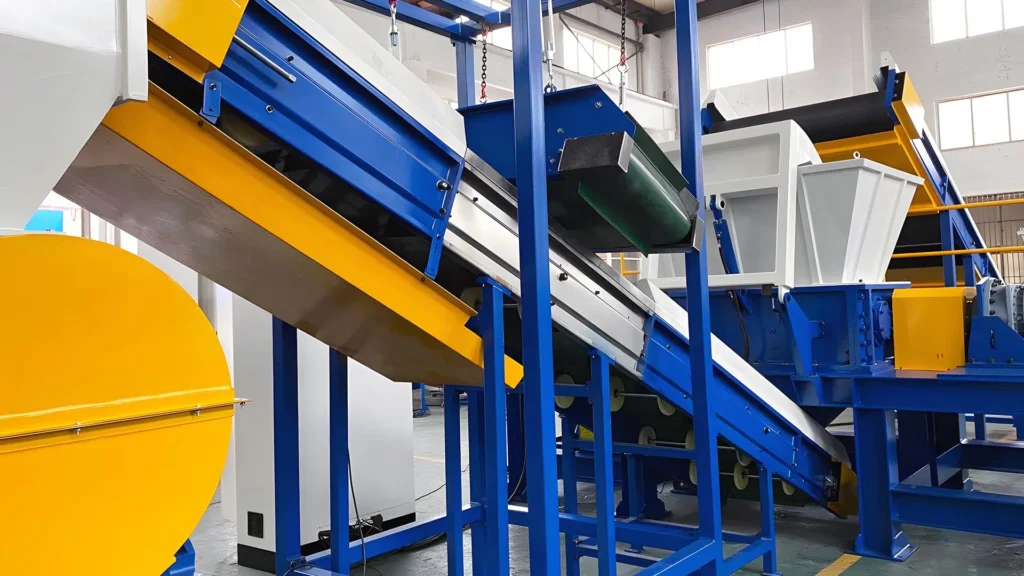
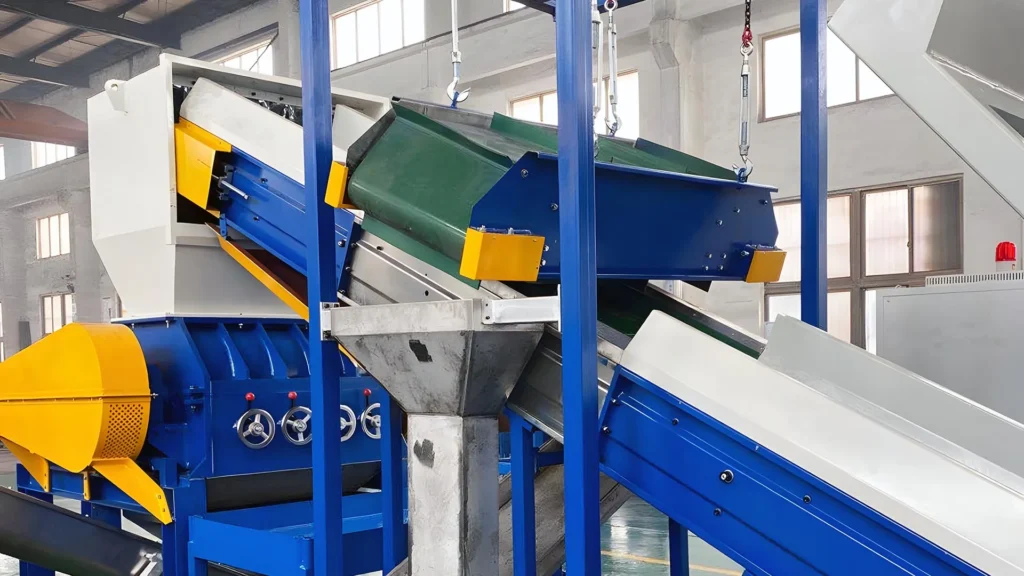
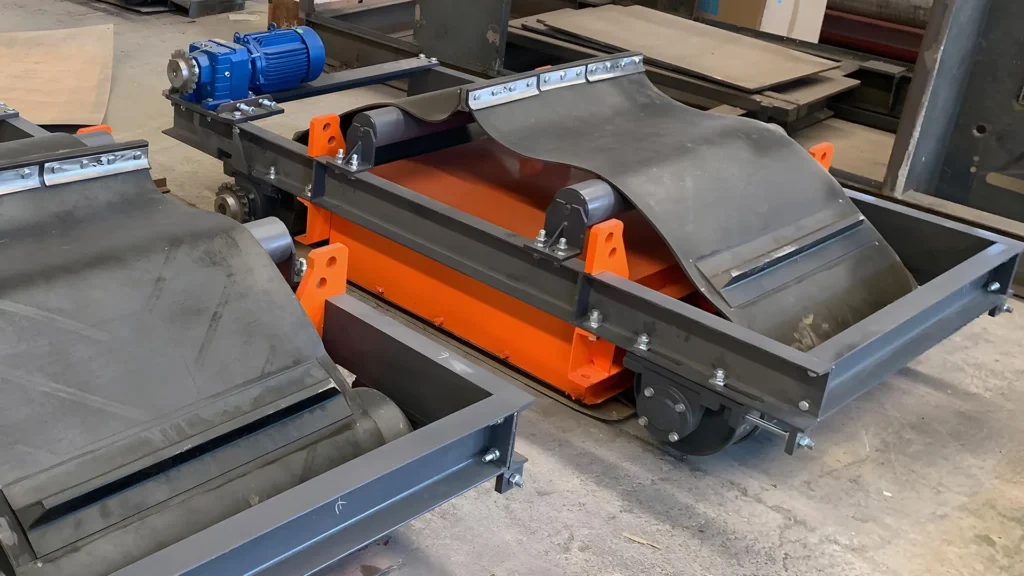
Porquê escolher um separador magnético suspenso?
Concebido para separação contínua de alta carga em linhas de reciclagem e manuseamento de materiais a granel.
-
Campo magnético suspenso
Montado sobre a correia para projetar um campo poderoso no fluxo de material sem interromper o transporte.
-
Extração ferrosa automatizada
Os metais ferrosos são levantados do fluxo de produto e descarregados para recolha, reduzindo paragens manuais de limpeza.
-
Protege britadores e granuladores
Captura ferro estranho cedo para que trituradores, moinhos e granuladores evitem danos por impacto e tempo de paragem não planeado.
-
Uso mais amplo da indústria
Comum na reciclagem de plástico e pneus, mineração e minerais, processamento de madeira e outras linhas de purificação a granel.
Aplicações & Materiais
A separação magnética suporta tanto a proteção do equipamento quanto a pureza do produto na reciclagem e no manuseamento industrial de material.
-
Reciclagem de Plástico.
Remove parafusos, agrafos, arame, fragmentos de aço e ferro estranho de linhas de reciclagem de PET, HDPE, PP, filme PE e plástico rígido.
-
Triagem de Resíduos
Recupera metal ferroso de resíduos sólidos municipais, preparação de CDR/CSR e instalações mistas de recuperação de material.
-
Mineração & Pedreiras
Separa material com ferro e protege britadores, crivos e transportadores de contaminação metálica indesejada.
-
Fabrico.
Mantém moinhos, moinhos e linhas de produção a funcionar puxando metal da matéria-prima antes de chegar à maquinaria.
Fatores de Seleção & Operação
A boa separação depende de mais do que a força do íman. O fluxo de material e a posição de instalação importam tanto quanto.
Tipo de material, densidade aparente, tamanho de partícula e nível de humidade.
Tamanho, forma e taxa de carregamento esperados de contaminação ferrosa.
Largura do transportador, velocidade da correia, profundidade de carga e altura de instalação.
Se a fábrica precisa de limpeza manual, descarga automática ou operação contínua.
Especificações
As especificações finais dependem do tipo de separador e do layout da linha de reciclagem. Estes parâmetros são pontos comuns de discussão durante a seleção do equipamento.
| Parâmetro | Opções Típicas | Notas de Seleção |
|---|---|---|
| Tipo de Separador | Overband, tambor, polia, corrente de Foucault | Adequar o tipo ao fluxo de material, tipo de metal e requisito de descarga. |
| Largura do Transportador | Personalizada à largura da linha | A zona magnética deve cobrir o fluxo total de material. |
| Profundidade de Camada de Material | Baixo e uniformemente distribuído é preferido | A carga profunda reduz o desempenho de captura, especialmente para peças pequenas de metal. |
| Método de Limpeza | Descarga manual ou automática | A descarga automática é preferida para linhas contínuas e de alta contaminação. |
| Posição de Instalação | Acima do transportador, na descarga ou na polia de cabeça | Coloque o separador antes de maquinaria sensível sempre que possível. |
Perguntas frequentes
Instale-o antes de britadores, granuladores, extrusoras, peletizadores ou equipamento fino de triagem sempre que metal ferroso possa danificar maquinaria a jusante.
Não. Os separadores magnéticos standard removem metais ferrosos como ferro e aço. Alumínio, cobre e latão normalmente requerem um separador de correntes de Foucault.
Os ímanes suspensos são comuns sobre transportadores. Os ímanes de tambor e polias magnéticas são úteis quando o layout precisa de descarga ferrosa compacta e contínua.
A força do íman, velocidade da correia, profundidade da carga, distribuição do material, altura de instalação e tamanho de partícula afetam todos o desempenho de captura.
Depende do grau. O inox magnético ferrítico e martensítico (série 400) responde ao campo, mas o inox austenítico não magnético (série 300) é largamente invisível para um separador magnético standard e precisa de correntes parasitas ou triagem baseada em sensores.
A força magnética cai drasticamente com a distância, pelo que o separador tem de ficar suficientemente perto para o seu campo alcançar o fundo da camada de material. Uma carga funda ou irregular, ou um íman montado demasiado alto, deixa passar pequenas peças ferrosas. Um fluxo raso e uniformemente distribuído na folga correta dá a captura mais fiável.
Garantia & apoio global à instalação
-
Cobertura de garantia
Disponibilizamos cobertura de garantia padrão para componentes da máquina suportados e defeitos de fabrico.
-
Instalação & assistência
Prestamos orientação de instalação, apoio no arranque, formação de operadores e serviço de peças sobresselentes segundo o projeto.
Solicite um orçamento para separador magnético
Partilhe o seu material, largura do transportador, débito e detalhes de contaminação. Os nossos engenheiros podem recomendar uma configuração adequada de separador magnético.
