


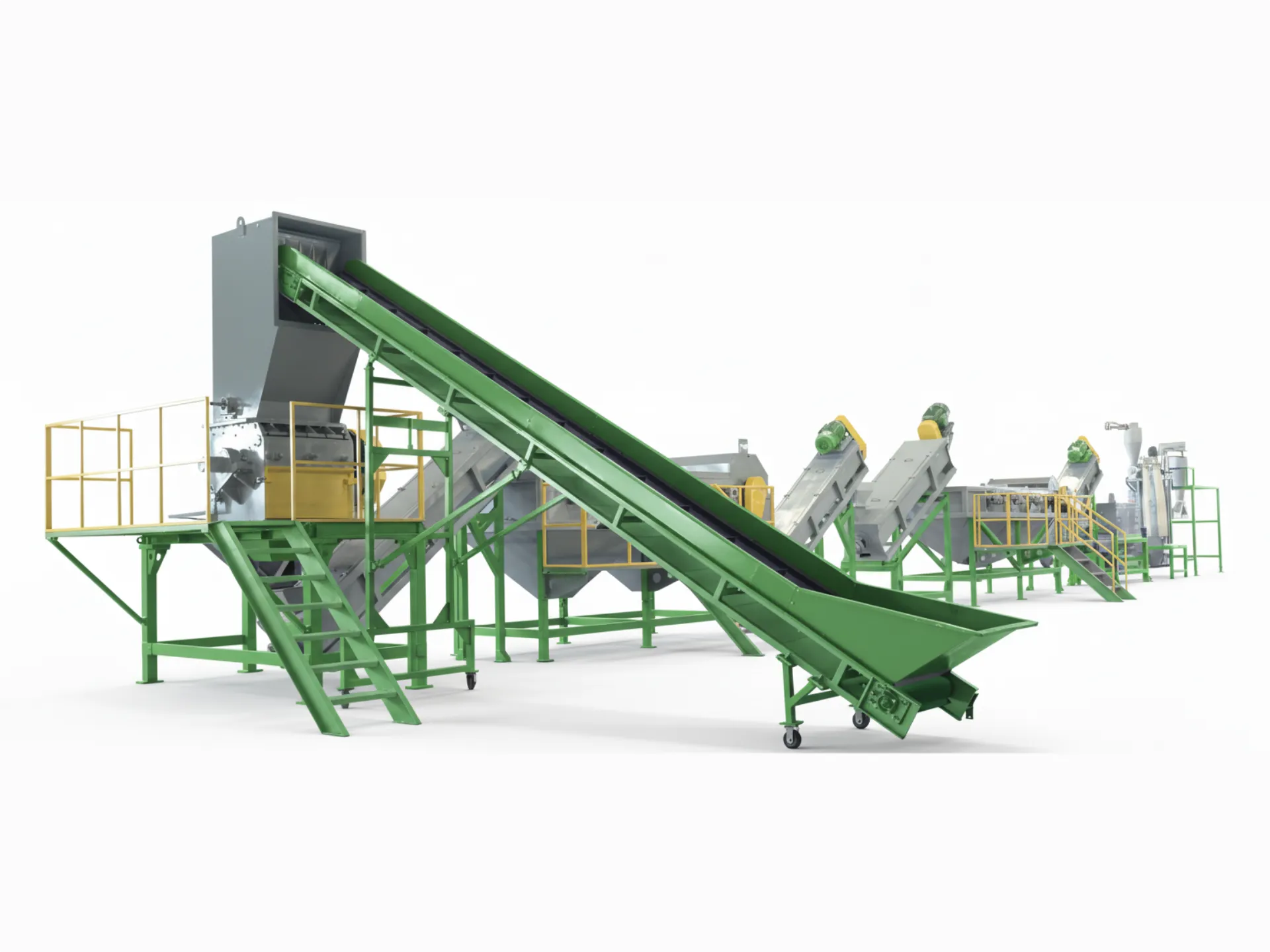
Lavado de botellas de HDPE Línea de Reciclaje
An automated HDPE bottle washing recycling line engineered for post-consumer resin (PCR) feedstocks, including detergent, milk, shampoo, and household-chemical bottles. Crushing, friction washing, density separation, and thermal drying are synchronised to turn contaminated plastics into clean rHDPE flakes—ready for extrusion, compounding, or direct feed into our Granuladoras de plástico.
Modular infeed, high-torque wet crushing, optional hot washing, and closed-loop water treatment empower you to achieve premium flake purity even with heavy labels, caps, sand, and chemical residues in the stream.
Explore the Complete HDPE Bottle Washing Recycling Line
Why Our HDPE Bottle Recycling System Excels
- Producción estable, menores costos operativos
El transporte continuo y las recetas PLC estabilizan el rendimiento al tiempo que optimizan el consumo de energía y agua.
- Limpieza profunda de residuos de botellas
Wet crushing, friction scrubbing, and optional hot washing remove oils, detergents, and odours to deliver cleaner rHDPE flakes.
- Label & Light Contaminant Removal
Air separation and screening reduce labels, films, paper, and dust—improving purity and downstream processing stability.
- Listo para tratamiento de agua de circuito cerrado
Diseñado para integrar sistemas de filtración y recirculación para reducir la descarga y simplificar el cumplimiento.
Standard HDPE Bottle Washing Process Flow
From baled post-consumer bottles to purified rHDPE flakes—each stage is configured to your contamination level and target flake purity.
- Debaling & Pre-sorting
Abrir pacas, eliminar metales/impurezas de gran tamaño y estabilizar la alimentación continua.
- Trituración húmeda
Reduce bottles to uniform flakes while flushing loose residues, sand, and dirt in a high-water-volume chamber.
- Lavado por fricción
High-speed mechanical scrubbing (over 1000 RPM) aggressively detaches labels, glued paper fibres, and stubborn dirt.
- Lavado en caliente (opcional)
Chemical thermal washing softens glues and extracts oils, dairy fats, and stubborn detergents, ensuring food-grade or premium rHDPE.
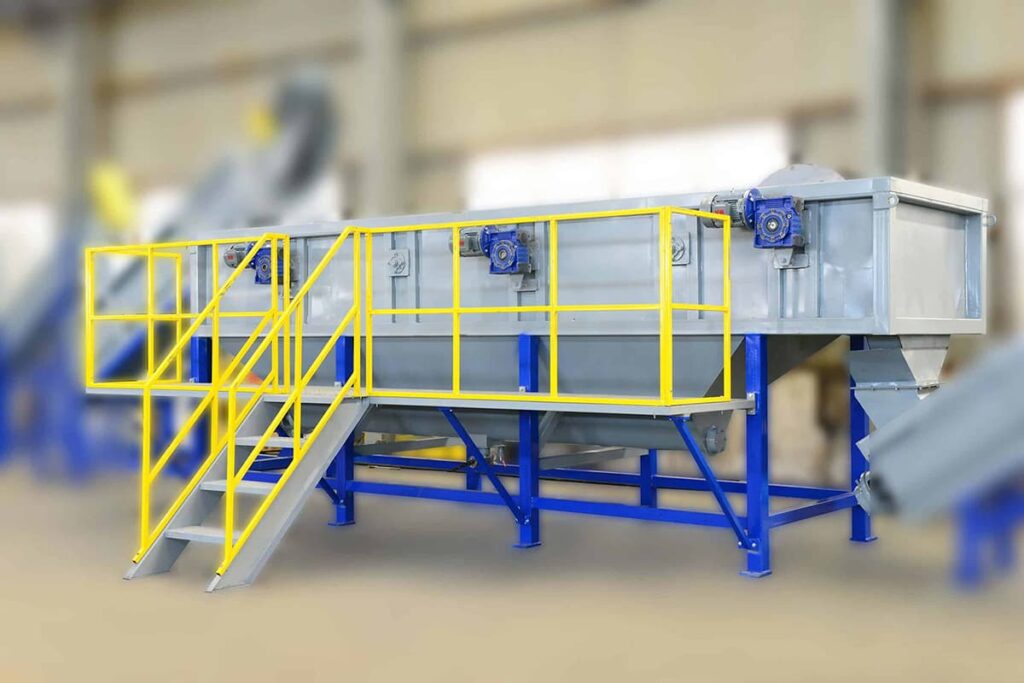
- Separación por hundimiento y flotación
Density separation floats the targeted HDPE/PP while sinking heavier foreign plastics like PET, PVC, and metals.
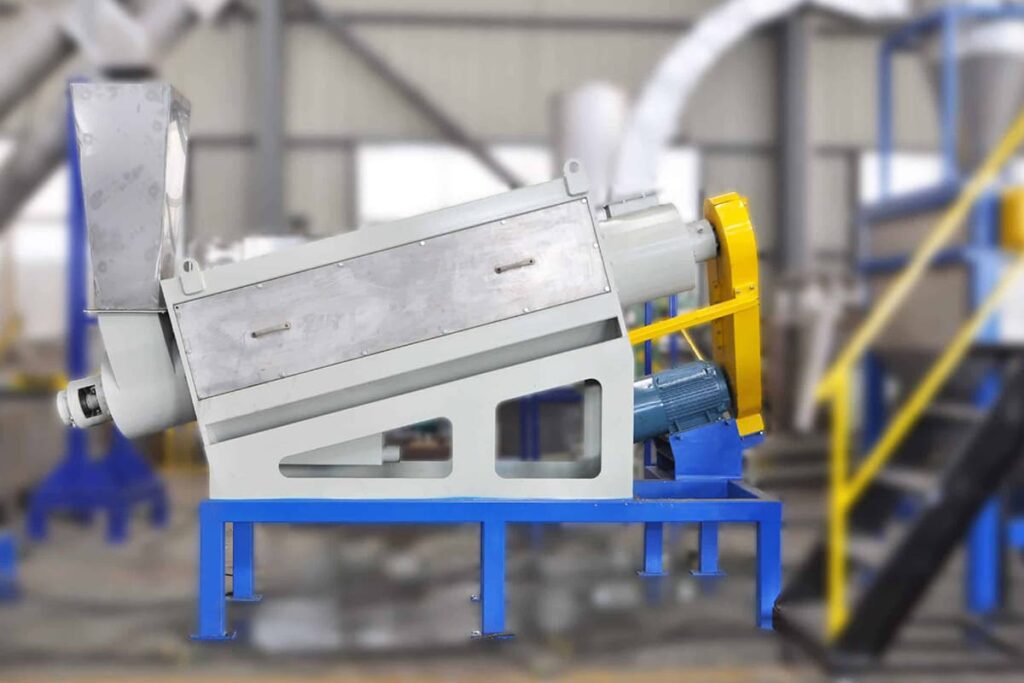
- Dewatering & Thermal Drying
Automated centrifugal dewatering coupled with hot air drying reduces surface moisture to below 1%, preparing flakes for silos.
Inside the Line: Core Recycling Equipment Composition
A professional HDPE bottle washing recycling line is constructed from heavy-duty modules—each engineered for maximum decontamination, rigorous density separation, and energy-efficient drying.
| Componente del equipo | Función primaria |
|---|---|
| Abridor de pacas / Transportador de alimentación | Abre pacas (opcional) y garantiza una alimentación estable y continua en la línea. |
| Prelavadora/Trommel (Opcional) | Elimina arena, piedras y suciedad suelta de manera temprana para proteger las máquinas que se encuentran aguas abajo y reducir la carga de agua. |
| Trituradora húmeda / granuladora | Reduce el tamaño de las botellas al mismo tiempo que elimina la contaminación suelta para un lavado posterior eficiente. |
| Lavadora de fricción | El fregado de alta velocidad elimina residuos persistentes, fibras de papel y suciedad restante de las escamas. |
| Lavadora caliente (opcional) | Improves decontamination for oily or detergent-heavy bottles using heated water and controlled chemistry. |
| Tanque de separación fregadero-flotador | Separación por densidad donde el HDPE/PP normalmente flota mientras que el PET/PVC y los contaminantes pesados se hunden. |
| Rinse & Transfer Screw | Enjuaga las escamas y transfiere el material entre etapas manteniendo un tiempo de residencia constante. |
| Deshidratación centrífuga | Elimina mecánicamente el agua superficial para reducir la demanda de energía del secado térmico. |
| Thermal Dryer & Air Transport | El secado con aire caliente reduce el contenido de humedad de los copos y los transporta al almacén. |
| Clasificador Zig-Zag / Aire | Elimina etiquetas, películas y fracciones ligeras para mejorar la pureza final. |
| Estación de silo/ensacado | Almacena y empaca los copos de HDPE terminados para una fácil logística y una alimentación estable a las líneas de peletización. |
| Sistema de control PLC | Control HMI/PLC centralizado para enclavamientos, recetas, alarmas y diagnósticos remotos opcionales. |
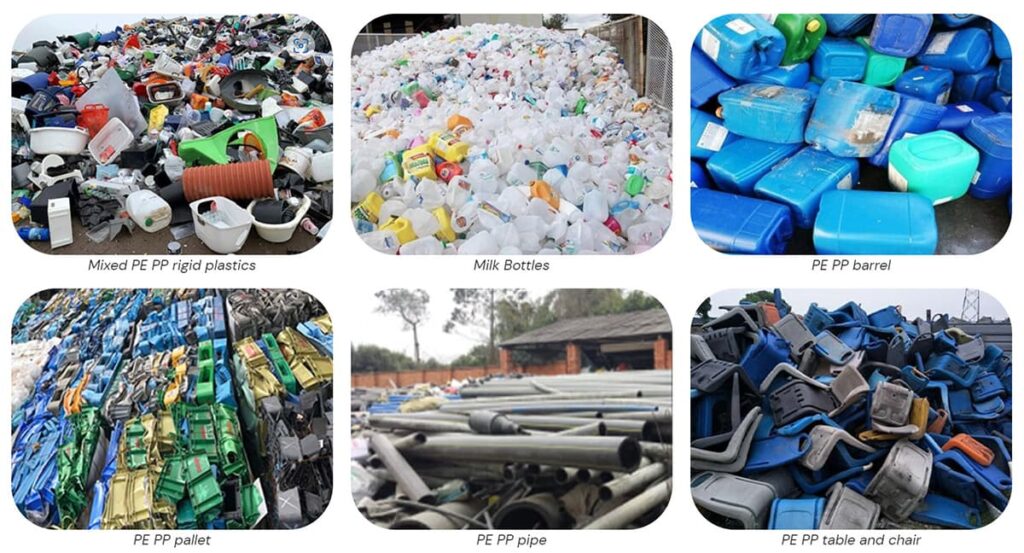
Supported Materials & Incoming Feedstock
- PCR HDPE Bottles
Milk jugs, detergent bottles, heavy-duty shampoo containers, and other daily chemical packaging laden with residues.
- Mixed Material Bales
Handles bales containing labels, caps, rings, and mixed plastics by efficiently classifying PP/PE from heavier contaminants.
- Contenedores rígidos de PP/PE
The system's robust crushers simultaneously accommodate jerrycans, drums, and rigid plastic packaging fractions.
Commercial Value of Recycled rHDPE Flakes
Producing high-purity rHDPE flakes unlocks highly profitable resale markets, secures circular supply chains, and fulfills corporate ESG and packaging recycled-content mandates.
- rHDPE Flake & Pellet Producers
Produce cleaner, more consistent flakes to supply extrusion/pelletising lines for packaging, pipe, sheet, and injection-grade compounds.
- Toll Washing & Contract Processing
Run multi-customer bottle streams with traceable recipes and repeatable quality targets—ideal for recyclers scaling capacity.
- Municipal & MRF Upgrading
Upgrade mixed bottle streams into higher-value HDPE flakes, improving diversion rates and commodity resale value.
- Brand PCR & ESG Supply
Support recycled-content targets by supplying stable PCR HDPE feedstock for blow-moulding and injection applications.
Future Innovations in HDPE Bottle Recycling
- Intelligentisation mejorada
Integration of AI and IoT for smarter process control, predictive maintenance, and data-driven optimisation.
- Máxima eficacia
Continuous innovation to improve throughput capacity while simultaneously reducing energy consumption and operational costs.
- Sostenibilidad del medio ambiente
Adoption of eco-friendly cleaning agents and advanced water filtration systems, aiming for near-zero discharge.
- Modularidad y personalización
Emphasis on modular designs allowing for easier customisation, scalability, and upgrades to meet evolving client needs.
Tangible Environmental & Economic Benefits
- Reduce los residuos de plástico
Significantly diminishes the volume of plastic ending up in landfills or polluting natural ecosystems, helping to alleviate environmental strain.
- Conserva los recursos naturales
Lessens the demand for virgin petroleum-based resources, reducing the carbon footprint associated with new plastic production.
- Promueve una economía circular
Transforms waste materials back into valuable resources, encouraging sustainable manufacturing and consumption patterns.
- Alto rendimiento de la inversión
Generates revenue from the sale of recycled flakes and lowers disposal costs, delivering significant economic benefits and a swift ROI.
Please note: Equipment configuration and the specific process flow will be carefully optimised according to the characteristics of your raw materials and desired output.
FAQs on HDPE Bottle Washing Recycling
It is designed for post-consumer HDPE bottles (milk, detergent, shampoo, household chemicals), typically with labels and closures attached. Feedstock can be baled or loose, and we can tailor infeed and washing stages based on contamination level and target purity.
Multi-stage friction washing, optional hot washing, and density separation reduce labels, oils, and residues. Final cleanliness depends on incoming material, but the line is configured to deliver low contamination and low moisture flakes for pelletising or compounding.
Yes. Air classification targets labels and light fractions, while sink-float separation helps remove heavier plastics (typically PET/PVC) from HDPE/PP. For higher-purity requirements, optional sorting and metal detection can be integrated upstream.
Central PLC with touchscreen HMI provides recipe control, safety interlocks, and real-time monitoring of water, energy, and throughput. Remote diagnostics and data logging can be included for predictive maintenance.
Washing Line Technical Parameters
Specific technical parameters can vary based on the model and customisation. For detailed specifications, please refer to individual product sheets or contact us.
| Capacidad de entrada | 500kg/h | 1000kg/hora | 1500kg/h | 2000kg/h |
|---|---|---|---|---|
| Espacio requerido | 42m×10m×6m | 50m×15m×6m | 55m×16m×6m | 60m×18m×6m |
| Operadores | 3-4 personas | 5-6 personas | 5-6 personas | 5-6 personas |
| Energía de instalación | 150-200kW | 250-300kW | 370kW | 450-500kW |
| Circulación de agua (T/H) | 2 | 3 | 4 | 5 |
Nuestro compromiso con un futuro más limpio
The HDPE bottle washing recycling line plays an indispensable role in tackling plastic pollution and supporting the circular economy. As technology advances, these lines will continue to improve in efficiency, automation, and water management—helping recyclers deliver higher-quality PCR materials.
"Thanks to our innovative washing technology, we provide reliable and remarkably efficient recycling solutions. Our unwavering commitment ensures our processes are environmentally friendly, sustainable, and consistently deliver superior quality results."
Enquiries & Quotations
Garantía: All HDPE bottle washing recycling systems include a 1-year limited warranty and lifetime technical support.
Share your bottle type, contamination profile (labels, caps, sand, oil/detergent), and throughput target. We will configure the optimal washing line with layout, utilities, timeline, and investment details.
