


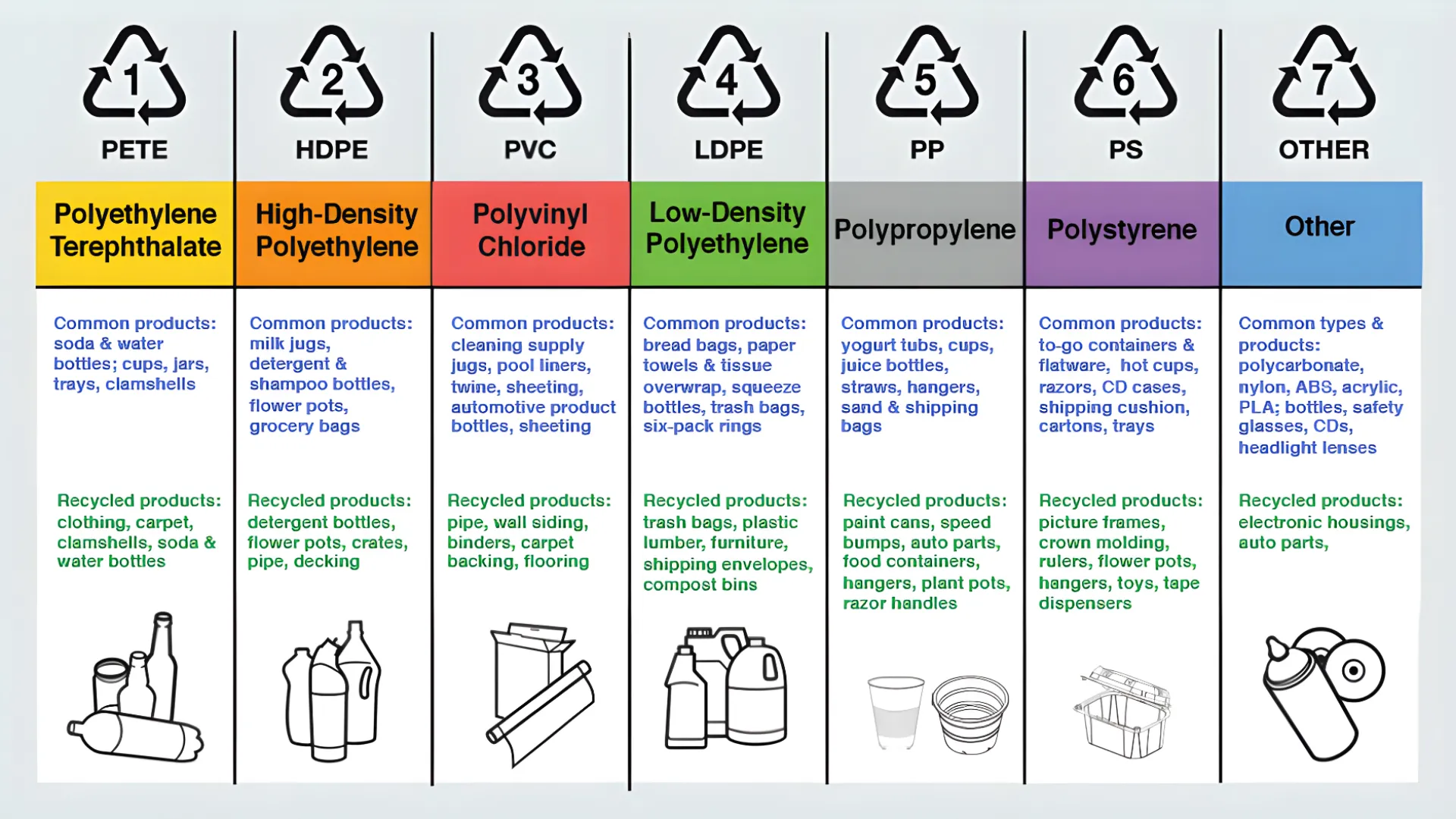
Rentabilitatea unei operațiuni de reciclare depinde în întregime de materia primă. Amestecarea polimerilor incompatibili (de exemplu, PVC cu PET) poate deteriora catastrofal echipamentele de extrudare și poate face ca fulgii finali de rPET să nu mai fie vandabili. Pentru operatorii de instalații, stăpânirea Sistemului Internațional de Codificare a Identificarii Rășinilor (RIC) ASTM este prima linie de apărare împotriva contaminării.
Acest ghid analizează cele șapte coduri de rășină dintr-o perspectivă a procesării industriale, detaliind caracteristicile specifice mașini de reciclare necesar pentru fiecare polimer.
1. PET (polietilen tereftalat)


- SursăSticle de băuturi, tăvi pentru alimente.
- ProprietățiTransparență ridicată, rezistență la solvenți.
- Cerință de procesareEtichetele și lipiciurile sunt principalii contaminanți. A PET Sticlă de spălare a liniei de spălare Spălarea cu o soluție caustică fierbinte este obligatorie pentru a atinge nivelurile de puritate (<50 ppm PVC) necesare pentru aplicațiile cu fibră sau sticlă-sticlă.
2. HDPE (polietilenă de înaltă densitate)


- Sursă: Cartușe cu detergent, sticle de șampon, butoaie de ulei.
- ProprietățiRaport rezistență-densitate ridicat, plutește în apă (densitate < 1,0 g/cm³).
- Cerință de procesareHDPE-ul rigid necesită forfecare cu cuplu mare. A Tocator cu un singur arbore se utilizează pentru reducerea inițială a dimensiunii bulgărilor groși, urmată de rezervoare de separare prin chiuvetă-flotare.
3. PVC (clorură de polivinil)


- SursăȚevi, profile pentru ferestre, izolație pentru cabluri.
- ProprietățiConținutul de clor îl face sensibil la căldură. Degradarea eliberează acid clorhidric (HCl).
- Cerință de procesareEvitați procesarea PVC-ului în extrudere standard, de uz general. Necesită o geometrie specializată a șurubului și un control strict al temperaturii pentru a preveni degradarea. Recomandăm extrudere specializate Granulatoare PVC pentru reducerea dimensiunii.
4. LDPE (polietilenă de densitate mică)


- SursăFolie termocontractibilă, sacoșe de cumpărături, folie agricolă.
- ProprietățiDuctilitate ridicată, rezistență la tracțiune scăzută.
- Cerință de procesareFoliile se înfășoară în jurul rotoarelor standard. Folosiți un dispozitiv desemnat Linie de spălare pentru reciclarea foliei cu o presă cu șurub integrată cu diametru variabil (storcător) pentru deshidratarea mecanică a scamei înainte de peletizare.
5. PP (Polipropilenă)


- SursăCapace de sticle, recipiente de iaurt, bare de protecție auto.
- ProprietățiPunct de topire ridicat, rezistență chimică.
- Cerință de procesareAdesea amestecat cu PE. Rezervoarele cu chiuvetă și plutitor separă PP-ul (flotatorul) de PET-ul (chiuveta).
6. PS (Polistiren)


- SursăSpumă expandată (EPS), tacâmuri de unică folosință (HIPS).
- Cerință de procesareEPS este aer 98%. Trebuie densificat folosind un compactor la rece sau o mașină de topit la cald înainte de a putea fi transportat sau granulat economic.
7. Altele (Cod 7)
Codul 7 este o categorie generală pentru materialele plastice care nu se încadrează perfect în #1–#6. Acesta include adesea materiale inginerești sau “speciale” și ambalaje multistrat.
- Materiale comunePC (policarbonat), ABS, PA/nailon, PMMA (acrilic), PLA (bioplastic), compozite multistrat.
- Realitatea Reciclării“Alte” materiale plastice sunt adesea incompatibile cu fluxurile standard de reciclare a mărfurilor și sunt adesea respinse, cu excepția cazului în care aveți o materie primă dedicată și segregată și o piață finală.
- Cerință de procesareTratați Codul 7 ca un risc de contaminare, cu excepția cazului în care este identificat și separat în mod clar. Sortarea optică NIR și specificațiile stricte pentru baloți sunt de obicei necesare înainte de reducerea dimensiunii și extrudare.
Rezumat: Tabel de compatibilitate a procesării
| Plastic | Densitate (g/cm³) | Plutește/Scufundă-te în apă | Mașină principală |
|---|---|---|---|
| PET | 1.38 | Scufunda | Mașină de spălat fierbinte |
| HDPE | 0,93 – 0,97 | Plutitor | Tocătorul |
| PVC | 1,16 – 1,45 | Scufunda | Granulator specializat |
| LDPE | 0,91 – 0,94 | Plutitor | Film Squeezer |
| PP | 0,90 – 0,92 | Plutitor | Rezervor chiuvetă-plutitor |
| PS | 1,04 – 1,07 | Scufunda | Densificator / Topitură la cald |
| Alte | Variază | Variază | Sortare NIR / Linie dedicată |
La Rumtoo, proiectăm sisteme complete la cheie bazate pe aceste proprietăți ale materialelor. Înțelegerea chimiei fluxului dumneavoastră de deșeuri ne permite să configurăm corect... Mașină de reciclat pentru un ROI maxim.
