


자재 회수용 마그넷 분리기
A magnetic separator removes ferrous metal from plastic flakes, mixed waste, mining material, and other bulk streams before the metal damages crushers, granulators, extruders, or final sorting equipment.
- Captures tramp iron, steel pieces, screws, nails, wire, and other magnetic contamination from moving material streams.
- Protects downstream equipment while improving the purity and resale value of recovered material.
- Available as overband magnets, drum magnets, magnetic pulleys, and line-specific separation modules.
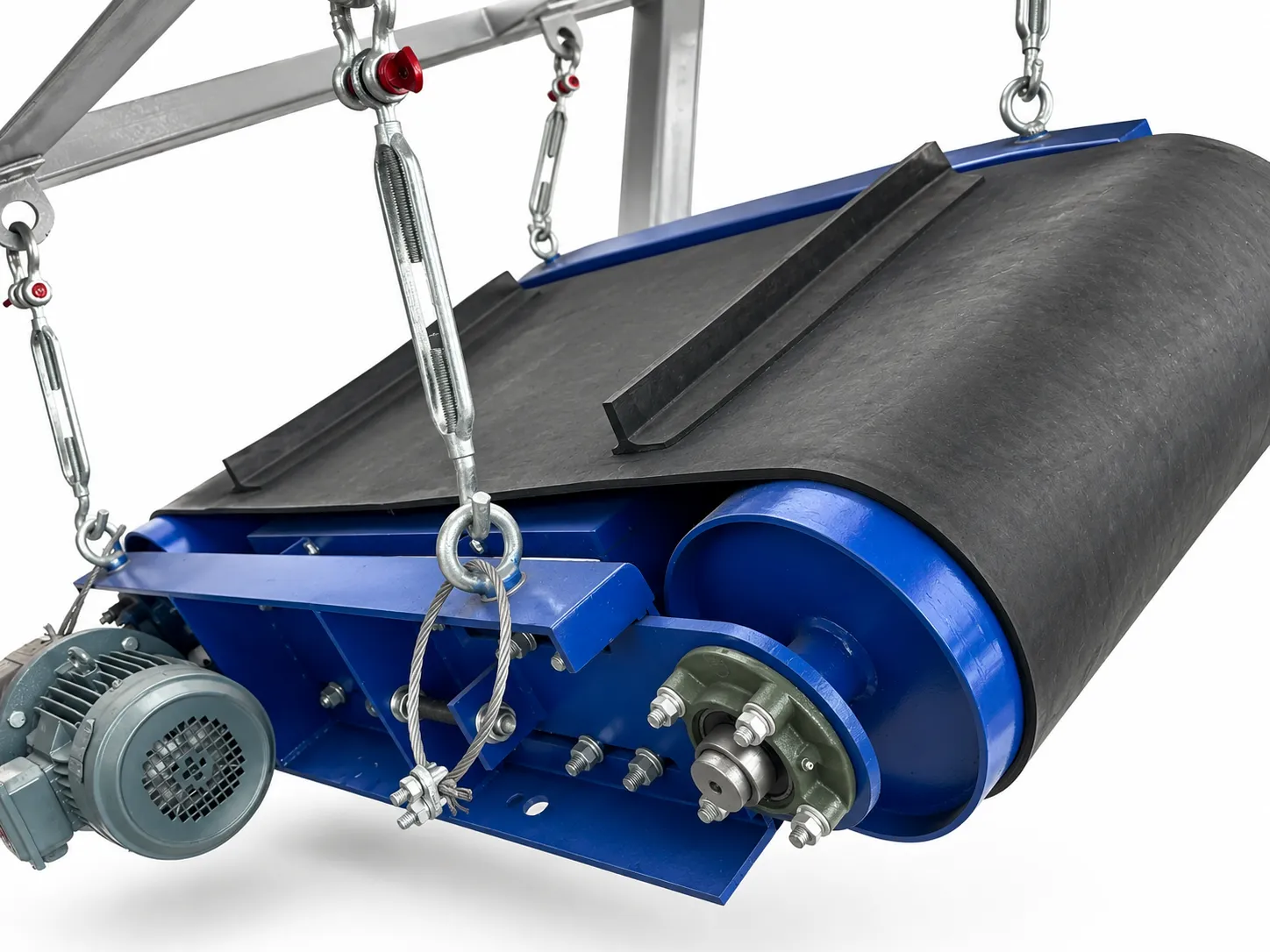
How a Magnetic Separator Works
A magnetic separator places a controlled magnetic field near the material flow. Ferrous metal responds to the magnetic force and separates from plastic, paper, glass, wood, minerals, or other non-magnetic material.
1. Material Feed
Material moves across a conveyor, chute, drum surface, or pulley. A consistent layer improves separation because the magnet can reach each particle more evenly.
2. Magnetic Capture
Iron and steel are attracted by the magnetic field while non-magnetic material continues along its normal path.
3. Separate Discharge
Captured metal is discharged into a separate collection point, reducing contamination and protecting downstream machines.
자기 분리기의 종류
The right magnetic separator depends on where the metal appears, how deep the material layer is, and whether you need manual or continuous discharge.
산업 마그넷
Installed above a conveyor belt.
Suitable for removing large ferrous contaminants from plastics, waste streams, wood, and aggregate before crushing or sorting.
Drum Magnet
Magnetic drum with continuous discharge.
Useful when material passes directly over the drum and the line needs automatic separation of ferrous pieces from dry bulk material.
Magnetic Pulley
Installed as the conveyor head pulley.
A compact choice for continuous ferrous separation at the end of a conveyor without adding a large overhead unit.
와전류 분리기
For non-ferrous metals.
Used after ferrous removal when the line also needs to recover aluminum, copper, brass, and other conductive non-ferrous metals.
주요 애플리케이션
Magnetic separation supports both equipment protection and product purity in recycling and industrial material handling.
플라스틱 재활용
Removes screws, staples, wire, steel fragments, and tramp iron from PET, HDPE, PP, PE film, and rigid plastic recycling lines.
폐기물 선별
Recovers ferrous metal from municipal solid waste, RDF/SRF preparation, and mixed material recovery facilities.
Mining & Quarrying
Separates iron-bearing material and protects crushers, screens, and conveyors from unwanted metal contamination.
제조
메탈을 원료에서 제거하여 공정 및 생산선이 원활하게 운영되도록 합니다.
Selection & Operating Factors
Good separation depends on more than magnet strength. The material flow and installation position matter just as much.
What to Check Before Selection
- Material type, bulk density, particle size, and moisture level.
- Expected ferrous contamination size, shape, and loading rate.
- Conveyor width, belt speed, burden depth, and installation height.
- Whether the plant needs manual cleaning, automatic discharge, or continuous operation.
왜 중요한가요?
In plastic recycling, a small steel fragment can damage crusher knives, screens, pelletizer components, or extruder screws. A properly placed magnetic separator reduces this risk before the metal reaches expensive downstream equipment.
For higher purity targets, magnetic separation is often used before density separation, air classification, optical sorting, or pelletizing.
Typical Technical Parameters
Final specifications depend on the separator type and the recycling line layout. These parameters are common discussion points during equipment selection.
| 매개변수 | 일반적인 옵션 | 선택 참고 사항 |
|---|---|---|
| Separator Type | Overband, drum, pulley, eddy current | Match the type to material flow, metal type, and discharge requirement. |
| Conveyor Width | Customized to line width | The magnetic zone should cover the full material stream. |
| Material Layer Depth | Low and evenly spread is preferred | Deep burden reduces capture performance, especially for small metal pieces. |
| 청소 방법 | Manual or automatic discharge | Automatic discharge is preferred for continuous and high-contamination lines. |
| Installation Position | Above conveyor, at discharge, or head pulley | Place the separator before sensitive machinery whenever possible. |
관련 장비
Build a cleaner recovery line by pairing magnetic separation with the right downstream sorting and recycling equipment.
자주 묻는 질문
Install it before crushers, granulators, extruders, pelletizers, or fine sorting equipment whenever ferrous metal could damage downstream machinery.
No. Standard magnetic separators remove ferrous metals such as iron and steel. Aluminum, copper, and brass usually require an eddy current separator.
Overband magnets are common above conveyors. Drum magnets and magnetic pulleys are useful when the layout needs compact, continuous ferrous discharge.
Magnet strength, belt speed, burden depth, material distribution, installation height, and particle size all affect capture performance.
등급에 따릅니다. 마그넷 퓨리틱과 마르تن시크(400시리즈) 스테인리스는 필드에 응답하지만, 비마그넷 오스테니트(300시리즈) 스테인리스는 표준 마그넷 분리기에 대해서는 거의 보이지 않으며, 전류 유도나 센서 기반의 정리가 필요합니다.
자기력은 거리에 따라 급격히 감소하기 때문에, 분리기가 재료층의 바닥에 자기장이 미치도록 충분히 가까이 배치되어야 합니다. 깊거나 불균형한 부하, 또는 너무 높게 설치된 마그넷은 작은 철분 조각이 스며나갈 수 있게 합니다. 적절한 간격에서 얇고 균일하게 분포된 흐름은 가장 신뢰할 수 있는 잡힘을 제공합니다.
Request a Magnetic Separation Recommendation
Share your material, conveyor width, throughput, and contamination details. Our engineers can recommend a suitable magnetic separator configuration.
