


Heavy-Duty Single-Shaft Shredder with Hydraulic Drawer
A heavy-duty single-shaft shredder with hydraulic pusher drawer, built for stable feeding and high-torque primary size reduction of rigid plastics, wood, paper bundles, textiles, and mixed industrial waste streams.
- Hydraulic pusher feeds irregular, bulky materials toward the rotor for consistent heavy-duty shredding.
- Low-speed, high-torque rotor with SKD11 knives powers through dense purgings and plastic blocks.
- 400–2,000 kg/h across four models; output size adjustable via screen and knife configuration.
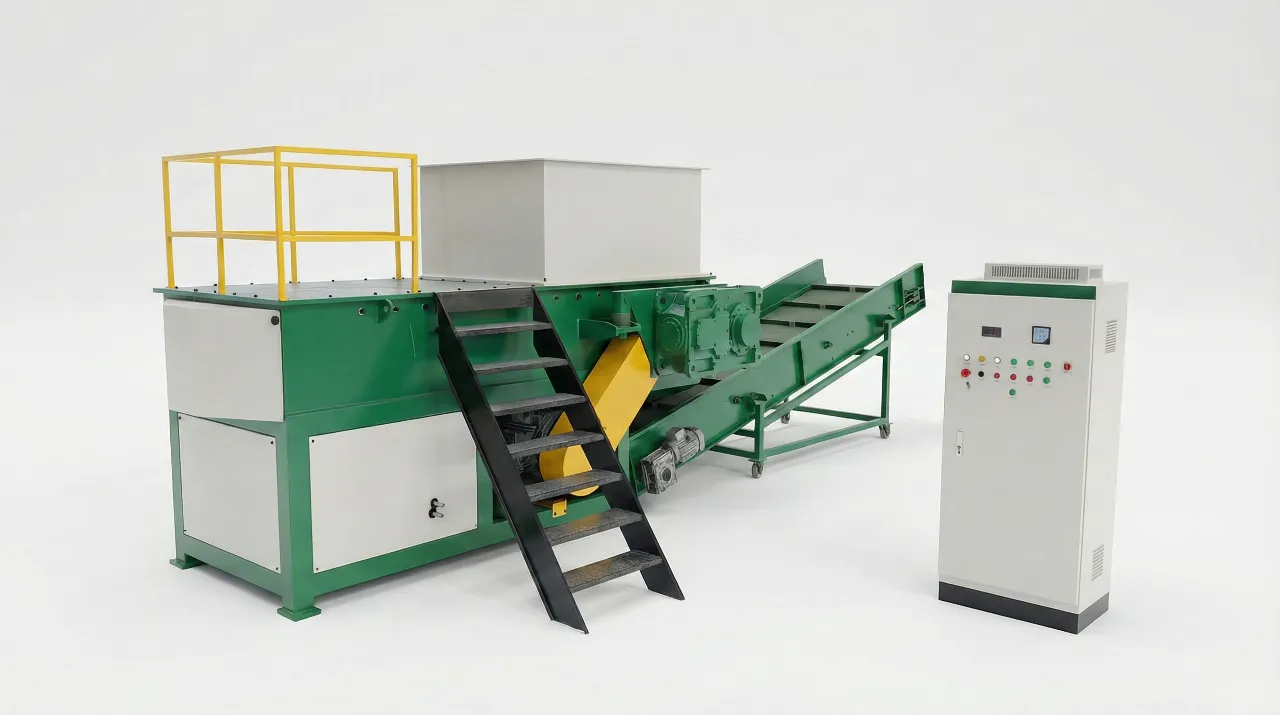
Key Advantages of Our Heavy-Duty Shredder
Engineered to handle difficult, bulky, and abrasive industrial waste streams with maximum reliability and minimal maintenance.
-
Intelligent Hydraulic Ram
The hydraulic drawer pushes material toward the rotor automatically, preventing overload and keeping heavy-duty shredding consistent even with bulky, irregular feedstock.
-
Precision Cutting System
SKD11 square knives mounted on a solid steel rotor deliver clean cuts and long service intervals; individual knives can be rotated or replaced as they wear.
-
Customizable Output Size
Interchangeable screens and adjustable knife setups let you dial in particle size for granulators, wash lines, or other downstream equipment.
-
Unmatched Versatility
One heavy-duty shredder covers rigid plastics, wood pallets, paper bundles, textiles, and selected mixed waste streams — no need for multiple machines.
-
Engineered for Tough Jobs
A reinforced frame and high-torque drive maintain stable throughput on dense purgings, plastic blocks, and other demanding primary-shredding applications.
-
Quiet and Efficient Power
The low-speed rotor design keeps noise down while delivering the sustained torque that heavy-duty shredding demands.
What Makes a Shredder Heavy-Duty?
The label “heavy-duty” gets used loosely in the shredder market. In practice, a true heavy-duty shredder comes down to four critical pillars: rotor mass, knife quality, drive torque, and feed control.
-
Solid Steel Rotor
A solid, heavy rotor acts as a flywheel, storing kinetic energy that carries the cut through dense purgings and thick-walled parts without stalling. Hollow or lightweight rotors bounce off the same material.
-
SKD11 Tool-Steel Knives
The cutting edges do the real work. SKD11 square knives hold their edge far longer than mild-steel blades on abrasive plastics and wood, which means fewer knife changes and more consistent particle size over a shift.
-
Hydraulic Feed Control
Without consistent feeding, even a strong rotor stalls or idles. The hydraulic drawer meters bulky material into the cutting chamber at a controlled rate, so the rotor stays loaded and throughput stays predictable.
-
Low-Speed, High-Torque Drive
Running at 70–85 rpm instead of several hundred keeps noise and dust down while multiplying cutting force — the right formula for primary size reduction of tough, irregular waste. Learn more about the key components of a single-shaft shredder.
Heavy-Duty Single-Shaft Shredder Overview
Engineered with an automatic hydraulic pusher drawer and high-torque solid rotor for difficult, irregular waste streams.
Stable Feeding for Irregular Materials
The hydraulic drawer feeds bulky or hard-to-grip material toward the rotor automatically. This makes the machine suitable for waste streams that need a steady pushing force to maintain throughput and improve cutting stability.
Low-Speed, High-Torque Cutting
Unlike high-speed granulators that shatter material on impact, this heavy-duty shredder tears and shears at 70–85 rpm. The result is controlled particle size, less fines, lower noise, and far less wear on knives when processing abrasive feedstock such as glass-filled plastics or dirty wood waste.
Heavy-Duty Shredder Applications & Materials
Versatile size reduction engineered for dense, bulky, and tough material streams across recycling and recovery facilities.
-
Plastic Recycling
Defective products, runners, purgings, plastic blocks, drums, and rigid scrap — the classic heavy-duty shredding workload in plastics recycling.
-
Wood and Biomass
Wood pallets, lumber offcuts, and bulky wood waste, pre-sized before grinding, briquetting, or biomass processing.
-
Secure Destruction
Documents, defective goods, and confidential waste streams requiring controlled, verifiable destruction.
-
E-Waste and WEEE
Primary size reduction of housings, cables, and mixed assemblies before separation and material recovery stages.
-
Textiles and Fiber Waste
Carpets, textile offcuts, and fiber bundles that wrap and jam conventional equipment — the hydraulic feed keeps them moving.
-
General Industrial Waste
Mixed production waste, packaging rejects, and pre-sorted streams headed for RDF preparation or further recycling.
How to Choose the Right Heavy-Duty Shredder
Four critical factors decide whether a heavy-duty shredder will maximize ROI or become a plant bottleneck.
Factor 1
Throughput vs. Real Feed Rate
Size for your peak hour, not your average. The four models cover 400–2,000 kg/h; running a shredder consistently above 85% of rated capacity accelerates knife wear.
Factor 2
Feedstock Material Mix
Dense purgings and thick-walled parts need rotor mass and torque; bulky, springy materials like film bales and textiles need hydraulic feed control to prevent bridging.
Factor 3
Target Output Particle Size
Primary shredding for a wash line needs a different screen than pre-sizing for a granulator. Confirm downstream expectations — screens are interchangeable, but getting it right saves downtime.
Factor 4
Total Cost of Ownership
Purchase price is only part of it. Knife life, power consumption per ton, and spare parts availability determine real economics. See our shredder cost guide and buying guide.
Heavy-Duty Shredder Specifications
Standard engineering configurations across the DS-Series. Rotor speed, screen mesh, and knife alloy can be customized to match your material requirements.
| Model | Main Motor Power | Hydraulic Motor Power | Rotor Diameter | Rotor Speed | Approx. Capacity |
|---|---|---|---|---|---|
| DS-600 | 30 kW | 4 kW | 400 mm | 85 rpm | 400–600 kg/h |
| DS-800 | 45 kW | 4 kW | 400 mm | 85 rpm | 600–800 kg/h |
| DS-1000 | 37 kW × 2 | 5.5 kW | 450 mm | 80 rpm | 800–1,200 kg/h |
| DS-1200 | 45 kW × 2 | 5.5 kW | 550 mm | 70 rpm | 1,500–2,000 kg/h |
Frequently Asked Questions
Clear answers to common questions about heavy-duty shredder engineering, material versatility, throughput sizing, and after-sales support.
Four things: a solid steel flywheel rotor, SKD11 tool-steel knives, a low-speed high-torque drive (70–85 rpm), and a hydraulic drawer that meters feed into the cutting chamber. Together they let the machine power through dense purgings and plastic blocks that would stall lighter shredders.
Rigid plastics (defective products, runners, purgings, drums, blocks), wood pallets and lumber offcuts, paper bundles, textiles and carpets, e-waste housings, and selected mixed industrial waste streams that need primary size reduction.
Across the four models, 400–2,000 kg/h depending on model, material density, and screen size. Dense plastics run at the higher end of a model’s range; bulky, low-density materials run lower. Size for your peak hour, not your average.
Yes. Final particle size is set by the screen hole size combined with rotor speed and knife configuration. Screens are interchangeable, so the same heavy-duty shredder can be reconfigured if your downstream process changes.
Price depends on model size, drive power, knife specification, and automation options. Our industrial shredder cost guide breaks down the price drivers and total cost of ownership — or request a quote below with your material and throughput requirements.
Single-shaft shredders with hydraulic feed excel at controlled primary size reduction with uniform output — ideal when a granulator or wash line sits downstream. Dual-shaft machines suit unsorted, highly variable waste where tearing volume matters more than particle consistency.
Yes. We provide layout guidance, installation and commissioning support, operator training, and long-term spare parts service including replacement SKD11 knives and screens.
Warranty & Global Installation Support
Every machine includes complete engineering guidance, commissioning support, and responsive after-sales service.
-
Comprehensive Warranty Coverage
Standard warranty coverage is provided for core machine components and manufacturing defects, including the solid rotor, drive system, and hydraulic assembly.
-
Global Installation & Training
Experienced engineers provide plant layout guidance, startup assistance, operator training, and lifetime technical support.
Get a Heavy-Duty Shredder Quote
Share your material type, target throughput, and output size requirement. Our engineering team will recommend a suitable heavy-duty shredder configuration and provide a technical quotation.

Comments are closed.