


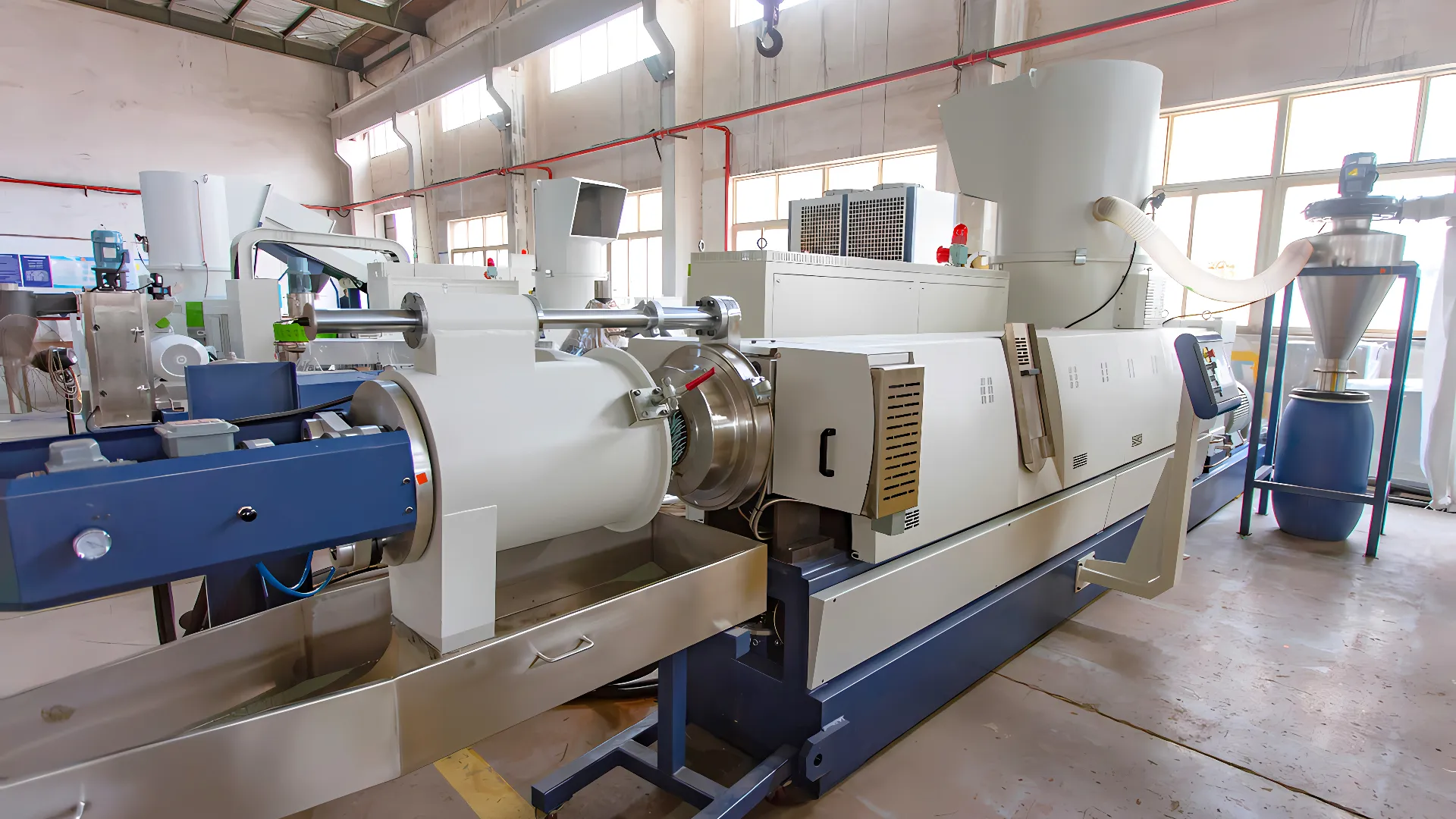
Our advanced single-screw plastic pelletizing machines with Heat Wave Stabilization produce premium plastic pellets by providing uniform heat distribution throughout the entire barrel length. This energy-saving pelletizer, available in single or double stage arrangement, comes standard with hydraulic-powered screen change to ensure there is no downtime throughout each operating session.
What Is a Single-Screw Plastic Pelletizing Machine?
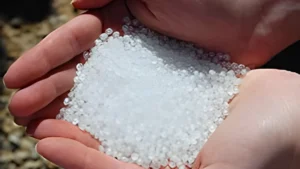
A single-screw plastic pelletizing machine — often called a single-screw pelletizer — melts plastic scrap and reforms it into small, uniform pellets. It sits at the end of most plastic recycling lines: washed flakes or crushed regrind go in, and dense, free-flowing pellets come out, ready for extrusion, injection molding, or sale as recycled resin.
Pelletizing does three things that loose regrind cannot. First, it densifies the material — a bag of pellets holds far more weight than a bag of fluffy film flakes, cutting storage and transport cost. Second, the melt filtration step removes the last contaminants that washing misses: paper fibers, degraded gels, and fine grit. Third, it homogenizes the melt, so every pellet has the same composition and melt index, which is what downstream processors actually pay for.
How Does a Single-Screw Pelletizer Work?
The working principle follows four stages. Feeding: plastic scrap enters the hopper and drops into the barrel, where the rotating screw conveys it forward. Melting: heater bands along the barrel — combined with shear heat from the screw itself — bring the plastic to a uniform melt. Our Heat Wave Stabilization keeps temperature even across the full barrel length, avoiding hot spots that degrade the polymer.
Filtration: the melt passes through a screen changer that traps contaminants. The standard hydraulic-powered screen changer swaps screens without stopping the line, so there is no downtime during screen changes. Pelletizing: the clean melt is then formed into pellets — either as strands cooled in a water tank and cut, or cut directly at the die face in a water ring — and dried before collection.
Additional technical refinements include a high-precision gearbox that drives the screw shaft consistently yet quietly, and a barrel and screw built from custom-formulated steel, gas-nitrided against rust and wear. Ultra-quiet ventilation fans with integrated temperature meters and PID thermal regulation run the full barrel length.
Key Components Explained
Screw and barrel. The heart of the machine. Screw diameter (100–200 mm in the SJ series) sets throughput; the L/D ratio (length to diameter) sets how much melting and mixing happens before the die. A longer L/D gives cleaner, more homogeneous melt but needs more drive power.
Gearbox and drive motor. The gearbox reduces motor speed to the screw’s working range while multiplying torque. A precision gearbox runs quieter and lasts longer under the continuous heavy load of pelletizing.
Heating and cooling. Heater bands bring each barrel zone to its setpoint; cooling fans prevent overheating. PID control holds temperatures within a tight band, which is what keeps pellet quality consistent from the first kilogram to the last.
Screen changer. The last line of defense for pellet quality. Hydraulic screen changers — standard on our machines — let operators swap a blinded screen in seconds without stopping extrusion.
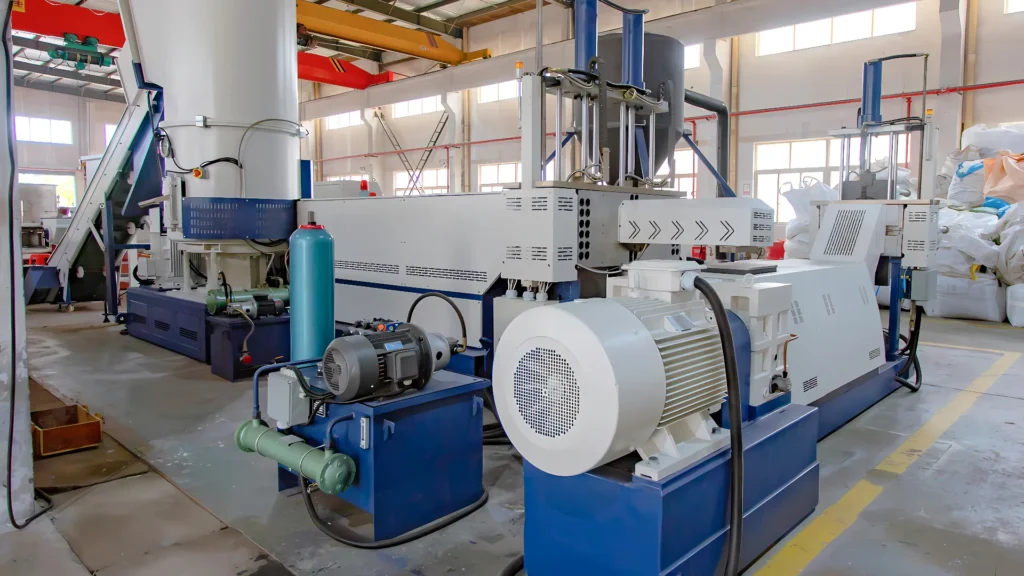
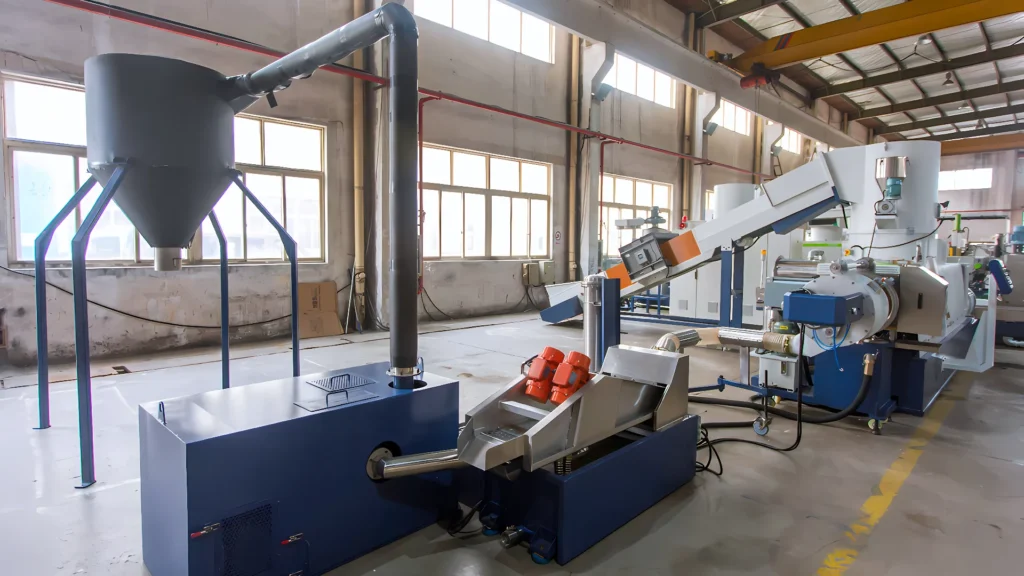
Cutting system. Depending on your choice of melt pelletizing or strand pelletizing, a water-ring cutting system or a strand line with water tank and pellet granulator is fitted. For higher mechanization, a vertical dryer with blower feeding a storage silo can be added.
Single-Stage vs. Double-Stage Configuration
Single-stage machines do everything in one extruder: melt, filter, pelletize. They are simpler, cheaper, and easier to maintain — the right choice for relatively clean scrap such as in-house edge trim or pre-washed flakes.
Double-stage machines add a second extruder in series. The first stage melts the material and does a coarse filtration; the melt then passes directly into the second extruder for re-melting and fine filtration before pelletizing. This two-pass treatment produces noticeably cleaner pellets from challenging feedstock — printed films, agricultural film with soil residue, or mixed post-consumer scrap — at the cost of roughly 30–40% more power and a larger footprint.
Rule of thumb: if your feedstock already went through a proper washing process, single-stage is usually enough. If you are pelletizing dirty or printed material directly, the double-stage pays for itself in pellet quality.
Strand Pelletizing vs. Water-Ring Pelletizing
In strand pelletizing, melt exits the die as continuous strands, runs through a cooling water tank, and is chopped into pellets by a strand pelletizer. The equipment is simple and the pellets are cylindrical and uniform — a proven setup for rigid plastics like HDPE and PP.
In water-ring pelletizing, rotating knives cut the melt directly at the die face while water sweeps the pellets away. There are no strands to break, so it handles sticky materials and high throughputs better, and the pellets come out nearly spherical, which flows better in downstream feeding systems.
Single-Screw vs. Twin-Screw Pelletizers
Single-screw pelletizers are the economical choice for straightforward recycling: melt it, filter it, pelletize it. They cost less to buy, use less power, and need less maintenance — which is why they dominate PE and PP film and rigid recycling.
Twin-screw machines earn their keep when the job goes beyond simple re-melting: compounding fillers or color masterbatch into the resin, devolatilizing moisture from hygroscopic materials, or processing formulations that need intensive mixing. If your product is plain recycled pellets, single-screw is the sensible choice; if you are engineering a compound, look at twin-screw.
Materials and Applications
Single-screw pelletizing machines handle the mainstream polyolefins — PE films and bags, PP woven bags and rigid parts, HDPE bottles and containers — as well as PS and ABS regrind. Typical installations include film recycling lines (paired with a cutter-compactor pelletizing line for bulky films), rigid plastic washing and pelletizing lines, and in-house reclaim of production scrap.
While single-screw pelletizers are ideally suited to these recycling operations, we also offer twin-screw plastic pelletizing machines tailored for compounding applications.
Technical Specifications
| Model | Screw Diameter | L/D | Driving Motor | Output |
|---|---|---|---|---|
| SJ-100 | ○100mm | 20/32 | 45-55 KW | 100-200 KG/H |
| SJ-120 | ○120mm | 20/32 | 55-75 KW | 100-200 KG/H |
| SJ-150 | ○150mm | 20/32 | 75-90 KW | 200-300 KG/H |
| SJ-180 | ○180mm | 20/32 | 90-132 KW | 200-400 KG/H |
| SJ-200 | ○200mm | 20/32 | 160-280 KW | 600-800 KG/H |
CE certification available.
Larger, more powerful models available based on your request.
How to Choose the Right Single-Screw Pelletizer
Start with your material: film and bags favor a cutter-compactor feed or double-stage setup, while clean rigid regrind runs fine on a single-stage machine. Next, size the throughput for your peak — not average — feed rate, leaving 15–20% headroom so the extruder is not constantly maxed out.
Then match the configuration to your pellet quality target. Selling food-contact-adjacent or high-clarity pellets justifies double-stage filtration; in-house reuse of your own scrap usually does not. Finally, confirm utilities: the larger SJ models need serious electrical supply and cooling water capacity, so check your plant infrastructure before committing.
Frequently Asked Questions
What is a single-screw plastic pelletizing machine used for?
It converts plastic scrap — flakes, crushed film, or regrind — into uniform pellets that can be fed directly into extrusion, injection molding, or blown film lines. Pelletizing densifies the material, removes residual moisture and contaminants, and produces a consistent feedstock that commands a higher resale price than loose regrind.
What is the difference between single-stage and double-stage pelletizers?
A single-stage machine has one extruder: it melts, filters, and pelletizes in one pass, which suits relatively clean scrap. A double-stage machine adds a second extruder after the first — the first stage melts and pre-filters, the second stage re-melts and fine-filters — delivering cleaner pellets from dirtier or printed feedstock at the cost of higher power consumption.
Strand pelletizing or water-ring pelletizing — which should I choose?
Strand pelletizing extrudes strands through a die, cools them in a water tank, then cuts them into pellets; it is simple and economical for rigid plastics. Water-ring pelletizing cuts the melt directly at the die face inside a water ring, which handles sticky or high-throughput materials better and produces rounder pellets. See our water-ring pelletizer guide for details.
Single-screw or twin-screw pelletizer — which is right for my material?
Single-screw machines are the workhorse for straightforward melt-and-pelletize recycling of PE, PP, and similar polyolefins — lower cost and simpler maintenance. Twin-screw machines add intensive mixing and compounding capability for filled, reinforced, or multi-component formulations. Our twin-screw extruder guide covers when compounding matters.
What throughput can I expect from a single-screw pelletizer?
The SJ series below covers 100–2,000 kg/h depending on screw diameter, L/D ratio, and material. Light films run slower than dense regrind on the same machine. Always size for your peak feed rate and confirm test results with your actual scrap before ordering.
How do I choose the right plastic pelletizer for my line?
Match the machine to your material (film vs. rigid), contamination level (single vs. double stage), target pellet quality, and downstream process. Our plastic pelletizer buying guide walks through the full selection process, and the PET single-screw pelletizer article covers PET-specific considerations.
Do you provide installation and after-sales support?
Yes. We provide installation guidance, commissioning support, operator training, and long-term spare parts service including screws, barrels, heaters, and screen changers.
Need help sizing a pelletizer for your material? Read our plastic pelletizer buying guide or contact our engineering team with your scrap type and target throughput for a tailored recommendation.
