


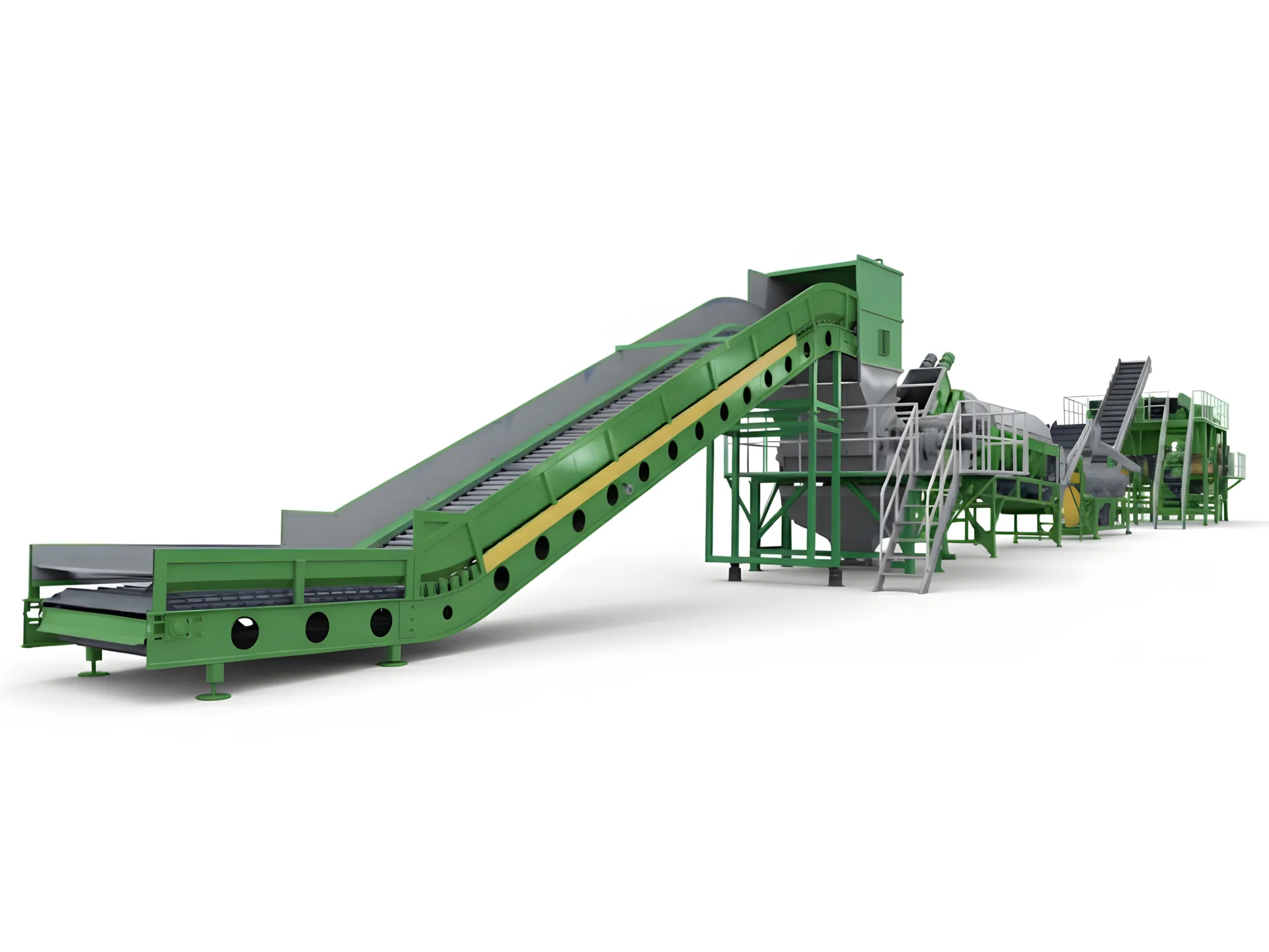
Complete PET Bottle Washing Line for High-Quality Flakes
Your one-stop industrial solution for recycling post-consumer PET bottles. Engineered as an essential component of comprehensive plastic washing lines, our advanced automated systems transform baled beverage bottles into clean, high-purity rPET flakes, prepared for bottle-to-bottle pelletizing or spinning into polyester staple fiber.
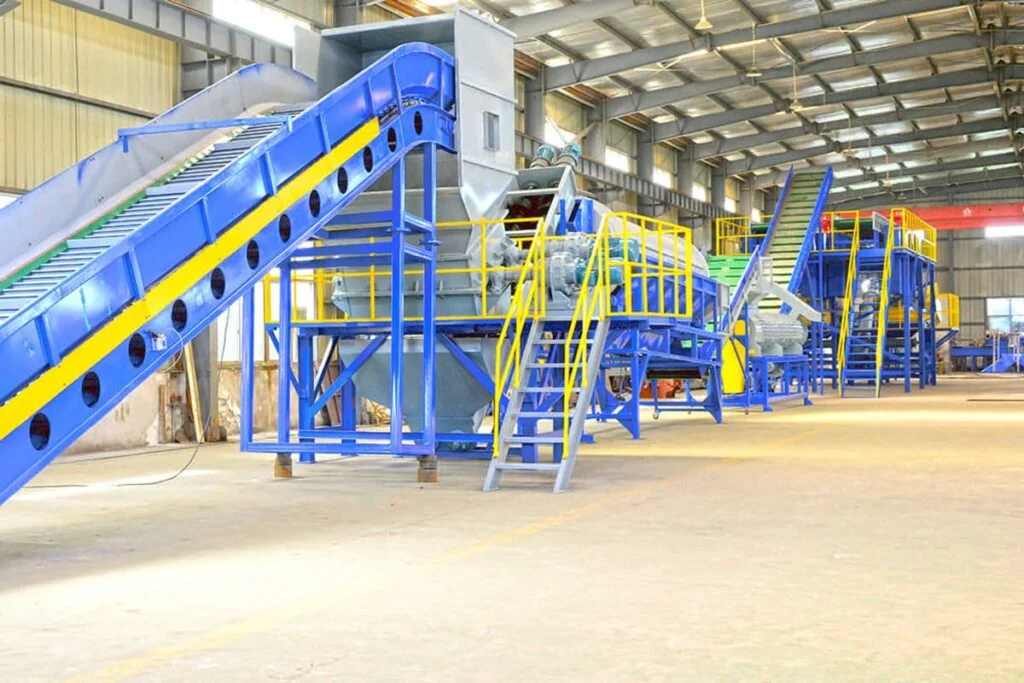
Engineered for Maximum Throughput & Purity
-
High-Throughput Capacities
Turnkey lines rated from 500 kg/h up to 5,000 kg/h, configured for single-shift or continuous 24/7 industrial recycling duty.
-
Water & Energy Efficient
Counter-current cascading wash loops reduce freshwater consumption, pairing seamlessly with our DAF water treatment system.
-
Premium Grade Purity
Consistently achieves PVC levels < 150 PPM (optionally < 50 PPM with optical sorters), impurities < 100 PPM, and residual moisture < 1%.
-
Flexible Layout Architecture
Adaptable linear, L-shaped, or U-shaped plant configurations engineered to fit existing warehouse footprints and ceiling clearances.
See Our PET Washing Line in Operation
Watch post-consumer baled PET bottles undergo de-baling, optical sorting, wet grinding, hot chemical washing, and sink-float separation into pristine flake feedstock.
Standard Process Flow Diagram
A comprehensive schematic detailing bottle opening, label removal, wet granulating, multi-stage hot washing, and centrifugal drying.

Step-by-Step Washing Process
Our PET Bottle Washing Line operates through carefully synchronized mechanical and thermal stages to guarantee supreme purity without degrading intrinsic viscosity (IV).
-
Step 1De-Baling & Bottle Opening
High-torque debaler breaks compacted PET bales into a continuous, single-layer stream onto the sorting belt.
-
Step 2Trommel Screening & De-Stoning
Rotary trommel filters out loose soil, small stones, metal caps, glass shards, and heavy abrasive debris.
-
Step 3Mechanical Label Scraping
High-speed rotary label remover shears PVC/PP sleeve labels without shattering bottles, stripping over 98% of labels.
-
Step 4Manual & Optical Sorting
Multi-station sorting conveyor removes non-PET bottles, opaque HDPE bottles, metal cans, and off-color containers.
-
Step 5Wet Granulation & Size Reduction
Heavy-duty wet crusher shreds bottles into uniform 12-16mm flakes while continuous water flushing reduces blade friction.
-
Step 6Continuous Steam Hot Washing
Steam-injected hot washing reactor (85-90°C) with caustic soda dissolves hot-melt adhesives and label glue residues.
-
Step 7High-Speed Friction Washing
Rotary paddles accelerate flakes against a perforated screen to flush away dissolved adhesives, dirt, and chemical foam.
-
Step 8Density Sink-Float Separation
Hydrodynamic separation tanks float polyolefin caps (PP/PE) while pure PET flakes sink and are discharged by bottom screw.
-
Step 9Centrifugal Dewatering & Thermal Drying
High-G spin dryer mechanically extracts water, followed by thermal pipeline flash drying to reach final moisture < 1%.
-
Step 10Zig-Zag Air Classification & Packing
Air classifier extracts residual light label films and fines before bagging into one-ton bulk bags or storage silos.
Technical Specifications: Capacity Models
Standard capacity configurations for PET bottle washing systems. Customized higher throughputs and turnkey plant layouts are built to client specifications.
| Model | Throughput Capacity | Installed Power (kW) | Water Consumption (m³/h) | PVC Contamination | Moisture Content |
|---|---|---|---|---|---|
| PET-500 | 500 kg/h | ~135 kW | 2 - 3 m³/h | < 150 PPM | < 1% |
| PET-1000 | 1,000 kg/h | ~240 kW | 4 - 6 m³/h | < 100 PPM | < 1% |
| PET-2000 | 2,000 kg/h | ~380 kW | 6 - 8 m³/h | < 50 PPM | < 1% |
| PET-3000 | 3,000 kg/h | ~520 kW | 8 - 12 m³/h | < 50 PPM | < 1% |
Standard Equipment Configuration
Turnkey equipment list for an industrial automated PET bottle washing line from de-baling to finished flake silo.
| No. | Component Name | Primary Function |
|---|---|---|
| 1 | Vertical de-baler with platform | Decompacts dense baled PET bottles |
| 2 | Belt conveyor | Transfers unbaled bottles to screening trommel |
| 3 | Roller trommel | Tumbles out stones, sand, loose glass, and metal debris |
| 4 | Belt conveyor | Transfers screened bottles to label remover |
| 5 | High-speed label remover | Strips glued and shrink sleeve labels mechanically |
| 6 | Manual sorting platform | Permits visual inspection and removal of foreign objects |
| 7 | Metal detector & separator | Protects granulator blades against ferrous and non-ferrous metals |
| 8 | Inclined belt conveyor | Feeds sorted bottles into granulator chamber |
| 9 | Wet granulator / crusher | Reduces bottles to 12-16mm flakes while spraying water |
| 10 | Screw feeder | Conveys wet PET flakes to primary floating washer |
| 11 | Floating washer tank | Separates floating polyolefin caps and labels from sinking PET |
| 12 | Centrifugal dehydrator | Extracts initial wash liquid from flake stream |
| 13 | Steam hot washer No. 1 | Caustic hot agitation melts glue and removes residues |
| 14 | Inclined screw loader | Transfers hot flakes to second hot washing reactor |
| 15 | Steam hot washer No. 2 | Deep chemical cleansing for food-grade purity |
| 16 | Inclined screw loader | Transfers flakes to high-speed friction washer |
| 17 | High-speed friction washer | Intensive abrasive scrubbing eliminates caustic and chemical film |
| 18 | Rinse float washer No. 1 | Second sink-float separation to remove trace cap micro-particles |
| 19 | Rinse float washer No. 2 | Final clean water immersion and rinse cycle |
| 20 | Centrifugal dewatering machine | High-G centrifugal force reduces surface moisture to < 2% |
| 21 | Thermal pipeline dryer & Zig-zag separator | Dries flakes to < 1% moisture and blows away residual label film |
| 22 | Storage silo & bagging station | Pneumatically stores and packages finished rPET flakes |
| 23 | Central PLC electric cabinet | Siemens/Schneider automated control console with safety interlocks |
Frequently Asked Questions
Clear answers about PET washing line capacity, moisture reduction, chemical treatment, and plant layout.
Ready to Turn PET Bottle Waste into High-Value rPET Flakes?
Contact our recycling machinery engineers today for a customized proposal, layout consultation, and a detailed equipment quote tailored to your capacity goals.

Comments are closed.