


PET 이면 HDPE 이면 PP/PE 재활용 라인 각 재료는 정렬, 세척, 건조, 녹이기 및 펠렛화에서 다르게 행동하기 때문에 다른 장비가 필요합니다. PET 병은 보통 라벨 제거, 뜨거운 세척 및 엄격한 PVC 제어가 필요합니다. HDPE 단단한 플라스틱은 강한 크기 감소 및 침전-부유 분리가 필요하며, PP/PE 필름은 적극적인 세척, 짜기, 건조, 배출가스 제거 및 안정적인 공급이 필요합니다.
이 비교는 폐기물 재활용 공장 구매자들이 장비 주문 전에 올바른 라인을 선택하는 데 도움이 됩니다. 전체 장비 카테고리를 읽으면서 비교하고 싶으시면 저희를 먼저 방문하세요. 산업 플라스틱 재활용 기계 페이지.
빠른 비교: PET, HDPE 및 PP/PE 라인
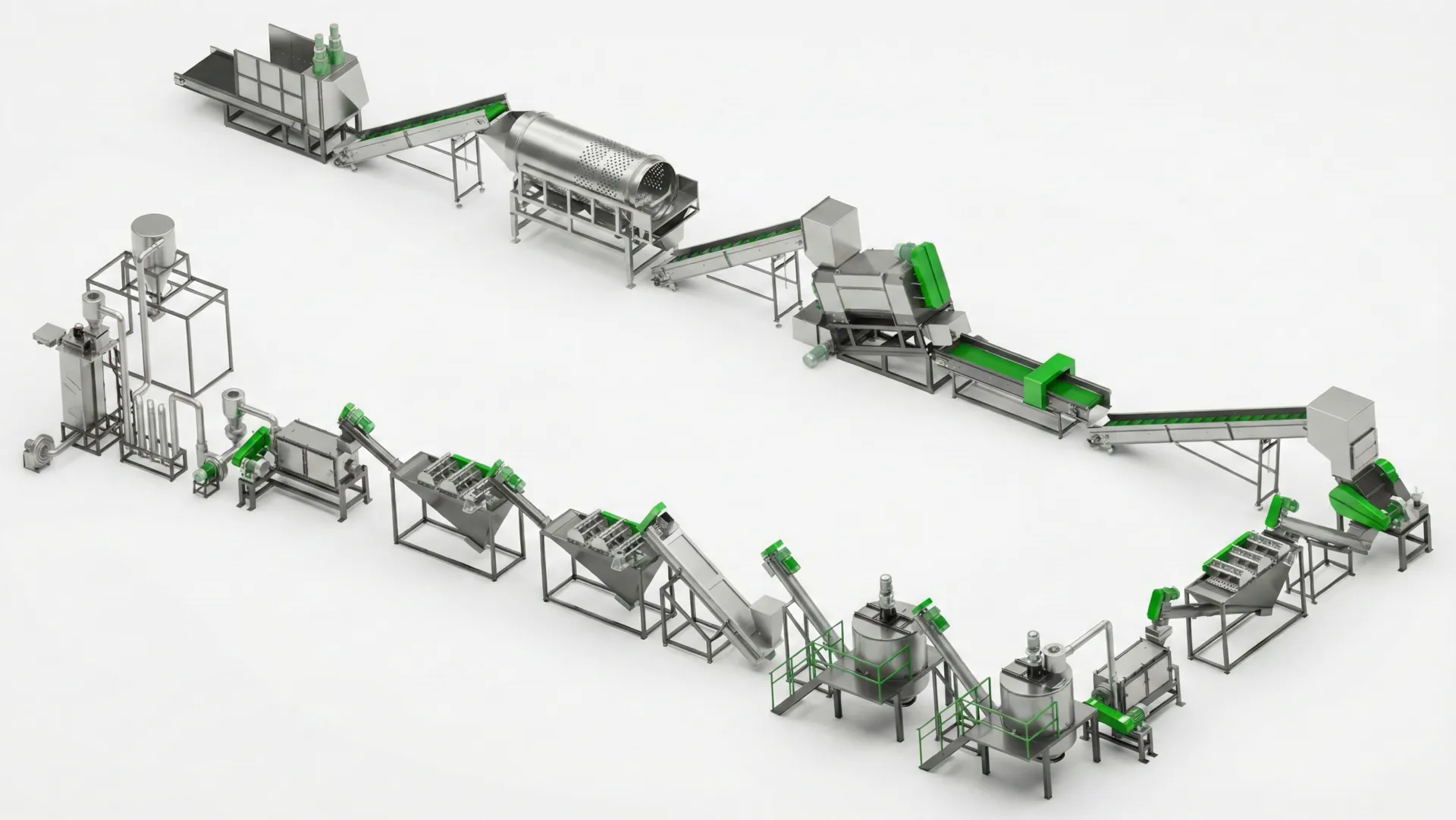
PET, HDPE 그리고 PP/PE 라인은 주입 형태, 오염 제어, 건조 요구 사항, 그리고 최종 제품 목표에서 가장 크게 차이가 있습니다. 공장은 일부 장비 개념을 공유할 수 있지만, 한 재료 라인 설계를 직접 다른 주입재에 복제해서는 안 됩니다.
| 자재 흐름 | 일반적인 입력 | 주요 설비 절차 | 일반적인 생산량 | 심각한 위험 |
|---|---|---|---|---|
| 애완 동물 | 음료병, 트레이, 열형성품 | 덤프 풀러, 라벨 제거기, 압착기, 냉/열 세척기, 침수-부력 분리기, 건조기, 정리기 | 청정 PET 플레이크, 때로는 펠릿 | PVC, 라벨, 접착제, 습기, 색상 혼합 |
| HDPE 경질 | 우유잔, 통, 상자, 병, 커버 | Shredder or granulator, friction washer, sink-float, dryer, pelletizer if needed | 청정 플레이크 또는 펠릿 | PP 혼합물, 라벨, 금속, 무거운 오물, 용융흐름 변화 |
| PP/PE 필름 | 농업용 필름, 스탠드 필름, 가방, 염원 가방 | 쇼더, 마찰세척기, 부력탱크, 압축기, 건조기, 커팅압축 펠릿제조기 | 건조 플레이트 또는 펠릿 | 물, 모래, 인크, 낮은 부피 밀도, 불안정한 공급 |
왜 한 개의 재활용 라인이 모든 플라스틱에 맞지 않는가
한 회수 라인이 모든 플라스틱을 처리할 수 없습니다. 성분 밀도, 녹여서의 행동, 포장 디자인, 오염 유형이 공정을 변경합니다. PET는 물에 침수하지만, HDPE와 PP는 일반적으로 부유합니다. 필름은 큰 표면적 때문에 많은 단단한 플라스틱보다 1킬로그램당 더 많은 물과 오물을 가지고 있습니다.
미국 EPA에 따르면, 2018년 미국 시골 단체 폐기물에서 발생한 플라스틱은 357만 톤에 달했으며, 플라스틱 컨테이너 및 포장재는 145만 톤을 넘었다. EPA는 또한 PET 병과 용기의 2018년 회수율이 29.1%이고, 자연 HDPE 병의 회수율이 29.3%라고 보고했다. 출처: 에이파이 플라스틱: 재질별 데이터.
그 숫자들은 라인 설계가 중요한 이유를 보여줍니다. PET 병, HDPE 컨테이너, 그리고 PP/PE 필름은 모두 재활용 사업에 들어올 수 있지만 각 흐름은 생산량을 보호하고 출력 품질을 유지하는 과정이 필요합니다.
PET 재활용 라인: 장비 및 품질 우선순위
PET 병 또는 트레이 흐름에서 라벨, 컵, PVC, 접착제, 오염물질 및 습기를 제거하기 위해 PET 재활용 라인이 구축됩니다. PET 플레이트 구매자들은 종종 색상, PVC 수준, 라벨 잔여물, 습기 및 미세 먼지에 신경 쓰는 데, 이러한 요인들이 하류 엑스트루전, 섬유, 시트 또는 병 등급 적용에 영향을 미칩니다.
- 앞면 정렬: PET 병 제외하고 금속, 유리, 돌, 어려운 색상을 깨끗이 제거한 후 깨끗이 합니다.
- 표면 제거: 표면 처리 전 라벨 로드를 줄여 플레이크와 세척수가 깨끗하게 유지되도록 합니다.
- 크기 축소: 크래셔 또는 습식 그랜불러를 사용하여 일관된 PET 플레이크를 만드십시오.
- 냉각 및 열 세척: 진흙, 설탕, 접착제, 기름 및 표면 오염을 제거합니다.
- 식빵 분리: 부유하는 캡과 라벨을 침수하는 PET 플레이크에서 분리합니다.
- 건조 및 공기 분류: 수분을 줄이고 희미한 라벨이나 미세한 입자를 제거합니다.
플라스틱 재활용 협회는 라벨 재료, 인쇄유, 접착제, 그리고 유효 범위가 PET 재활용 품질에 영향을 줄 수 있음을 경고합니다. 비해제 접착제와 호환되지 않는 라벨 재료는 플레이크와 함께 이동하여 출력 가치를 낮출 수 있습니다. 출처: PET 라직 패키징용 APR 설계 가이드.
PET 프로젝트의 경우, 저희와 함께 시작하세요. 페트병 재활용 시스템 페이지. PVC 관리가 주요 위험인 경우, 우리의 PVC 관리 가이드를 읽으십시오. PVC를 PET 병 재활용 라인에서 제어합니다..
HDPE 단단한 재활용 라인: 장비 및 품질 우선순위
HDPE 단단한 재활용 라인은 병, 통, 상자, 커버 등 다른 두꺼운 벽의 폴리올레핀 아이템을 위해 구축됩니다. 프로세스는 일반적으로 크기 축소, 세척, 밀도 분리, 건조 및 선택 사항인 펠릿화에 중점을 둡니다.
- 잘라내기 또는 거칠기 큰 통, 상자 및 큰 고정성 부품에는 썬더링을 선택하고, 병과 같은 작은 항목에는 그랜불레이션을 사용하세요.
- 마찰 세척 토큰 크기 조정 후 표면 오물, 라벨, 유기물 잔여물 제거.
- 침수-부력 분리 부유하는 HDPE와 PP를 유지하면서 가능한 경우 더 밀도가 높은 재료를 제거합니다.
- 건조: 사용 목표 수분과 출력 형태에 따라 중력 분리와 열 건조를 사용하세요.
- 작은 알모양으로 하기: 구매자가 펠릿 대신 파편을 필요로 할 때는 Extrusion, Melt Filtration, 및 Pellet Cutting을 추가하세요.
APR은 HDPE의 밀도를 0.94-0.97 g/cm3로 명시하며, 이는 HDPE가 일반적으로 물에 뜹니다를 의미합니다. 또한 APR은 PP를 압출 시 혼합하면 HDPE를 오염시킬 수 있으며, 농도가 너무 높으면 충격 강도를 저하시킬 수 있다고 언급합니다. 출처: APR HDPE 고정성 지도.
고정형 HDPE와 PP 컨테이너에 대한 정보는 우리의 단단한 플라스틱 세척 라인. 아직 Shredding과 Crushing 사이를 선택하고 계신다면, 우리의 플라스틱 재활용 기계 선택 가이드.
PP/PE 필름 재활용 라인: 장비 및 품질 우선순위
PP/PE 필름 재활용 라인은 낮은 부피 밀도, 높은 수분, 무거운 먼지, 불안정한 공급으로 구성됩니다. 필름 재활용은 일반 플라스틱 재활용보다 더 많은 씻기, 압축, 건조, 공급 제어가 필요합니다.
- 선쇄재처리: 활석 필름 박스를 열고 하류 장비 주위의 랜딩을 줄입니다.
- 마찰 세척 사람, 라벨, 종이, 유기물, 표면 먼지를 제거합니다.
- 부유 세척: 중량 오염물을 분리하면서 polyolefin 필름을 유지합니다.
- 압축 및 건조 Extrusion 전에 물을 제거하세요, 특히 농업 필름과 씻은 박스에 대해요.
- 커퍼압축기 공급: Extrusion 전에 필름을 밀도를 높여 불안정한 흡수를 방지하세요.
- 배출 및 필터링: 펠렛화 과정에서 잉크, 습도, 접착제 및 휘발성 물질을 제어합니다.
APR는 PE 유연한 포장재를 백, 포장, 래핑, 사켓, 라이너, 그리고 다른 필름 형식으로 설명합니다. 또한, 북미 주거 후 소비자 필름은 대개 소매 위치에서 수집되며 LDPE, LLDPE, HDPE, 그리고 다층 패키지를 포함할 수 있습니다. 출처: APR PE 유연한 가이드.
영화 프로젝트는 저희로 시작하세요 PP/PE 필름 재활용 라인 가이드. 세탁 후 습기가 문제가 된다면, 다음 방법을 고려해 보세요 플라스틱 필름 스크위저는 습기를 줄입니다..
과정 단계별 장비 비교
PET vs HDPE vs PP/PE recycling lines는 과정 단계에 따라 가장 쉽게 비교할 수 있습니다. 같은 단계 이름은 매우 다른 장비 선택을 숨길 수 있습니다, 특히 씻기, 건조, Pelletizing에서요.
| 처리 단계 | PET 라인 | HDPE 단단한 라인 | PP/PE 필름 라인 |
|---|---|---|---|
| 정렬 | 우선순: PVC, 색상, 금속, PET 외 물질 제거 | 금속, 라벨, PVC, 혼합 성분 제거 | 종이, 딱딱한 플라스틱, 실, 금속, 색깔 필름 제거 |
| 크기 축소 | 습식 압쇄기 또는 플레이크용 그랜불러 | 파이프나 크러셔 기반의 파이프 크기 | 필름을 열기 위한 파이프나 습식 크러셔 |
| 세탁 | 냉수, 뜨거운 물, 씻기, 레이블 제어 | 마찰 씻기와 플로트 분리 | 마찰 씻기, 플로트 씻기, 모래 제거 |
| 건조 | 플라스크와 열 건조로 플라크 습도 제거 | 필요에 따라 센트로필과 열 건조 | 고수분량에 대한 스퀴저와 열 건조 |
| 압출 | 플라크나 펠릿 목표에 따라 선택적 | 펠릿 판매 시 일반적 | 펠릿 출력 시 일반적; 강력한 공급이 필요 |
| 필터링과 배기 | 펠릿 등급 PET에 중요 | 레이블, 미세한 입자, 혼합 용융에 중요 | 인크, 습도, 발화성에 매우 중요 |
정리 차이: PET은 정숙이 필요하며, 폴리올레핀은 분리가 필요
PET은 PVC 및 비-PET 재료를 엄격하게 제거해야 하며, HDPE 및 PP/PE 흐름은 폴리올레핀 분리 및 색상 제어가 필요. 정리 품질은 수익, 씻기 비용, 플라크 가치, 펠릿 안정성에 영향을 미친다.
TOMRA는 센서 기반 정리가 혼합 플라스틱, PET, 폴리올레핀, PVC, 필름에서 폴리머와 색상을 분리할 수 있다고 주장합니다. TOMRA는 또한 적절한 응용 프로그램에서 자동 정리가 HDPE와 PP 회수에서 95% pure를 달성할 수 있다고 보고합니다. 출처: TOMRA 플라스틱 정리 응용 프로그램.
수동 정리가 정숙 목표를 충족시키지 못하거나 노동 비용이 너무 높아지면 광학 정리를 사용하십시오. 입력이 작고 깨끗하며 매우 명확할 때(예: 단일 색상의 후공업 쓰레기와 같이) 간단한 수동 정리를 사용하십시오.
건조와 습도: 숨겨진 차이
PET, HDPE, PP/PE 필름에서 건조 요구가 급격히 변화합니다. 필름은 일반적으로 표면 수분을 많이 가지며, PET 플라크 구매자는 종종 하위 처리를 위해 긴장된 습도 제한을 설정합니다.
| 재료 | 습도 도전 | 실용적인 건조 선택 |
|---|---|---|
| PET 플레이크 | 습도는 플라크 저장 및 하위 처리에 영향을 미칩니다 | 센트로필 건조기와 뜨거운 공기 또는 열 건조 |
| HDPE 고정형 플라크 | 레이블, 캡, 불규칙한 형태에 수분이 남아 있음 | 센트로필 건조기; 펠릿화 또는 포장이 필요할 때 열 건조 |
| PP/PE 필름 | 필름은 수분을 잡아서 높은 표면 수분을 가지고 있습니다 | Pelletizing 전에 Squeezer나 스크류 프레스와 열 건조 |
نمونه 테스트 시, 공급자에게 건조 후 수분을 측정하도록 요청하고, 펠릿이 목표인 경우 재료를 Extrusion을 통해 운행하도록 합니다. 우리의 경험에 따르면, 보기에 강력한 씻기 라인이 건조기가 Extruder의 공급 및 배기 요구 사항을 충족하지 못하면 실패할 수 있습니다.
피말 또는 펠릿?
적절한 출력 목표는 세척 및 건조 후 라인이 종료되는지 아니면 extrusion 및 pelletizing으로 계속되는지를 결정합니다. PET 프로젝트는 종종 깨끗한 플레이크를 판매하지만, HDPE와 PP/PE 프로젝트는 구매자가 균일한 주입원료가 필요할 때 pelletizing을 추가하는 경우가 많습니다.
- 플레이크를 선택하세요 구매자가 세척된 재료를 처리할 수 있고 플레이트 사양을 수용할 때
- 펠릿을 선택하세요 구매자가 더 쉬운 주입, 안정적인 용융 특성, 또는 직접 extrusion, injection, film blowing에 사용할 때.
- 선택하세요 만약 귀사의 공장에서 고급 플레이크를 판매할 수 있고 저급 또는 내부 흐름을 펠릿화할 수 있다면.
필름이 필요하시면 스크류 설계, 필터 유형, 배출가스 제거, 잘라내는 방식, 냉각 및 silo 저장을 비교해 보세요. 저희 플라스틱 펠릿화 라인 페이지는 주요 플라스틱 펠릿 제조 장비 옵션을 설명합니다.
비용 및 레이아웃 차이점 구매자가 확인해야 할 사항
비용 차이는 오염 수준, 설비 수량, 처리 용량, 자동화, 수처리, 건조 요구 사항, 그리고 펠렛 제조 범위에서 비롯됩니다. PET 대 HDPE 대 PP/PE 재활용 라인은 동일한 기준으로 가격을 책정해야 하며, 그렇지 않으면 비교가 팀을 오인하게 할 수 있습니다.
- 입력을 정의하십시오: 장기, 흩어진 병, 부서진 플라스틱 페인, 필름 롤, 통, 상자, 또는 혼합 유연 플라스틱.
- 출력을 정의하십시오: 세척된 플레이트, 건조된 플레이트, 펠릿, 또는 이 둘 다.
- 각 공급업체에게 전달대, 플랫폼, 전기실, 수처리, 건조기, 필터, 부품, 설치 및 교육을 포함하도록 요청하십시오.
- 비용을 비교하십시오: 전력, 물, 압축 공기, 폐수, 바닥 공간, 천장 높이 및 유지보수 접근성.
- 샘플 테스트를 진행하고 kg/h, 습도, 세척 결과, 필터 압력, 펠렛 품질, 정지 시간을 기록하세요.
예산 계획을 위해 제품 설명서를 참조하십시오. 플라스틱 재활용 기계 비용 가이드바닥 공간 및 프로세스 흐름에 대해 저희 제품을 활용하세요. 플라스틱 재활용 시설 레이아웃 가이드.
결정 매트릭스: 어떤 라인이 귀하의 원료에 맞나요?
이 결정 표를 사용하면 혼합된 프로젝트 옵션이 있을 때 올바른 라인을 선택하는 데 도움이 됩니다. 공식 견적을 요청하기 전에 이를 사용하세요.
| 소재 조건 | 추천 라인 | 이유 |
|---|---|---|
| 정리된 PET 병 묶음에 라벨과 캡이 포함되어 있습니다. | 페트병 세척라인 | PET는 라벨 제거, 침수-상승, 세척, 건조 및 PVC 제어가 필요합니다. |
| HDPE 병, 통, 상자 및 PP 컵 | 유연성 없는 플라스틱 세척 라인 | 성형 폴리올레핀은 쇠너, 마찰 세척, 밀도 분리 및 선택 사항인 펠릿 제조가 필요합니다. |
| 농업용 필름에 모래와 습기가 섞여 있습니다. | PP/PE 필름 세척 및 펠릿 제조 라인 | 필름은 강한 세척, 짜기, 건조, 배출가스 제거 및 필터링이 필요합니다. |
| 정리된 공장 PP 또는 PE 가공품 | 파쇄기 + 플라스틱 펠릿 라인 | 정제 후 산업 쓰레기는 종종 전면 씻기를 건너뛰고 할 수 있습니다 |
| 혼합 PET, HDPE, PP, PE, PVC | 재료별 라인 전에 정리 우선 시스템 | 혼합 폴리머는 씻기와 extrusion 전에 분리되어야 하며 가치를 보호할 수 있습니다 |
FAQ: PET 대 HDPE 대 PP/PE 재활용 라인
PET, HDPE, 그리고 PP/PE를 처리할 수 있는 재활용 라인이 하나로 가능한가요?
일줄은 일부 프론트엔드 정렬이나 크기 감소 개념을 공유할 수 있지만, 고가치 출력을 목표로 하면 PET, HDPE, 및 PP/PE를 하나의 혼합 흐름으로 처리하지 않아야 합니다. 재료는 다른 분리, 씻기, 건조, extrusion 설정이 필요합니다.
쓰레기 처리선 중 가장 많이 씻어야 할 설비가 필요한 선은 어디입니까?
PET bottle and PP/PE film lines often need the most washing equipment, but for different reasons. PET needs label, glue, and PVC control; film needs sand, water, ink, and low-density handling control.
PP/PE 필름이 왜 압축기가 필요한가요?
PP/PE 필름은 씻은 후에 얇은 필름이 많은 표면 습기를 가지기 때문에 압축기가 필요합니다. 압축으로 필름을 밀도 있게 하고 열 건조나 extrusion 전에 습기를 줄입니다.
HDPE가 PET보다 재활용이 쉬운가요?
HDPE는 흐름이 깨끗하고 정리가 잘 되어 있을 때 더 용이하지만, 여전히 라벨, PP 혼합물, 먼지, 금속, 그리고 녹는 정도에 대한 관리가 필요합니다. PET는 고가치의 플래크를 제공하지만, 더욱 엄격한 PVC 및 습도 관리가 필요합니다.
플라스틱 파편을 판매해야 하나요?
flakes를 판매할 때 구매자가 씻은 재료를 처리할 수 있고 여러분의 라인이 파편 규격을 충족할 수 있도록 하세요. 균일한 복용량, 안정된 녹는 성능, extrusion, injection, 또는 film blowing에서의 사용이 더 쉬운 경우 펠릿을 선택하세요.
다음 단계: 라인을 재료에 맞추기
PET 대 HDPE 대 PP/PE 재활용 라인은 재료 성질, 오염 원인, 출력 목표, 구매자 요구 사항에 따라 선택되어야 합니다. PET 라인은 파이프 pureness를 보호합니다. HDPE 고정 라인은 수익과 polyolefin 품질을 보호합니다. PP/PE 필름 라인은 습기, 공급, 배기 문제를 해결합니다.
비교에서 라인 설계로 이동하려면 Rumtoo에 재료 사진, 목표 kg/h, 오염 상세 정보, 바닥 계획, 출력 목표를 보내 주세요. 우리의 엔지니어는 PET 병 라인, 고정 플라스틱 씻기 라인, PP/PE 필름 라인, 또는 완전 재활용 공장 레이아웃을 비교하는 데 도움을 드릴 수 있습니다.
