


مقارنة خطوط إعادة تدوير البولي إيثيلين تراي كيت (PET) مقابل البولي إيثيلين (HDPE) مقابل البولي بروبيلين (PP) / البولي إيثيلين (PE) تتطلب معدات مختلفة لأن كل مادة تتصرف بشكل مختلف في عملية التفريغ، والغسل، والتجفيف، والذوبان، والتحويل إلى قاطع. عادةً ما تحتاج قوارير PET إلى إزالة العلامة التجارية، والغسل الساخن، والتحكم الصارم في PVC. تحتاج البلاستيك الصلب من HDPE إلى تقليل حجم كبير وتفريق الجسم المغمور، بينما تتطلب بلاستيك الفيلم من PP / PE الغسل العنيف، والضغط، والتجفيف، والتحرير من الغاز، والتغذية المستقرة.
يساعد هذا المقارنة في اختيار مشتري محطة إعادة التدوير الخط الصحيح قبل طلب المعدات. إذا كنت ترغب في مقارنة فئات المعدات الكاملة بينما تقرأ، ابدأ بزيارة آلات إعادة تدوير البلاستيك الصناعية صفحة.
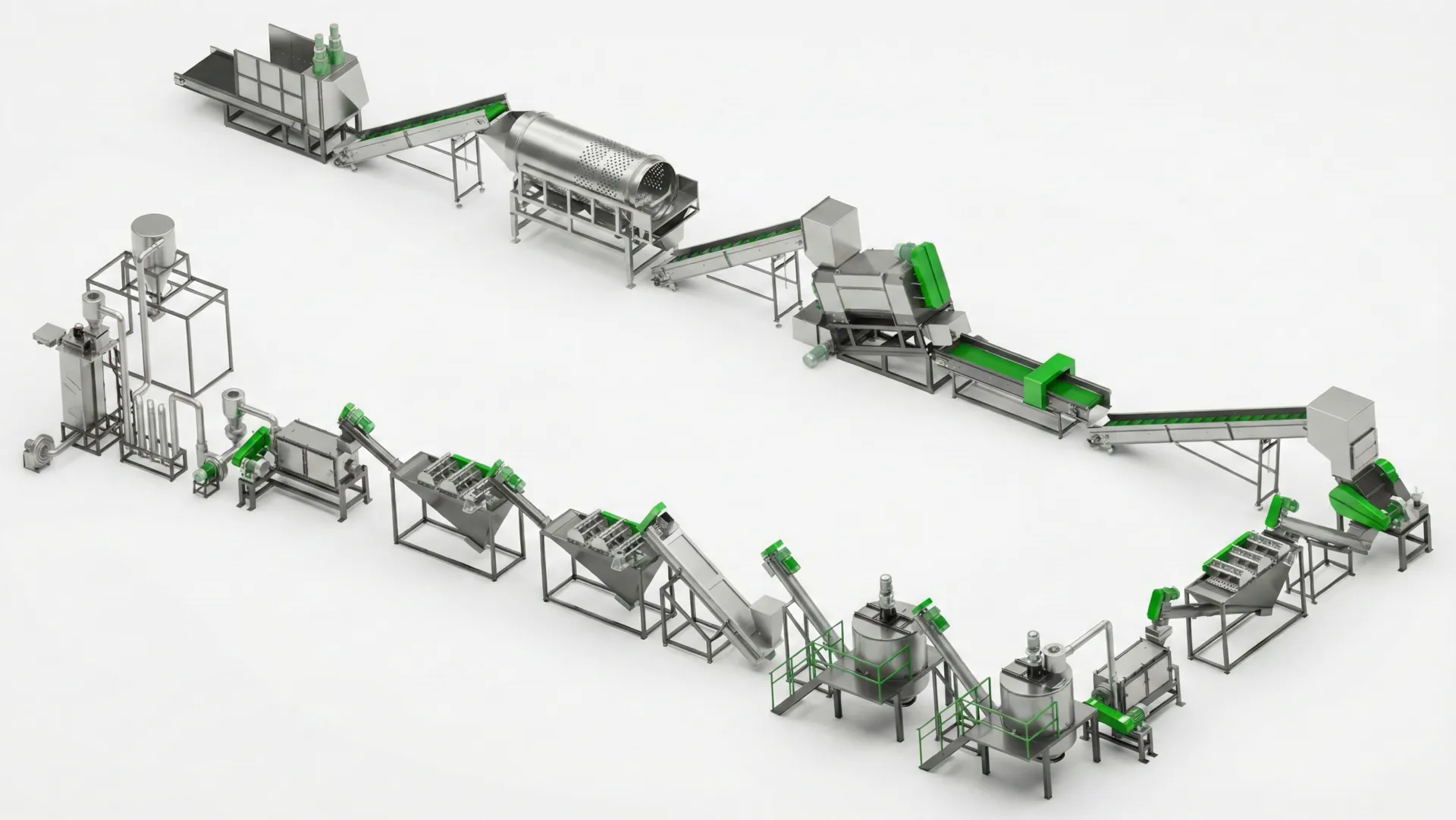
Quick Comparison: PET, HDPE, and PP/PE Lines
PET, HDPE, and PP/PE lines differ most in feed form, contamination control, drying demand, and final product target. A plant can share some equipment concepts, but it should not copy one material line design directly onto another feedstock.
| نهر المواد | المواد المدخلة الشائعة | مسار المعدات الرئيسي | المنتج النموذجي | الخطر الحرج |
|---|---|---|---|---|
| حيوان أليف | قوارير المشروبات، الأطباق، الأشكال الحرارية | مزيل العلامات التجارية، المزيل، الكرش، الغسل البارد / الساخن، التفريق الجسم المغمور، المجفف، المزيل | قطع PET النظيفة، أحيانًا قاطع | PVC، علامات، لاصق، الرطوبة، خليط الألوان |
| البلاستيك الصلب من HDPE | زجاجات الحليب، الأحواض، الصناديق، الزجاجات، الأغطية | المزيل، المزيل، غسالة التفريغ، التفريق الجسم المغمور، المجفف، المزيل إذا لزم الأمر | قطع نظيفة أو قاطع | مزيج PP، علامات، معادن، الأوساخ الثقيلة، اختلاف في تدفق الذوبان |
| بلاستيك الفيلم من PP/PE | البلاستيك الزراعي، الفيلم القابل للتمدد، الأكياس، الأكياس المفروشة | المزيل، غسالة التفريغ، خزان الطفو، المضغ، المجفف، المضغ المضغ | قطع جافة أو قاطع | الماء، الرمل، الحبر، كثافة حجم منخفضة، تغذية غير مستقرة |
لماذا لا يمكن استخدام خط إعادة التدوير الواحد لكل بلاستيك
One recycling line cannot fit every plastic because resin density, melt behavior, packaging design, and contamination type change the process. PET sinks in water, while HDPE and PP usually float. Film also carries more water and dirt per kilogram than many rigid plastics because of its large surface area.
وفقًا لإدارة حماية البيئة الأمريكية (EPA)، بلغ إنتاج البلاستيك في النفايات الصلبة في الولايات المتحدة 35.7 مليون طن في عام 2018، وكانت القوارير والتعبئة والتغليف البلاستيكية تشكل أكثر من 14.5 مليون طن. أوردت EPA أيضًا معدلات إعادة التدوير لعام 2018 بنسبة 29.1% للقوارير والزجاجات من PET وبنسبة 29.3% للزجاجات الطبيعية من HDPE. مصدر: بيروقراطية بيئة (EPA) البلاستيك: بيانات مخصصة للمادة.
هذه الأرقام تظهر لماذا يهم تصميم الخط. قد تدخل قوارير PET، صناديق HDPE، وأفلام PP/PE إلى أعمال إعادة التدوير، ولكن كل نهر يحتاج إلى عملية تحمي الإنتاج والجودة النهائية.
خط إعادة تدوير PET: الأولويات في المعدات والجودة
محلل إعادة تدوير PET يتم بناؤه لاستبعاد العلامات، الأغطية، PVC، الغراء، والتراب والرطوبة من تدفقات القنوات أو الصناديق. يشتري المشتريون لفاتات PET الاهتمام باللون، مستوى PVC، بقايا العلامات، الرطوبة، والغبار الدقيق لأن هذه العوامل تؤثر على تطبيقات التشكيل، الألياف، الألواح، أو درجة القنوات التالية.
- تصنيف الأمامي: ابحث عن البوتылки غير المبنية من PET، والمعادن، والزجاج، والصخور، والألوان الصعبة قبل الخلط.
- إزالة العلامات تقليل كمية العلامات قبل الغسل حتى تظل الرقائق والمياه النظيفة.
- تصغير الحجم: استخدم محركاً أو granulator رطب لخلق فقاعات بلاستيكية PET متسقة.
- تنظيف بارد و حار إزالة الغبار، والسكر، والمادة الحافظة، والزيت، والتعقيم السطحي.
- الفصل بالطفو والترسيب: يحصل على العبوات البلاستيكية القابلة للطفو (العناوين والبطاقات) من البلاستيك المعدني الغامق.
- Drying and air classification: تقليل الرطوبة وإزالة العلامات الخفيفة أو الغبار.
الجمعية الأمريكية للمتقاعدين البلاستيكية تحذير بأن مواد العلامات، والدهانات، والمطاطيات، ومساحة التغطية يمكن أن تؤثر على جودة إعادة تدوير PET. المطاطيات غير المتخلصة والمواد غير المتوافقة للعلامات يمكن أن تنتقل مع الرقائق وتقلل من قيمة الإنتاج. المصدر: دليل تصميم APR للمواد البلاستيكية الصلبة PET.
للпроектات PET، ابدأ بمنتجاتنا نظام إعادة تدوير زجاجات PET صفحة. إذا كانت التحكم في الـ PVC هي خطرك الرئيسي، اقرأ دليلنا حول إدارة البولي فينيل كلوريد في خطوط إعادة تدوير زجاجات البوتل PET.
محلل تدوير بلاستيك HDPE صلب: المعدات والمعايير الجودة
محلل تدوير البلاستيك الصلب HDPE مصمم للنفايات البلاستيكية الصلبة مثل عبوات البوتل، الخزانات، الصناديق، الأغطية، وأمور بوليوليفينات الدهون الكثيفة الأخرى. يركز العملية عادة على تقليل الحجم، والتنظيف، والفصل المبني على الكثافة، والجفاف، والتحبيب المختار.
- تقطيع أو تكسير Choose shredding for bulky drums, crates, and large rigid parts; use granulation for bottles and smaller items.
- تنظيف بالفترة إزالة الغبار السطحي، والصناديق، والبقايا العضوية بعد عملية التقليل من الحجم.
- فصل الغسق والصعود ابقِ على السباحة HDPE و PP بينما يتم إزالة المواد الأكثر كثافة قدر الإمكان.
- تجفيف: استخدم جفافًا دورانيًا وجفافًا حراريًا بناءً على هدف الرطوبة وشكل الإخراج.
- التكوير: إضافة تكسير البلاستيك، وتصفية السائل، وتقطيع الحصص عندما يحتاج المشتري إلى حصص بدلاً من الرقائق.
يحدد APR كثافة HDPE بين 0.94-0.97 غ/سم³، مما يعني أن HDPE عادة ما يطفو في الماء. ويشير APR أيضًا إلى أن PP قد يلوث HDPE عند خلطه في التشكيل، وقد يقلل من خصائص الصدمة إذا كانت المستوى مرتفعًا جدًا. المصدر: موجهة HDPE رقيقة.
للحاويات الصلبة من HDPE و PP، راجع موقعنا خط غسيل بلاستيك جامدإذا كنت لا تزال تختار بين تكسير وكسر، قارن المعدات لدينا على مرشدة اختيار آلة إعادة تدوير البلاستيك.
خط إعادة تدوير بلاستيك الفيلم PP/PE: أجهزة الجودة الأكثر أهمية
يبنى خط إعادة تدوير بلاستيك الفيلم PP/PE حول كثافة حجمية منخفضة، رطوبة عالية، تلوث ثقيل، وتغذية غير مستقرة. غالبًا ما تحتاج إعادة تدوير الفيلم إلى غسل، ضغط، تجفيف، وضبط التغذية أكثر من إعادة تدوير البلاستيك القاسي.
- القطع المسبق: افتح أكوام الفيلم المفتوحة وقم بتقليل التشطيب حول الأجهزة التالية.
- تنظيف بالفترة إزالة الرمل، الأوسمة، الورق، المواد العضوية، والغبار السطحي.
- الغسل العكسي: فصل التلوث الثقيل بينما تبقي فيلم البولي أوليفين عائمًا.
- الضغط والتجفيف: إزالة الماء قبل الطباعة، خاصة للفيلم الزراعي والحقائب المغسولة.
- تغذية المضارب المضغوط: كثيف الفيلم قبل الطباعة لمنع التغذية غير المستقرة.
- التجفيف والتصفية: تحكم في الحبر، الرطوبة، اللاصقات، والغازات المتطايرة أثناء تحويل البلاستيك إلى كريستال.
يصف APR البلاستيك البوليمري القابل للتمدد كحقائب، أكياس، غطاء، أكياس، مظاريف، وأشكال فيلم أخرى. ويشير أيضًا إلى أن البلاستيك المنزلي بعد الاستخدام في الشمالية الأمريكية يتم جمعه غالبًا في مواقع البيع بالتجزئة ويشمل LDPE، LLDPE، HDPE، والصناديق متعددة الطبقات. مصدر: APR PE Flexible Guidance للبدء في مشاريع الفيلم، استخدم.
مرشدة خط إعادة تدوير بلاستيك الفيلم PP/PE . إذا كانت الرطوبة بعد الغسل عائقك، استعرض كيف يمكن لـ. ضغط بلاستيك الفيلم تقليل الرطوبة..
مقارنة الأجهزة بناءً على مرحلة عملية
PET vs HDPE vs PP/PE recycling lines are easiest to compare by process stage. The same stage name can hide very different equipment choices, especially in washing, drying, and pelletizing.
| مرحلة عملية | خط PET | خط HDPE القاسي | خط بلاستيك الفيلم PP/PE |
|---|---|---|---|
| فرز | أولوية عالية: إزالة PVC، اللون، المعادن، غير PET | إزالة المعادن، الأوسمة، PVC، المادة الخام المختلطة | إزالة الورق، البلاستيك القاسي، الخيوط، المعادن، الفيلم الملون |
| تصغير الحجم | مضارب أو خلاط مائي للقطع | مطحنة أو معالج بناءً على حجم الجزء | مطحنة أو محطم رطب لفتح الفيلم |
| غسل | غسل بارد، غسل حار، غسل، تحكم في العلامة التجارية | غسل بالتآكل وتمييز العوالق | غسل بالتآكل، غسل العوالق، إزالة الرمل |
| تجفيف | Centrifugal and thermal drying for flake moisture | Centrifugal and thermal drying as needed | ضغط بالإضافة إلى thermal drying للكثافة المائية العالية |
| البثق | اختياري؛ يعتمد على هدف العوالق أو البوليتير | شائع عند بيع البوليتير | شائع للبوليتير؛ يتطلب تغذية قوية |
| التصفية والتهوية | مهمة للبوليتير درجة البوليتير | مهمة للعلامات، النفايات، والخلطات المختلفة | مهمة جدًا للطلاء، الرطوبة، والغازات المتطايرة |
الفرق في التصفية: البوليتير يحتاج إلى نقاء، البوليوليفرين يحتاج إلى الفصل
PET needs strict removal of PVC and non-PET materials, while HDPE and PP/PE streams need polyolefin separation and color control. Sorting quality affects yield, washing cost, flake value, and pellet stability.
TOMRA states that sensor-based sorting can separate polymers and colors across mixed plastics, PET, polyolefins, PVC, and film. TOMRA also reports that automated sorting can reach over 95% purity in HDPE and PP recovery in suitable applications. Source: تطبيقات تصفية TOMRA للبلاستيك.
استخدم التصفية البصرية عندما لا يمكن للتصفية اليدوية تحقيق هدف النقاء أو عندما يصبح تكلفة العمل اليدوي عالية جدًا. استخدم التصفية اليدوية البسيطة عندما يكون الدخل صغيرًا، نظيفًا، وواضحًا جدًا، مثل النفايات الصناعية الواحدة اللون.
جفاف والرطوبة: الفرق الخفي
Drying demand changes sharply across PET, HDPE, and PP/PE film. Film usually holds more surface water, while PET flake buyers often set tight moisture limits for downstream processing.
| مادة | تحدي الرطوبة | اختيار جاف عملي |
|---|---|---|
| رقائق PET | تؤثر الرطوبة على تخزين الرمل والمعالجة اللاحقة | جاف مركزي بالإضافة إلى الهواء الساخن أو thermal drying |
| HDPE rigid flakes | الماء يبقى في العلامات، القبعات، والشكل غير المنتظم | جاف مركزي؛ thermal drying إذا كان هناك حاجة إلى pelleting أو bagging |
| بلاستيك الفيلم من PP/PE | الفيلم يأخذ الماء ويحمل رطوبة سطحية عالية | سقّاط أو دبّاس نايلون بالإضافة إلى التجفيف الحراري قبل التشكيل بالبوليستر |
عند إجراء اختبارات العينات، اطلب من الموردين قياس الرطوبة بعد الجفاف ثم إرسال المادة عبر مضخة التشكيل إذا كانت الحبيبات هي الهدف. بناءً على خبرتنا، يمكن أن تفشل خط الغسل الذي يبدو قوياً على الورق ما زال يفشل إذا لم يتمكن الجفاف من الالتزام بتلبية احتياجات التغذية والهواء لمضخة التشكيل.
إخراج: رقائق أم قوالب؟
الهدف المناسب للإخراج يحدد ما إذا كانت خطتك تنتهي بعد غسل وتجفيف أو تستمر في التشكيل والتحبيب. غالبًا ما تُباع مشاريع PET بفلاتات نظيفة، بينما تُضاف عملية التحبيب عادةً لمشاريع HDPE و PP/PE عندما يحتاج المشتري إلى مواد تغذية متجانسة.
- اختر الرقائق عندما يمكن المشترين معالجة المادة المُغسلة وقبول معايير الغرامات.
- اختر البلاستيكيات عندما يحتاج المشتري إلى توزيع أسهل، أو سلوك ذوبان مستقر، أو استخدام مباشر في التشكيل البلاستيكي أو التشكيل بالحقن أو تشكيل الأفلام.
- اختر كلاهما إذا كانت مصنعك قادرًا على بيع فقاعات عالية الجودة وتجميع النفائس الأقل جودة أو القنوات الداخلية.
إذا كنت بحاجة إلى حبيبات، قارن تصميم الشفرة، ونوع الفلتر، والتفريغ من الغاز، وتصميم المنشار، والتبريد، ومخزن silo. نحن خطوط تكوير البلاستيك لدينا الصفحة تشرح الخيارات الرئيسية للآلات الرئيسية للتصفيق.
الاختلافات في التكلفة والترتيب التي يجب على المشترين التحقق منها
الاختلافات في التكلفة تأتي من مستوى التلوث، عدد المعدات، الطاقة الإنتاجية، الت автоматизация، معالجة المياه، متطلبات الجفاف، ونطاق التجميع. يجب تقييم خطوط إعادة التدوير PET مقابل HDPE مقابل PP/PE بنفس الحدود، وإلا سيتعثر فريقك.
- تعريف الإدخال: أكوام، زجاجات مفتوحة، رقائق مكسرة، أشرطة أفلام، أسطوانات، صناديق، أو بلاستيك صلب مختلط.
- تعريف الإخراج: رقائق معدة، رقائق جافة، كريات، أو كلاهما.
- اطلب من كل مورد تضمين الناقلات، المنصات، الأدراج الكهربائية، معالجة المياه، المجففات، الفلاتر، قطع الغيار، التركيب، والتدريب.
- قارن بين الخدمات: كهرباء، ماء، هواء مضغوط، مياه الصرف الصحي، مساحة الأرضية، طول السقف، ووصول الصيانة.
- أجرِ اختبار عينة وسجّل كجم/ساعة، الرطوبة، نتيجة الغسل، ضغط الفلتر، جودة الكريات، والوقت غير المستخدم.
للتنظيم المالي، راجع موقعنا دليل تكلفة آلة إعادة تدوير البلاستيك. لمساحة الأرضية وخط العمل، استخدم دليل تخطيط مصنع إعادة تدوير البلاستيك.
مخطط القرار: أي خط يناسب مادتك الخام؟
يساعد هذا مخطط القرار في اختيار الخط المناسب عند وجود خيارات مشروع مختلطة. استخدمه قبل طلب عرض رسمي.
| الحالة المبدئية للمواد الخام | الخط الموصى به | السبب |
|---|---|---|
| أكوام زجاجات بولي إيثيلين تريهيدروكسي بنقاط وغطاء | خط غسيل زجاجات PET | يحتاج بولي إيثيلين تريهيدروكسي إلى إزالة العلامات، غرق-استنزاف، الغسل، الجفاف، ومراقبة البوليفين كلوريد |
| مرطبانات، قارورات، صناديق من البولي إيثيلين عالي الكثافة (HDPE) وغطاءات البولي بروبيلين (PP) | خط غسل البلاستيك القاسي | البولي أوليفينات القاسية تحتاج إلى تقطيع، غسل بالجاذبية، فصل الكثافة، واختياري تحويل إلى كريستال |
| فيلم الزراعي مع الرمل والرطوبة | خط غسل وتحويل فيلم البولي بروبيلين (PP) والبولي إيثيلين (PE) | الفيلم يحتاج إلى غسل قوي، ضغط، تجفيف، إزالة الغاز، وفلترة |
| قطع البولي إيثيلين (PP) أو البولي إيثيلين (PE) النظيفة من المصنع | مطحنة بالإضافة إلى خط تحويل الكريستال | النفايات الصناعية النظيفة يمكن تجاوز الغسل الكامل أحياناً |
| مزيج من البولي إيثيلين تري هيدروكسي ستيرين (PET)، البولي إيثيلين عالي الكثافة (HDPE)، البولي بروبيلين (PP)، البولي إيثيلين (PE)، والبولي فينيل كلورايد (PVC) | نظام تصنيف أولاً قبل خطوط المواد المحددة | الم políمرات المختلطة تحتاج إلى فصل قبل الغسل والتحويل لتحمي القيمة |
أسئلة شائعة: خطوط تحويل PET مقابل HDPE مقابل PP/PE
هل يمكن لخط إعادة التدوير معالجة البولي إيثيلين تري هيدروكسى، البولي إيثيلين، والبولي بروبيلين/البولي إيثيلين؟
يمكن لخط واحد أن يتضمن بعض مفاهيم الترتيب الأمامي أو تقليل الحجم، ولكن لا يجب معالجة PET، HDPE، و PP/PE كتدفق مختلط إذا كان الهدف هو الحصول على تدفق إخراج عالي القيمة. تحتاج المواد إلى فصل مختلف، وتنظيف، وتجفيف، واستخراج إعدادات مختلفة.
ما الخط الذي يحتاج إلى معدات الغسل الأكثر؟
PET bottle and PP/PE film lines often need the most washing equipment, but for different reasons. PET needs label, glue, and PVC control; film needs sand, water, ink, and low-density handling control.
لماذا تحتاج أغلفة البولي بروبيلين/البولي إيثيلين عادةً إلى الضغط؟
فيلم البولي بروبيلين/البولي إيثيلين غالبًا ما يحتاج إلى مضخة لأن الفيلم الرقيق يحمل رطوبة سطحية عالية بعد الغسل. تضغط المضخة تثقف الفيلم وتقلل الرطوبة قبل التجفيف الحراري أو الطباعة بال extrusion.
هل يمكن إعادة تدوير البولي إيثيلين عالي الكثافة (HDPE) بسهولة أكثر من البولي إيثيلين التريبيتيك (PET)؟
HDPE can be easier when the stream is clean and sorted, but it still needs control for labels, PP mix, dirt, metal, and melt flow. PET can deliver high-value flakes, but it demands stricter PVC and moisture control.
هل يجبني بيع البلاستيك المجروش أم البلاستيك المسحوق؟
بيع الأشواك عندما يمكن للمشترين التعامل مع المواد المغسولة وأن خطك يمكنه تحقيق مواصفات الأشواك. اختر الأكياس عندما يحتاج المشترين إلى تعديل موحد، سلوك انصهار مستقر، واستخدام أسهل في الطباعة، أو حقن، أو تفجير الفيلم.
الخطوة التالية: مطابقة الخط إلى المادة
يجب اختيار خطوط تحويل PET مقابل HDPE مقابل PP/PE بناءً على سلوك المادة، مصدر التلوث، الهدف من الإنتاج، وتطلبات المشتري. تحمي خطوط PET نقاء الكريستال. تحمي خطوط HDPE القاسية الإنتاج والجودة البولي أوليفينية. تحل خطوط فيلم PP/PE مشاكل الرطوبة، التغذية، وإزالة الغاز.
للانتقال من المقارنة إلى تصميم الخط، أرسل Rumtoo صور مادتك، الهدف من الكيلوغرام/الساعة، تفاصيل التلوث، خطة الأرض، والهدف من الإنتاج. يمكن لمهندسيننا مساعدتك في المقارنة بين خط تحويل زجاجات PET، خط غسل البلاستيك القاسي، خط فيلم PP/PE، أو تخطيط المصنع الكامل للتحويل.
