


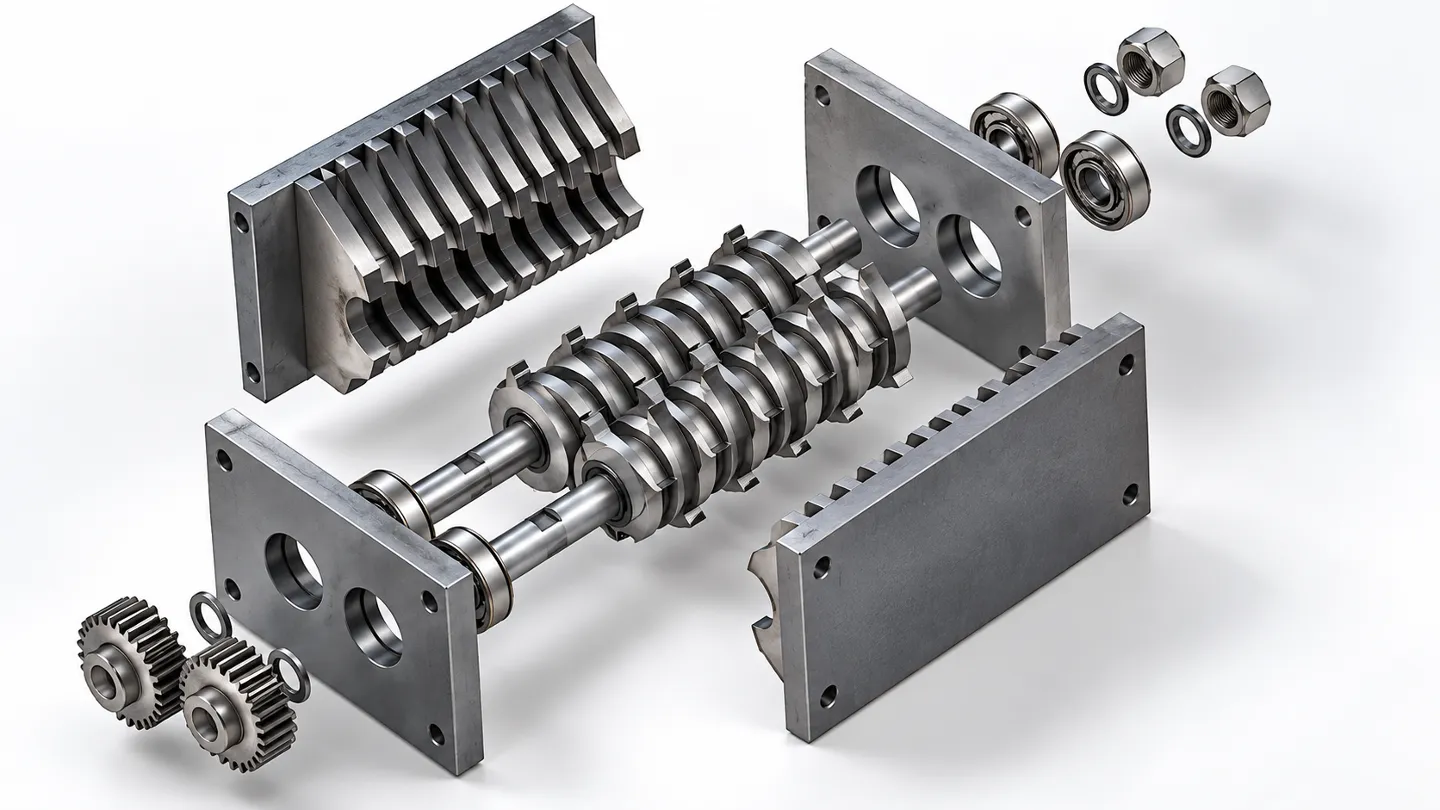
Shredder blade replacement is a controlled maintenance job, not a simple parts swap. Before opening the cutting chamber, isolate every energy source, document the existing blade arrangement, inspect the rotor and counter knives, and confirm the manufacturer’s torque and clearance specifications. After installation, turn the rotor manually where the machine design permits, complete a guarded no-load test, and only then reintroduce material gradually.
This guide provides a practical maintenance framework for single-shaft and multi-shaft industrial shredders. It does not replace the machine manual, site lockout procedure or work by qualified service personnel. If you are selecting steel grades or ordering a new cutter set, first read our industrial shredder blade selection guide.
When Do Shredder Blades Need Attention?
Do not wait for a blade to break. Blade condition should be tracked using processed tonnage, operating hours, motor load, output quality and inspection findings. A change in one metric may have several causes, so inspect the full cutting system before replacing parts.
| Observed Change | Possible Cause | Immediate Check |
|---|---|---|
| Higher motor current or longer cycle time | Dull blades, excessive feed, wrapped material or incorrect clearance | Blade edges, hydraulic pusher, chamber buildup and counter knife |
| Ragged strips instead of clean cuts | Rounded edges or excessive blade-to-counter-knife clearance | Edge condition, fixed-knife position and mounting surfaces |
| More fines, dust or heat | Repeated rubbing, dull edges, screen damage or over-processing | Screen, cutting gap, rotor speed and recirculation |
| New vibration or knocking | Loose fastener, chipped cutter, stack error, bearing or alignment problem | Stop immediately and inspect before restarting |
| Uneven wear across the rotor | Uneven feeding, rotor runout, shaft deflection or blade-seat contamination | Feed pattern, blade pockets, bearings, cutters and spacers |
| Visible crack, missing corner or deformed blade | Impact, contamination, unsuitable material or installation error | Remove the machine from service and investigate the failure |
Safety Preparation Before Opening the Shredder
Shredders can retain electrical, hydraulic, pneumatic, gravitational and mechanical energy after the main disconnect is switched off. Follow your site’s written energy-control procedure and applicable regulations. OSHA’s control of hazardous energy guidance explains the purpose of lockout/tagout, while its machine-guarding resources cover access to hazardous moving parts.
- Stop feeding and allow the chamber to clear using the approved shutdown sequence.
- Identify every energy source, including stored hydraulic pressure, elevated covers, flywheels and suspended rotor assemblies.
- Apply personal locks and tags according to the site procedure.
- Release or restrain stored energy and verify a zero-energy state.
- Block or support covers, shafts and heavy components with rated equipment.
- Use cut-resistant handling tools and protective equipment appropriate to the blade and task.
- Photograph and mark the original blade, spacer, shim and fastener arrangement before disassembly.
Large shafts and cutter stacks can weigh hundreds of kilograms. Use a documented lifting plan, rated lifting points and equipment with sufficient capacity. Never place hands beneath a suspended shaft or blade pack.
Tools and Records to Prepare
- Current machine manual, blade drawing and assembly diagram
- Lockout/tagout equipment and zero-energy verification instruments
- Rated lifting equipment, supports and blade-handling fixtures
- Calibrated torque wrench and the manufacturer’s tightening sequence
- Feeler gauges, straightedge, dial indicator and measuring tools required by the OEM
- Cleaning tools that will not damage precision mounting surfaces
- New approved fasteners, locking devices, shims and seals where specified
- Inspection sheet for blade position, dimensions, damage, torque and startup results
Single-Shaft Shredder Blade Rotation and Replacement
Many single-shaft shredders use square rotor knives with two or four usable edges. If the knife is within its dimensional limit and has no cracks, deformation or seat damage, rotating it to an unused edge may restore cutting performance without installing a new set.
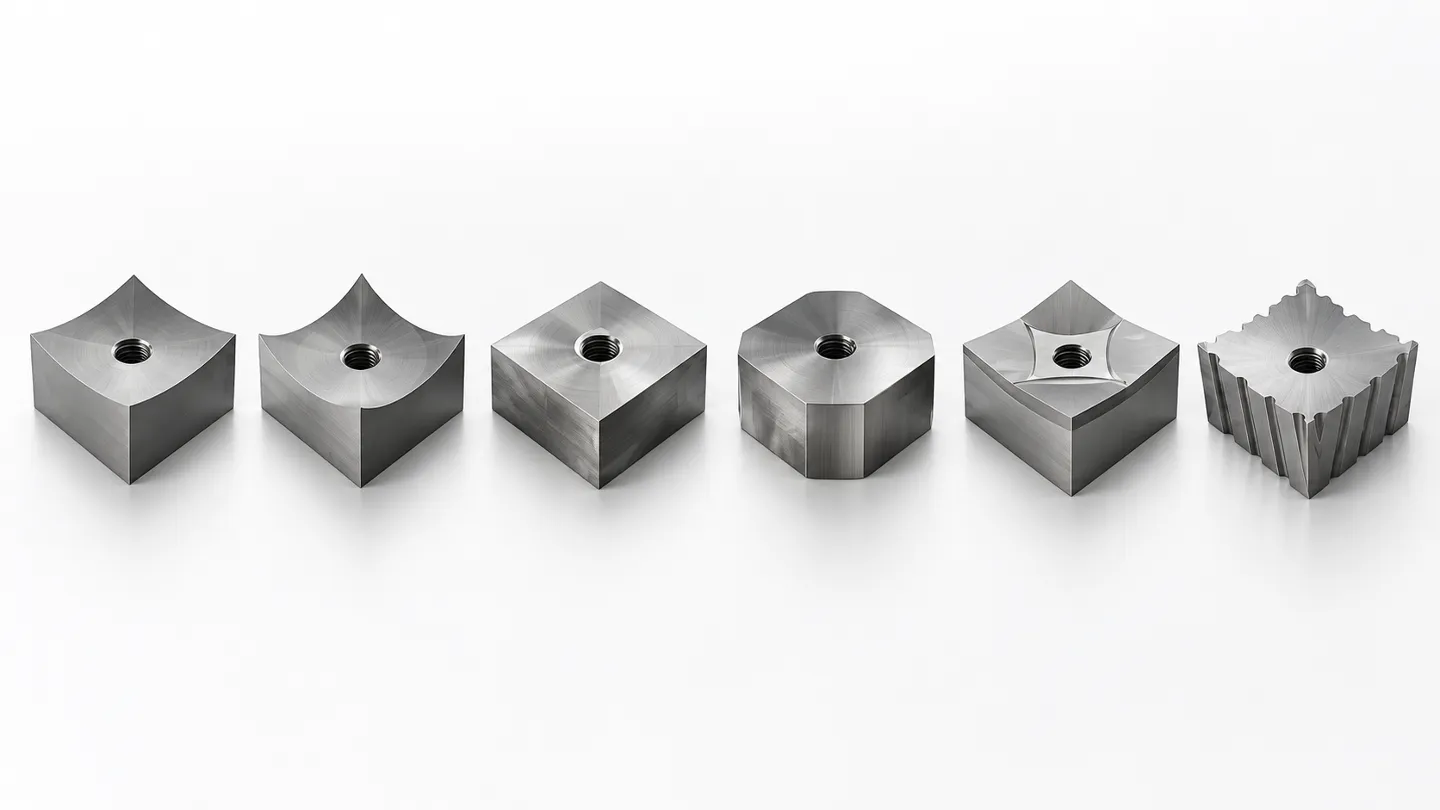
- Record the current condition. Note edge position, wear pattern, chipped areas and any location with abnormal buildup.
- Expose the rotor safely. Open and mechanically secure the chamber using the OEM procedure.
- Remove one knife at a time when practical. This preserves position information and makes irregular wear easier to trace.
- Clean the knife pocket and threads. Plastic, metal chips or raised damage beneath the knife can prevent full seating and cause early fracture.
- Inspect the pocket and fastener. Look for fretting, cracks, stripped threads, stretched bolts or damaged locating surfaces.
- Rotate or replace the knife. Keep orientation consistent with the rotor drawing. Do not mix geometries or unapproved thicknesses.
- Install approved fasteners. Lubrication or thread-locking products change clamp load and must match the manufacturer’s instruction.
- Tighten in the specified sequence. Use the machine-specific torque, not a generic value based only on bolt diameter.
- Inspect and adjust the counter knife. Measure clearance at all required rotor positions and account for runout.
- Repeat and document. Record every rotated or replaced position so all edges can be managed consistently.
Dual- and Multi-Shaft Cutter Stack Service
A dual-shaft shredder normally uses intermeshing cutters and spacers. Stack width, cutter orientation, hook timing and shaft position determine whether the cutters shear correctly. This work is more complex than rotating square knives and may require removal of the complete shaft assembly.
- Mark each shaft, cutter, spacer and end component before removal.
- Measure the assembled stack and exposed shaft references before loosening it.
- Support the shaft and remove bearings, gears, seals or retainers only in the approved sequence.
- Protect cutter edges and precision shaft surfaces during lifting and separation.
- Inspect cutter thickness, spacer thickness, bore, keyway or spline, shaft runout and bearing condition.
- Group replacement cutters and spacers as a matched set; accumulated thickness variation can change end clearance and cutter alignment.
- Reassemble the hook pattern and cutter timing exactly as shown on the drawing.
- Verify shaft rotation and intermesh through a complete revolution before reconnecting power.
If drawings, lifting fixtures or stack specifications are unavailable, contact the shredder manufacturer or a qualified service provider rather than reconstructing the arrangement from memory.
Blade Clearance, Fastener Torque and Alignment
There is no universal shredder blade gap. The correct clearance depends on the machine design, blade geometry, material thickness, rotor runout, thermal conditions and target output. A value used for one rigid-plastic shredder may be unsafe or ineffective on a different model.
- Measure at the locations and rotor positions specified in the manual.
- Confirm that blade seats, counter-knife supports and shims are clean and undamaged.
- Check rotor or shaft runout before using shims to correct an inconsistent gap.
- Use calibrated tools and record the final measurements.
- After tightening, recheck clearance because clamp load can move the fixed knife.
Torque also depends on fastener grade, thread condition, lubrication, locking method and joint design. Reusing stretched or damaged bolts can cause loss of clamp load even when the torque wrench reaches the target reading.
Regrind, Rotate or Replace?
| Blade Condition | Likely Action | Required Check |
|---|---|---|
| One edge worn; remaining edges unused | Rotate if the blade design permits | No cracks, deformation, seat damage or minimum-size violation |
| Uniform edge wear with sufficient grinding allowance | Regrind using an approved procedure | Final dimensions, edge geometry, heat damage and matched-set consistency |
| Small localized chip | Engineering assessment before regrinding or replacement | Crack extension, root cause, remaining section and balance |
| Deep crack, large fracture or warped blade | Replace and investigate the failure | Contamination, material, heat treatment, pocket, torque and alignment |
| Bore, spline, keyway or mounting surface damaged | Replace unless an approved repair exists | Torque transfer, fit and shaft condition |
| Blade below minimum permitted size | Replace | Do not compensate with unapproved shims or gap changes |
Grinding changes blade dimensions. A set should be processed and measured consistently so mixed heights or thicknesses do not create uneven loading. For replacement options, see our plastic shredder replacement blades.
Pre-Startup Inspection and Controlled Test
- Verify that all cutters, counter knives, spacers, screens, fasteners, guards and covers are installed.
- Remove tools, loose parts, lifting devices and cleaning materials from the chamber.
- Where the design permits, rotate the shaft manually through a complete cycle and confirm there is no contact.
- Reinstall guards and clear personnel before removing locks according to the site procedure.
- Jog or run the machine empty using the manufacturer’s startup procedure.
- Stop immediately if there is contact, unusual noise, vibration, temperature rise or abnormal motor current.
- Introduce a small, clean quantity of normal feedstock and observe cutting quality and load.
- Reinspect fasteners, leakage, temperature and blade condition after the initial controlled run when specified.
Preventive Maintenance Schedule
Use condition and production data to set intervals. Calendar-only schedules can be misleading because one plant processes clean film while another handles abrasive, contaminated rigid scrap.
| Interval | Recommended Checks |
|---|---|
| Each shift or startup | Noise, vibration, motor load, cutting quality, leaks, guards and visible chamber buildup |
| Planned inspection | Blade edges, counter knife, screen, fasteners, wrapping, pocket condition and contaminants |
| After a jam or foreign-object event | Stop and inspect cutters, shaft, bearings, screen, counter knife and drive before restarting |
| At blade rotation or replacement | Record position, dimensions, torque, clearance, wear mode and parts used |
| Trend review | Compare service life, processed tonnage, energy use, downtime and failure locations |
How to Extend Shredder Blade Life
- Remove metal and other hard contaminants before they reach the shredder.
- Keep feed within the machine’s approved size and loading limits.
- Avoid continuing operation after vibration, blade contact or a major jam.
- Keep blade pockets and counter-knife supports clean and flat.
- Rotate multi-edge knives before severe wear damages the seat or increases drive load.
- Maintain hydraulic pushers, screens, bearings and shafts together with the cutting system.
- Store a matched spare set in a dry, protected rack with its drawings and inspection report.
- Use failure photos and service records when specifying the next blade set.
Browse our complete recycling machine blade range for shredder, crusher and granulator applications.
Sourcing Quality Replacement Blades
When replacement is the right call, blade quality determines how long the new edge lasts. Look for blades custom-machined from D2, DC53, or SKD-11 tool steel and heat-treated for your specific feedstock.
- D2 balances wear resistance and toughness for general rigid plastics.
- DC53 adds toughness for abrasive, glass-filled material.
- SKD-11 suits hard plastics needing a fine, durable edge.
Provide your blade drawing or sample — or the shredder make and model — so the replacement matches the exact length, width, thickness, bolt holes, and edge angle. A blade that drops in without modification holds the clearance your cut quality depends on. For a full breakdown of blade steel grades and how to match them to your material, see our guide to plastic recycling blade steels.
Frequently Asked Questions
How often should shredder blades be replaced?
There is no universal interval. Track processed tonnage, operating hours, motor load, output quality and measured wear. Replace or rotate blades before severe wear damages the blade seat, counter knife, screen or drive system.
What is the correct clearance between a shredder blade and counter knife?
Use the range specified for the exact shredder model. Clearance depends on blade geometry, feedstock, rotor runout and operating conditions. A generic value copied from another machine can cause poor cutting or blade contact.
Can worn shredder blades be resharpened?
Many blades can be reground if they have sufficient dimensional allowance and no disqualifying cracks, deformation or mounting damage. The complete set should be measured after grinding so blade height, thickness and clearance remain consistent.
Can replacement blades from different suppliers be mixed?
Only if the machine manufacturer or responsible engineer confirms compatibility. Geometry, thickness, mass, hardness, heat treatment and mounting tolerances must match. Unverified mixing can create uneven loading, stack errors or interference.
Why do shredder blade bolts come loose?
Possible causes include dirty or damaged knife seats, incorrect fasteners, wrong lubrication, reused stretched bolts, incorrect torque, vibration, overload or damaged threads. Correct the root cause rather than simply applying more torque.
What should be checked after a blade change?
Verify blade orientation, cutter stack, fasteners, torque, counter-knife clearance, free rotation, guards and tool removal. Complete a controlled no-load test, then introduce a small amount of normal feedstock while monitoring sound, vibration and motor load.
Request Replacement Blades or Service Support
Send the shredder model, blade drawing or sample dimensions, feedstock information, current service life and clear photos of the wear or fracture. Our team can review replacement options and help identify the information needed for a matched cutter set.
