


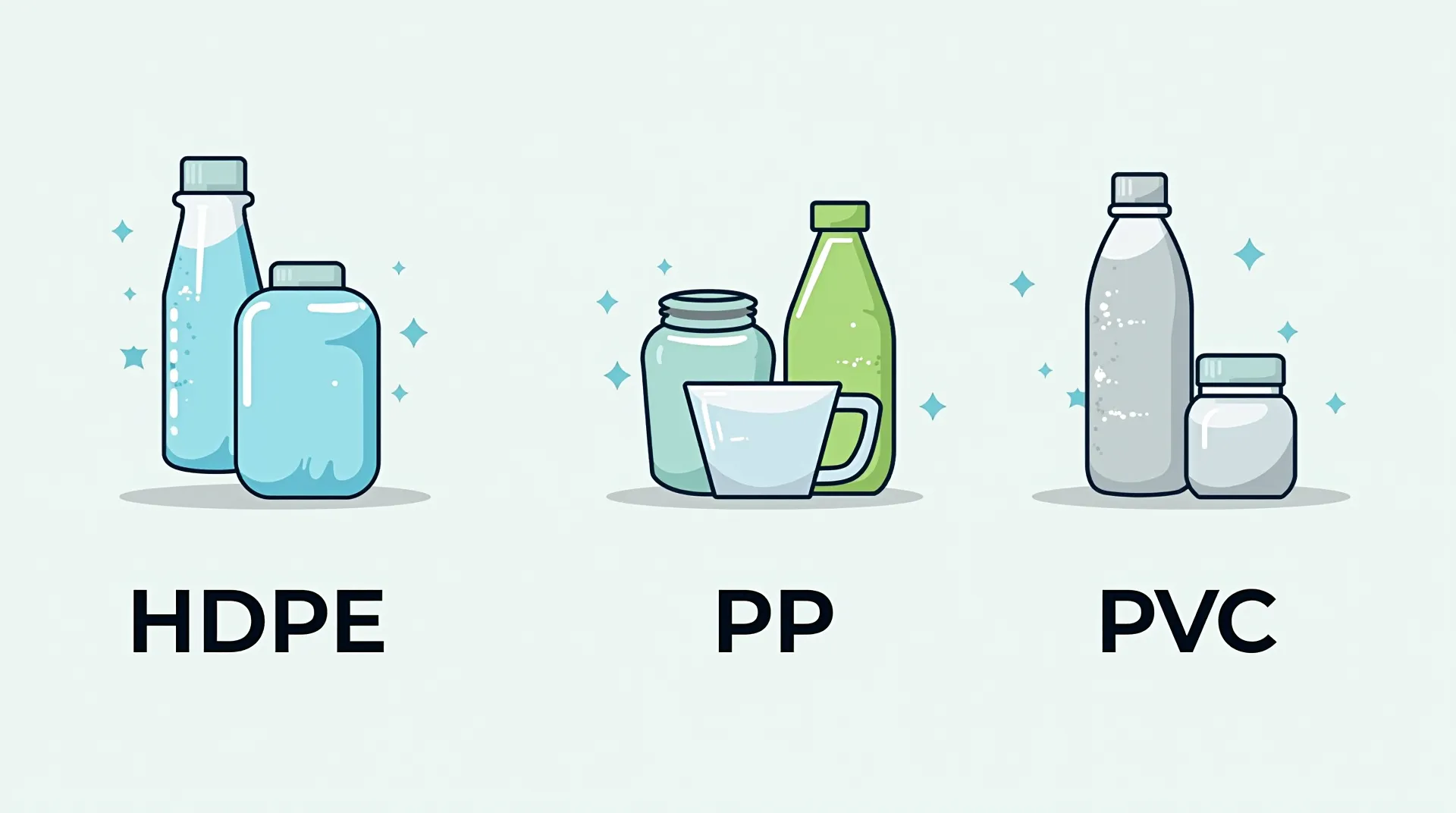
Common Types of Rigid Plastics for Recycling (HDPE, PP, PVC, PET & More)
This page is written for recyclers and buyers who want to identify rigid plastics, understand sorting risks, and choose the right recycling workflow—from size reduction to washing and pelletizing.
How to Identify Rigid Plastics (Fast Checks for Recycling)
Correct identification is the foundation of stable output quality. In mixed rigid streams, mis-sorting PVC is one of the most common reasons for poor pellet quality and processing issues.
1) Resin code & typical product
Look for resin IDs on packaging or molded marks.
- HDPE (#2): detergent bottles, drums, crates
- PP (#5): rigid packaging, caps, automotive parts
- PVC (#3): pipes, profiles, cable conduit
- PET (#1): bottles, trays (often higher washing needs)
2) Float / sink hint (water test)
A quick reference used in many recycling lines (results may vary by fillers/additives).
- Usually floats: HDPE, PP
- Often sinks: PET, PVC, PC, ABS (varies with formulation)
3) Common contamination points
- Labels & glue: increases washing difficulty
- Metal inserts: needs magnetic/metal separation
- Oil/grease: requires stronger washing/drying
- Mixed polymers: lowers pellet quality
4) Output target matters
- Flakes: lower CAPEX, common for in-house reuse
- Pellets: higher value, requires stable feeding & melt filtration
If you plan to sell pellets, consider a dedicated Linia do granulacji tworzyw sztucznych matched to your material and cleanliness level.
Most Common Rigid Plastics: Properties, Uses & Recycling Notes
Below are the most common rigid plastics encountered in industrial and post-consumer streams, with practical recycling notes to help you plan sorting and equipment.
1) HDPE (High-Density Polyethylene)
Common sources: bottles, drums, crates, pipes (some applications)
- High strength-to-density ratio
- Excellent chemical & moisture resistance
- Durable and impact resistant
- Often paired with PP in rigid streams, but best performance comes from clean sorting
- Typical process: size reduction → washing/drying → flakes or pellets
- Recommended equipment path: Niszczarka do tworzyw sztucznych → Granulator tworzyw sztucznych → Plastikowa linka do prania
2) PP (Polypropylene)
Common sources: rigid packaging, caps, automotive components, household items
- High melting point (good heat resistance)
- Excellent fatigue resistance (hinges/caps)
- Lightweight and chemical resistant
- Good candidate for pellet production when properly sorted and cleaned
- Watch for label glue and mixed polymers in rigid packaging
- Workflow: Granulator + Sznur do wieszania prania → optional Linia do peletyzacji
3) PVC (Polyvinyl Chloride)
Common sources: pipes, profiles, window frames, cable conduit
- Rigid or flexible depending on additives
- Excellent chemical resistance & durability
- Good electrical insulation
- Critical: PVC contamination in PP/PE streams can damage quality and cause processing issues
- Requires strict sorting and dedicated processing approach
- For rigid PVC scrap, start with controlled size reduction: Niszczarka / Granulator
4) PET (Polyethylene Terephthalate)
Common sources: bottles, trays, clamshell packaging
- High tensile strength, strong and lightweight
- Good gas/moisture barrier
- Widely recyclable
- Washing quality is often the biggest driver of output value
- Label removal and hot-wash steps may be required (depends on feedstock)
- Start with size reduction and washing planning before pelletizing
5) PS (Polystyrene)
Common sources: packaging, housings, disposable products (varies by region)
- Rigid and often transparent
- Easy to mold and shape
- Good thermal insulation
- Can be brittle; blade and screen selection matters
- Maintain clean sorting to protect output quality
- Typical approach: Granulator → cleaning as required
6) ABS (Acrylonitrile Butadiene Styrene)
Common sources: electronics housings, automotive parts, durable consumer goods
- High impact resistance
- Good dimensional stability
- Easy to machine and process
- Often contains metal inserts—plan for separation
- Better pellet outcomes come from consistent feedstock (avoid mixed plastics)
- Size reduction: Niszczarka → Granulator
7) PC (Polycarbonate)
Common sources: safety shields, electronics, automotive components, optical-grade items
- Exceptional impact resistance
- High transparency (many grades)
- Heat resistant
- Quality varies by grade; keep streams consistent
- Watch for coatings and mixed materials (affects melt filtration needs)
- When targeting pellets, match filtration and process settings carefully
Recommended Recycling Workflows & Equipment (Rigid Plastics)
Below are common workflows used in real projects. Your exact configuration depends on contamination level, target flake size, and whether you produce flakes or pellets.
Workflow A: Rigid PP/HDPE → Clean Flakes
Best for: in-house reuse, stable flake output, moderate investment
- Niszczarka do tworzyw sztucznych (optional for bulky items)
- Granulator tworzyw sztucznych (uniform flake size)
- Plastikowa linka do prania (remove labels, dirt, residue)
- Drying & storage (reduce moisture, stabilize output)
Workflow B: Rigid PP/HDPE → Pellets
Best for: selling pellets, higher value output, tighter process control
- Pre-sorting & metal removal
- Size reduction (shredder/granulator)
- Washing & drying (stable cleanliness and moisture)
- Linia do granulacji tworzyw sztucznych (extrusion + filtration + pellet cutting)
Workflow C: Mixed Rigid Stream (Higher Risk)
Best for: operators with strong sorting capability and steady feedstock
- Sort out PVC and other incompatible plastics early
- Use stable size reduction to avoid downstream bottlenecks
- Plan washing intensity around label/glue and oil contamination
Turnkey Approach: One Supplier, One System
Best for: faster commissioning, fewer integration risks, stable long-term operation
If you want a complete plan including equipment configuration, layout, and commissioning support, consider a Complete Recycling Solution.
Recycling-Focused Comparison of Common Rigid Plastics
This table focuses on what recyclers care about most: identification hints, sorting difficulty, washing needs, and a recommended processing direction.
| Plastic | Resin Code | Typical Sources | Float/Sink Hint | Sorting Difficulty | Washing Need | Recommended Direction |
|---|---|---|---|---|---|---|
| HDPE | #2 | Bottles, drums, crates | Often floats | Low–Medium | Średni | Flakes → optional pellets (after washing/drying) |
| PP | #5 | Caps, rigid packaging, auto parts | Often floats | Średni | Średni | Flakes or pellets (clean sorting improves pellet quality) |
| PCV | #3 | Pipes, profiles, conduit | Often sinks | Wysoki | Low–Medium | Dedicated stream; avoid mixing with PP/PE |
| ZWIERZAK DOMOWY | #1 | Bottles, trays | Often sinks | Średni | Wysoki | Washing-intensive; output value depends on cleanliness |
| PS | #6 | Packaging, housings | Often sinks | Średni | Średni | Controlled granulation; keep streams consistent |
| ABS | — | Electronics & auto housings | Often sinks | Średni | Low–Medium | Plan metal removal; flakes → pellets if consistent feedstock |
| komputer | #7 (often “Other”) | Safety shields, electronics | Often sinks | Średni | Low–Medium | Keep grades consistent; pellets require stable filtration |
Często zadawane pytania
Which rigid plastics are easiest to recycle?
In many operations, HDPE and PP are among the easiest rigid plastics to recycle when properly sorted and cleaned. Output stability improves significantly when streams are kept consistent.
Why is PVC contamination such a big problem?
PVC mixed into PP/PE streams is a common cause of quality issues and processing instability. If your feedstock may contain PVC, prioritize pre-sorting and consider dedicated processing.
Do I need a washing line for rigid plastics?
If your rigid plastics are post-consumer or contaminated (labels, glue, oil, dirt), a washing line is typically required to achieve clean flakes or stable pellets. For clean factory scrap, washing may be minimal.
What equipment do I need for rigid plastics recycling?
Most rigid plastic workflows use size reduction first (shredder and/or granulator), then washing/drying as needed. For pellet production, add a pelletizing line. See: Complete Recycling Solution.
Should I produce flakes or pellets?
Flakes typically require lower investment and are often used for in-house reuse. Pellets can be higher value but require stable cleanliness, moisture control, and melt filtration. If selling pellets is the goal, consider a dedicated Linia do granulacji tworzyw sztucznych.
Need a recommended configuration for your rigid plastics?
Send your material photos, contamination level (labels/oil/metal), target capacity (kg/h), and desired output (flakes or pellets). We can prepare a complete configuration and quotation based on your project.
