


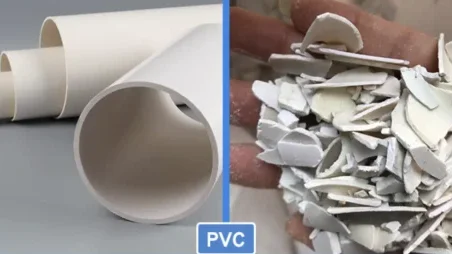
PVC pipe granulator machines reduce long, bulky plastic pipes and profiles into uniform, reusable regrind. Facilities use these granulators to process in-house manufacturing scrap or post-consumer piping back into viable feedstock. Rumtoo engineers these systems to handle the specific geometric challenges of pipe extrusion waste, preventing material bridging and optimizing throughput.
Applicable Materials and Feedstock Constraints
Standard size reduction equipment often struggles with long extrusions due to hopper constraints. Dedicated pipe granulators utilize specialized infeed angles to accommodate continuous lengths safely.
- Primary Feedstock: PVC, PE, PP, PPR, and nylon pipes.
- Secondary Materials: Plastic slats, wood slats, and heavy-duty paper tubes.
- Processing Constraints: Maximum wall thickness and polymer hardness dictate the required rotor configuration, knife metallurgy, and motor torque requirements.
Core Mechanisms and Operating Principles
The efficiency of a pipe granulator relies on the synchronization of its feeding, cutting, and discharge mechanisms.
- Low-Position Infeed: The hopper sits parallel or at a very low angle to the ground. This horizontal approach eliminates the labor-intensive requirement to manually pre-cut long pipes prior to processing.
- V-Type Cutting Technology: The rotor features a chevron knife array that pulls material toward the center of the cutting chamber. This prevents material from jamming against the sidewalls and eliminates hazardous flyback out of the hopper.
- Variable Rotor Designs: Rotors are configured based on the target material. Processing thick-walled rigid plastics requires different knife angles and rotor mass compared to thin-walled materials.
- Controlled Discharge: An adjustable screen mesh sits beneath the rotor to regulate the final regrind size.
Machine Specifications and Design Features
| Component | Design Feature | Operational Impact |
|---|---|---|
| Feeding Hopper | Low-profile, horizontal alignment | Allows continuous feeding of long pipe sections safely. |
| Cutting Rotor | V-type chevron knife array | Centers the feedstock, prevents jamming, and balances motor load. |
| Cutting Knives | High-resistant steel alloy | Maintains a sharp shear edge longer, reducing dust and heat generation. |
| Machine Housing | Split-chamber quick access | Minimizes downtime during knife gap adjustments and color changes. |
Maintenance, Wear Parts, and Uptime
Maintaining knife sharpness directly impacts the granulator’s energy consumption and the quality of the regrind. Dull knives tear the plastic instead of shearing it, which spikes motor load and generates excessive fines.
The cutting chamber features a quick-open design to facilitate rapid maintenance. This grants technicians immediate access to the rotor and bed knives for necessary gap adjustments or complete blade replacements. Routine maintenance protocols must include verifying the precise clearance between the rotating and stationary knives to ensure an optimal cutting action.
Sizing and Selection Criteria
Selecting the correct equipment depends heavily on the maximum pipe diameter and the heaviest wall thickness you intend to process. Thick-walled rigid PVC requires significantly higher torque and robust rotor configurations to prevent stalling.
Facilities handling a wide variety of profile shapes should evaluate a versatile pvc pipe&profiles crusher to ensure the cutting chamber geometry matches the shifting feedstock dimensions. Always size the motor and the optional air extraction blower based on your maximum required throughput in kilograms per hour.
Commissioning and Acceptance Checklist
Before placing the granulator into active production, perform the following site acceptance checks:
- Verify rotor and bed knife gap clearances against manufacturer specifications using feeler gauges.
- Test all limit switches and safety interlocks on the cutting chamber and hopper access panels.
- Run a no-load test to monitor for abnormal bearing vibration or excessive motor heating.
- Process a sample batch of the maximum specified pipe diameter to confirm the V-type rotor handles the initial bite without motor stalling.
- Inspect the discharged regrind for size uniformity and acceptable dust limits.
Frequently Asked Questions
How long do the cutting blades last before requiring sharpening?
Blade life depends entirely on the feedstock material, wall thickness, and potential contamination levels within the processing environment. When processing clean, rigid PVC pipes or similar unpolluted profiles, operators can typically expect several weeks of continuous operation before sharpening becomes necessary. However, introducing abrasive materials, fiberglass-reinforced plastics, or exceeding the recommended wall thickness will significantly accelerate edge wear. Facilities can maximize the interval between required maintenance stops by strictly maintaining the precise clearance gap between the rotor and bed knives. Utilizing the OEM-specified high-resistant steel blades also prevents premature dulling and ensures a clean shear rather than a tearing action.
What determines the final size of the granulated PVC?
The interchangeable screen mesh positioned directly beneath the cutting rotor dictates the final dimensional size of the output particles. During operation, the plastic material continues to circulate and be sheared within the cutting chamber until the fragments are small enough to drop through the specified screen holes. Plant operators can easily swap these screens during maintenance windows to achieve different regrind dimensions. This flexibility is critical, as the required particle size often varies depending on the specific feeding requirements of downstream extruders, injection molding machines, or other compounding equipment utilized in the facility.
Does the granulator require a dedicated extraction system?
While basic gravity discharge is technically possible for low-volume setups, integrating an active air extraction system is highly recommended for any industrial-scale or continuous operation. An extraction blower creates negative pressure, actively pulling the granulated regrind through the screen mesh. This continuous evacuation significantly reduces friction and heat accumulation inside the enclosed cutting chamber. Controlling the internal temperature is particularly critical when processing heat-sensitive polymers like PVC, as excessive heat can cause material degradation, smearing, or chamber blockages. Additionally, the pneumatic system automates the immediate transfer of the finished regrind into silos or bulk bags.
