


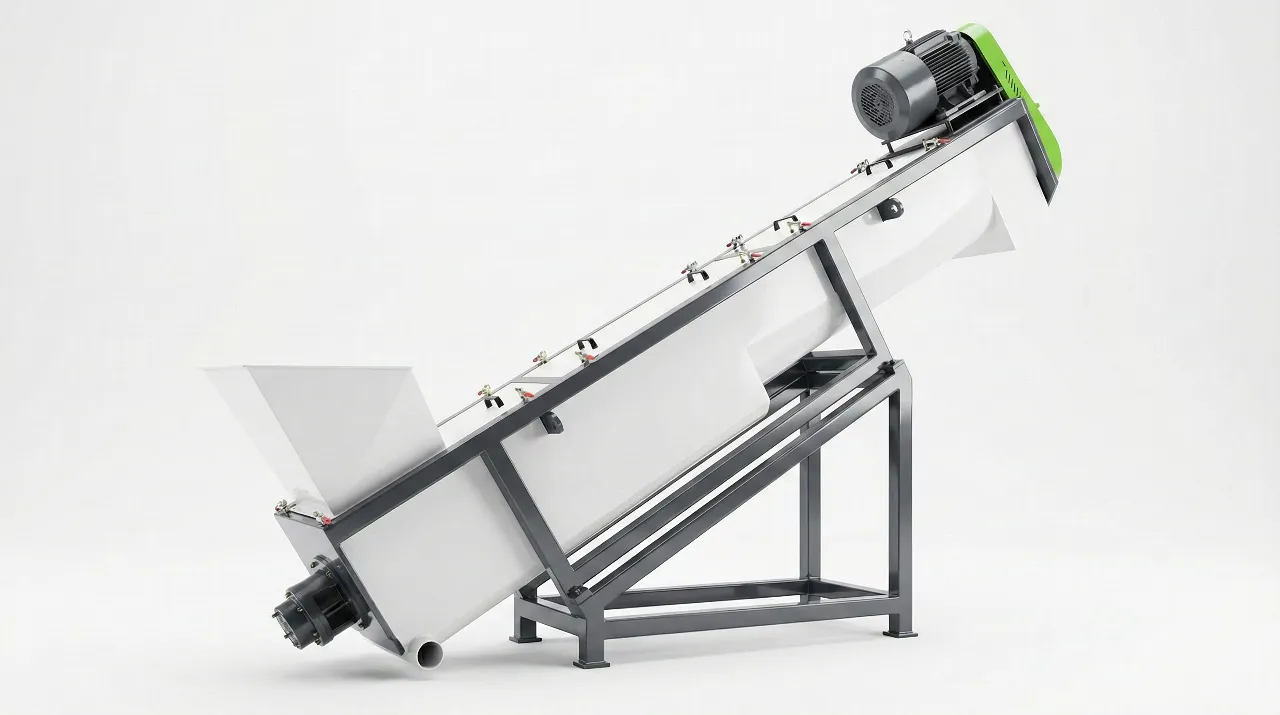
High-Speed Friction Washer for Plastic Recycling
A high-speed friction washer designed to scrub PET, HDPE, PP, and mixed rigid plastic flakes, remove residual dirt and label glue, and improve downstream washing, separation, and drying efficiency.
- Strips loose dirt, sand, paper fibre, and label-glue residue from flakes after crushing.
- High-speed internal friction helps strip away stubborn contamination before final rinsing and drying.
- Available with project-specific layout, wear part options, and integration support.
Friction Screw Washer Equipment Overview
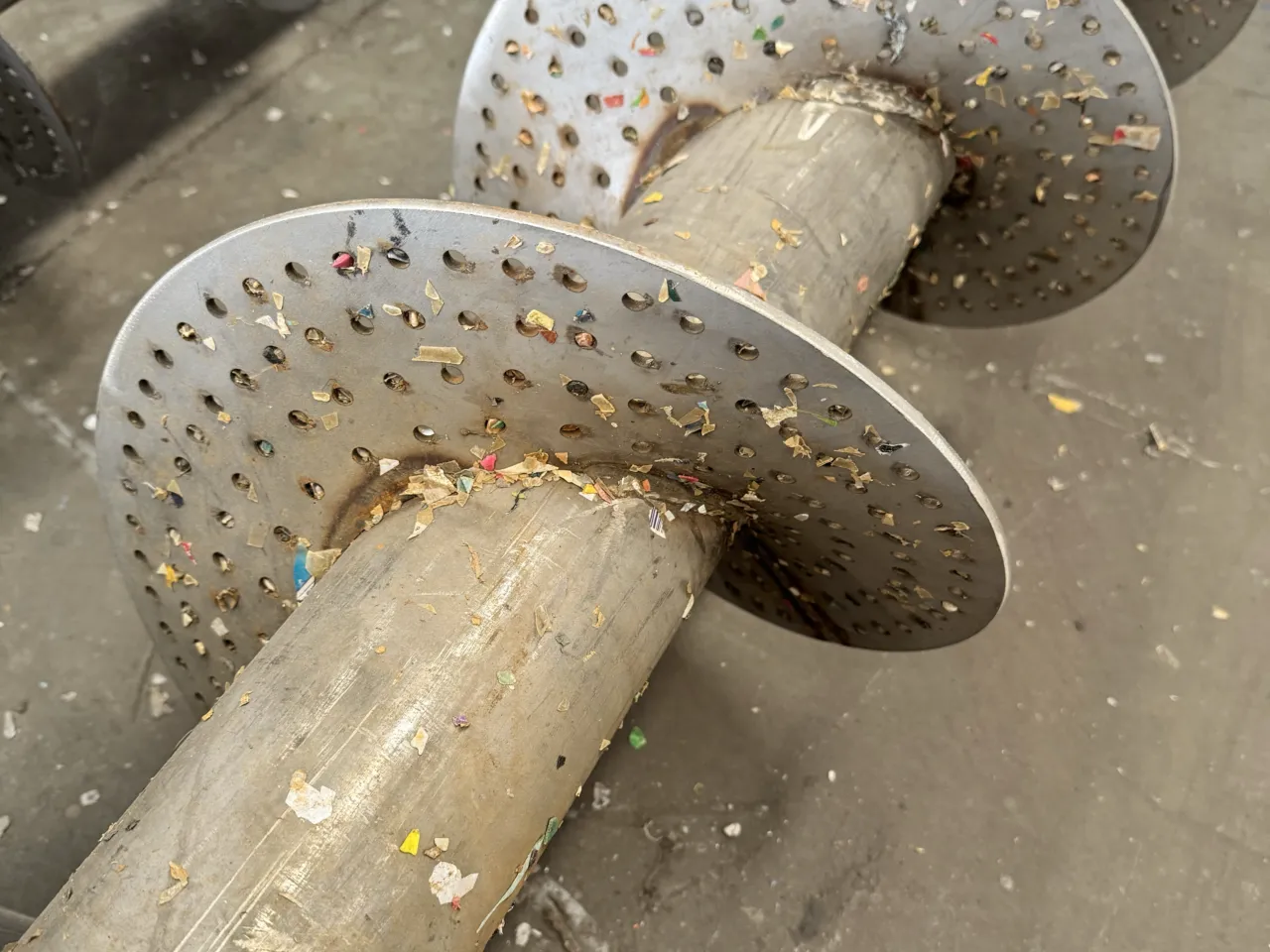
High-Speed Scrubbing for Cleaner Flakes
The friction washer uses a high-speed shaft and screen structure to force flakes into constant contact with water and with each other, breaking away dirt, label residue, and loose contaminants before the next washing stage.
Key Features of Friction Screw Washer
High-speed friction action supports cleaner material streams by removing loose dirt, paper fibres, glue residue, and fines.
-
Improved Cleaning Efficiency
High-speed friction action supports cleaner material streams by removing loose dirt, paper fibres, glue residue, and fines.
-
Adjustable Operation
Working parameters can be tuned according to material composition, target output, and washing line requirements.
-
Durable Industrial Build
Designed for continuous-duty operation in demanding recycling environments with replaceable wear parts and service-friendly access.
-
System Integration
Can be installed as part of a larger washing, separation, and drying line for PET, HDPE, PP, and mixed rigid plastics.
Applications & Materials
-
PET Bottle Flakes
Removes paper fibres, residual label glue, and loose fines after crushing and before final rinsing.
-
HDPE and PP Rigid Plastics
Improves flake cleanliness before float-sink separation, hot washing, or downstream drying modules.
-
Contaminant Reduction
Supports cleaner material streams before pelletizing, storage, or higher-value recycled flake production.
-
Custom Washing Projects
Configured to match local material conditions, target capacity, and existing recycling line layouts.
Specifications
| Model | Motor Power | Main Shaft Diameter | Rotating Speed | Reference Output (PET/HDPE) | Capacity |
|---|---|---|---|---|---|
| FSW-400 | 37KW | 400mm | 1400 RPM | 500 – 1000 KG/H | 400 – 800 KG/H |
| FSW-550 | 45KW | 550mm | 1200 RPM | 1000 – 1500 KG/H | 600 – 1000 KG/H |
| FSW-750 | 55KW | 750mm | 1080 RPM | 2000 – 3000 KG/H | 1200 – 2000 KG/H |
Part of a Complete Plastic Washing & Pelletizing Line
This machine is one stage of a full recycling line. A typical wet line runs in this sequence, and the equipment below covers each stage:
- Friction Screw Washer — scrubs off oil, labels, and surface dirt before separation. (this machine)
- Sink-Float Separation Tank — separates plastics by density, floating light polyolefins off the heavier resins.
- Centrifugal Dryer — spins off free surface water mechanically after washing.
- Thermal Dryer — hot-air drying to below 1% moisture before pelletizing.
- Rigid PP/HDPE Flake Pelletizer — pelletizes clean rigid HDPE and PP flake into uniform pellets.
- Single-Screw Pelletizing Line — water-ring or strand single-screw pelletizing at production throughput.
See the full rigid plastic washing line, or our guide on plastic recycling washing line cost.
Frequently Asked Questions
The friction washer can be configured according to material type, contamination level, and production target in PET, HDPE, PP, and mixed rigid plastic recycling projects.
Yes. Layout, motor sizing, wear parts, shaft design, and supporting components can be adjusted according to application requirements.
Yes. We provide installation guidance, commissioning support, operator training, and after-sales service according to project scope.
Selection depends on feedstock type, contamination condition, target capacity, installation space, and the downstream process. We can recommend a suitable model after reviewing your project requirements.
A friction washer cleans mechanically: a high-speed shaft forces flakes against each other and the screen to scrub off loose dirt, paper fibre, glue residue, and fines, usually with cold or ambient water. A hot washer cleans thermally and chemically, using heated water and detergent or caustic to dissolve oils and strong adhesives. The two are complementary — friction washing handles the mechanical contamination a hot wash alone leaves behind.
It removes loose dirt, sand, paper label fibre, glue residue, and surface fines clinging to the flakes. It does not dissolve oils, strong full-surface adhesives, or melted-on residue — those need a hot caustic wash. Friction washing works best as the mechanical scrubbing stage before or alongside hot washing and float-sink separation.
Warranty & Global Installation Support
-
Warranty Coverage
Standard warranty coverage is available for supported machine components and manufacturing defects.
-
Installation & Support
We provide installation guidance, commissioning support, operator training, and spare parts service according to project scope.
Get a Friction Screw Washer Quote
Share your material details, capacity target, and project requirement. We will recommend a suitable friction washer configuration for your line.

Comments are closed.