


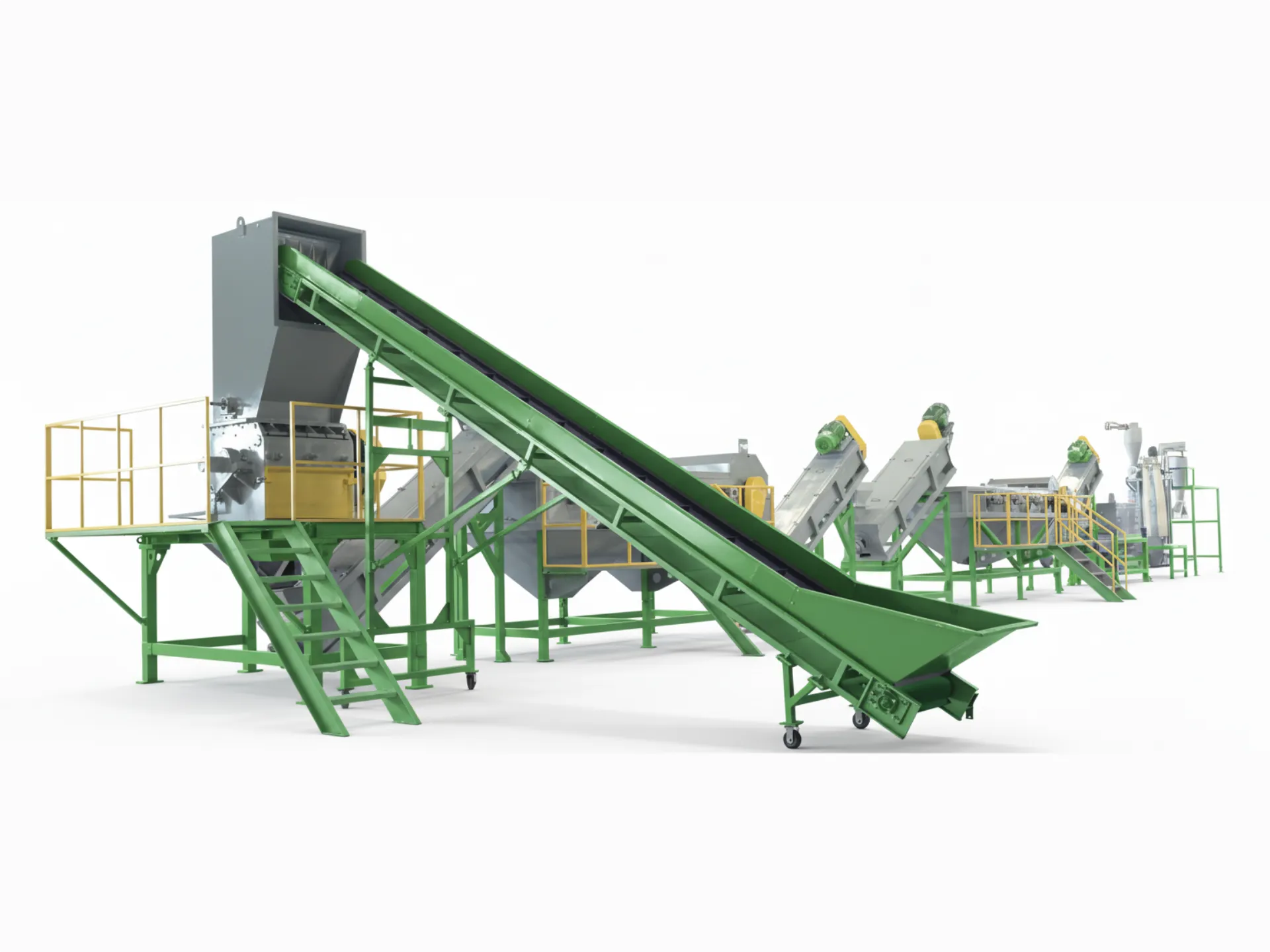
HDPE Bottle Washing Recycling Line
This washing line is designed to remove contamination, improve material purity, and prepare recycled plastics for drying, pelletizing, or direct reuse.
- Configured according to material type, contamination condition, and throughput target.
- Designed for stable industrial operation and practical maintenance access.
- Available with project-based layout and support options.
Equipment Overview
Industrial Solution Overview
This washing line is designed to remove contamination, improve material purity, and prepare recycled plastics for drying, pelletizing, or direct reuse.
Key Features
High Purity Output
Multiple washing and separation stages help improve final flake cleanliness.
Flexible Material Handling
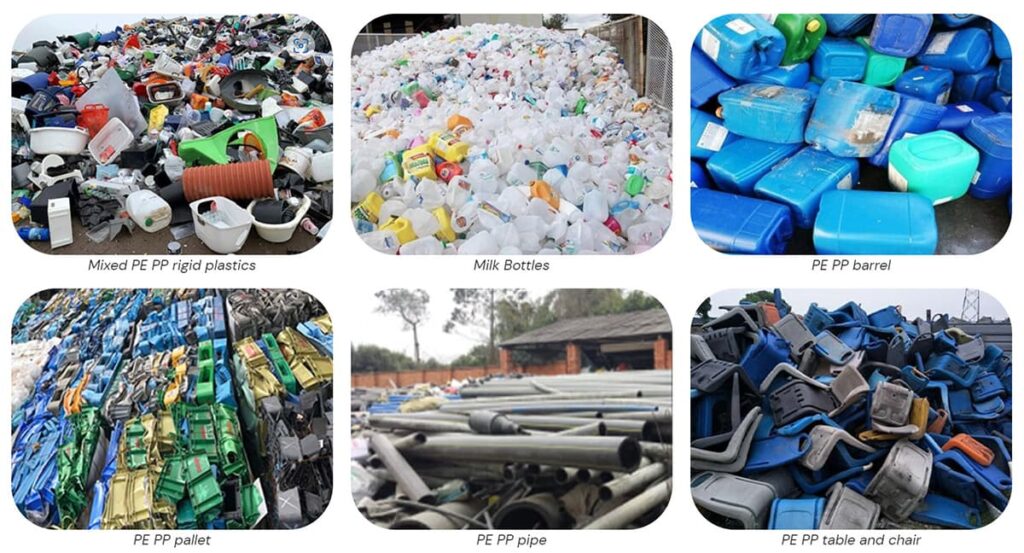
Suitable configurations are available for rigid plastics, bottles, films, and mixed feedstock.
Stable Continuous Operation
Process stages are arranged for more reliable flow through shredding, washing, and drying.
Project-Based Layout
Line configuration can be adjusted according to material condition and workshop constraints.
Typical Applications
Contaminated Plastic Waste
Designed for washed rigid plastics, films, bottles, or mixed recyclable feedstock.
Improved Material Purity
Supports downstream drying, pelletizing, or resale of cleaned flakes.
Integrated Recycling Plants
Can be linked with shredders, crushers, dryers, and water treatment systems.
Customized Plant Projects
Configured according to contamination level, output target, and installation conditions.
HDPE Bottle Washing Line Process
| Process Step | Function in the Line |
|---|---|
| Bale Opener / Feeding Conveyor | Opens bales (optional) and ensures stable, continuous feeding into the line. |
| Pre-washer / Trommel (Optional) | Removes sand, stones, and loose dirt early to protect downstream machines and reduce water load. |
| Wet Crusher / Granulator | Size-reduces bottles while flushing away loose contamination for efficient downstream washing. |
| Friction Washer | High-speed scrubbing removes stubborn residues, paper fibres, and remaining dirt from flakes. |
| Hot Washer (Optional) | Improves decontamination for oily or detergent-heavy bottles using heated water and controlled chemistry. |
| Sink-Float Separation Tank | Density separation where HDPE/PP typically float while PET/PVC and heavy contaminants sink. |
| Rinse & Transfer Screw | Rinses flakes and transfers material between stages while maintaining consistent residence time. |
| Centrifugal Dewatering | Mechanically removes surface water to reduce thermal drying energy demand. |
| Thermal Dryer & Air Transport | Hot-air drying brings flakes to low moisture content and conveys them to storage. |
| Zig-Zag / Air Classifier | Removes labels, films, and light fractions to improve final purity. |
| Silo / Bagging Station | Stores and packs the finished HDPE flakes for easy logistics and stable feeding to pelletising lines. |
| PLC Control System | Centralised HMI/PLC control for interlocks, recipes, alarms, and optional remote diagnostics. |
Washing Line Technical Parameters
Specific technical parameters can vary based on the model and customisation. For detailed specifications, please refer to individual product sheets or contact us.
| Input Capacity | 500kg/h | 1000kg/h | 1500kg/h | 2000kg/h |
|---|---|---|---|---|
| Required Space | 42m x 10m x 6m | 50m x 15m x 6m | 55m x 16m x 6m | 60m x 18m x 6m |
| Operators | 3-4 people | 5-6 people | 5-6 people | 5-6 people |
| Installation Power | 150-200kW | 250-300kW | 370kW | 450-500kW |
| Water Circulation (T/H) | 2 | 3 | 4 | 5 |
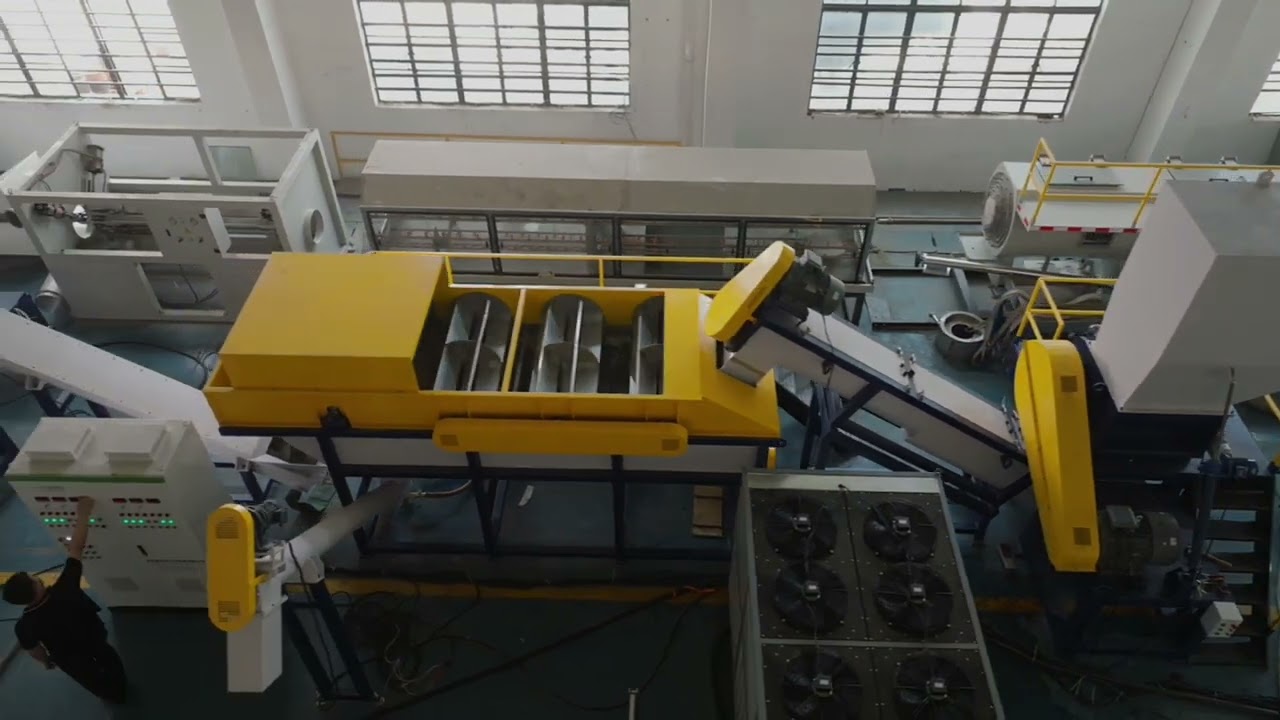
See It in Action
Frequently Asked Questions
HDPE Bottle Washing Recycling Line can be configured according to the material type, contamination condition, and production target involved in your project.
Yes. Layout, motor sizing, wear parts, and supporting components can be adjusted according to application requirements.
Yes. We provide installation guidance, commissioning support, operator training, and after-sales service according to project scope.
Selection depends on material characteristics, target capacity, installation conditions, and downstream process requirements. We can recommend a suitable configuration after reviewing your project.
Warranty & Installation
Warranty Coverage
Standard warranty coverage is available for supported machine components and manufacturing defects.
Installation & Support
We provide installation guidance, commissioning support, operator training, and spare parts service according to project scope.
Request a Customized Solution
Share your material details, capacity target, and project requirement. We will recommend a suitable configuration.
