


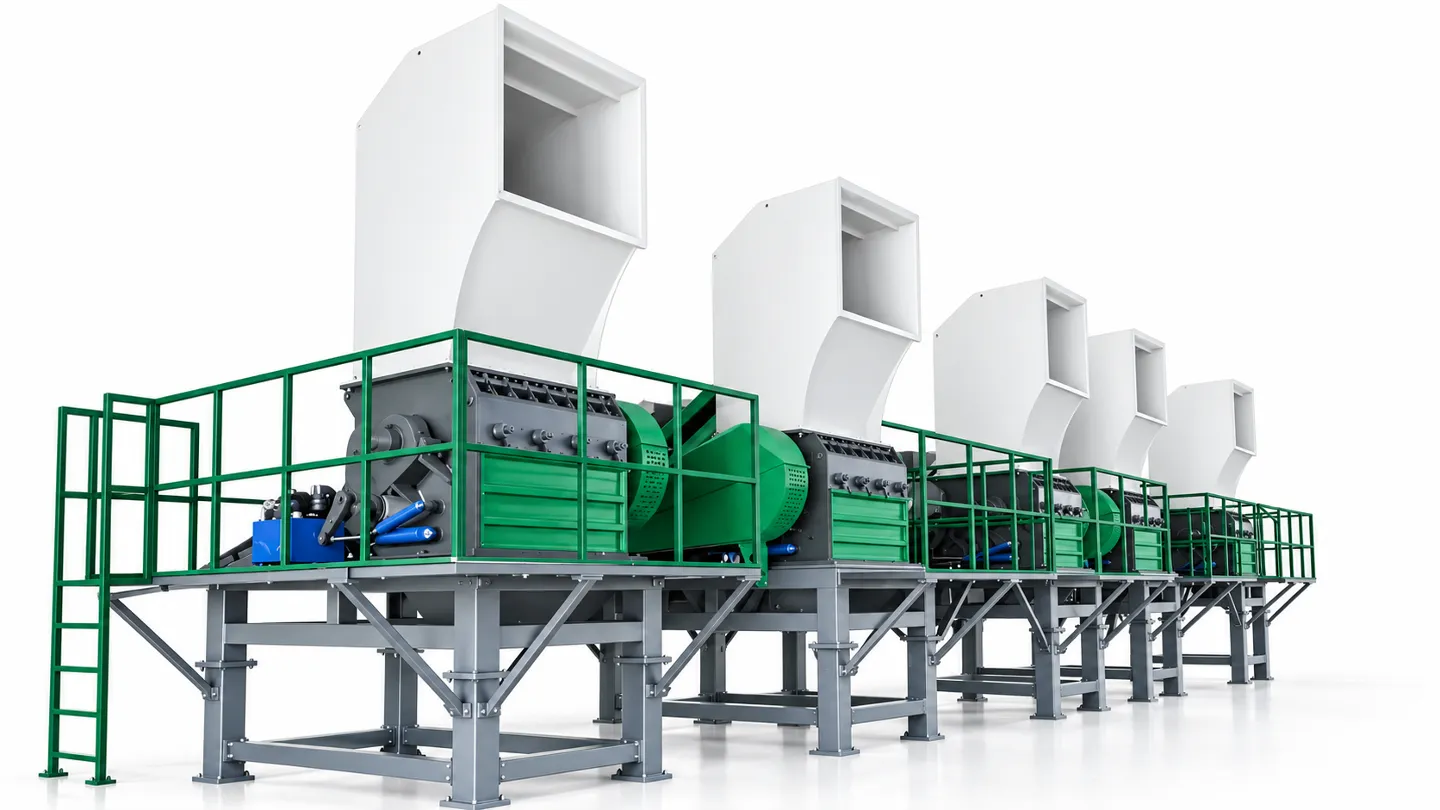
Plastic Crusher: A Comprehensive Guide for Industrial Recycling
A Plastic Crusher is an indispensable machine for any modern recycling facility or manufacturing plant dealing with plastic scrap. The challenges of managing bulky plastic waste are significant—high disposal fees, inefficient storage, and missed opportunities for resource recovery. At Rumtoo Machine, we engineer high-performance plastic crushers, often called granulators, that directly address these problems. They are designed to be the reliable core of your recycling operations, transforming plastic liabilities into valuable, reusable assets.
The primary function of this equipment is size reduction. By processing large, unwieldy plastic parts into small, uniform flakes or granules, a plastic crusher prepares the material for its next life. This resulting “regrind” has a higher bulk density, is easier to handle, and is ready for reprocessing, often being reintroduced into production lines. This guide offers an in-depth exploration of how these machines operate, their critical components, diverse applications, and the key factors to consider when selecting the right model for your specific needs.
How Does a Plastic Crusher Achieve Size Reduction?
A plastic crusher employs a high-speed, shear-cutting action to break down plastic materials. The process, while mechanically straightforward, relies on precision engineering for optimal performance. Here’s a step-by-step breakdown of the operation:
- Feeding: Plastic waste is introduced into the machine through a sound-dampened feeding hopper. The hopper is designed to safely guide material into the cutting chamber while minimizing noise and preventing material from flying back out.
- Cutting Action: Inside the chamber, a heavy-duty rotor spins at several hundred RPM. This rotor is equipped with multiple knives. As it rotates, these knives sweep past a set of stationary knives mounted on the chamber’s inner walls. The extremely close tolerance between the rotating and stationary knives creates an intense scissor-like cutting action that shears the plastic.
- Screening & Discharge: The material is continuously cut and reduced in size until the particles are small enough to pass through a perforated screen located at the bottom of the cutting chamber. The dominant physical action is shearing when blades are sharp and clearances are tight — dull blades shift the process toward tearing and compression, raising energy consumption and producing more fines. Once discharged, this uniform regrind can be collected via a blower system, conveyor, or directly into a container.
A Deeper Look at Critical Machine Components
The performance, durability, and safety of a plastic crusher are dictated by the quality of its components. Understanding these parts is essential for any potential buyer.
Cutting Chamber and Rotor Design
The rotor is the heart of the crusher. Different designs are suited for different materials. A V-Shape (or V-Cut) Rotor is an excellent general-purpose design. It pulls material towards the center of the rotor, ensuring a steady cutting process with reduced power consumption and lower heat generation. For more demanding applications, a Double-Scissor Cut configuration provides more aggressive cutting action, ideal for thicker or tougher materials. A third option, the helical rotor, arranges blades in a spiral pattern inside an enclosed rotor body. This heavy-duty design handles thick cross-sections, pipes, and profiles that would jam lighter configurations.
Blade Material and Quality
The knives do the hard work. They must be tough, wear-resistant, and capable of holding a sharp edge. Our machines feature knives forged from D2 tool steel (SDK11 equivalent), a high-carbon, high-chromium alloy renowned for its excellent edge retention and resistance to abrasion. This choice reduces the frequency of sharpening and replacement, maximizing uptime.
Removable Screen
The size of the holes in the screen determines the final size of the output particles. Screens are interchangeable, allowing operators to produce different granule sizes to meet specific reprocessing requirements. A typical range for screen openings is from 10mm to 100mm.
Drive System and Bearings
A reliable motor and a well-designed transmission provide consistent power to the rotor. Crucially, our plastic crusher design places the bearing housings outside the cutting chamber. This smart feature prevents fine dust and plastic residue from infiltrating and damaging the bearings, a common failure point in inferior machines, thus significantly prolonging the machine’s service life.
Plastic Crusher Types at a Glance
The right plastic crusher depends on the shape and condition of your feedstock — not just the polymer name. A short HDPE bottle, a six-meter PVC pipe, a thick purge lump, and dirty agricultural film all behave very differently inside a cutting chamber. Here are the five main configurations and where each one fits best.
Standard Plastic Crushers
The usual starting point for bottles, containers, injection-molding runners, and pre-cut rigid scrap. Rotating knives pass fixed knives, and material stays in the chamber until it passes through the selected screen, giving controlled flake size for washing, conveying, storage, or extrusion. Typical reference ranges run from 200 to 1,200 kg/h with 22 to 110 kW motors and 12 to 100 mm screen apertures — actual output shifts with wall thickness, bulk density, feeding consistency, screen size, blade condition, and contamination.
Heavy-Duty and Extra-Large Rigid Plastic Crushers
Built for thick-walled molded parts and dense production scrap that would overload a standard chamber: crates, housings, drums, thick blocks, and injection purgings. A larger feed opening, heavier rotor, stronger bearing arrangement, and suitable flywheel keep cutting stable under shock loads. Do not select this category from the material name alone — a hollow HDPE drum and a solid HDPE purge lump share a polymer but place very different loads on the rotor. Oversized or extremely dense pieces may still need a shredder or pre-cutting stage first.
Pipe and Profile Crushers
Long pipes and profiles need a controlled feed path. A horizontal crusher lets PVC conduit, HDPE pipe, window profile, and similar extrusion scrap enter lengthwise, so six-meter pieces do not have to be cut into short sections by hand. The feed system and rotor pull the pipe progressively while limiting kickback. Specify maximum outside diameter, wall thickness, length, and whether pipes arrive individually or in bundles — a machine sized for thin PVC conduit will not suit thick pressure pipe even at a similar diameter.
Sheet, Tray, and Thermoform Crushers
Wide, flat scrap can bridge above a conventional hopper or wrap around the rotor. Sheet and thermoform crushers use a wide or horizontal feed arrangement to accept trays, boards, skeletal webs, and extrusion edge trim, with knife geometry that shears while the feed system keeps flat material moving toward the rotor. Before ordering, record maximum sheet width and thickness, whether the material is stacked, rolled, or continuous, and how the crusher connects to the production line.
Wet Plastic Crushers
A wet crusher injects water into the cutting chamber during operation. The water cools the knives, suppresses loose dust, and rinses surface dirt before flakes move to friction washing, float-sink separation, dewatering, or drying. Wet crushing suits PET and HDPE bottles, dirty PP/PE film, and rigid scrap entering a washing line — facilities report 40–60% longer intervals between blade sharpening thanks to lower cutting temperatures. It does not replace a complete washing system, and selection must cover water flow, recirculation, corrosion protection, wastewater treatment, and the moisture load on the next machine.
Plastic Crusher vs. Plastic Shredder: Clarifying the Difference
In the world of recycling machinery, “crusher” and “shredder” are often used interchangeably, but they refer to machines with distinct functions and applications. Selecting the wrong one can create major inefficiencies in your workflow.
Plastic Crusher (Granulator)
- Mechanism: High-speed rotor with sharp knives for a clean, scissor-like cut.
- Output: Small (typically <12mm), uniform, cubical granules or flakes (regrind).
- Best For: Secondary size reduction; processing pre-sorted, relatively clean materials like bottles, pipes, production scrap, and film.
- Main Goal: To produce consistently sized material ready for direct reuse in an extruder or molding machine.
Plastic Shredder
- Mechanism: High-torque, low-speed cutters that tear, rip, and shear material.
- Output: Larger (typically 20-100mm), irregular-shaped strips or chips.
- Best For: Primary size reduction; breaking down bulky, tough, or contaminated items like purgings, bales of film, or automotive parts.
- Main Goal: To liberate contaminants and perform an initial, coarse volume reduction before further processing.
For many manufacturing facilities, a single plastic crusher is sufficient to process production scrap. In large-scale, post-consumer recycling plants, a shredder is often used first to break down bales, followed by a crusher to create the final regrind.
When to Step Up: Premium Granulator Models
Our flagship granulators are engineered for versatility and high performance, capable of transforming a wide variety of plastic materials into high-quality, reusable regrind. Explore the technical specifications to find the perfect machine for your recycling needs.
What Determines Crusher Throughput?
Crusher capacity is not a single number on a spec sheet — it depends on several interrelated variables. Material properties are the primary constraint: soft polymers like PE and PP cut faster than tough engineering resins such as ABS, nylon, and polycarbonate, and clean production scrap processes more quickly than post-consumer material with dirt and labels. Cutting chamber dimensions and blade width control how much material the crusher accepts per cycle — a 1,000 mm-wide chamber moves significantly more volume than a 600 mm unit. Motor power determines whether the rotor holds speed under load; undersized motors bog down when fed aggressively, which is why heavy-duty crushers specify 55–110 kW motors. Screen aperture creates the most direct trade-off: smaller holes produce finer output but require longer residence time in the chamber, so an 8 mm screen yields injection-molding regrind while a 95 mm screen produces flakes for washing lines. Always ask a supplier for the feed material, screen size, and moisture level behind any quoted kg/h figure.
Applications Across Industries
A general-purpose plastic crusher is a versatile asset applicable in numerous industrial settings. Its ability to generate valuable raw material from waste makes it a financially sound investment.
- Injection Molding: Immediately reclaim sprues, runners, and rejected parts. The uniform regrind can be mixed with virgin resin, drastically reducing material costs.
- Blow Molding: Process flash, tails, and defective containers (e.g., PET bottles, HDPE jugs) into clean flakes for reuse.
- Pipe & Profile Extrusion: Grind down start-up scrap, off-spec pipes, and profiles made from PVC, HDPE, or PP.
- Film and Sheet Production: Granulate edge trims and rejected rolls of PE, PP, or PET film into easily manageable flakes.
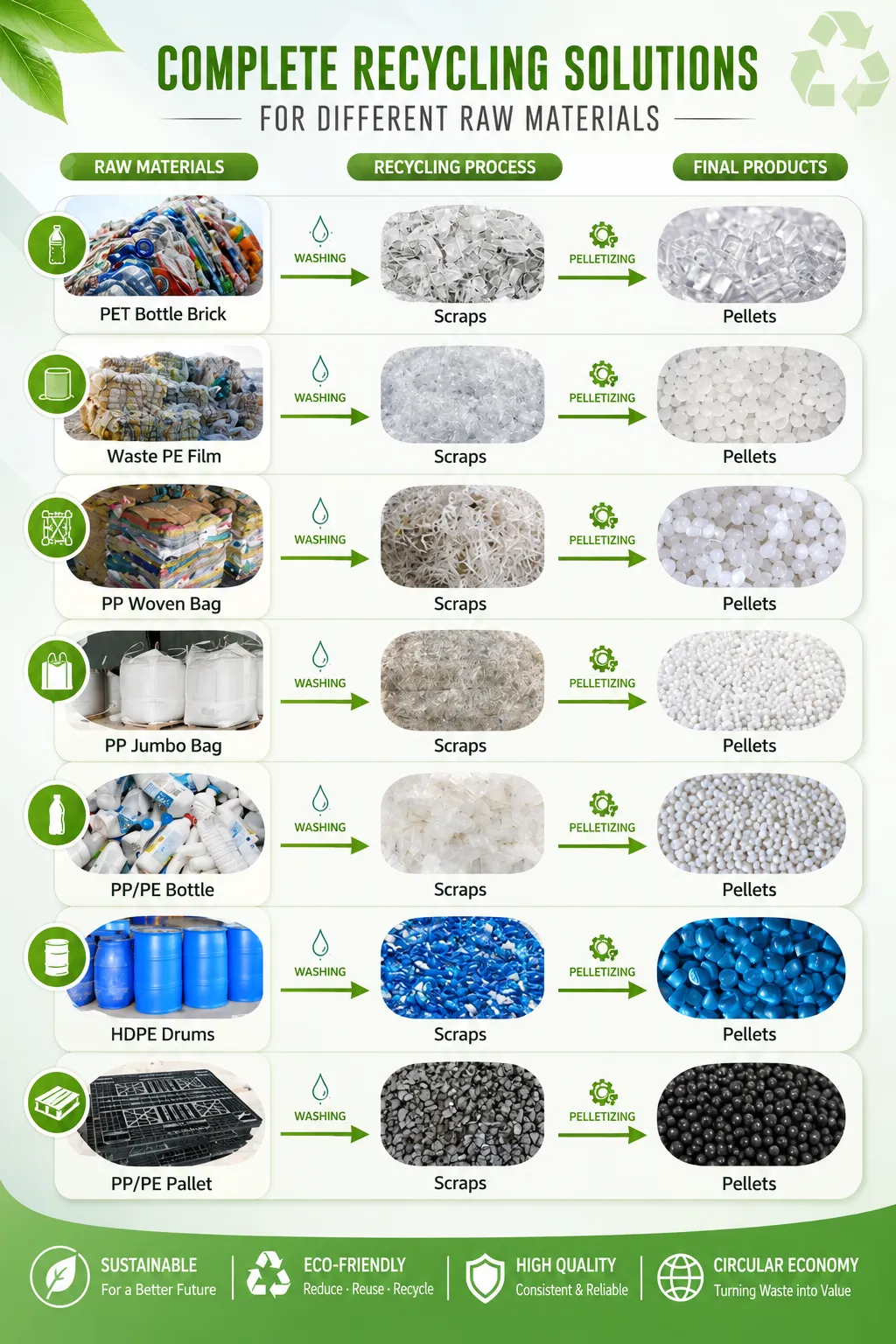
- Post-Consumer Recycling: As a key component in a wash line, a crusher processes pre-shredded and cleaned plastics into a final product ready for sale to manufacturers. The quality of this regrind is critical, as detailed by material specifications from organizations like the Association of Plastic Recyclers (APR).
Preventive Maintenance for Plastic Crushers
Crusher reliability depends on disciplined maintenance, and proactive plants report 70–80% less unplanned downtime than run-to-failure operations. Blade management is the single most critical task: sharp blades cut cleanly with minimal fines and dust, while dull blades tear material, raise power consumption, and generate heat. Establish a blade rotation schedule based on tonnage processed — typically every 40–80 operating hours depending on material abrasiveness — and keep spare blade sets on hand to minimize changeover time. Screen inspection should happen at each shift change; clogged screens restrict flow, causing chamber buildup, overheating, and melted plastic. Brush screens clean between blade changes and rotate them 180° periodically to distribute wear. Bearing and motor lubrication follows manufacturer intervals: check gearbox oil weekly, change it annually or per hour-meter schedule, and regrease motor bearings every 2,000–3,000 hours. Finally, keep foreign objects out — even small metal pieces can chip blade edges or crack the rotor, so pre-screening or metal detection upstream protects against catastrophic damage.
A Buyer’s Guide: How to Select the Right Plastic Crusher
Making the right choice requires a careful analysis of your specific needs. Answering these questions will guide you to the most suitable model and configuration.
- What is the primary material you will process? The type of plastic (e.g., soft LDPE film vs. hard ABS plastic), its thickness, and its shape will influence the best rotor design and the required motor power.
- What is your required throughput? Define how many kilograms or pounds of material you need to process per hour. It’s wise to select a machine with about 20-30% more capacity than your current need to account for future growth.
- What is the desired final particle size? Your end-use for the regrind dictates the screen size. If you are selling the material, your customer will have specific size requirements. For in-house reuse, the size must be compatible with your production machinery.
- How will the machine be fed and the output collected? Consider your operational workflow. Will you be feeding it by hand, or do you need an integrated conveyor belt? Will the regrind be collected in a simple bag, or do you require a cyclone and blower system for automated transport?
- What are the maintenance considerations? Look for features that simplify maintenance, such as hydraulic-assisted opening of the cutting chamber for quick access to knives and screens. This minimizes downtime and improves safety.
Common Buying Mistakes to Avoid
Buying from motor power alone: chamber size, rotor geometry, screen area, and feeding method can matter more. Testing with one material for a mixed feedstock: the hardest, largest, or most abrasive material usually determines the safe configuration. Ignoring upstream metal removal: tramp metal damages knives, screens, and rotors. Choosing the smallest screen immediately: excessive restriction cuts output and raises heat and wear. Skipping downstream checks: flakes must suit the washer, separator, dryer, or extruder that follows. Accepting capacity without test conditions: always request the feed material, screen size, and moisture level behind the quoted kg/h.
Frequently Asked Questions
What is a plastic crusher?
A plastic crusher (often called a granulator) is an industrial machine that reduces plastic parts, bottles, or pre-shredded waste into uniform flakes — typically 3 to 12 mm — for downstream washing, pelletizing, or direct reuse in molding. It uses a high-speed rotor with fixed and rotating knives that cut against a sizing screen.
What is the difference between a plastic crusher and a plastic shredder?
A plastic shredder is a slow, high-torque machine for first-stage size reduction of bulky or contaminated waste, producing large 20–100 mm chips. A plastic crusher is a high-speed machine for second-stage fine size reduction, producing 3–12 mm flakes suitable for extrusion. Most production lines use both: shredder first, crusher second.
How much does an industrial plastic crusher cost?
Industrial plastic crusher prices typically range from US $5,000 for small benchtop units up to US $80,000+ for heavy-duty models with high throughput, hardened tool steel blades, and integrated screens. Final cost depends on rotor size, motor power (15–75 kW), blade material (D2, SKD11, hardfacing), and accessories such as soundproofing or conveyors.
What blade material is best for a plastic crusher?
D2 tool steel is the cost-effective default for general PE/PP/PET regrind. SKD11 or higher-grade tool steels offer longer service life when processing abrasive materials like PVC, glass-filled plastics, or post-consumer film with residual contamination. For the longest service intervals, hardfacing or carbide-inlay blades are used in high-throughput recycling lines.
How do I choose the right plastic crusher for my recycling line?
Match the crusher to four factors: (1) input material — bottle, lump, or shredded flake; (2) required throughput in kg/h; (3) output flake size needed by your next-stage process; and (4) service environment — single shift vs continuous duty. For most plastic recyclers, a heavy-duty model with 30–55 kW motor handles 300–800 kg/h cleanly.
Is a wet crusher always better than a dry crusher?
No. Wet crushing helps when processing dirty material that enters a washing line, and the water cools the blades — but it adds water handling, corrosion protection, wastewater treatment, and drying load downstream. Clean production scrap is usually simpler and less costly to process in a dry crusher.
How do I choose the right screen size for a plastic crusher?
Start from the flake size your next process requires, then confirm the chosen aperture can meet your throughput target without excessive heat, fines, or recirculation inside the chamber. A smaller screen improves size control but reduces throughput and increases blade wear — the right choice balances downstream requirements with stable operation.
Which blade configuration suits my material?
A double-scissor cut is the general-purpose choice for bottles and rigid containers, generating minimal heat with clean cuts. A V-type rotor concentrates material toward the chamber center and suits thick-walled parts and harder engineering plastics. A helical rotor handles thick cross-sections, pipes, and profiles that would jam lighter configurations. Match the arrangement to your toughest material, not your average one.
Your Investment in a Sustainable and Profitable Future
Integrating a Rumtoo Machine plastic crusher is a strategic decision that delivers multiple returns. Financially, you convert a costly waste stream into a source of revenue or savings. Operationally, you create a more efficient, streamlined workflow. Environmentally, you contribute to the circular economy by keeping valuable polymers out of landfills.
Our machines are built to withstand the rigors of industrial use and are backed by a comprehensive 1-year limited warranty. We are committed to providing equipment that not only meets but exceeds your expectations. Ready to take control of your plastic waste? Contact our team of experts today to discuss your application and receive a personalized quote.
