


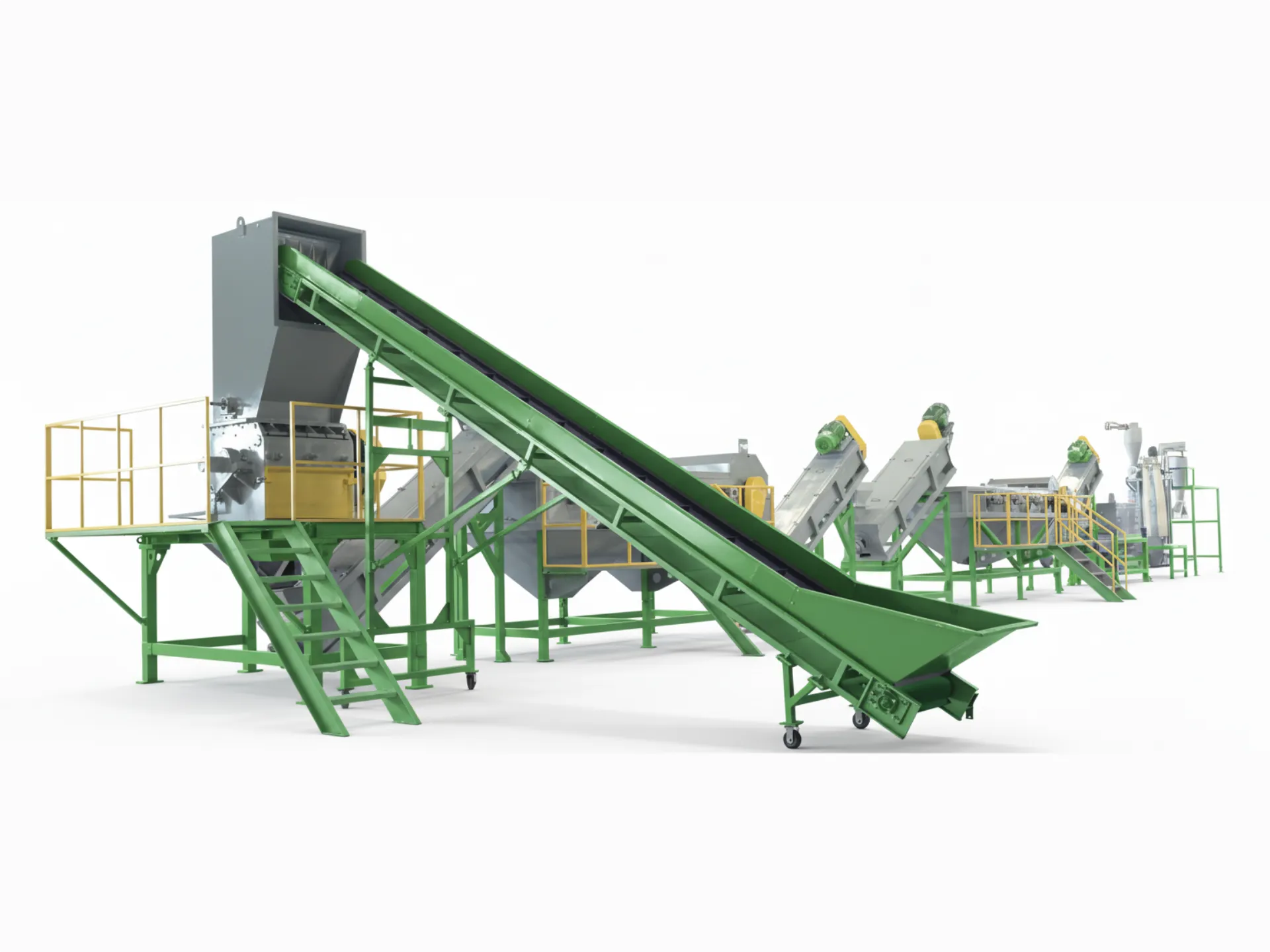
High-Performance HDPE Bottle Washing & Recycling Line
Transform post-consumer milk bottles, detergent jugs, drums, and rigid containers into ultra-clean, high-density polyethylene flakes with industry-leading purity and moisture control.
- 500–3,000 kg/h Customizable throughput
- <1% Flake Moisture Direct extrusion ready
- 99.8% Decontamination Oil, label & glue removal
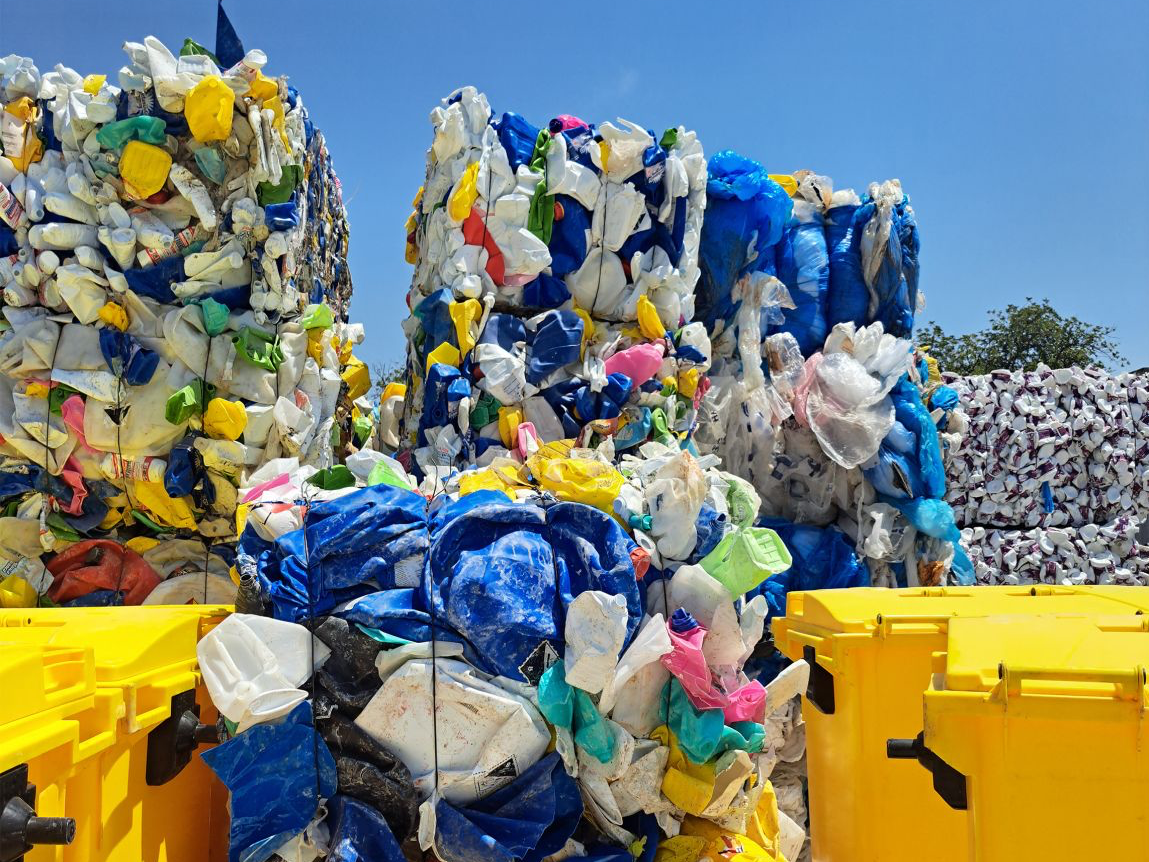
Engineered for Tough Contamination: Milk, Oil & Heavy Soils
Post-consumer rigid HDPE recycling poses distinct engineering challenges compared to standard film recycling. Baled milk bottles carry sour dairy curd proteins and pervasive odor, while household detergent jugs and industrial jerry cans contain viscous surfactants, synthetic oils, and tenaciously glued labels.
Rumtoo’s turnkey HDPE bottle washing plant integrates high-shear wet granulation, high-speed friction scrubbing, continuous 85°C caustic hot wash stripping, and precision hydrodynamic sink-float separation. The system consistently removes labels, hot-melt glues, and chemical residues—producing premium regrind flakes suitable for high-value blow molding and pipe extrusion.
Key Features of HDPE Bottle Washing Line
Industrial-grade architecture built for heavy continuous duty, high recovery rates, and low operational expenditure.
-
High-Efficiency Rotary De-Labeling
Patented mechanical rotary de-labeler strips over 98% of PVC/PET shrink sleeves and paper labels before granulating, protecting downstream screens from premature blinding.
-
Heavy-Duty Wet Granulation
Water-injected cutting chamber with cryogenically treated D2/SKD-11 scissor blades dices rigid containers into uniform 10–14 mm flakes while cooling knives and initiating pre-wash.
-
High-Speed Friction Scrubbing
Dynamic multi-paddle rotor spinning at 1,000–1,200 RPM creates intense flake-on-flake mechanical friction, peeling away stubborn residues, glues, and milk film into outer screen baskets.
-
Continuous Hot Caustic Washing
Steam or electric-heated 85°C alkaline chemical bath with automated dosing thoroughly saponifies organic oils, dissolves milk proteins, and neutralizes pervasive odors.
-
Multi-Stage Hydrodynamic Separation
Precision sink-float tanks cleanly separate floating polyolefins (HDPE flakes and PP caps, density <0.96 g/cm³) from sinking PET, PVC, glass, and grit (>1.0 g/cm³).
-
Centrifugal Dewatering & Air Separation
High-G centrifugal spin combined with thermal flash air drying and zig-zag classification yields dry (≤1.0% moisture), dust-free flakes ready for direct extrusion or storage.
Target Feedstocks & Processing Applications
Versatile processing across a broad spectrum of post-consumer and post-industrial rigid polyolefin streams.
-
Milk & Beverage Bottles
Natural and white blow-molded HDPE containers with milk curd residues, juice dregs, and snap-on neck rings.
-
Detergent & Shampoo Jugs
Colored HDPE containers contaminated with viscous surfactants, cosmetic oils, and heavy pressure-sensitive labels.
-
HDPE Drums & Jerry Cans
Large blow-molded industrial containers, lubricant oil canisters, and chemical transport barrels requiring intensive pre-shredding.
-
PP Bottle Caps & Closures
Polypropylene threaded caps and dispensing closures co-processed and float-separated alongside rigid HDPE containers.
-
Rigid Crates & Pallets
Injection-molded HDPE/PP beverage crates, logistics totes, field harvest boxes, and structural pallet scraps.
-
Automotive Fluid Containers
Engine oil jugs, windshield fluid bottles, and radiator coolant containers requiring intense hot alkaline washing.
HDPE Bottle Washing Process: Step-by-Step
Fully automated, continuous material flow from baled post-consumer bottles to ultra-clean, extrusion-ready rigid flakes.
-
Automated Bale Breaking & Trommel Pre-Wash
Heavy-duty de-baler loosens tightly compressed bottle bricks; rotary trommel screen with continuous water spray washes away loose soil, sand, and beverage dregs before sorting.
-
Mechanical Rotary De-Labeling
Patented curved alloy rotor pegs gently strip sleeves and paper labels at 98%+ efficiency without crushing bottle necks or losing salable bottle polymer.
-
Manual / Optical Sorting Platform
Modular dual-sided conveyor platform allows manual rejection of foreign metals, PVC bottles, or off-color containers (optional NIR optical polymer sorting available).
-
Heavy-Duty Wet Granulation
Water-injected rotary granulator with D2/SKD-11 scissor-cut knives grinds bottles into uniform 10–14 mm flakes while cooling cutting edges and flushing abrasive grit.
-
High-Speed Centrifugal Friction Washer
Dynamic multi-paddle rotor spinning at 1,000–1,200 RPM creates high-shear flake friction, tearing off surface milk proteins, stubborn glues, and fine sediments.
-
Continuous Hot Caustic Washing Tank
80–85°C alkaline chemical bath (1–2% NaOH + eco-surfactants) with continuous paddle propulsion dissolves viscous motor oils, saponifies fats, and strips adhesive residues.
-
Multi-Stage Sink-Float Separation Tank
Precision hydrodynamic separation based on specific gravity: floating HDPE and PP flakes (<0.96 g/cm³) are propelled forward while sinking PET, PVC, glass, and sand sink to the bottom discharge screw.
-
Centrifugal Dewatering & Air Classification
High-G centrifugal spin reduces surface moisture to <1.5%, followed by a thermal flash pipe and zig-zag air classifier that lifts ultra-light dust/fines, yielding dry (≤1.0%), injection-ready HDPE flakes.
HDPE Bottle Washing Line Technical Specifications
Standard production configurations engineered for turnkey industrial plastic recycling. Custom capacities available on request.
| Specification / Model | HWL-500 | HWL-1000 | HWL-1500 | HWL-2000 | HWL-3000 |
|---|---|---|---|---|---|
| Input Capacity (kg/h) | 500 kg/h | 1,000 kg/h | 1,500 kg/h | 2,000 kg/h | 3,000 kg/h |
| Applicable Feedstock | Post-Consumer Milk Jugs, Detergent Bottles, HDPE Drums, Chemical Containers, PP Caps | Post-Consumer Milk Jugs, Detergent Bottles, HDPE Drums, Chemical Containers, PP Caps | Post-Consumer Milk Jugs, Detergent Bottles, HDPE Drums, Chemical Containers, PP Caps | Post-Consumer Milk Jugs, Detergent Bottles, HDPE Drums, Chemical Containers, PP Caps | Post-Consumer Milk Jugs, Detergent Bottles, HDPE Drums, Chemical Containers, PP Caps |
| Bottle De-Labeling Machine | 15 kW (Rotor Ø 600 mm) | 22 kW (Rotor Ø 800 mm) | 30 kW (Rotor Ø 900 mm) | 37 kW (Rotor Ø 1000 mm) | 45 kW (Rotor Ø 1200 mm) |
| Wet Granulator Rotor Drive | 37 kW (10 Rotary / 4 Stator) | 55 kW (10 Rotary / 4 Stator) | 75 kW (10 Rotary / 6 Stator) | 90 kW (12 Rotary / 6 Stator) | 132 kW (14 Rotary / 8 Stator) |
| High-Speed Friction Washer Speed | 1,000 RPM (15 kW) | 1,100 RPM (22 kW) | 1,200 RPM (30 kW) | 1,200 RPM (37 kW) | 1,200 RPM (45 kW) |
| Continuous Hot Wash System | 1 Tank (3 m³, 85°C, 11 kW) | 1 Tank (5 m³, 85°C, 15 kW) | 2 Tanks (10 m³, 85°C, 22 kW) | 2 Tanks (12 m³, 85°C, 30 kW) | 2 Tanks (16 m³, 85°C, 45 kW) |
| Hydrodynamic Sink-Float Stages | 1 Stage (6 m, 4 Paddles) | 2 Stages (6 m × 2, 8 Paddles) | 2 Stages (8 m × 2, 10 Paddles) | 2 Stages (10 m × 2, 12 Paddles) | 3 Stages (10 m × 3, 16 Paddles) |
| Centrifugal Dewatering & Final Moisture | 1,200 RPM (≤1.5% moisture) | 1,200 RPM (≤1.0% moisture) | 1,400 RPM (≤1.0% moisture) | 1,400 RPM (≤1.0% moisture) | 1,500 RPM (≤0.8% moisture) |
| Metallurgy & Wear Protection | D2 / SKD-11 Knives + SUS304 Wet Contact | D2 / SKD-11 Knives + SUS304 Wet Contact | D2 / SKD-11 Knives + SUS304 Wet Contact | D2 / SKD-11 Knives + SUS304 Wet Contact | D2 / SKD-11 Knives + SUS304 Wet Contact |
| Installed Power & Plant Footprint | ~120 kW (32 × 5 × 4.5 m) | ~195 kW (42 × 6 × 5.0 m) | ~280 kW (52 × 7 × 5.5 m) | ~360 kW (60 × 8 × 5.5 m) | ~490 kW (72 × 9 × 6.0 m) |
Note: Specifications are indicative and may be tailored according to feedstock contamination ratio, target pellet purity, and facility dimensions.
System Comparison: Rumtoo Dedicated HDPE Line vs. Generic Washing Lines
How our automated de-labeling, hot caustic washing, and multi-stage density separation outperform generic plastic recycling setups.
| Performance Dimension | Rumtoo Heavy-Duty HDPE Bottle Line | Generic / Commodity Washing Lines |
|---|---|---|
| Label & Sleeve Stripping | 98%+ Pre-Grind De-Labeling: Patented rotary de-labeler strips >98% PVC/PET shrink sleeves whole before granulating; protects wash screens from blinding. | <70% Post-Grind Separation: Lack dedicated pre-shred de-labelers; shredded sleeve confetti enters wash water, blinding dewatering screens and lowering flake purity. |
| Hot Wash Oil & Glue Removal | Continuous 85°C Caustic Bath: Continuous 85°C caustic hot washer with automated chemical dosing saponifies dairy curds, vegetable oils, and hot-melt glues completely. | Ambient Cold Wash Only: Rely on cold ambient washing only; grease, milk residues, and adhesive glues remain on flakes, producing severe odor and pellet defects. |
| Density Separation Precision | Multi-Stage Hydrodynamic Float Tanks: Multi-stage counter-current sink-float tanks with deep vessels ensure complete floatation of HDPE/PP while sinking PVC/PET >1.0 g/cm³ to <50 ppm. | Single Shallow Tank: Single shallow static tank; turbulent surface flow carries heavy sinking PET/PVC fines across discharge weirs, contaminating HDPE regrind. |
| Residual Moisture & Drying | ≤1.0% Moisture Flakes: High-G centrifugal spin + thermal air flash drying + zig-zag deduster achieves dry (≤1.0%), dust-free flakes ready for direct extrusion without pre-drying. | 3–6% Residual Moisture: Basic spin dryer leaving 3–6% moisture; flakes require expensive secondary offline drying or cause severe venting bubble holes during pelletizing. |
| Abrasion Resistance & Metallurgy | D2/SKD-11 Knives & SUS304 Wet Contact: All wet contact surfaces fabricated in heavy SUS304 stainless steel; cutting chambers lined with replaceable Hardox wear plates and cryo-treated D2 blades. | Carbon Steel Contact: Standard carbon steel contact parts prone to severe caustic oxidation and rapid abrasive wear from sand/dirt, causing high maintenance downtime. |
| Water Treatment & Recycling | Closed-Loop Recirculation: Integrated closed-loop water treatment system with wedge-wire screen filtration and flocculation sedimentation reduces freshwater consumption by up to 60%. | Open Single-Pass Discharge: Open single-pass water discharge consuming massive freshwater volumes and incurring heavy environmental compliance penalties. |
HDPE Bottle Washing Line in Action: Video
Watch our high-speed washing, separation, and dewatering line operating in real industrial conditions.
Frequently Asked Questions
Key operational and engineering considerations for your HDPE washing line investment.
Our dedicated rotary de-labeling machine processes whole, baled, or loose bottles before they reach the granulator. Rotating blades adjust to bottle geometry to peel off over 98% of PVC/PET shrink sleeves and paper labels without puncturing or pulverizing the bottles. Removing labels prior to grinding prevents label scraps from contaminating flake wash water and clogging dewatering screens downstream.
Post-consumer HDPE bottles typically contain milk protein residues, motor oil, household chemicals, and stubborn adhesive glue. Ambient cold washing cannot dissolve oily films or glue residues, resulting in severe odor, discoloration, and structural degradation in recycled pellets. Rumtoo's continuous hot wash system maintains an 80–85°C alkaline bath (with mild NaOH and surfactant dosing) to saponify oils, dissolve adhesives, and neutralize odors completely.
Both HDPE (density ~0.94–0.96 g/cm³) and PP caps (density ~0.90–0.91 g/cm³) float in freshwater (density 1.0 g/cm³), while PET/PVC contaminants sink. Because HDPE and PP are both polyolefins, many pipe, sheet, and structural lumber molders can tolerate minor PP percentages. For bottle-to-bottle or high-specification blow molding, we integrate an upstream optical color/polymer sorter on whole bottles, or a secondary optical flake sorter after washing to isolate pure HDPE flakes.
Our wet granulator uses genuine D2 / SKD-11 high-carbon, high-chromium tool steel rotor and stator knives vacuum heat-treated to HRC 58–60. Because water continuously lubricates and cools the cutting zone during operation, blade life is extended by 2–3x compared to dry granulators. Under typical post-consumer bottle processing conditions, rotor knives run 400–600 hours between sharpenings, and each knife set can be reground 4–6 times before replacement.
The line achieves a final residual moisture level of ≤1.0% (and down to ≤0.8% with thermal air boost). This is achieved through a multi-stage mechanical drying sequence: first, a high-G horizontal centrifugal dryer strips free surface water to <1.5%, followed by an insulated hot air flash drying duct and zig-zag cyclone separator. Flakes can be directly fed into single-screw or twin-screw extruders without additional offline drying.
Operating a 1,000 kg/h HDPE washing line in an open loop would consume approximately 3–5 tons of water per hour. To minimize utility bills and environmental footprint, Rumtoo provides an integrated closed-loop water treatment system (including curved wedge-wire static screens, sedimentation tanks, and optional filter press). With recirculating loops, freshwater makeup is reduced to approximately 0.5–1.0 ton per ton of processed plastic.
Yes. Rumtoo HDPE bottle washing lines are engineered as modular polyolefin recycling plants. With minor adjustments to granulator screen hole diameters (typically 12–16 mm for thick-wall parts) and paddle speeds, the line efficiently washes PP beverage crates, injection-molded buckets, cosmetic bottles, and thermoformed PP containers.
A standard 1,000 kg/h HWL-1000 line requires approximately 42 meters in length, 6 meters in width, and a minimum ceiling clearance of 5.0 meters. Total installed power is approximately 195 kW (with actual operating consumption around 65–75% of connected load). Utilities require a 3-phase industrial power supply (380V/415V/480V 50/60Hz), industrial water supply with minimum 3 bar pressure, and optional steam connection (or electric heat exchangers) for the hot wash tank.
Warranty & Installation
-
Warranty Coverage
Standard 12-month comprehensive warranty coverage across all structural frames, gearboxes, motors, and electrical components against manufacturing defects.
-
Installation & Commissioning
On-site mechanical assembly, electrical wiring, PLC calibration, operator safety training, and lifetime spare parts supply support worldwide.
Request Technical Layout & Quotation
Connect with our plastic recycling engineering specialists for plant CAD layout design, mass balance calculations, and tailored pricing.
