


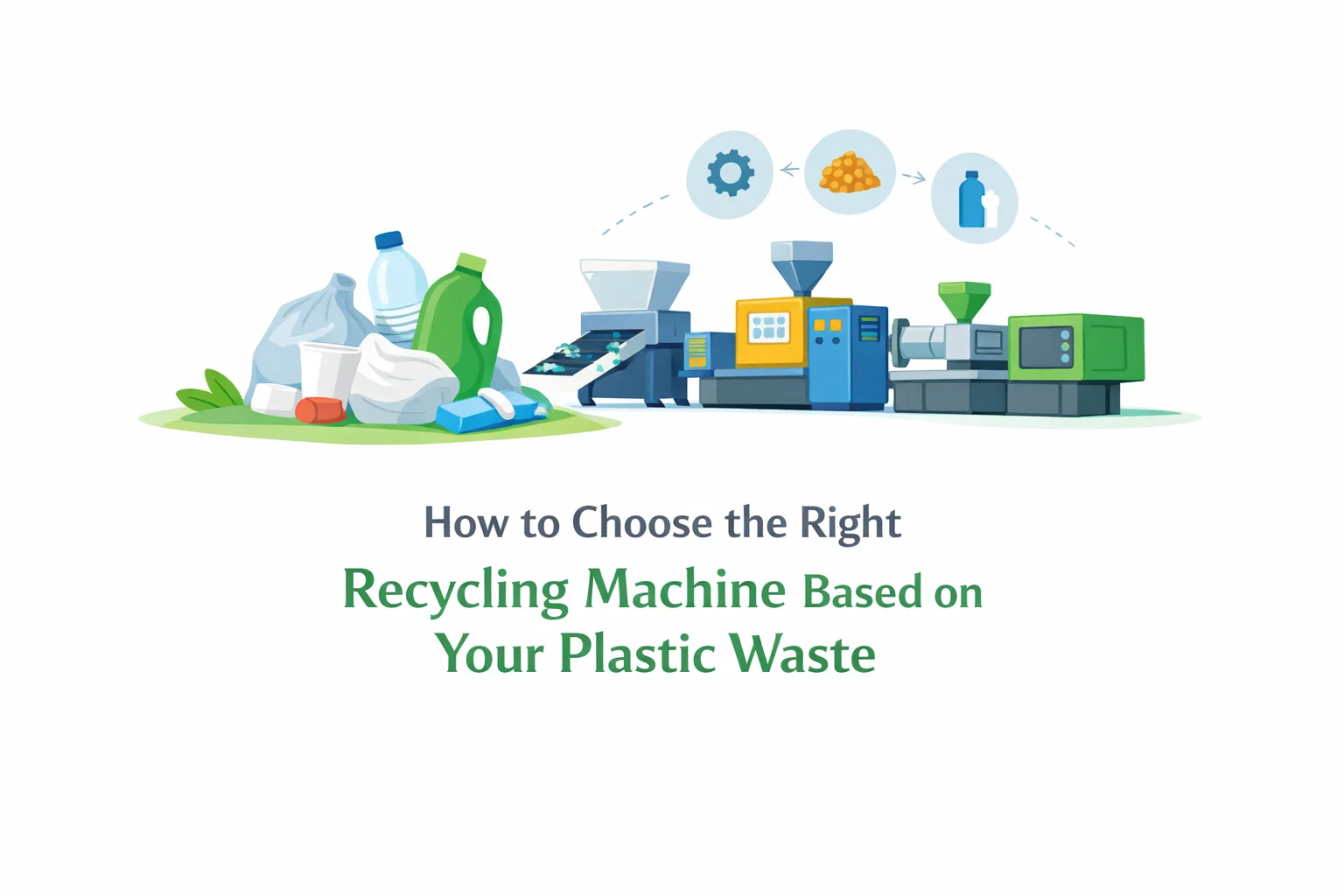
Geri dönüşüm makinesi seçimi, katalog başlıklarıyla değil, malzeme gerçekleriyle başlar. Makine tipi ve atık profili uyuşmuyorsa, dengesiz besleme, daha fazla arıza süresi ve daha düşük pelet kalitesi elde edersiniz. Bu kılavuz, film, sert, endüstriyel atık ve tüketim sonrası plastik atıklar için net bir seçim yolu sunmaktadır.
Öncelikle sistem kategorilerine hızlıca göz atmak isterseniz, lütfen aşağıdaki bağlantıya bakın. plastik geri dönüşüm makineleri sayfa.
1) Polimer Tanımlamasıyla Başlayın
Makine modellerini tartışmadan önce polimerlerinizi listeleyin: PE (HDPE/LDPE/LLDPE), PP, PET, PS, ABS, PA, PC ve karışık akışlar. Isıtma ve filtrasyon sırasında polimer davranışı, vida düzenini, havalandırma ihtiyacını ve peletleme yöntemini belirler.
- Tek, temiz polimer akışı: Daha basit proses düzeni ve daha düşük filtrasyon yükü.
- Karışık polimerler: Son kaliteyi korumak için ekstrüzyondan önce ayıklama gerekebilir.
- Isıya duyarlı malzemeler: Daha sıkı sıcaklık kontrolüne ve düzenli yemlemeye ihtiyaç var.
2) Öncelikle Nihai Ürünü Tanımlayın
Hedef çıktınız makinenin rotasını değiştirir:
- Sadece parçalanmış malzeme: Beden küçültme serisi yeterli olabilir.
- Temiz pullar: Yıkama, ayırma ve kurutma işlemleri kritik önem kazanır.
- Peletler: Ekstrüzyon, filtrasyon, gaz giderme ve peletleme işlemleri gereklidir.
Üretim özelliklerine ilişkin detaylar en başından net bir şekilde belirlendiğinde, tedarikçi teklifleri karşılaştırılabilir hale gelir.
3) Yem Formunu Besleme Sistemine Uygun Hale Getirin
Yem formu, alım istikrarını ve verimliliği kontrol eder.
- Film, poşetler, rafya: Kesici-sıkıştırıcı besleme genellikle daha güvenli bir seçenektir.
- Sert öğütülmüş malzeme veya yonga: Kontrollü dozajlama özelliğine sahip doğrudan besleme sistemleri genellikle iyi sonuç verir.
- Topaklar, kabarcıklar, kalın kısımlar: Ekstrüzyondan önce genellikle ön parçalama işlemi gereklidir.
Bir makinenin boyutunu yalnızca motor kW'ına göre belirlemeyin. Besleme davranışı genellikle gerçek darboğazdır.
4) Atık Durumunu Kontrol Edin: Temiz mi, Kirlenmiş mi?
Malzeme kaynağı önemlidir: Endüstriyel atıklar genellikle tüketim atıklarından daha temizdir. Kirlilik seviyesi, eritme işleminden önce tam yıkama ve ayırma gerekip gerekmediğini belirler.
- Temiz, kuru artık parça: Daha hafif ön işlemle peletleme aşamasına geçilebilir.
- Kirli veya karışık atık: Ön yıkama, sıcak yıkama, yoğunluk ayrımı ve kurutma gerekebilir.
- Metal, kağıt, etiketler, kum: Erken çıkarılmadığı takdirde aşınma ve filtrasyon basıncı artar.
5) Baskı, Yapıştırıcılar ve Uçucu Maddeleri Değerlendirin
Yoğun baskılı film ve lamine malzemeler erime sırasında daha fazla gaz salabilir. Bu durum havalandırmayı ve filtre stabilitesini etkiler.
- Düşük baskı yükü: Birçok durumda tek bir gaz giderme işlemi yeterli olabilir.
- Yüksek baskı veya yapıştırıcı yükü: Çift gaz giderme ve daha güçlü filtreleme genellikle tercih edilir.
Tedarikçilerden numunelerinizi incelemelerini ve testten elde edilen erime basıncı ve havalandırma davranışı verilerini paylaşmalarını isteyin.
6) Sıralamanın Gerekli Olup Olmadığına Karar Verin
Eğer hammaddeniz karışık renkler veya karışık polimerler içeriyorsa, son ekstrüzyondan önce bir ayıklama adımı ekleyin. Yüksek kaliteli ürünler için ayıklama, standart dışı partileri ve müşteri şikayetlerini azaltabilir.
- Polimer ayrımı (örneğin, PET ile PP/PE arasındaki ayrım)
- Ürün kalitesinin daha sıkı görsel kontrol gerektirdiği durumlarda renk ayrımı.
- Peletleme işleminden önce zorlu kirleticilerin uzaklaştırılması
7) Kapasiteyi Gerçek Çalışma Saatlerine Göre Ayarlayın
Kapasite planlamasında teorik maksimum üretim miktarı değil, tesisin fiili üretim programı kullanılmalıdır. Tanım:
- hedef kg/saat
- Vardiya başına saat ve günlük vardiya sayısı
- planlı bakım durdurmaları
- gelecekteki genişleme dönemi (genellikle 12-24 ay)
Küçük bir güvenlik payı pratiktir. Çok fazla büyük boyutlandırma, kısmi yükte verimliliği olumsuz etkileyebilir.
8) Karşılaştırılabilir Teklifler İsteyin
Kapsam uyumsuzluğunu önlemek için tüm tedarikçiler için tek bir teklif talebi şablonu kullanın.
- polimer listesi ve yüzdesi
- atıklarla ilgili fotoğraflar/videolar
- kirlilik ve nem durumu
- gerekli çıktı ve kalite sınırları
- hedef verim (kg/saat)
- hizmet sınırları (elektrik, su, alan)
- ticari kapsam (sadece makine veya kurulu hat)
- Başlangıç, eğitim, yedek parçalar ve garanti detayları
Sık Yapılan Seçim Hataları
- Sadece satın alma fiyatına göre seçim yapmak.
- Gerçek hammadde ile numune denemelerini atlamak.
- Farklı kapsam sınırlarına sahip fiyat tekliflerini karşılaştırmak.
- Kirlenmiş girdiler için yıkama ve kurutma ihtiyaçlarını göz ardı etmek.
- Filtrasyon, havalandırma ve bıçak aşınması maliyetini hafife almak.
SSS
Film atıklarını işlemek için hangi makine daha iyidir?
Yumuşak film ve torbalar için, ekstrüzyondan önce beslemeyi stabilize ettikleri için genellikle kesici-sıkıştırıcı besleme sistemine sahip hatlar tercih edilir.
Çamaşır ipine her zaman ihtiyacım var mı?
Hayır. Temiz, kuru, endüstriyel atıkların tamamen yıkanmasına gerek yoktur. Kirli tüketim sonrası atıkların ise istikrarlı bir çıktı kalitesi için genellikle yıkanması ve kurutulması gerekir.
Tek satır mı yoksa çok satır mı seçeceğim?
Malzemeler çok farklıysa, ayrı hatlar genellikle geçiş süresini ve kontaminasyon riskini azaltır. Besleme tutarlıysa ve kalite hedefleri orta düzeydeyse tek bir hat da çalışabilir.
Baskılı filmlerde gaz giderme işlemi ne kadar önemlidir?
Bu önemli. Daha fazla mürekkep ve yapıştırıcı genellikle erime sırasında daha yüksek uçucu madde yükü anlamına gelir; bu da daha güçlü havalandırma ve filtreleme gerektirebilir.
Makine tedarikçisine gönderilecek ilk şey nedir?
Hammadde fotoğrafları/videoları, polimer karışımı, kirlilik seviyesi ve hedef kg/saat bilgilerini gönderin. Bu, teknik eşleştirmeyi hızlandırır ve yanlış fiyat tekliflerini azaltır.
Özet
Doğru geri dönüşüm makinesi, gerçek atık akışınıza, hedef üretim miktarınıza ve çalışma programınıza uygun olan makinedir. Net bir malzeme denetimi, örnek deneme ve kapsamla uyumlu bir teklif talebi, proje riskini azaltacak ve ilk günden itibaren üretim istikrarını artıracaktır.
